
Sustainable Jewellery Day: Purvi Shah (RJC) on the Fundamentals of Credible Sustainability
The Sustainable Jewellery Day 2026 in Pforzheim places one of the jewellery and watch industry’s key future questions at the centre of its guiding theme, “Transparency. Trust. Responsibility.”: How can sustainability, origin, supply chains and responsibility be made transparent enough to create genuine trust?

The event is designed as an industry forum for exchange, guidance, and context. The focus is not only on materials or certifications, but also on how companies put responsibility into practice, how supply chains can become more transparent, and how retailers, brands, and consumers can discuss sustainability in a credible way. That is precisely why the triad of transparency, trust, and responsibility is more than just a slogan. It describes the challenge facing the industry.
INSIGHT-LUXURY discusses this with Purvi Shah, Executive Director of the Responsible Jewellery Council. The RJC is an international standards and certification organization for supply chains in the jewelry and watch industry. Its standards address, among other things, human rights, working conditions, environmental management, responsible sourcing, traceability, and transparent disclosure.
In the interview, Purvi Shah makes it clear that transparency alone is not enough. What matters is whether companies understand their supply chains, systematically identify risks, and demonstrably integrate accountability into their processes. Standards such as the Code of Practices, the Chain of Custody Standard, and the Laboratory-Grown Material Standard are intended to provide guidance—especially in an environment where supply chains are becoming more complex, regulatory requirements are getting stricter, and the expectations of retailers, brands, and consumers are becoming more specific.
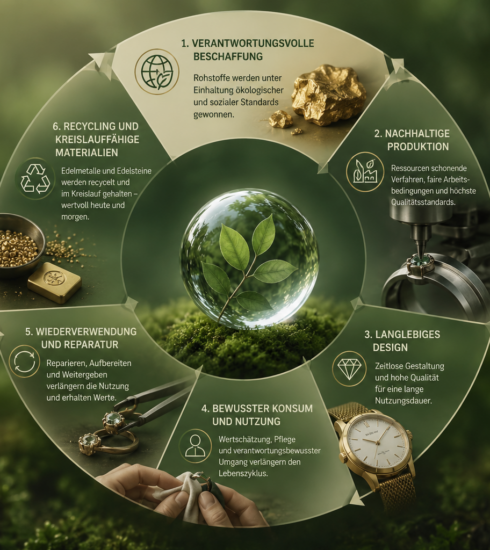
Sustainability is therefore not viewed as a standalone issue related to materials or communication. It becomes a shared responsibility across the entire value chain—and the foundation for trust, which must be verifiable.
In conversation with Purvi Shah, Executive Director of the Responsible Jewellery Council:
INSIGHT-LUXURY: The Sustainable Jewellery Day is guided by the theme “Transparency. Trust. Responsibility.” Where do you see the greatest need to intensify current efforts around sustainability, transparency and trust — and how can this be achieved in today’s complex geopolitical environment?
Purvi Shah:
The greatest need today is to continue strengthening responsible business practices across increasingly complex global supply chains while ensuring that transparency translates into meaningful trust.
At the Responsible Jewellery Council (RJC), we see transparency, trust and responsibility as mutually reinforcing. Trust is built when companies can demonstrate, through credible systems and independent verification, that they understand their supply chains, identify and manage risks, and are committed to continuous improvement.
This is precisely why the RJC’s standards framework is so important. Our Code of Practices (COP) provides a comprehensive framework for responsible business conduct across human rights, labour rights, environmental management and ethical business practices. Our Chain of Custody (COC) Standard supports greater transparency and traceability for eligible materials throughout the supply chain, while the Laboratory Grown Material Standard (LGMS) establishes clear requirements for responsible business practices and transparent disclosure within the laboratory-grown diamond and gemstone sector.
What makes this particularly important is that responsibility cannot sit with one part of the supply chain alone. Through our standards, the RJC provides a framework that supports responsible business practices across the value chain, bringing together companies from miningrefining and manufacturing through to brands and retailers
In today’s geopolitical environment, supply chains face growing complexity, from regulatory changes and trade disruptions to evolving stakeholder expectations. No single company can address these challenges alone. Industry-wide standards, independent certification and collaboration across the value chain are essential for creating consistency, accountability and confidence.
By encouraging companies to embed responsible practices into their operations and by providing credible frameworks for verification, the industry can continue strengthening trust and resilience, even as the external environment evolves.
INSIGHT-LUXURY: Sustainability only works if supply chains are actively involved, information is documented in a transparent way, and responsibility is communicated clearly. Where do you currently see the biggest gap: in implementation, in communication within the industry, or in communication with the end consumer?
Purvi Shah:
Significant progress is being made across implementation, transparency and communication, but one of the greatest opportunities today lies in helping stakeholders better understand the work that is already taking place throughout the supply chain.
Across the jewellery and watch industry, many businesses are investing substantial resources into responsible sourcing, due diligence, environmental management and human rights practices. Through certification against the RJC Code of Practices (COP), companies are required to demonstrate that these systems are embedded within their operations and independently audited.
However, much of this work happens behind the scenes. Consumers increasingly want to understand where products come from, how materials are sourced and what responsible business practices actually look like in practice. Translating complex supply chain management, due diligence processes and certification requirements into clear, accessible and meaningful communication remains a challenge for the industry, especially as we see increasing enforcement from consumer protection bodies.
One of the strengths of the RJC framework is that it creates a common approach across the value chain. Through our standards, businesses at different stages of the supply chain can work towards shared expectations around responsible business practices, transparency and accountability. This helps create greater consistency both within the industry and in how responsible practices are communicated externally.
Ultimately, strong implementation and strong communication must work together. Certification and responsible business practices provide the evidence, while transparent, substantiated and consistent communication helps build understanding and confidence among consumers and stakeholders.
INSIGHT-LUXURY: Which development do you believe will be most decisive over the next years in turning sustainability into lasting trust — for companies, retailers and consumers alike?
Purvi Shah:
The most decisive development will be the growing expectation for companies to demonstrate sustainability performance through credible, measurable and independently verified systems.
Across global markets, stakeholders increasingly expect evidence rather than aspiration. Companies are no longer judged solely by the commitments they make but by their ability to show how responsible business practices are embedded within their operations, how risks are managed and how progress is being achieved over time.
This is where standards and certification will continue to play a critical role. The RJC’s Code of Practices (COP) establishes a common framework for responsible business conduct across the jewellery and watch supply chain, while the Chain of Custody (COC) Standard supports transparency and traceability claims for eligible materials in metal supply chains. The Laboratory Grown Material Standard (LGMS) further strengthens confidence by providing a dedicated framework for responsible practices and transparent disclosure within the laboratory-grown sector.
Importantly, these frameworks bring together businesses from across the value chain, creating a shared foundation for responsible business practices from mine to retail. This collective approach is essential because trust is not created by one company or one segment of the industry alone, it is built through consistent actions across the entire supply chain.
Technology will undoubtedly continue to advance traceability and data collection, but technology alone does not create trust. Lasting trust comes when transparency is supported by robust governance, independent verification and accountability.
For companies, retailers and consumers alike, trust will increasingly be built through a combination of clear standards, credible certification and a demonstrated commitment to continuous improvement. Sustainability becomes meaningful when it moves beyond statements of intent and becomes embedded in everyday business practice, supported by evidence and verified through recognised frameworks such as COP, COC and LGMS.
These are the foundations that will help turn sustainability into long-term trust across the global jewellery and watch industry.
Learn more about Sustainable Jewellery Day: https://sustainable-jewellery.com/
More about the Responsible Jewellery Council: https://www.responsiblejewellery.com/