




Arnold & Son and the constant power of watchmaking and friendship
Arnold & Son and the constant power of watchmaking and friendship
“May the Force be with you” is probably the most famous phrase from the Star Wars saga and a greeting used by the Jedi Knights to encourage one another and wish each other luck and success.
The phrase is often used as an expression of hope and trust in an omnipresent force. In the "Constant Force Tourbillon 11" by Arnold & Son, this force is even constantly and equally strong. "The Force is with you" is what it should really be in the universe of the manufacturer, which is part of the Citizen Group.

But what lies behind this constant power?
The constant-force mechanism is a sophisticated complication in mechanical watchmaking. It ensures that the energy transfer to the balance remains consistent, regardless of how tightly the movement is wound. This complex technology ensures that the amplitude of the balance remains constant, thus increasing the precision of the watch.
Without constant force, the mainspring gradually loses power, which can lead to fluctuating balance amplitude and impair accuracy. The constant force mechanism neutralizes this effect and ensures that the balance is always driven with the same energy.
Arnold & Son is one of the few brands, along with A. Lange & Söhne, IWC and Grand Seiko, that integrate this complication into their watch movements.
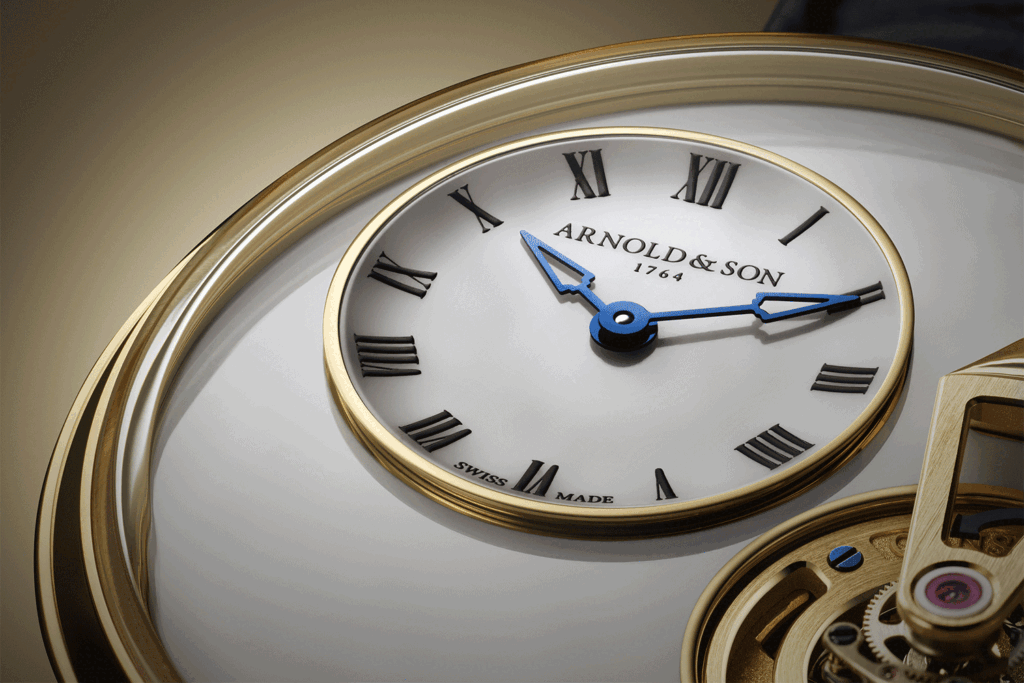
“Constant Force Tourbillon 11” in 18-carat yellow gold
There are just eleven examples of this timepiece, which houses the A&S5219 caliber in its 42.5-millimeter case made of 18-carat yellow gold – including a one-minute tourbillon and constant-force mechanism.
It was entirely developed and manufactured in our own factory in La Chaux-de-Fonds.

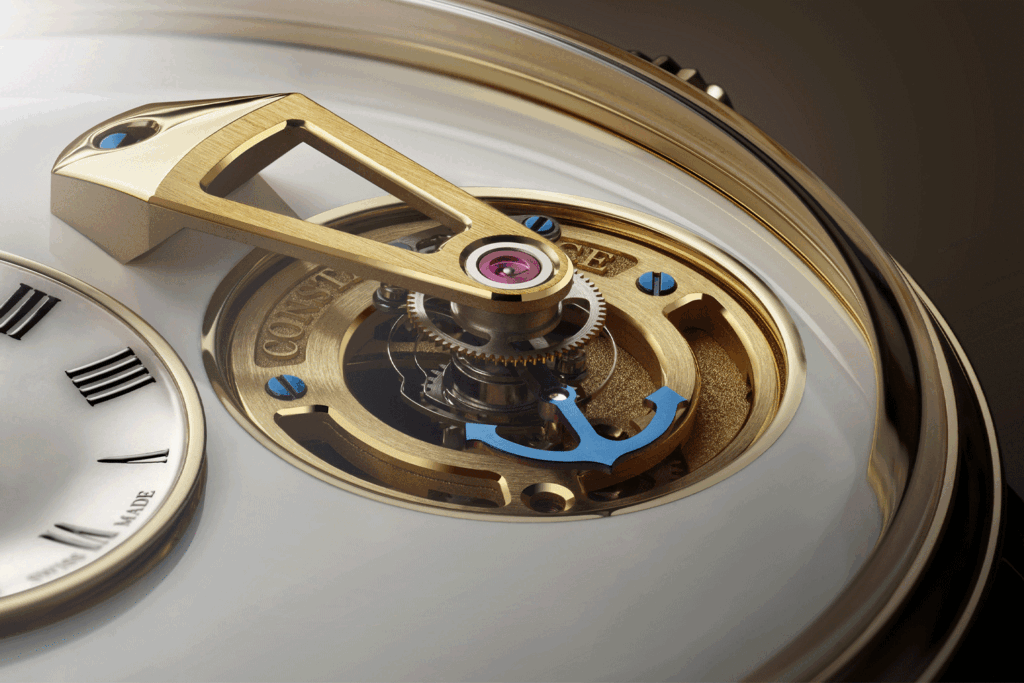
The hand-wound movement is equipped with two mainspring barrels, providing a power reserve of 100 hours. The constant-force mechanism is regulated by the tourbillon visible on the back.
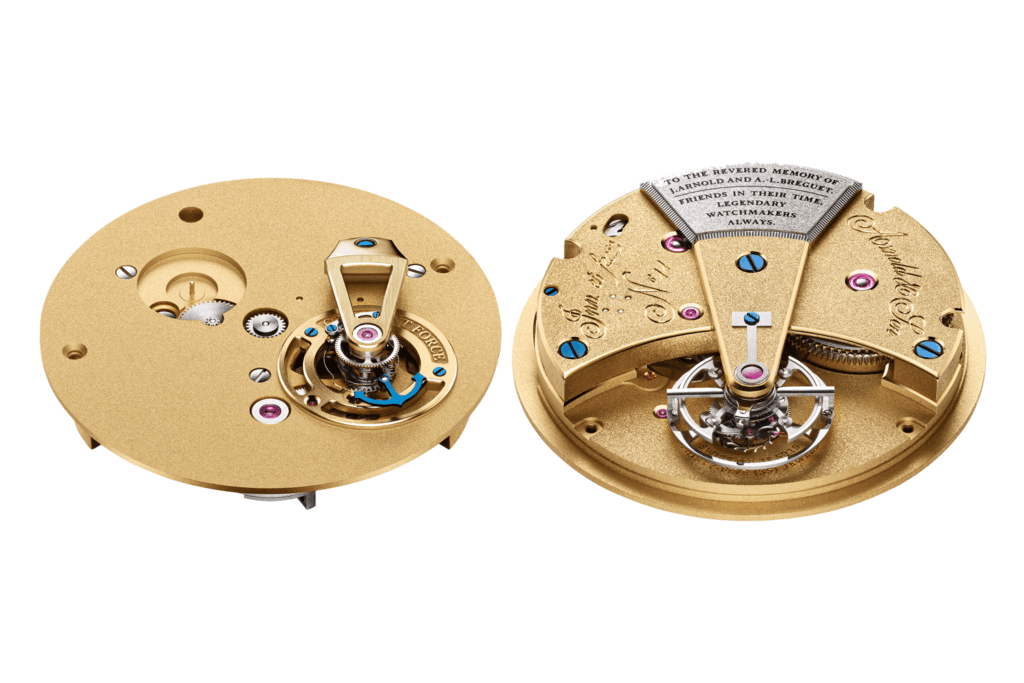
The architecture of this elaborately finished caliber is inspired by the first tourbillon-driven timekeeping instrument, built by Abraham-Louis Breguet in 1808 based on a chronometer movement designed by John Arnold.
Homage to Abraham-Louis Breguet, friendship and peace
The Constant Force Tourbillon 11, designed to mark the conclusion of the anniversary cycle celebrating John Arnold’s 260-year legacy, celebrates the watchmaker’s genius and his friendship with Abraham-Louis Breguet.
The two watchmakers shared a friendship that was unshakeable even by the horrors of war between their two nations or the French Revolution.
During this exchange, during which they each had their son trained by the other, they considered how best to correct the balance wheel's running errors.
The English watchmaker, for his part, focused on optimizing his detent escapement and developing balance wheels and special hairsprings to ensure the instruments reflected his proto-industrial approach to chronometer construction. This was all the more urgent as the Navy demanded that he produce the chronometers in ever-increasing quantities and at ever-lower prices.
The birth of the tourbillon
The Frenchman Abraham-Louis Breguet, on the other hand, continued to work on the development of the tourbillon during his exile in Switzerland from 1792 onwards.
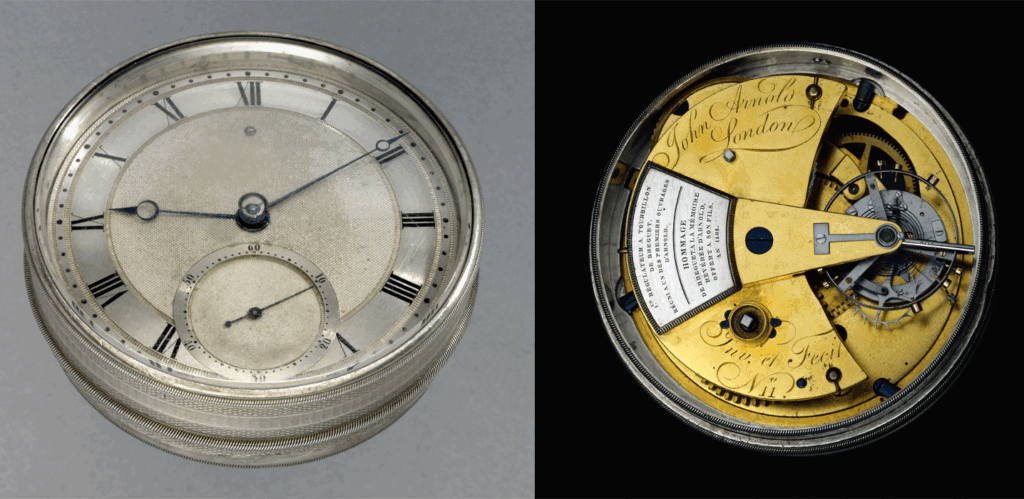
After returning to Paris in 1795, he mentioned in a letter the completion of a rotating cage. Two years after John Arnold's death, on June 26, 1801—or, according to the then-current revolutionary calendar, on the 7th of Messidor in the year 9—he patented this mechanism under the name "tourbillon."
To honor his friend's memory and commemorate their joint research, he built his first tourbillon regulator based on John Arnold's marine chronometer No. 11. He screwed a silver plaque onto the main bridge with the following inscription: "1st Breguet tourbillon regulator, commemorated by one of Arnold's premier works. In homage to Breguet in memory of Arnold, offered to his sons. In 1808."
The German translation reads: "First tourbillon regulator by Breguet, combined with one of John Arnold's first works. Breguet's homage to Arnold's memory, a gift to his son. In 1808."
This timepiece, now kept in the British Museum, was presented to John Roger Arnold, who succeeded his father as manager of the workshop and the London business.
A chronometer as a contemporary witness
As a tribute to all this work and in memory of the friendship that united these two brilliant watchmakers of the Age of Enlightenment, Arnold & Son decided to equip the “Constant Force Tourbillon 11” with an 18-carat yellow gold case and classic lines.
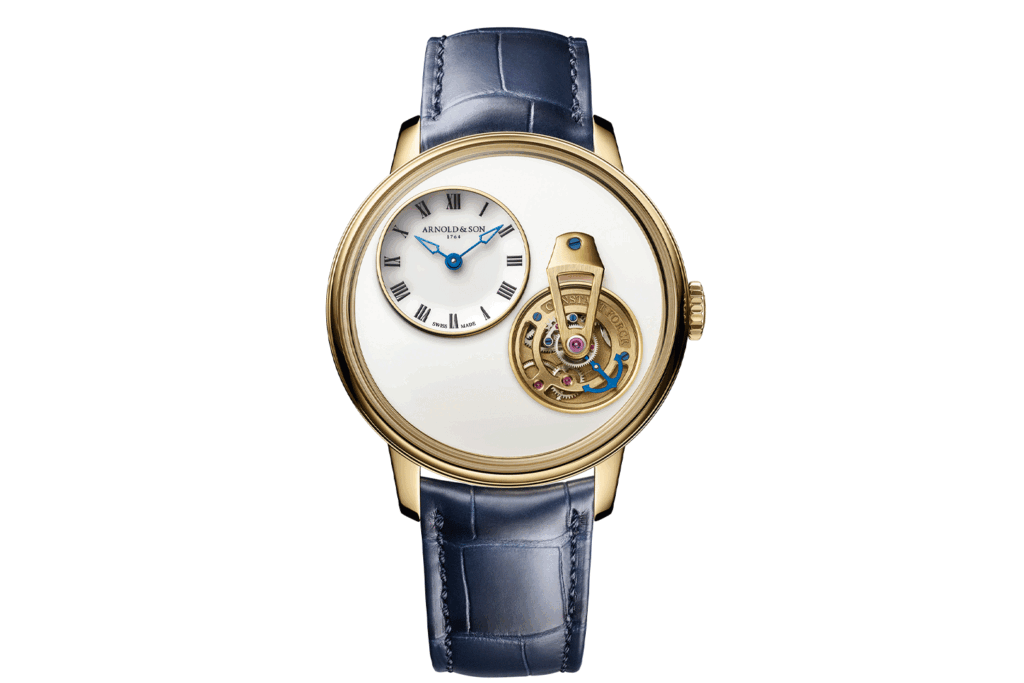
The precious metal with its yellow hue was deliberately chosen because it was commonly used for prestige pocket watches in John Arnold's time. It also harmonizes perfectly with the openwork bridge of the organ, which transmits the constant power and is also made of 18-carat yellow gold.
Past meets present
The caliber A&S5219 can be seen through the sapphire crystal caseback. To be as close as possible to the original movement from 1808, it was designed with manual winding.
But even though it's inspired by the past, it's no less contemporary. This is evident, among other things, in the two identical, series-connected barrels that build up a power reserve of 100 hours.
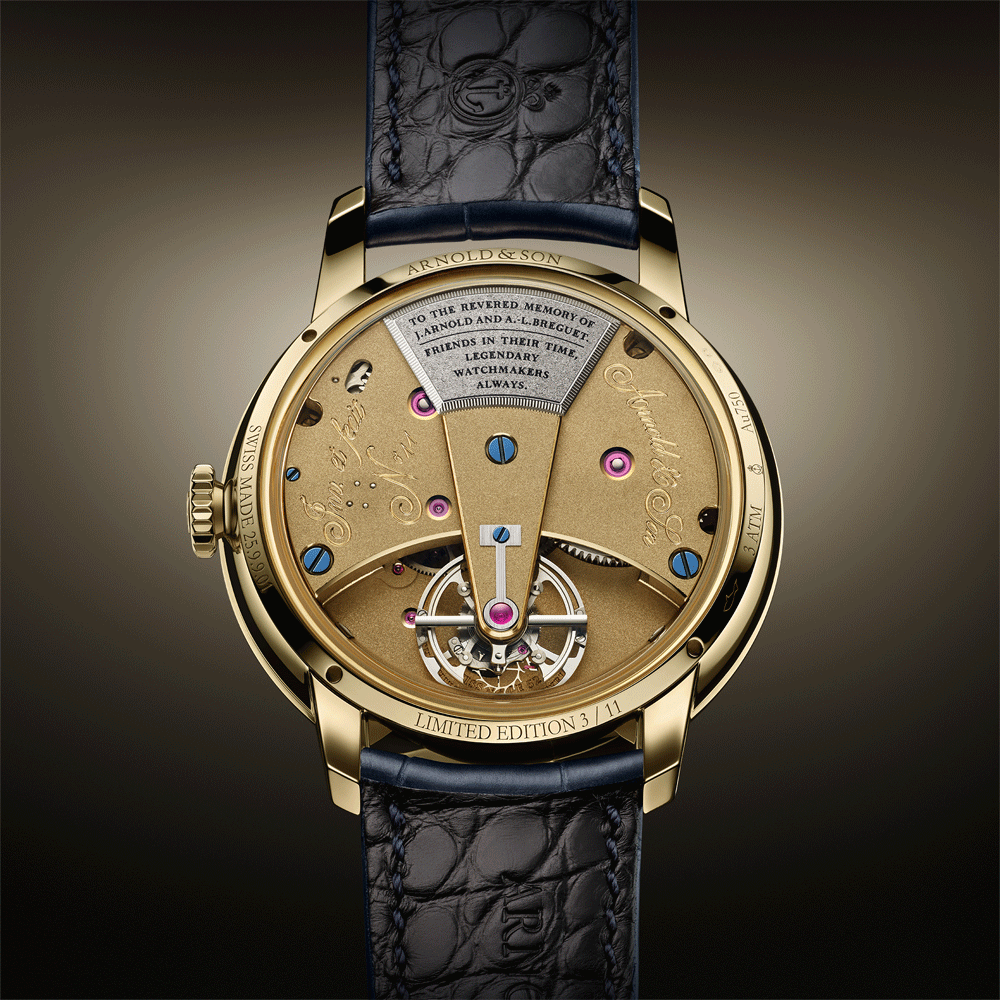
These drive the mechanism alternately, with the second becoming active as soon as the torque of the first falls below the optimal efficiency.
To ensure the isochronism of the regulating unit throughout its 100 operating hours, the movement's designers incorporated a patented constant-force mechanism between the primary gear train and the tourbillon. It is supported by an 18-carat yellow gold bridge.
A precious and fascinating dial
For the Constant Force Tourbillon 11, Arnold & Son chose a white grand feu enamel dial in the style of the bridge chronometer dials that John Arnold offered to British naval officers in his London shop. The dial was custom-crafted by a specialized watchmaker from an 18-carat yellow gold base.
(RRP €146,400)



 Deutsch
  English (UK)