



Birthstone of the month, part 3: Alexandrite
Birthstone of the month, part 3: Alexandrite
Alongside pearl and moonstone, alexandrite is one of June's fascinating birthstones. It is not as well-known as many other gemstone varieties - all the more reason to dedicate a separate article to it.
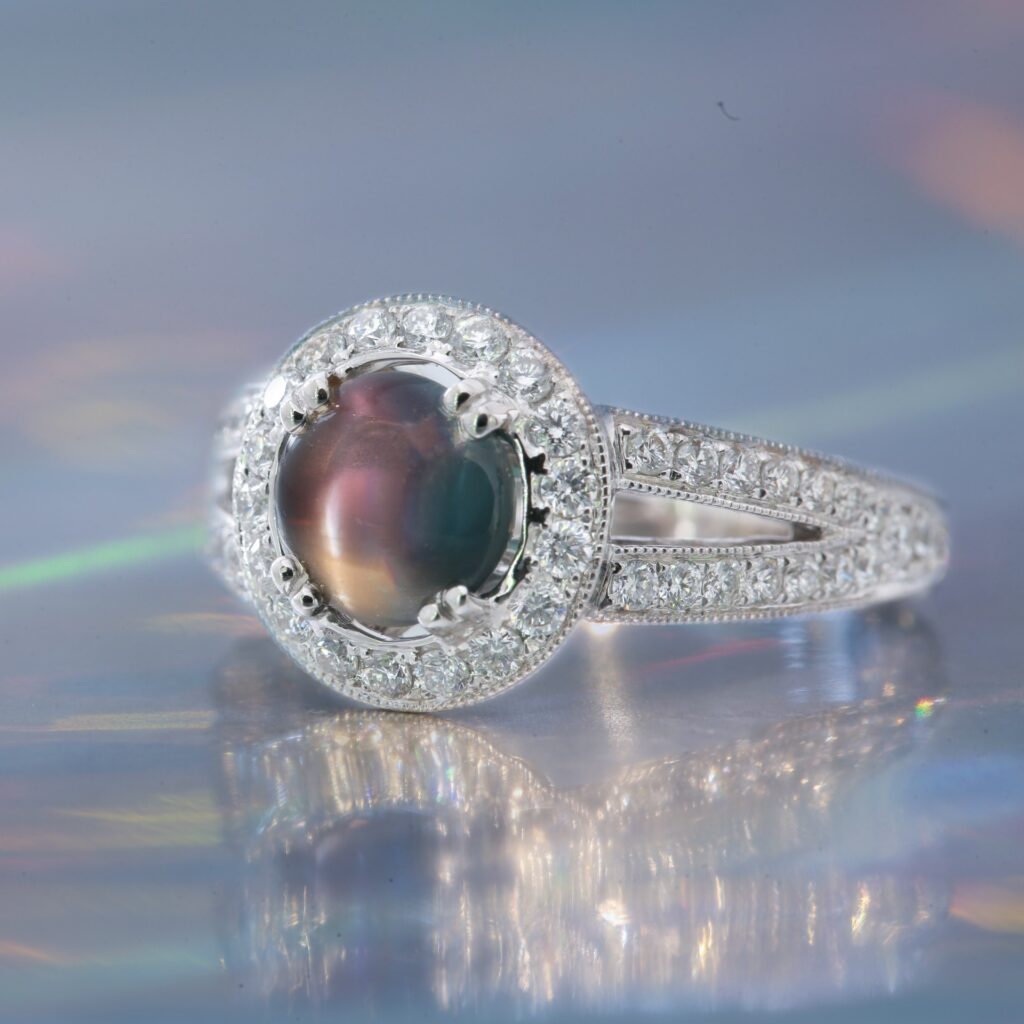
Left: White gold ring with cabochon-cut alexandrite. © Richard Hans Becker
All good things come in threes: After the two birthstones of the month of June, the pearl and the moonstone, alexandrite now follows in part 3.
Alexandrite, the colour changer
Alexandrite is a rare variety of the mineral chrysoberyl. Its special feature is that it changes colour under different light conditions. Its bluish-greenish colour under daylight or fluorescent light changes to a reddish to violet shade when the stone is viewed under artificial light. This effect is caused by the chromium content of the gemstone and is also known as the "alexandrite effect". The alexandrite in green is the most popular variant of this coloured gemstone.
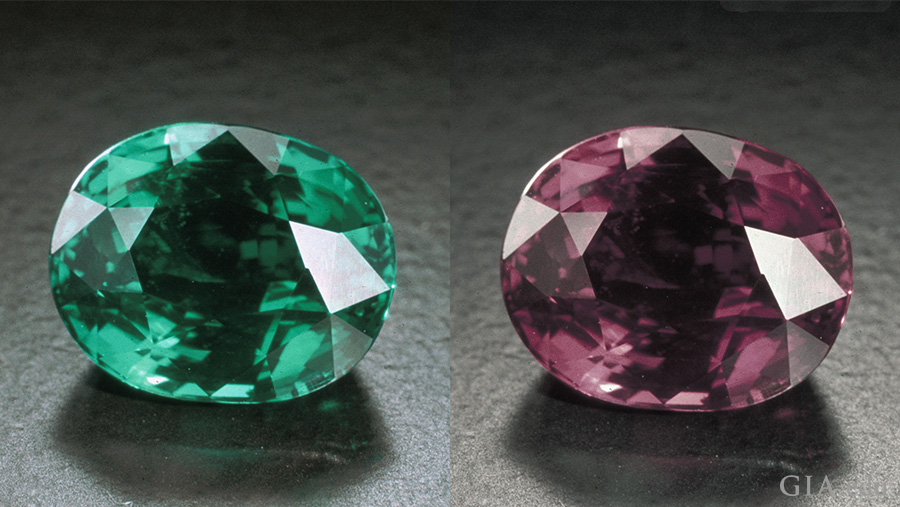
Larger deposits of this mineral were first found in Russia in 1830. In the Ural Mountains, alexandrite was found in mines that were actually used for mining emeralds. The gemstone was christened "alexandrite" to honour Alexander II, who was heir to the Russian tsarist throne at the time of its discovery.
Special feature: Cat's eye effect
Alexandrite can do even more: when filigree inclusions in this stone are arranged parallel to each other, another exciting optical phenomenon called the "cat's eye effect" is created. This shimmering light effect is highly sought-after and appears when the gemstone is cut into a cabochon shape - a narrow strip of light then appears that runs across the parallel inclusions in the mineral. The effect gets its name from its narrow shape, which is reminiscent of a cat's pupil.
Origin of alexandrite today
The alexandite deposits in the Russian Ural Mountains are in fact already exhausted today. Alexandrite is now mainly found in Brazil, Sri Lanka and eastern Africa. Although the new sites produce stones of good quality, they show a less distinct change in colour than the finds in 19th century Russia.
The fact that alexandrite is very rare, especially in the form of larger stones, makes the birthstone of the month June one of the more expensive coloured gemstones. Jewellery that showcases alexandrite with its special cat's eye effect is available from the coloured gemstone experts at Richard Hans Becker in Idar-Oberstein.
Franz Becker, who works in the family business, wears a ring with alexandrite himself, which he received for his confirmation and never takes off. Head of Marketing at Richard Hans Becker, Birgit Becker, reports on this:
Alexandrite is a truly magical gemstone - known for its spectacular colour change from emerald green in daylight to purple red in artificial light. This rarity makes it one of the most fascinating and valuable gemstones in the world. Its discovery in Tsarist Russia gives it a royal aura to this day. It becomes particularly individual when - as with Franz - a personal stone becomes part of a piece of jewellery with a history.
Alexandrite is also a good choice for jewellery because it is particularly hard - it achieves an 8.5 on the Mohs scale, making it one of the hardest minerals in the world of jewellery - perfect for beloved everyday jewellery that you always want to wear on your body.
Sources: Richard Hans Becker, Gemological Institute of America (GIA)

 Deutsch
  English (UK)