




Ulysse Nardin lets the movement of the new "Blast" fly
There's a lot going on on the dial of this new "Blast" from Ulysse Nardin with its 45-millimeter white gold case. But there's less going on underneath. Nevertheless, the watch appears clear and uncluttered.
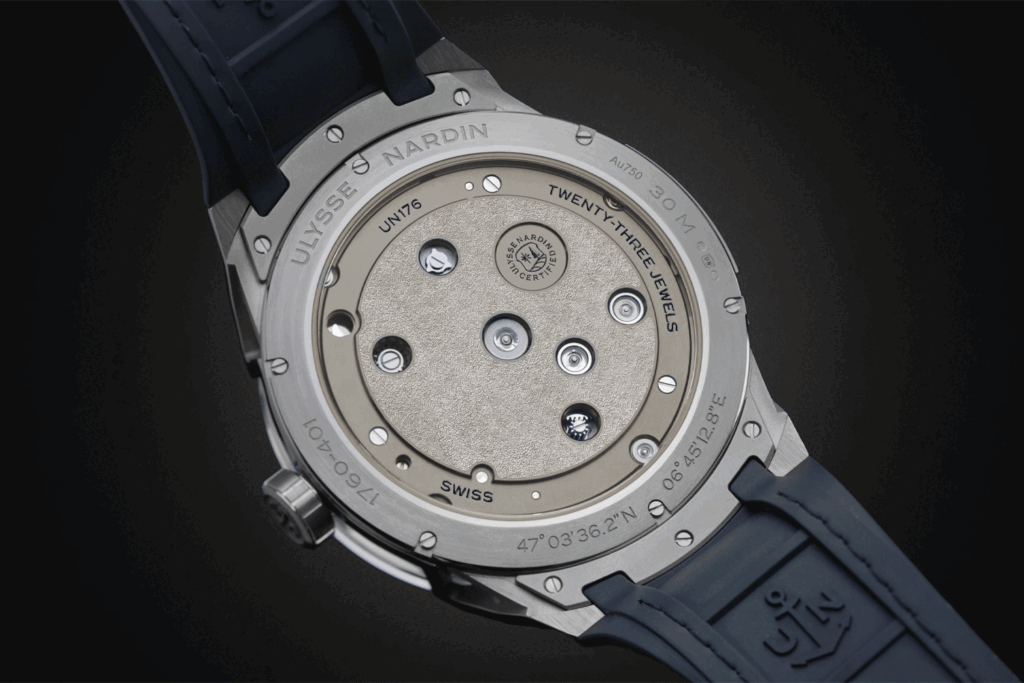
I disagree with the brand's own description, which describes the "Blast [Free Wheel Maillechort]," limited to 50 pieces, as "the most complex and confusing timepiece in history."
The reason for these seemingly contradictory impressions, however, is the same and of a technical nature. It is the innovative, cantilevered mechanism on the nickel silver dial. This material, also known as German Silver, is often used for bridges and plates in high-quality mechanical watch movements.

Ulysse Nardin uses it on the dial, which is quite logical. All the movement elements are positioned on the front of the watch, protected by an Ultra-Glass box milled from a single block of sapphire crystal.
The technology in detail
And this ever-unobstructed view reveals the in-house caliber UN-176, which appears deconstructed and seemingly ignores the laws of physics and watchmaking. Ulysse Nardin's technical department invested two years of research into the research and development of this movement.
The Tourbillon
The "Blast [Free Wheel Maillechort]" presents its 45-part flying tourbillon at 6 o'clock. It is equipped with Ulysse Nardin's Anchor Constant escapement, which challenges the principle of the traditional lever escapement. It consists of a circular frame with a centrally mounted lever suspended in space by two leaf springs with a diameter less than a quarter the thickness of a human hair.

These springs, mounted perpendicular to each other, are subjected to a bending force that bends and holds them in place. This guarantees a perfectly uniform impulse to the balance, regardless of the watch's power reserve. Thanks to silicon technology, which is also used in the balance spring and escape wheel, the ruby pallets of the conventional pallet lever are no longer necessary, as is the pallet pin.
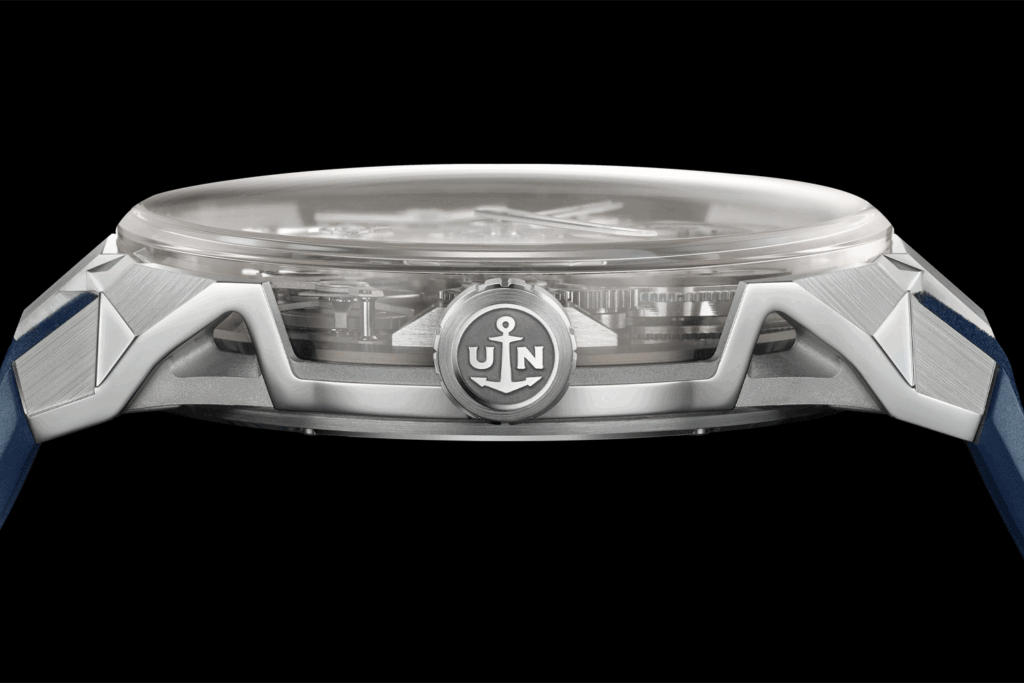
This exceptional tourbillon was awarded the Tourbillon Prize at the Grand Prix d'Horlogerie de Genève in 2015.
7-day power reserve
At 12 o'clock is a cantilevered double barrel, floating above the watch's surface without any visible attachment. The upper barrel is visible, while the lower one remains concealed. The generous seven-day power reserve is indicated by the unusual power reserve indicator at 4 o'clock.
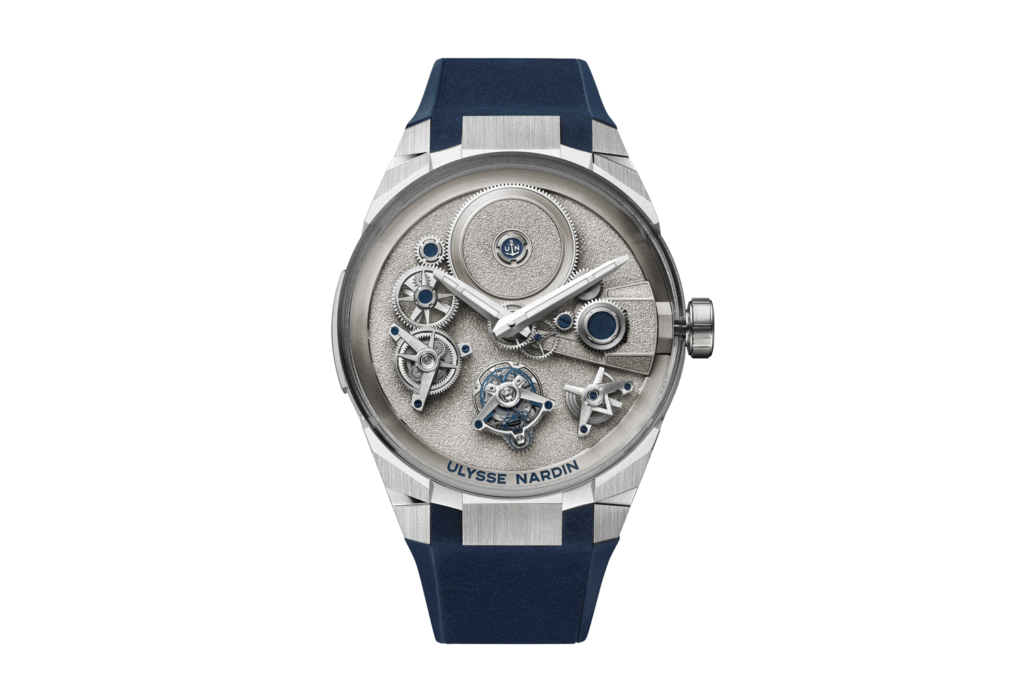
While the hand remains static, the indicator disc below it moves: three bands opposite the indicator mean that the watch is fully wound, while a single band indicates that the power reserve is almost used up.
Further overhung mechanisms are located on either side of the barrels: on the left side there is an intermediate wheel, a power reserve differential and a reduction gear, while on the right side there is the winding mechanism, which connects the barrel to the winding stem of the crown and allows the choice between winding or time setting.
The price is available upon request.



 Deutsch
  English (UK)