


Junghans: Exhibition in the terrace building on the history of wristwatches from Schramberg
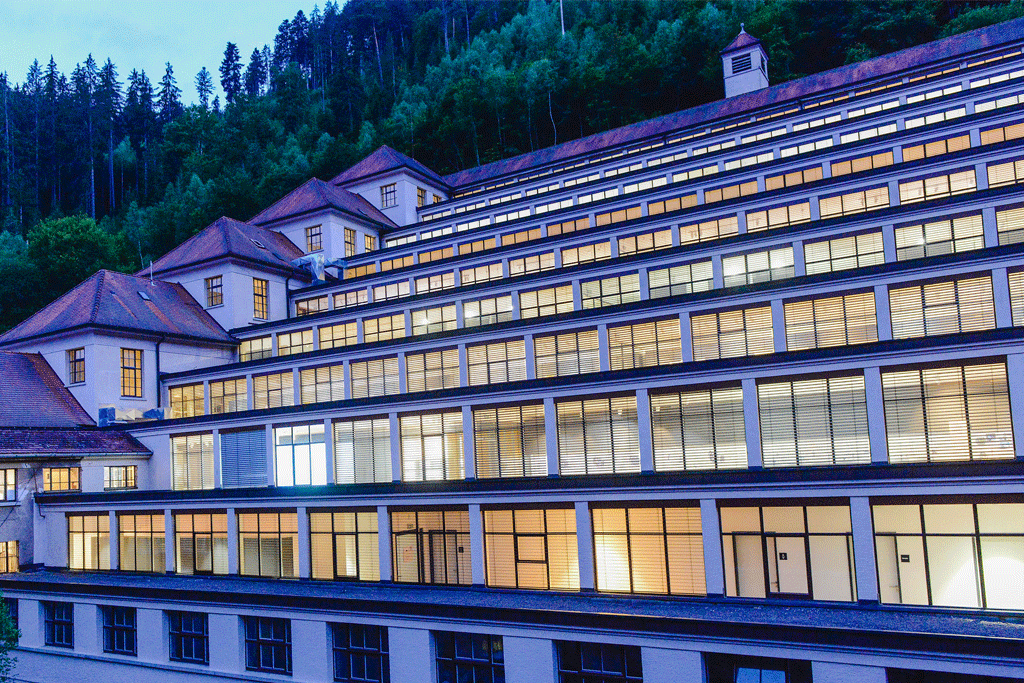
Anyone who has ever had the great pleasure of visiting the museum in the Junghans Terrace Building will probably have taken away two particularly impressive memories: firstly, the unique construction of the architectural jewel, which was nominated for the "European Museum of the Year Award" in 2020 and in which Junghans wristwatches used to be built, and secondly, that Junghans watches themselves have so far been a little neglected.
While the building, which breathes history from every pore, has lost nothing of its impressiveness, watches from the Schramberg-based manufacturer have finally been given due consideration.
Junghans and a century of watchmaking artistry on the wrist
At the end of July, Hannes Steim (Managing Partner of Uhrenfabrik Junghans) opened the exhibition "Junghans wristwatches - milestones in watch history" at the Terrassenbau Museum.
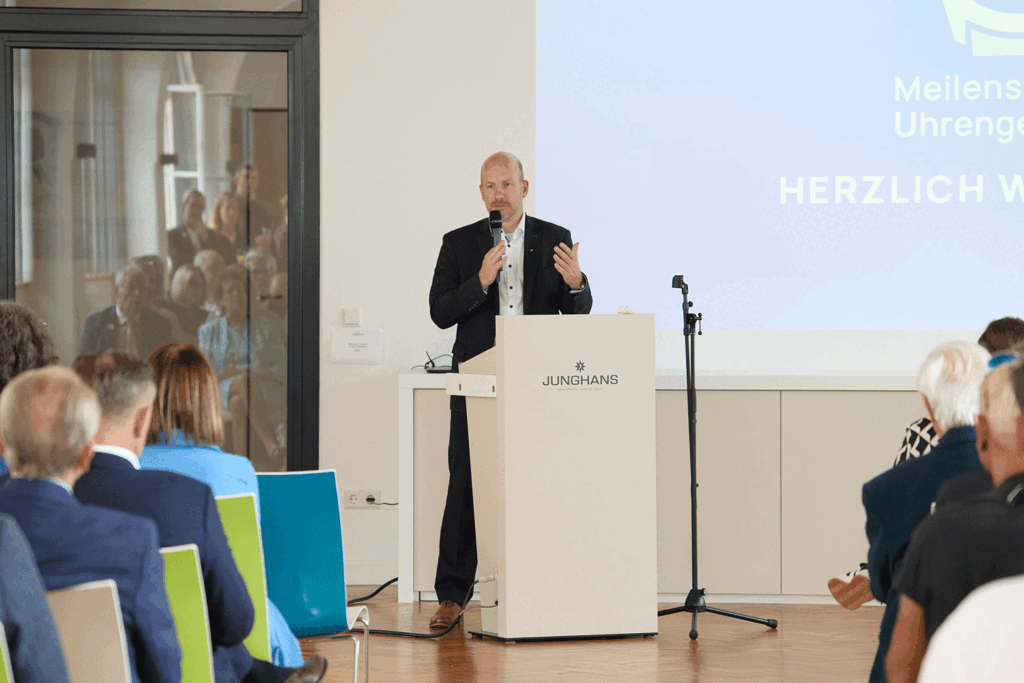
While the permanent exhibition is dominated by large clocks, the new show now puts the wristwatch centre stage.
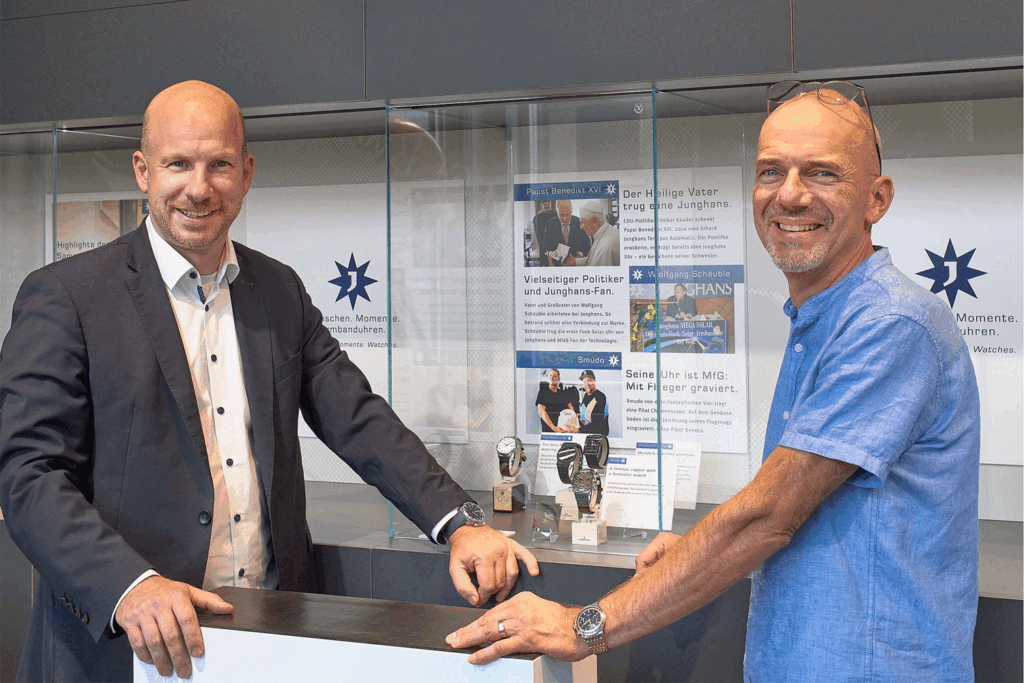
In the presence of around 100 guests, he emphasised the important role of Junghans within the industry: "Our experience of building millions of watches has constantly generated innovation over the decades and has played a key role in shaping the cultural history of time."

In 1951, Junghans was Germany's largest manufacturer of chronometers with a global market share of 15 per cent. This was followed in 1957 by the calibre J83, the first automatic chronometer calibre developed in-house. Incidentally, all chronometer movements were equipped with the shock protection developed by Junghans. Between 1949 and 1956, the company registered a total of 852 patents - impressive proof of the innovative strength and inventive spirit of the Schramberg watchmakers.

The exhibition put together by Junghans archivist Norbert Grünberger offers a journey through a century of watchmaking artistry on the wrist. The focus is on the development of the wristwatch at Junghans - from early mechanical chronometers to modern radio-controlled and solar models.
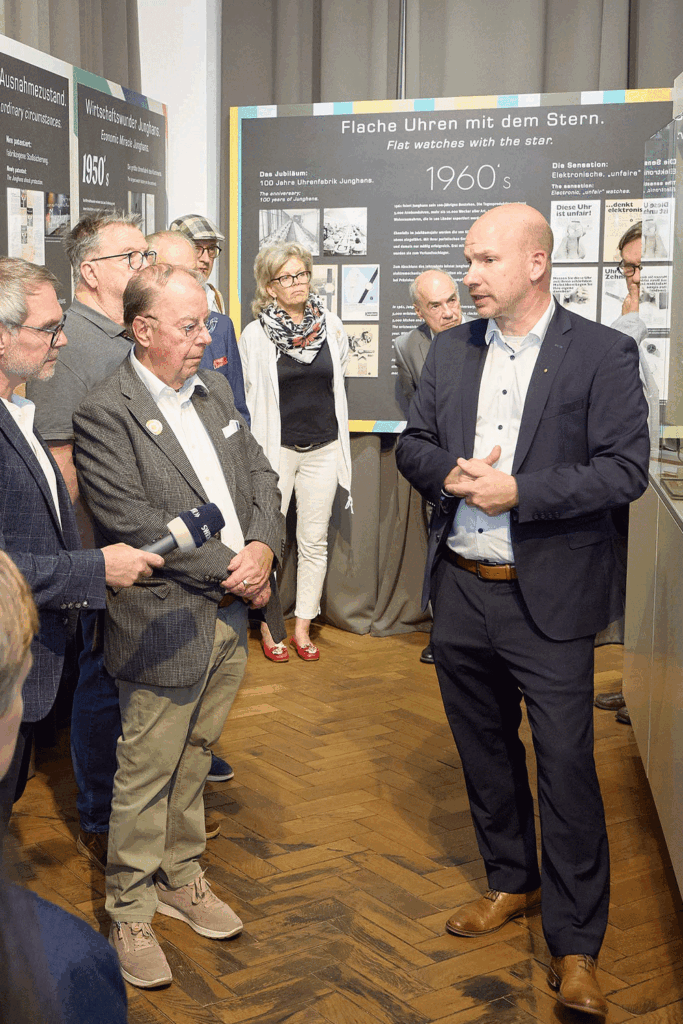
Hannes Steim welcomed the Junghans descendants Renate and Niko Junghans, the Mayor of Schramberg Dorothee Eisenlohr, jewellers from all over Germany, current and former Junghans employees and other friends of the company and the Junghans brand to the opening of the exhibition. Addressing current and future guests, the host said:
"With the exhibition 'Junghans Wristwatches - Milestones in Watchmaking History', we invite you to discover the fascinating development of Junghans wristwatches."
Hannes Steim
Time travel through the history of the Junghans wristwatch
From the early mechanical chronometer to the award-winning radio-controlled watch, the exhibition shows how Junghans has shaped the way time is worn on the wrist - in terms of both technology and design. Models from the decades from the 1920s to the 2010s are presented
There are around 370 exhibits from different eras to discover. These include technical innovations such as the NOBRK wristwatch from 1927, mechanical switching wheel chronographs with the J88 movement from 1949, the first electronic watch from 1967, the first solar-powered wristwatch from 1987 and the first radio-controlled wristwatch from 1990.
"We invented many of the things that are now standard in the industry."
Hannes Steim
Junghans watches have always been characterised by special technology and design. This is why prototypes, pre-series models, historical Meister watches and the Bauhaus-influenced design classics of the max bill line are also on display.
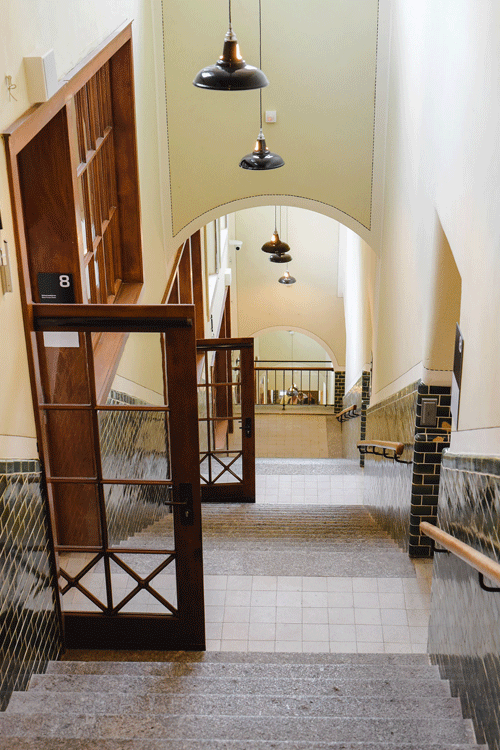
In the exhibition room, visitors also learn a lot about Junghans' expertise in sports timekeeping. In the past, the Schramberg-based company has chronometrised all the timekeeping at major international sporting events.
The exhibition will continue in other rooms of the terrace building, where special topics will be addressed. These include drive technologies, housing materials and design.
Exciting stories about prominent wearers, contributions from passionate Junghans collectors and some watches from the current owners Dr Hans-Jochem Steim and Hannes Steim give the exhibition a personal touch.
The museum is open Tuesdays to Sundays from 10 a.m. to 4 p.m., admission costs €8 (concessions €4).

 Deutsch
  English (UK)