

Transparency in the Watch and Jewelry Industry
In the supply chains for gold, diamonds, and gemstones, transparency is not a single piece of evidence, but rather the result of many interconnected steps. Origin, processing, trade, and certification must be documented in a traceable manner—and yet every supply chain is only as reliable as the information on which it is based.
That is precisely why standards, initiatives, and technological systems have been established that address various stages of the process: from mining to refining and trading to digital traceability. The key question, therefore, is: Who ensures transparency—and where are the limits?
So who is responsible for ensuring transparency?
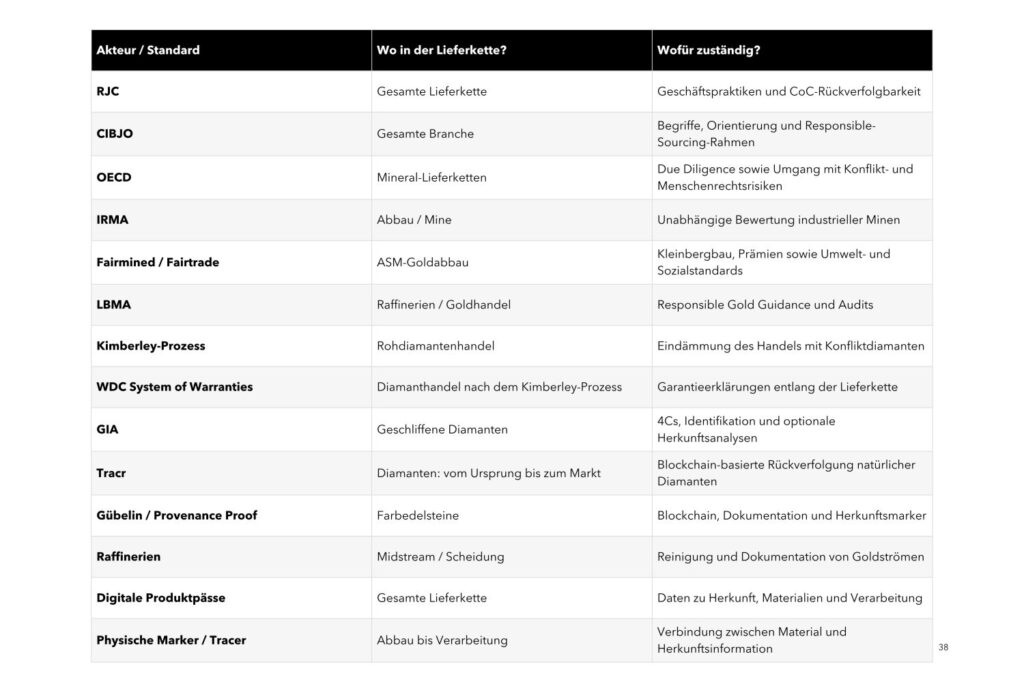
Cross-Cutting Standards
Organizations such as the Responsible Jewellery Council (RJC), CIBJO, and the OECD, with its Due Diligence Guidance, define fundamental frameworks for responsible business practices.
The RJC is aimed directly at companies in the jewelry and watch industry, and its Code of Practices covers topics such as human rights, environmental management, and business ethics. The complementary Chain of Custody certification is intended to make material flows more traceable.
With its Responsible Sourcing Blue Book, CIBJO provides guidance on terminology and processes. The OECD Guidelines serve as an internationally recognized foundation for risk-based due diligence obligations and shape many industry-specific standards.
Gold: Standards for Mining, Refining, and Trading
IRMA evaluates industrial mines based on social, environmental, and governance criteria.
Fairmined and Fairtrade focus on small-scale mining and promote better working and environmental conditions as well as more stable incomes.
The LBMA plays a central role in the international gold trade. Its Responsible Gold Guidance is aimed specifically at refiners and includes requirements for provenance verification, risk management, and the prevention of money laundering.
Refineries play a crucial role in this process, as they are where materials from various sources are brought together.
Diamonds: Conflict Monitoring and Traceability
The Kimberley Process regulates the international trade in rough diamonds and aims to eliminate conflict diamonds, but it is not a comprehensive sustainability standard.
The System of Warranties extends this approach throughout the supply chain. In addition, certificates of origin and digital traceability systems are becoming increasingly important.
Technological Approaches
Digital systems such as blockchain or product passports make it possible to store information and make it accessible throughout the supply chain.
Physical markers, such as DNA-based tracers, can help strengthen the link between the material and the dataset. Nevertheless, the reliability of the underlying data remains crucial.
Editor’s note: The information is taken from the official sources of the respective organizations.