Much Ado About the Tourbillon – A Complication We Don’t Really Need?
On the one hand, the tourbillon is considered one of the greatest technical challenges in fine watchmaking; on the other hand, it is regarded as rather unnecessary—at least in wristwatches.
This is because the tourbillon—French for “whirlwind”—was originally developed to compensate for the gravitational error in the escapement of pocket watches, which were often worn in the same position for long periods of time.
However, in the case of a wristwatch—which constantly changes its position when worn on the wrist—this original purpose of the tourbillon has largely been lost. Nevertheless, technical pragmatism does not prevent enthusiasts and manufacturers of complicated watches from continuing to be fascinated by the tourbillon, refining it, or reimagining it.
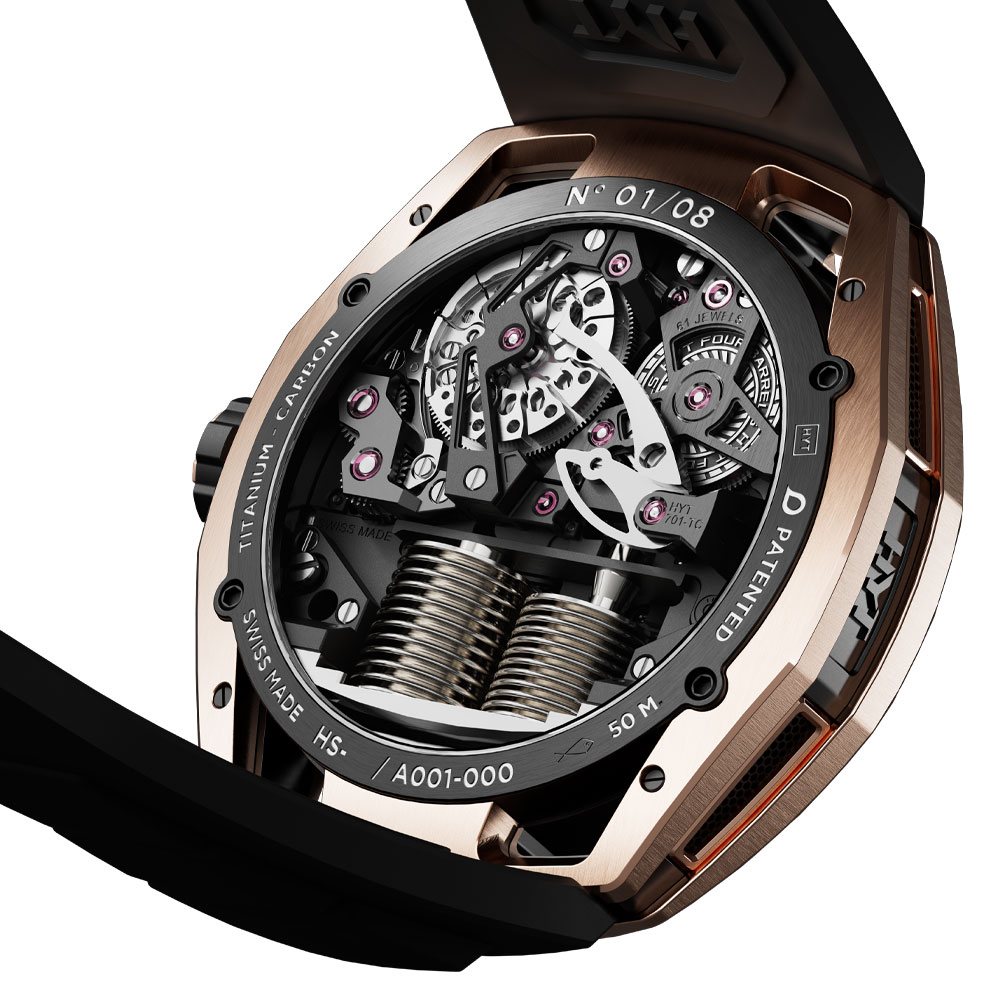
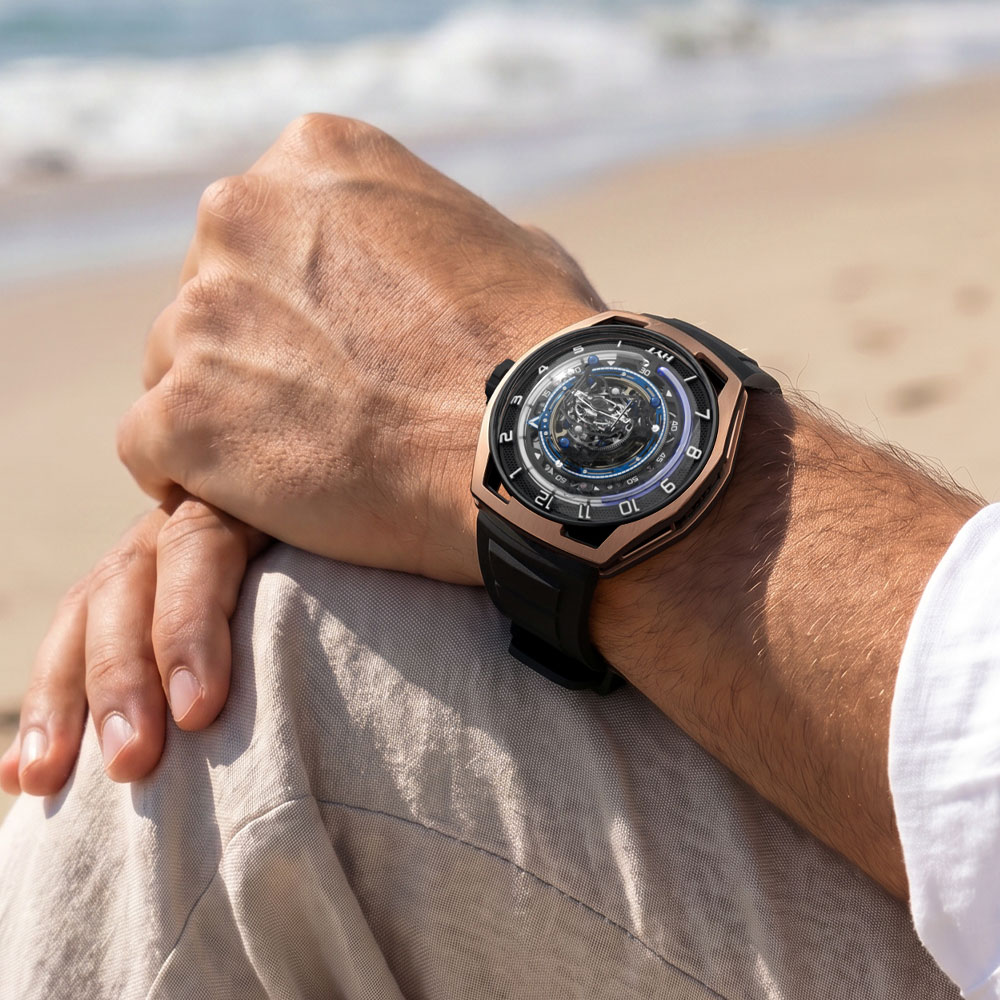
Hyt: Conical Tourbillon Midnight Blue
The Conical Tourbillon Midnight Blue combines a case made of warm 5N rose gold with black DLC-coated titanium, creating an elegant setting for HYT’s signature blue fluid: the tinted fluid flowing through the borosilicate glass capillary, the three spheres filled with blue fluid orbiting the conical tourbillon, and the blue central minute hand gliding across the dial. The spheres rotate at different speeds—four, five, or six times per minute—each in a clockwise direction. This constantly creates new configurations that never repeat even once within an hour. hytwatches.com
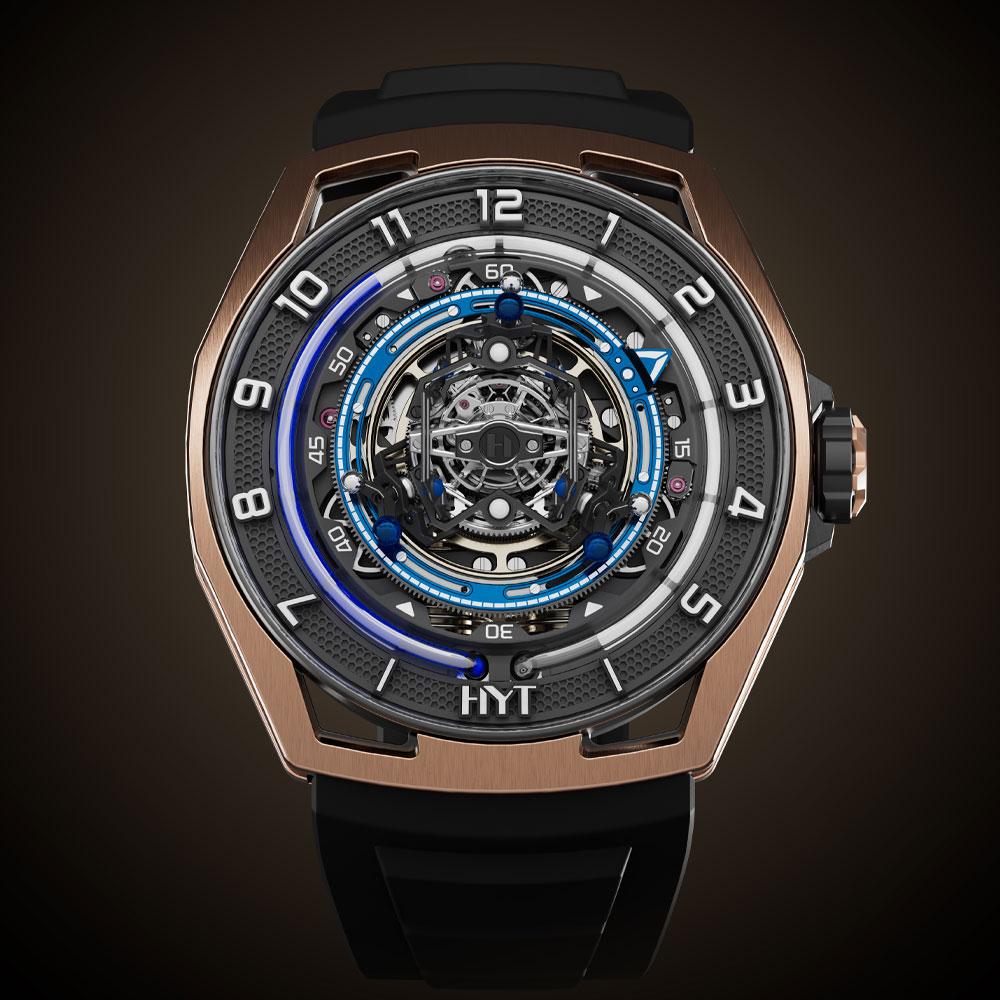
- Model: Conical Tourbillon Midnight Blue
- Movement: 701-TC, manual winding with winding tool, tourbillon, 40-hour power reserve
- Functions: retrograde fluidic hour display, central minute hand
- Case: Rose gold, black DLC-coated titanium, 48 x 52.3 x 25.15 mm, water-resistant to 3 bar
- Dial: Black with capillary lines
- Strap: Rubber
- Special feature: mechanical-fluidic technology that combines a mechanical movement with a retrograde time display, in which a fluorescent liquid circulates through a system of capillary tubes; limited to 11 pieces
- MSRP: 355,000 CHF (excl. VAT)
The Tourbillon—Defying Gravity
The French-Swiss watchmaker Abraham-Louis Breguet was granted a patent for the tourbillon on the 7th of Messidor in Year IX, which corresponds to June 26, 1801. Although the basic principle has remained the same, various designs have been developed over the past 225 years.
Gravity can cause position-dependent deviations in the rate, especially when the movement remains in the same position for most of the time. This is the case with a pocket watch that is taken out only a few times a day. To counteract this disturbance, Breguet developed the tourbillon.
The principle: The balance wheel, balance spring, and escapement are mounted in a rotating cage that spins around its own axis. The continuous rotation averages out positional errors and improves timekeeping accuracy.
With the rise of the wristwatch, the tourbillon largely lost its original practical purpose. However, watchmakers still like to showcase their craftsmanship through the tourbillon.
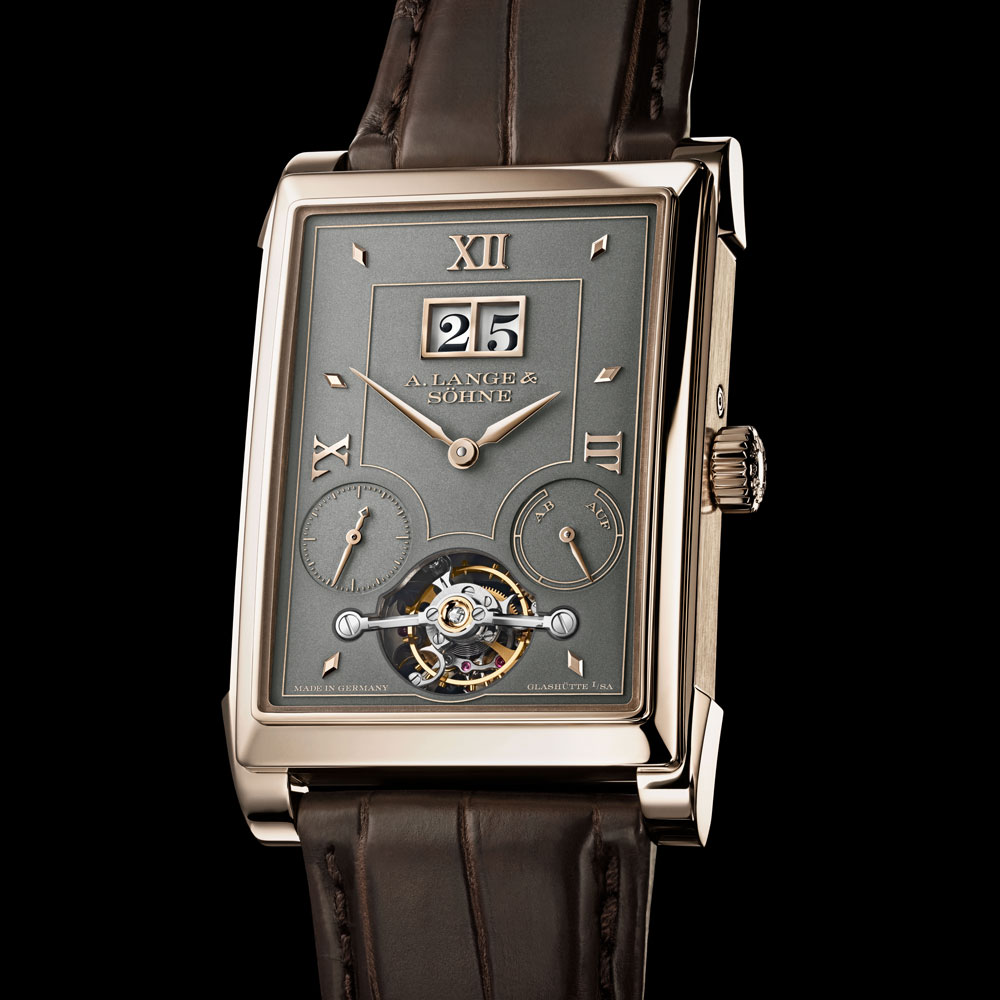
A. Lange & Söhne: Cabaret Tourbillon Honeygold
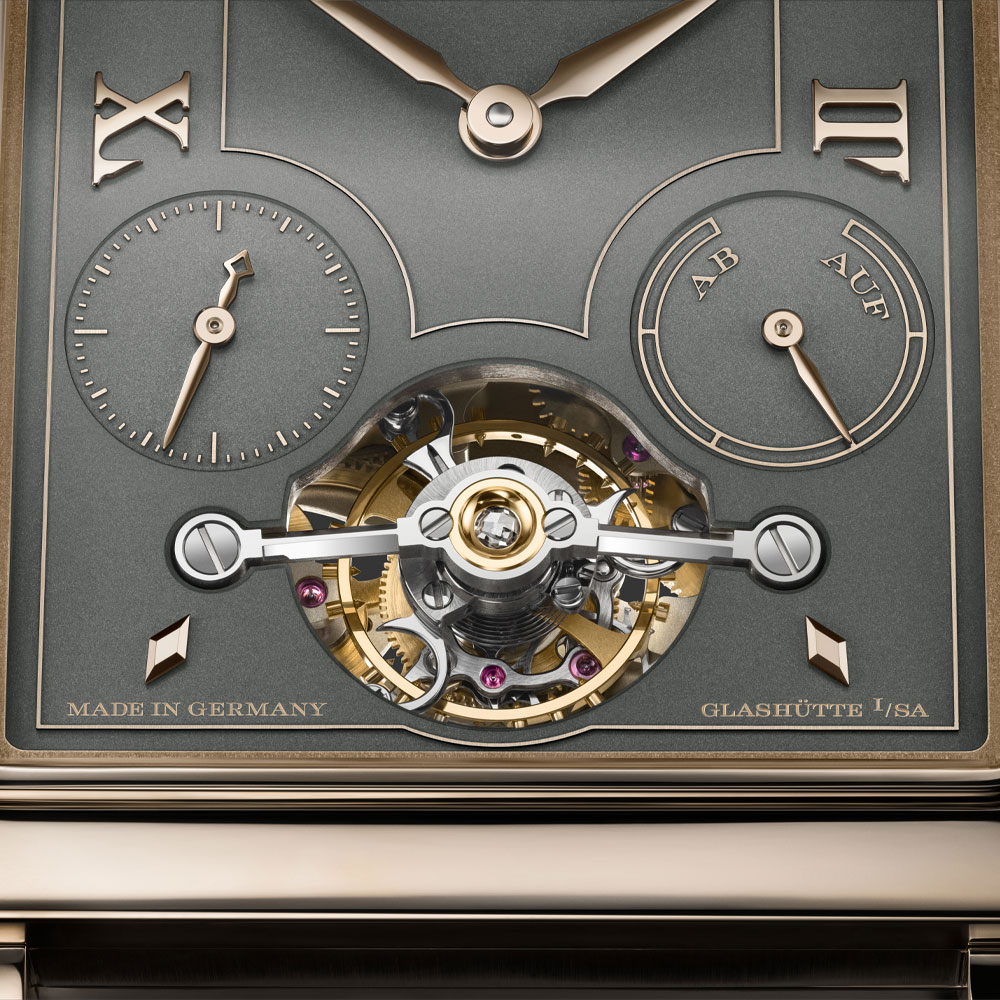
In 2008, A. Lange & Söhne introduced the “Cabaret Tourbillon,” the world’s first watch featuring a tourbillon stop-seconds mechanism. The mechanism, which was patented at the time, allows the tourbillon to be stopped at any time—that is, in any oscillation state of the balance wheel and in any position of the cage—via a stop spring. Only this makes it possible to set the watch’s time display to the exact second. While this function is a given in ordinary mechanical watches, its implementation in a tourbillon remained an unsolved problem for a long time. Since then, several of the manufactory’s watch models have been equipped with this useful additional function. The Cabaret Tourbillon Honeygold, limited to 50 pieces and featuring a honey-gold case, continues this tradition. alange-soehne.com
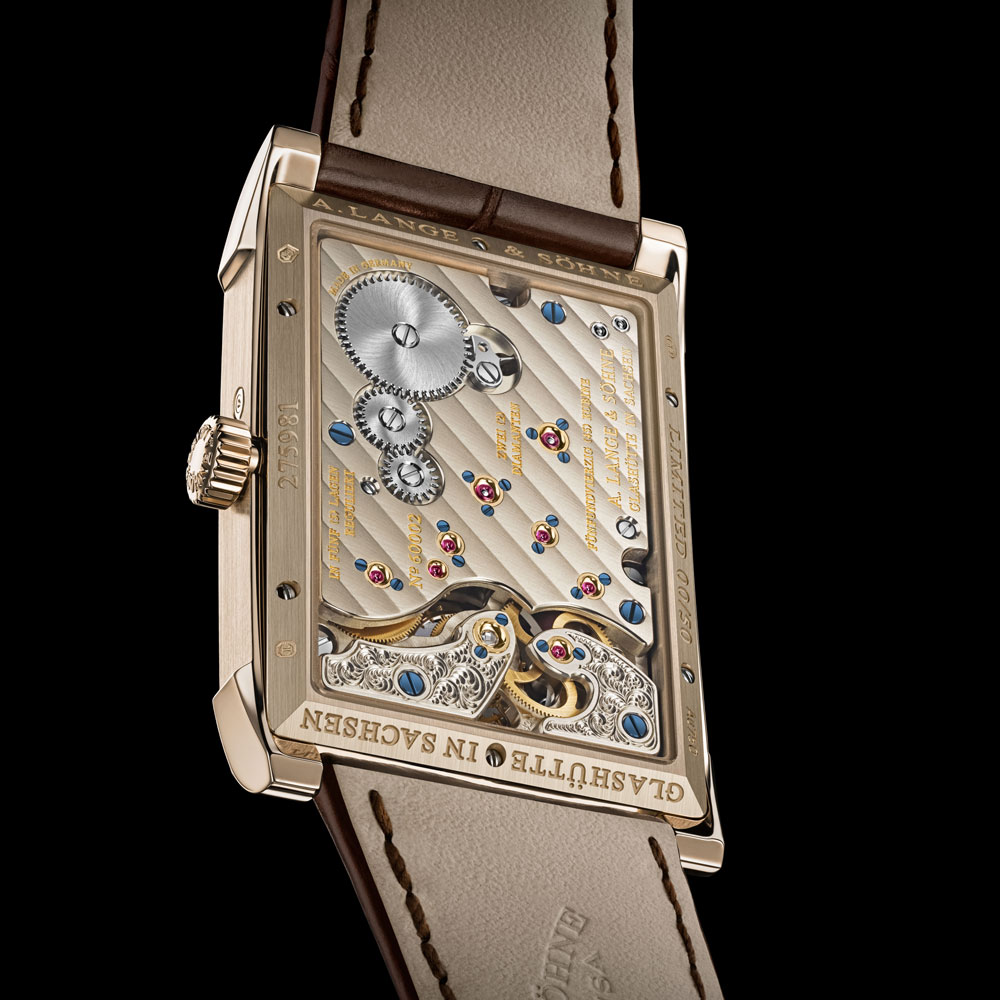
- Model: Cabaret Tourbillon Honeygold
- Movement: L042.1, manual-winding, tourbillon, 120-hour power reserve
- Functions: Hours, minutes, small seconds, large date, power reserve indicator
- Case: 750 Honeygold (Lange alloy), 29.5 x 39.2 x 10.3 mm, water-resistant to 3 bar
- Dial: black-rhodium-plated honey gold
- Strap: Alligator leather
- Special feature: limited to 50 copies
- MSRP: Upon request
Although the tourbillon is often counted among the grand complications, it differs from classic complications such as the minute repeater or the perpetual calendar: It does not add an additional display or function to the watch, but rather serves to compensate for positional errors and thus improve timekeeping accuracy. However, this in no way detracts from its fascinating appeal, which is characterized by mechanical aesthetics.
Various Types of Construction
Classic tourbillon: The cage is mounted at the top and bottom and typically rotates once per minute.
Flying Tourbillon: It was developed in 1920 by the German watchmaker Alfred Helwig. The cage is mounted on a single side, providing an unobstructed view of the movement.
Two-axis tourbillon: Two cages rotate simultaneously around different axes. The inner cage houses the balance wheel, balance spring, escape wheel, and anchor. This cage rotates around the first axis. It, in turn, is mounted within a second cage that rotates around a second axis. The continuous change in the orientation of the escapement in space is intended to average out the effects of gravity from as many directions as possible. Jaeger-LeCoultre’s “Gyrotourbillon” is one such dual-axis tourbillon.
Three-axis tourbillon: It exhibits a three-dimensional motion pattern. To put it simply: The balance wheel oscillates as it does in any mechanical watch. The inner cage rotates continuously. At the same time, this cage rotates with a second cage around a different axis. Both also move together with a third cage around yet another axis. As a result, the escapement performs an extremely complex three-dimensional movement. Franck Muller’s “Revolution 3,” released in 2004, was the first mass-produced wristwatch to feature a three-axis tourbillon.
Franck Muller: Vanguard Aero Revolution 3 Skeleton
Franck Muller presents the new “Vanguard Aero Revolution 3 Skeleton,” which offers an unobstructed view of the three-axis tourbillon. The case design and movement are closely integrated to showcase the in-house MVT FM 2031-VS caliber: The movement was mounted directly onto the case back—a first for Franck Muller. franckmuller.com
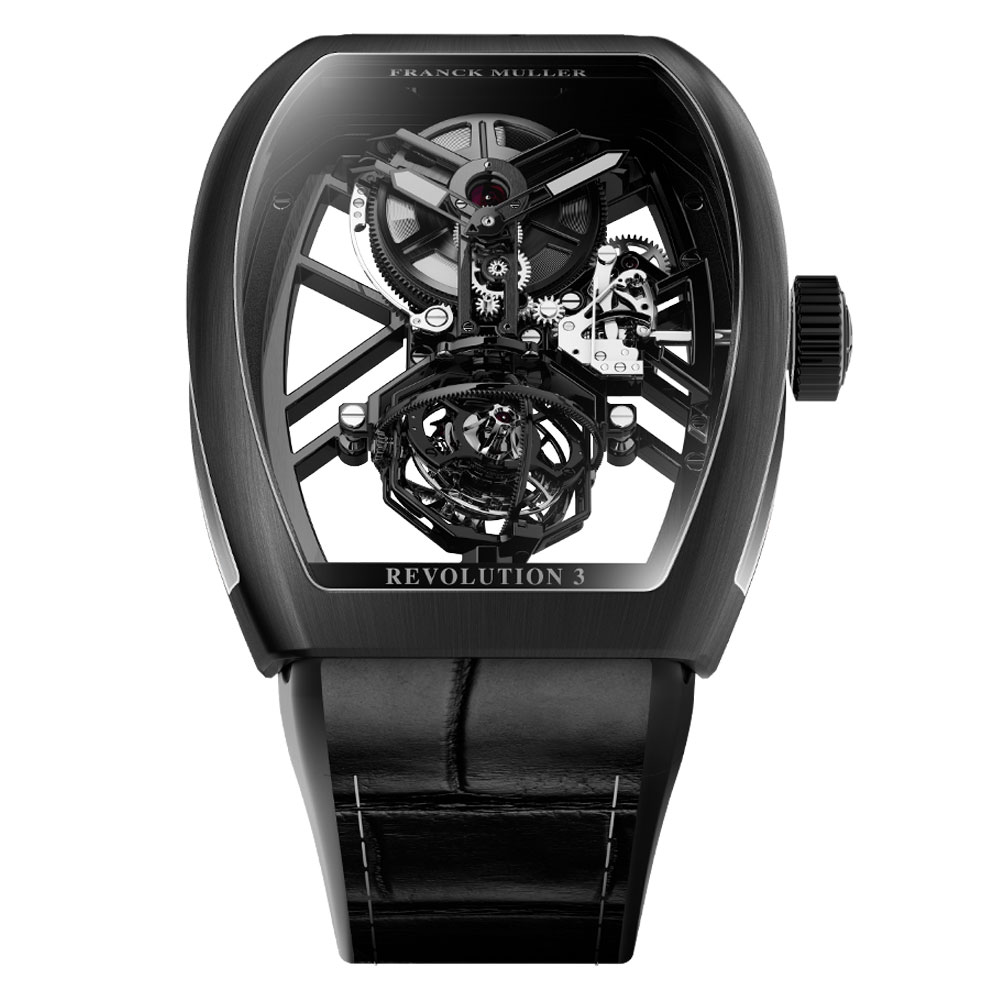
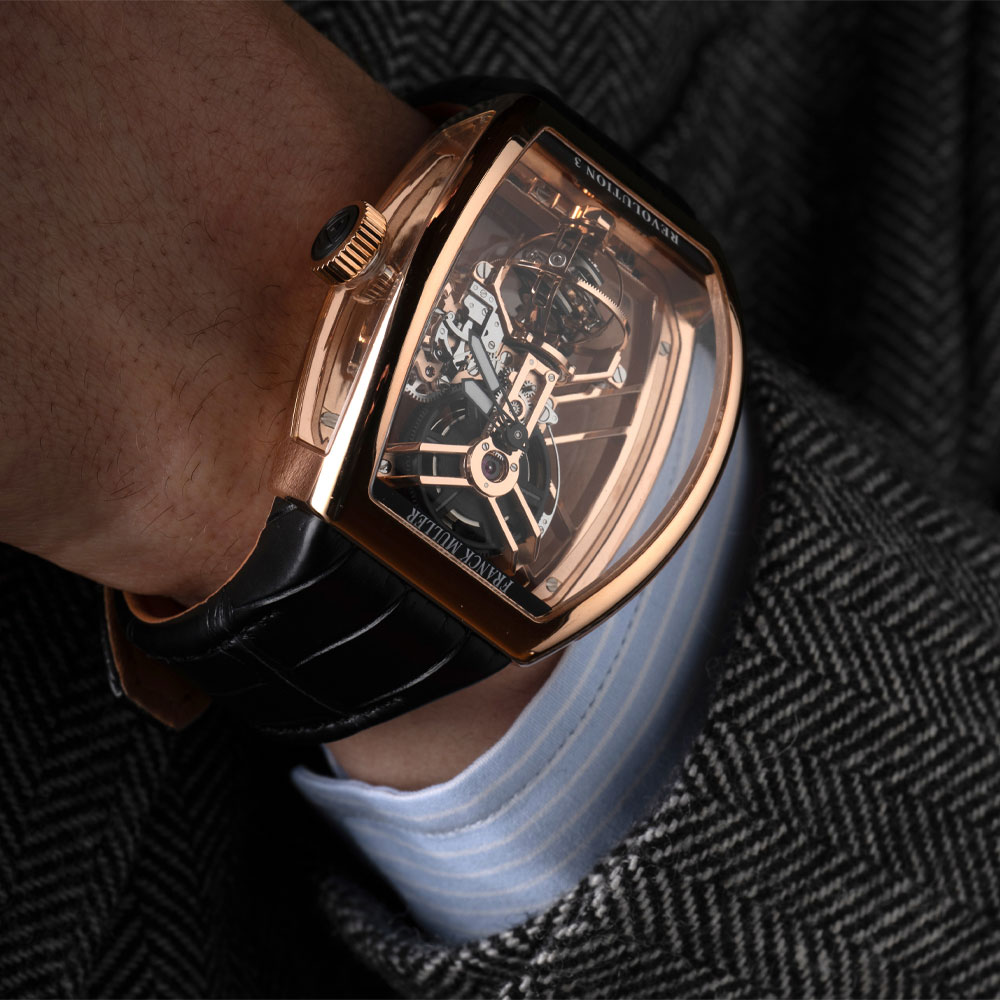
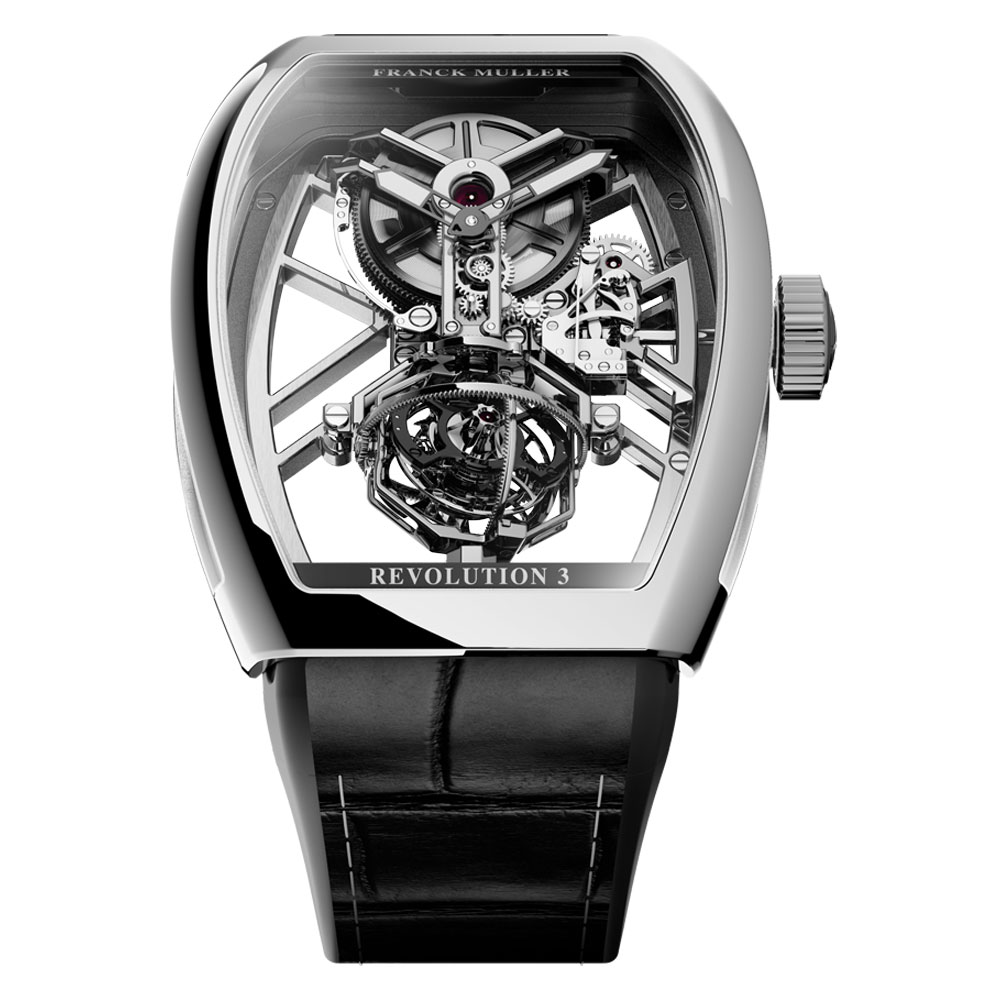
- Model: Vanguard Aero Revolution 3 Skeleton
- Movement: MVT FM 2031-VS, manual winding, three-axis tourbillon, 10-day power reserve
- Functions: Hours, Minutes
- Case: Rose gold, blackened titanium, or stainless steel; 43.4 x 52.1 x 22.4 mm; water-resistant to 3 bar
- Dial: skeletonized/open
- Strap: Alligator leather
- Special feature: Limited to 8 pieces per case material
- MSRP: Upon request
Special Types of Tourbillons
In addition, watchmakers are constantly developing special variations of the tourbillon. These include the “Cosmotourbillon” from Jaeger-LeCoultre. Unlike a classic or multi-axis tourbillon, it does not remain in a fixed position within the movement. Instead, it is an orbital flying tourbillon: the tourbillon cage itself rotates around its own axis once per minute, just like a classic flying tourbillon. At the same time, the entire tourbillon cage moves across the dial, completing a full circuit—hence the name “orbital tourbillon.”
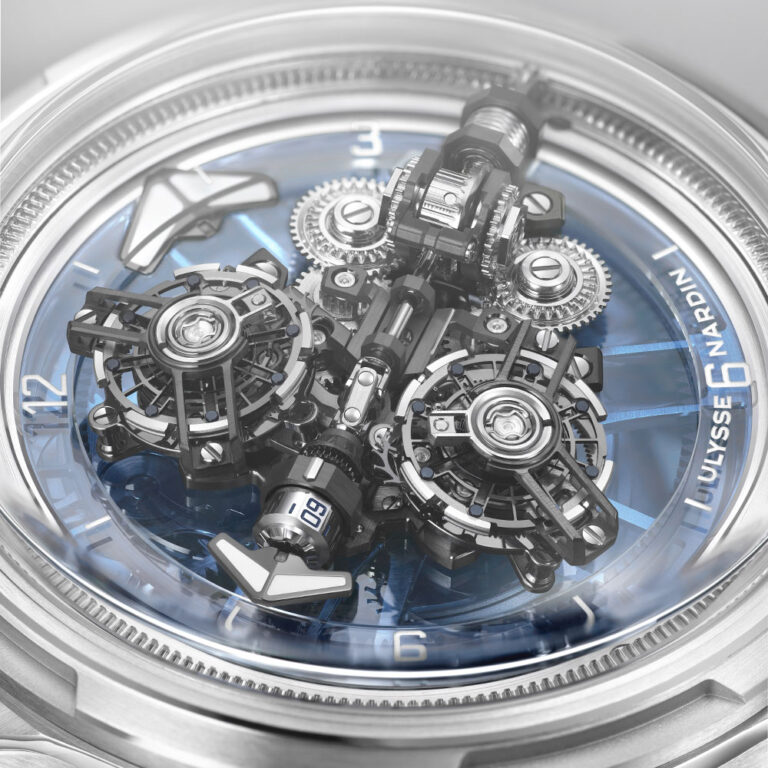
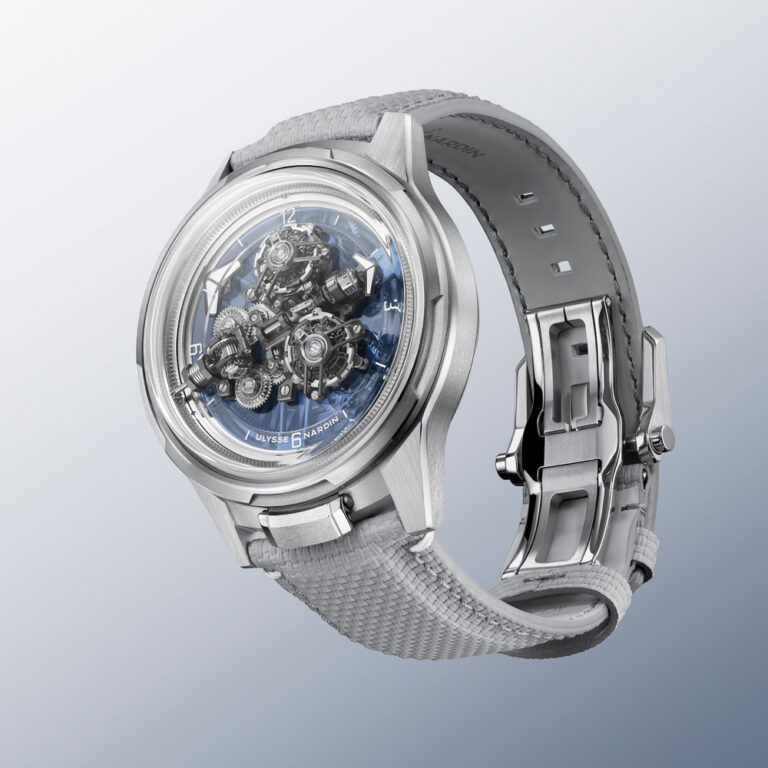
Another example is the “Super-Freak,” which Ulysse Nardin unveiled this year to mark the 25th anniversary of the “Freak.” Two flying titanium tourbillons, each inclined at a ten-degree angle, rotate in opposite directions and complete one revolution every 60 seconds. What sets it apart from other double tourbillons is that both tourbillons are connected via a differential, are powered by a shared mainspring barrel, and work together to regulate the movement.
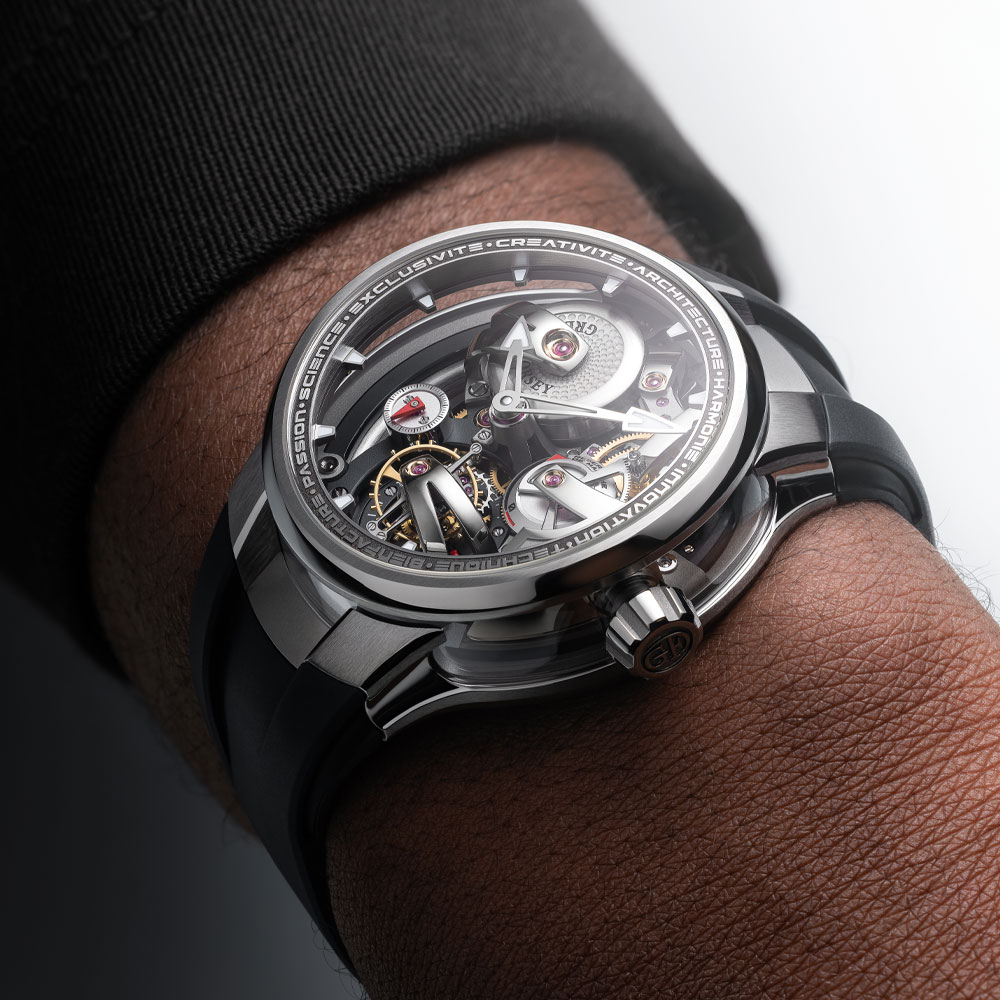
Greubel Forsey, on the other hand, specializes in inclined tourbillons, whose slanted axis further enhances the three-dimensional movement and contributes to a particularly striking appearance.
Greubel Forsey: 24-Second Tourbillon Architecture
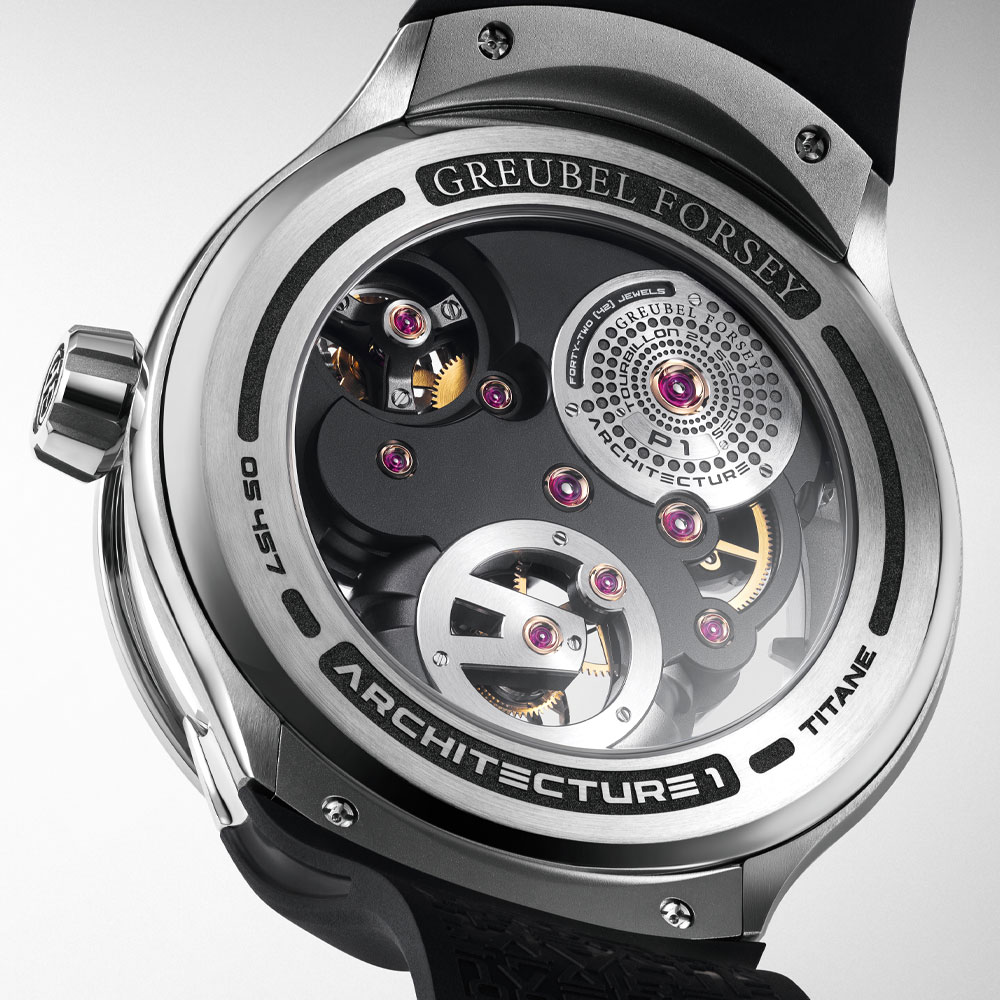
In the “Tourbillon 24 Secondes Architecture,” first unveiled in 2022, the movement’s architecture becomes the dial. The movement, consisting of 354 components, is fully exposed, making its structure a visual hallmark. From the outset, Greubel Forsey announced that this caliber would be produced for only five years and in a limited edition of just 66 pieces. After manufacturing and delivering 55 pieces, the atelier is closing this chapter with a final edition of eleven timepieces. greubelforsey.com
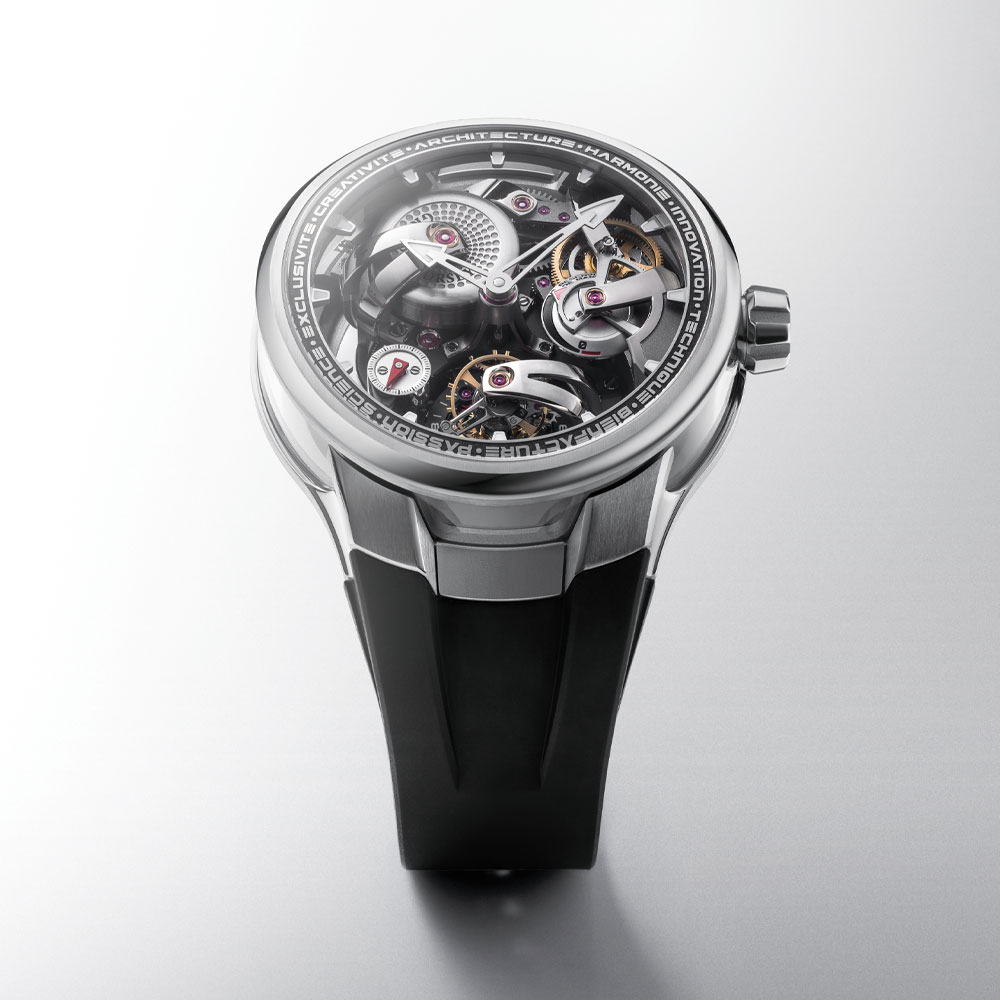
- Model: Tourbillon 24 Secondes Architecture
- Movement: Hand-wound, 90-hour power reserve, tourbillon
- Functions: Hours, minutes, small seconds, power reserve indicator
- Case: Titanium, sapphire crystal windows on the sides, 47.05 x 45.5 x 16.8 mm, water-resistant to 5 bar
- Dial: open
- Strap: Rubber
- Special feature: Tourbillon inclined at 25°, completes one full rotation in 24 seconds, limited to 11 pieces
- MSRP: Upon request
In 2022, Grand Seiko developed the T0 Constant-Force Tourbillon, the first fully integrated constant-force mechanism combined with a tourbillon on the same axis. Since there are no gears or other components between the two mechanisms, there are neither losses nor fluctuations in the transmission of torque to the balance wheel. This provides the constant-force mechanism with more stable energy transmission and the balance wheel with a more stable amplitude.
Particularly flat, small, or large
Currently considered the thinnest tourbillon wristwatch is Bulgari’s “Octo Finissimo Ultra Tourbillon,” introduced in 2025, with a total height of just 1.85 millimeters. This is made possible by an integrated design in which the case back also serves as the movement plate.
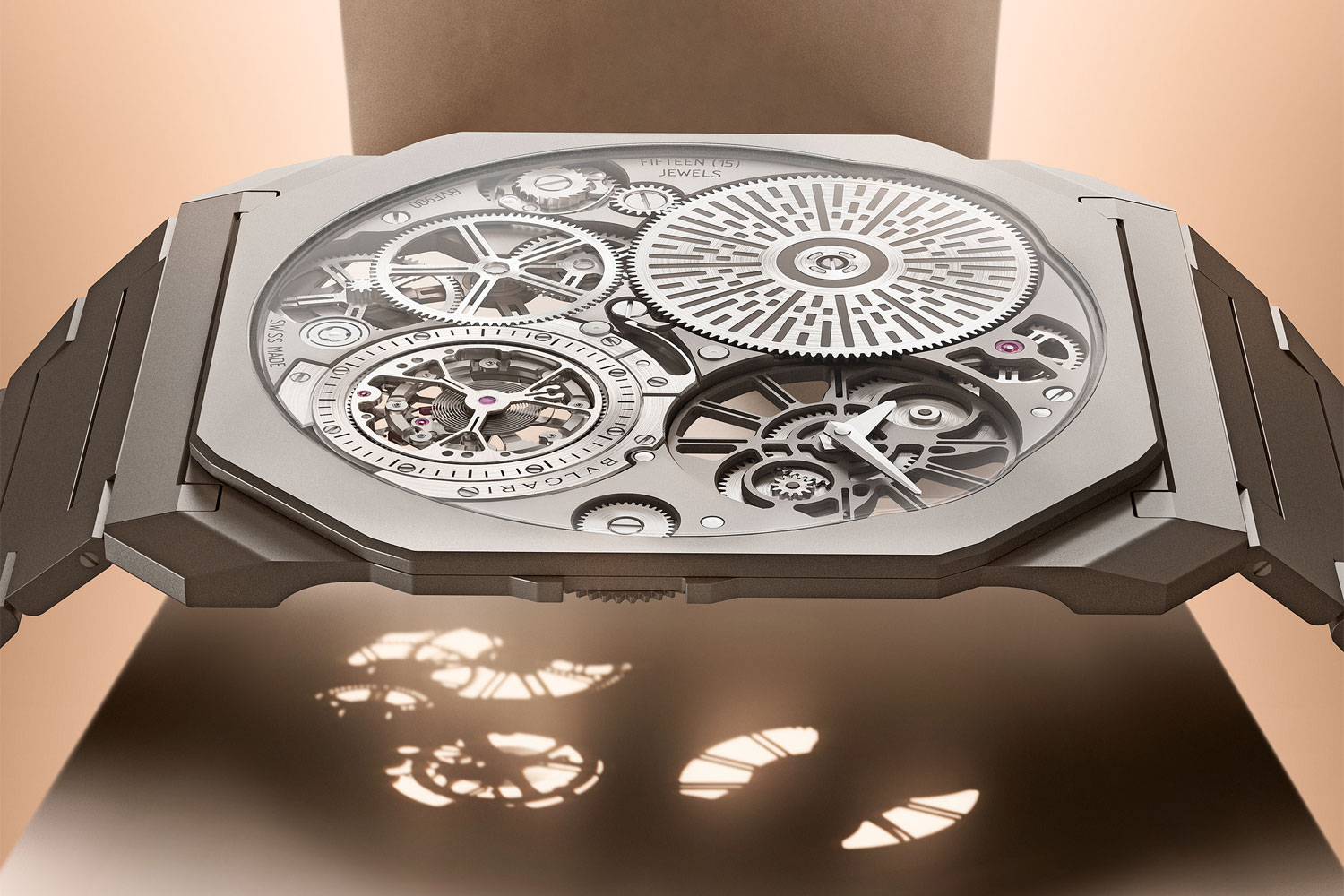
The smallest mass-produced tourbillon movement also comes from Bulgari: The BVL150 caliber in the “Serpenti Seduttori Tourbillon” measures just 22 × 18 millimeters and is considered the smallest tourbillon caliber currently in production.
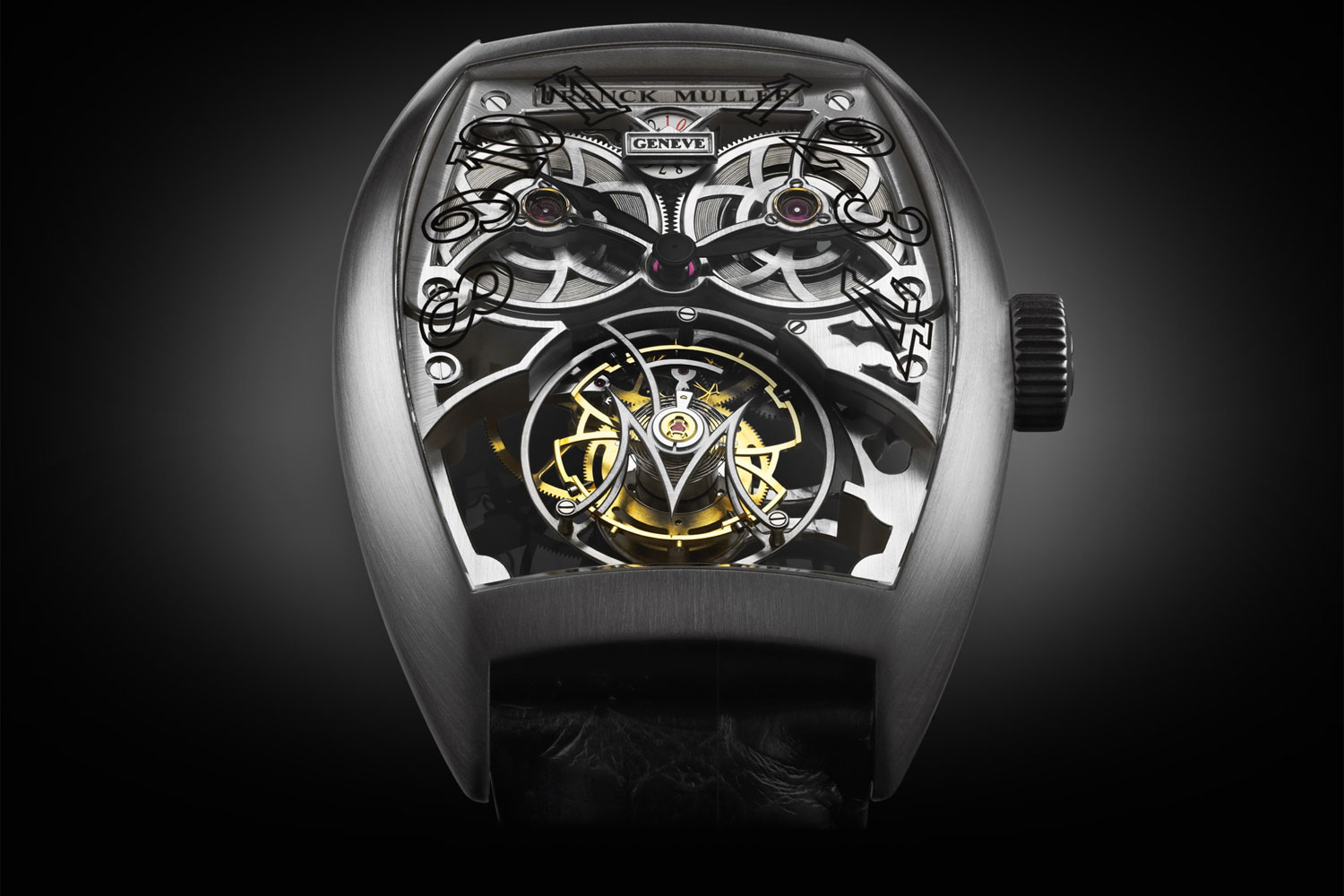
So while Bulgari is pushing the boundaries of miniaturization, other manufacturers are taking the opposite approach. Kerbedanz created what is currently the largest tourbillon cage in a wristwatch with the “Maximus”: The central flying tourbillon measures an impressive 27 millimeters in diameter. Previously, Franck Muller held this record with the “Giga Tourbillon” and its 20-millimeter tourbillon cage.
ArtyA: Purity Tourbillon Sport
At the heart of the “Purity Tourbillon Sport” beats an exclusive, fully ArtyA-manufactured, skeletonized caliber. With its 18-millimeter tourbillon, 4-Hz frequency, and fully transparent case, it occupies a unique position among the latest tourbillon releases. Each piece is delivered in the configuration selected at the time of order, including a color-coordinated case back gasket and strap. The gasket and strap can be replaced at any time at an authorized ArtyA retailer, giving the watch a completely new look with each new color. artya.com
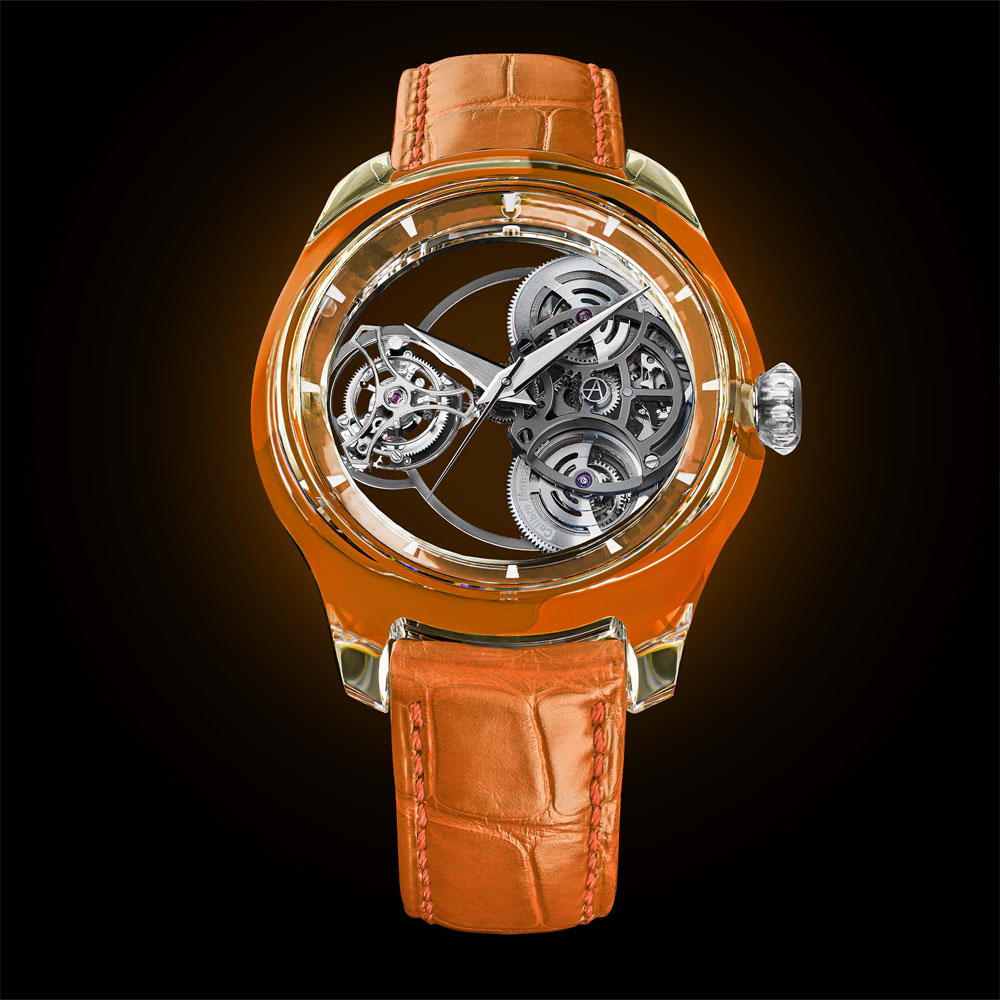
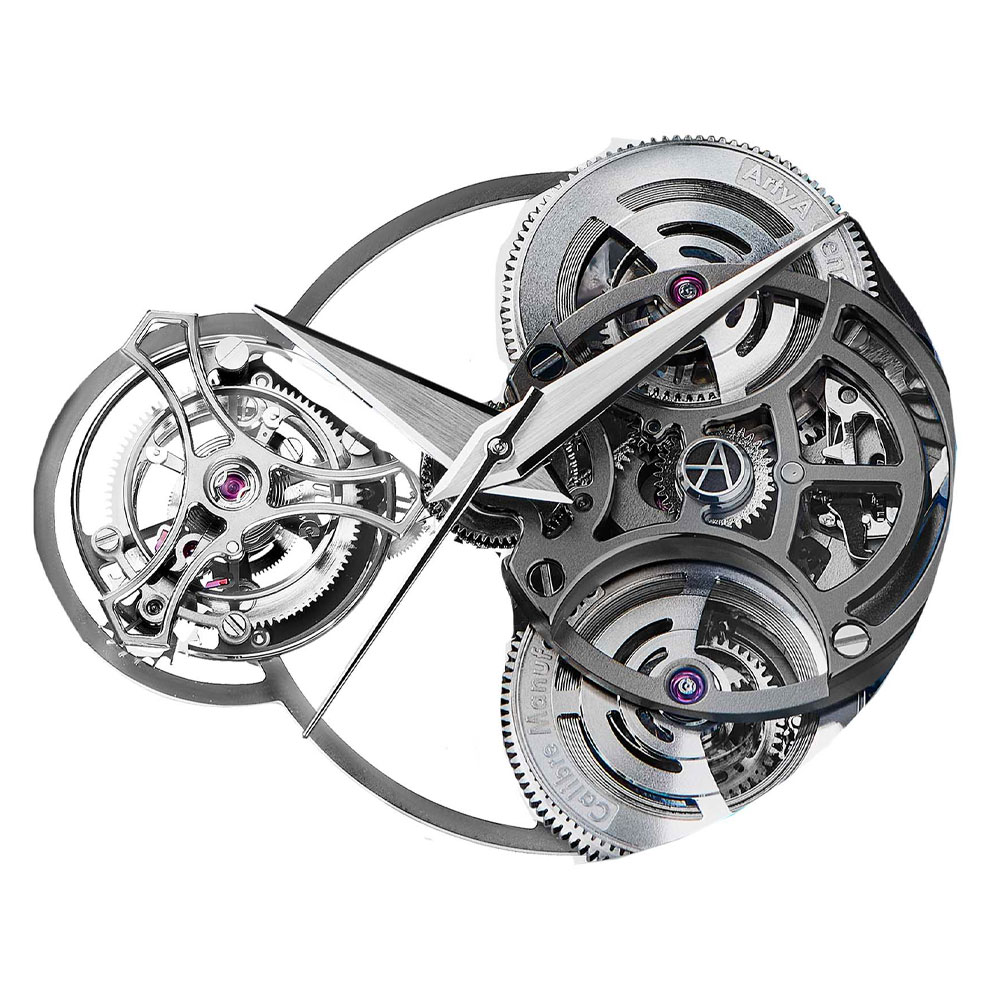
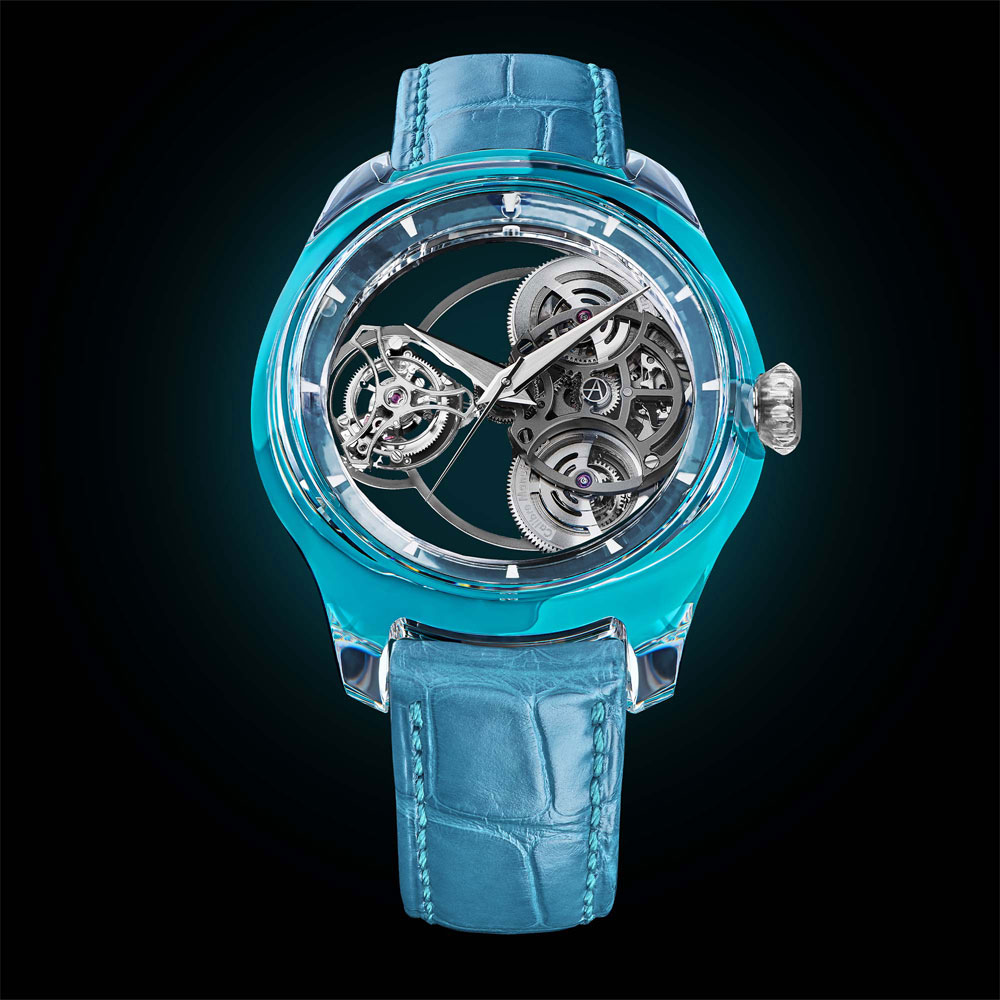
- Model: Purity Tourbillon Sport
- Movement: PUR-T1 with flying tourbillon, skeletonized, hand-wound, 70-hour power reserve
- Functions: Hours, minutes, central seconds, seconds display via the tourbillon
- Case: Sapphire crystal, 44 mm, water-resistant to 3 bar
- Dial: no traditional dial; the skeletonized in-house movement serves this function
- Strap: Rubber
- Special feature: Limited to 9 pieces per color (Deep Red, Luminous Orange, Electric Turquoise, Deep Blue)
- MSRP: 130,000 CHF
Ba111OD: Chapter 4 Tourbillon T.V.D.
Founded in 2019 by Thomas Baillod, the BA111OD brand has taken another strategic step with the acquisition this spring of BCP Tourbillons, a long-standing partner and key supplier of high-quality mechanical calibers. The transaction was carried out while fully preserving the independence of the watchmaking development workshop and its ecosystem and represents a decisive step toward strengthening BA111OD’s technical expertise, according to the Neuchâtel-based company. This move is accompanied by the launch of the new “Chapter 4 Tourbillon T.V.D.” ba111od.com
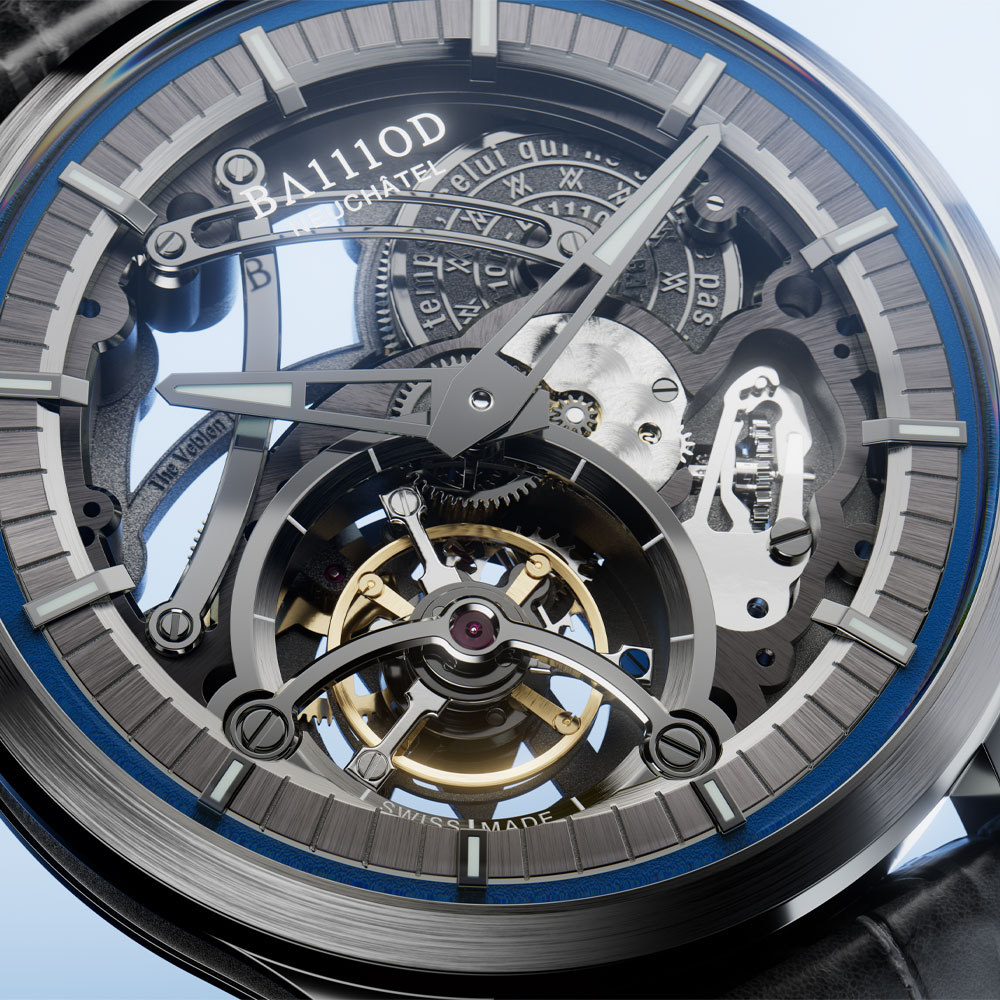
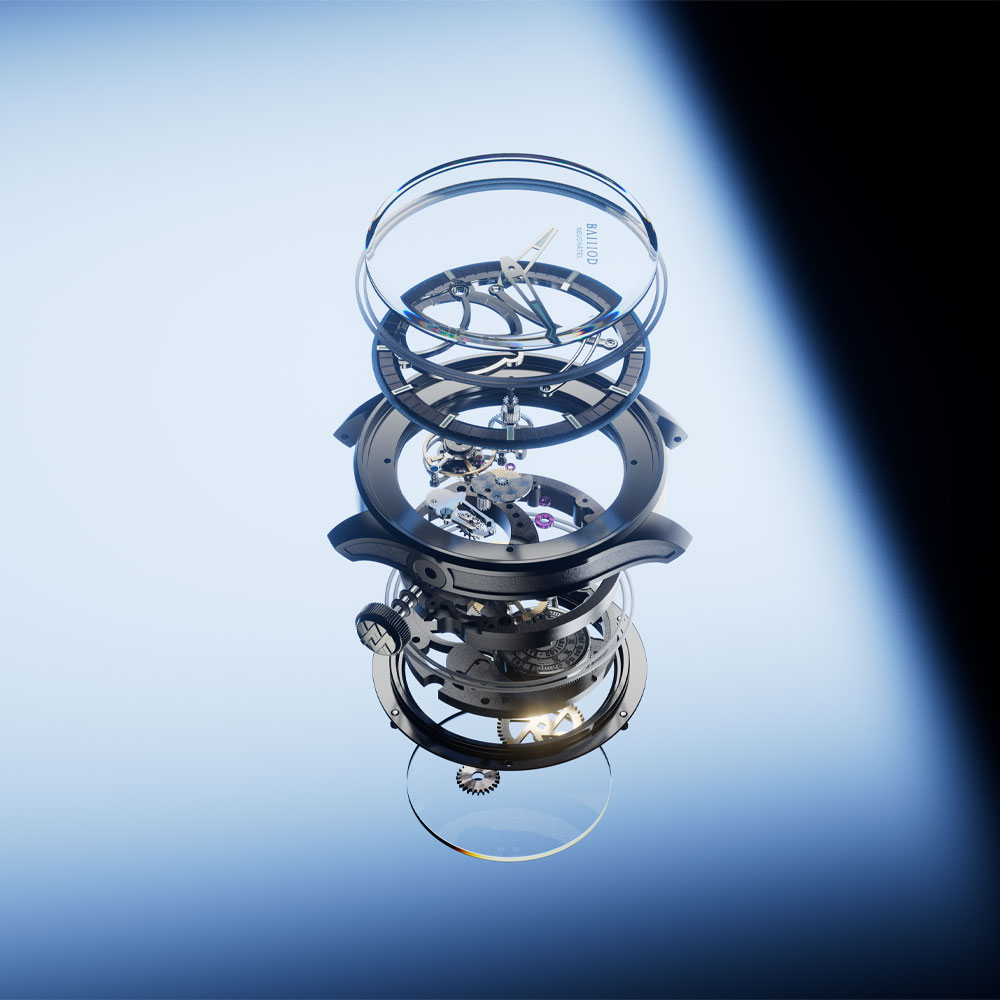
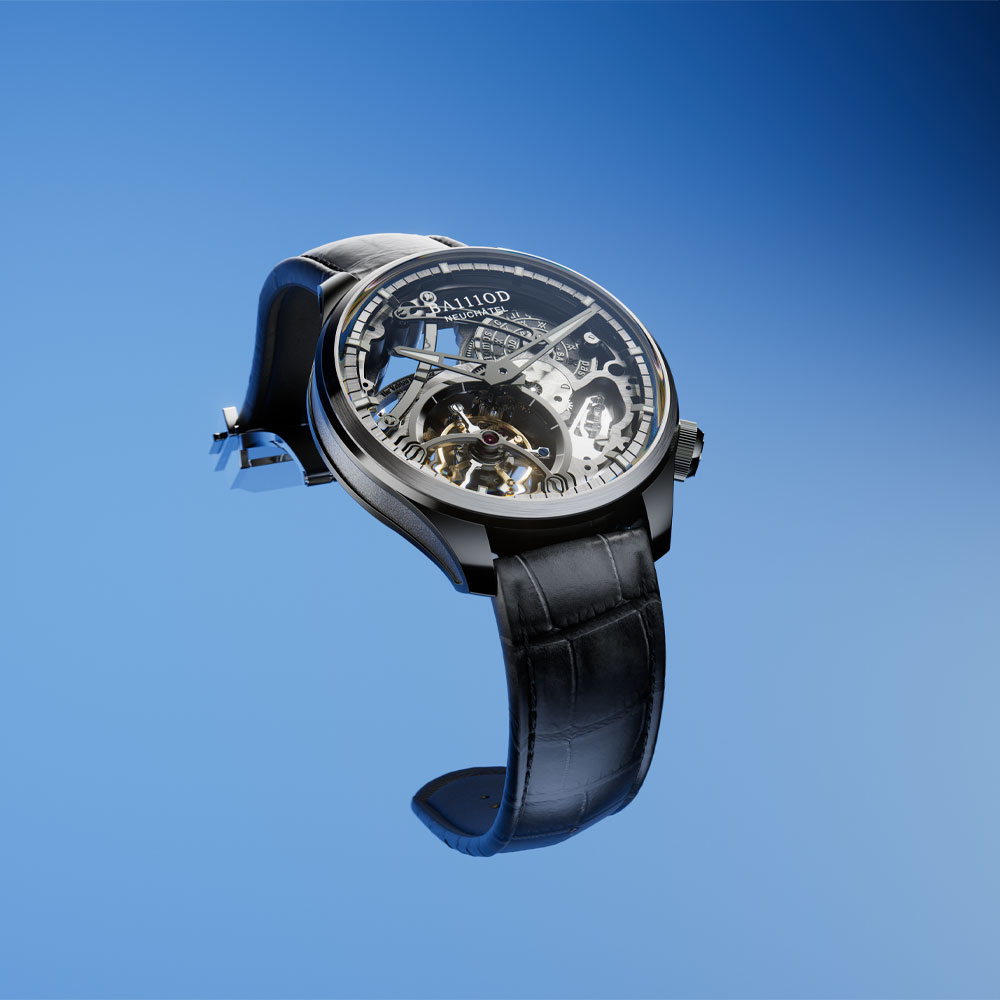
- Model: Chapter 4 Tourbillon T.V.D.
- Movement: BA.01, manual winding, tourbillon, 120-hour power reserve
- Functions: Hours, Minutes
- Case: Stainless steel with an anthracite-colored DLC coating, water-resistant to 5 bar
- Dial: partially skeletonized
- Strap: Leather with crocodile embossing
- Special Feature: Chronometer-certified
- MSRP: €10,500
Bianchet: Rotondo UltraFino
Bianchet has expanded its “Rotondo UltraFino” collection to include a rose gold model. The watch remains true to the technical foundation of the titanium UltraFino Rotondo. bianchet.com
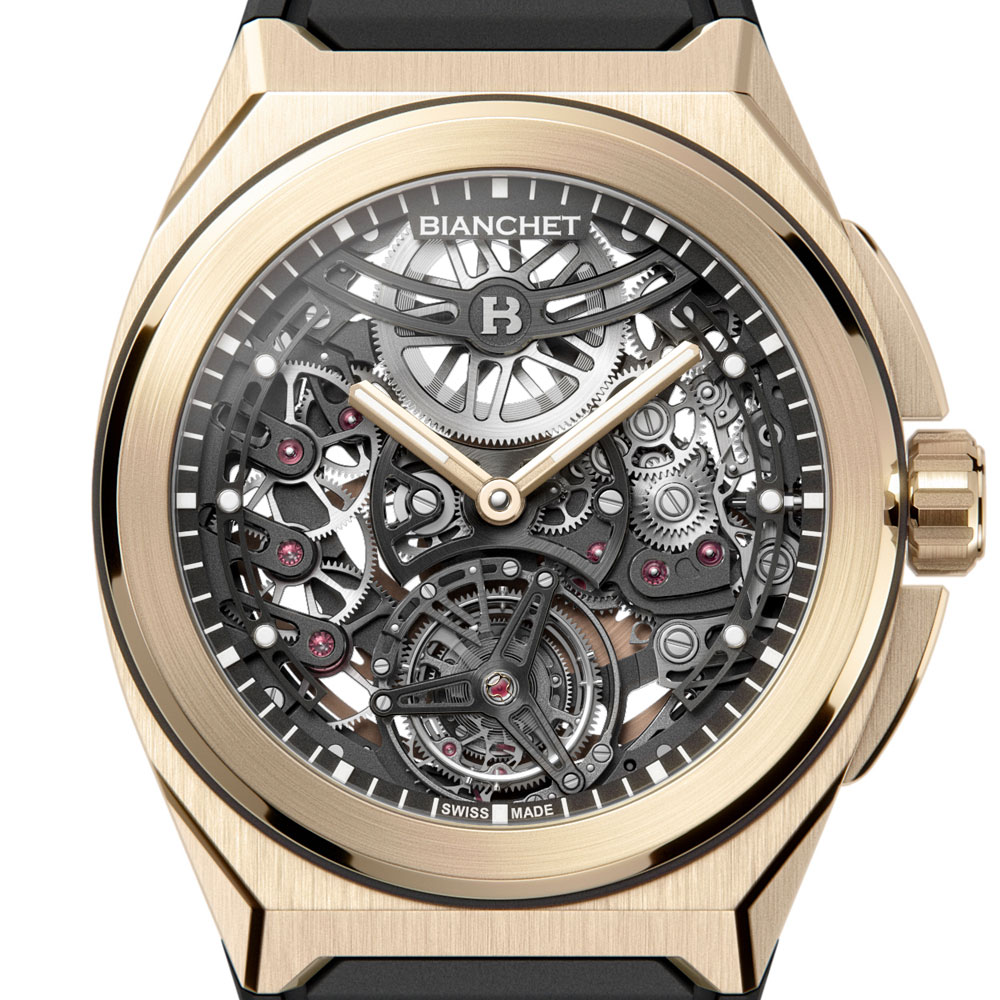
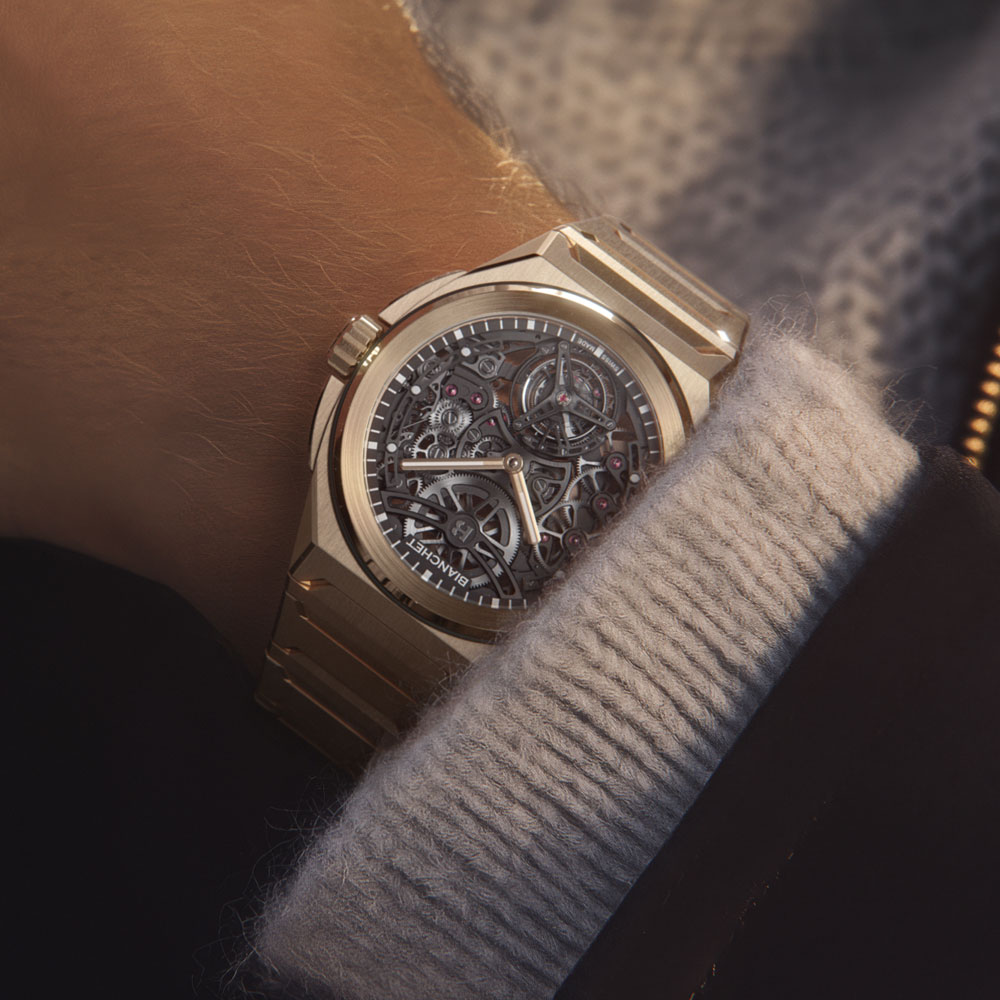
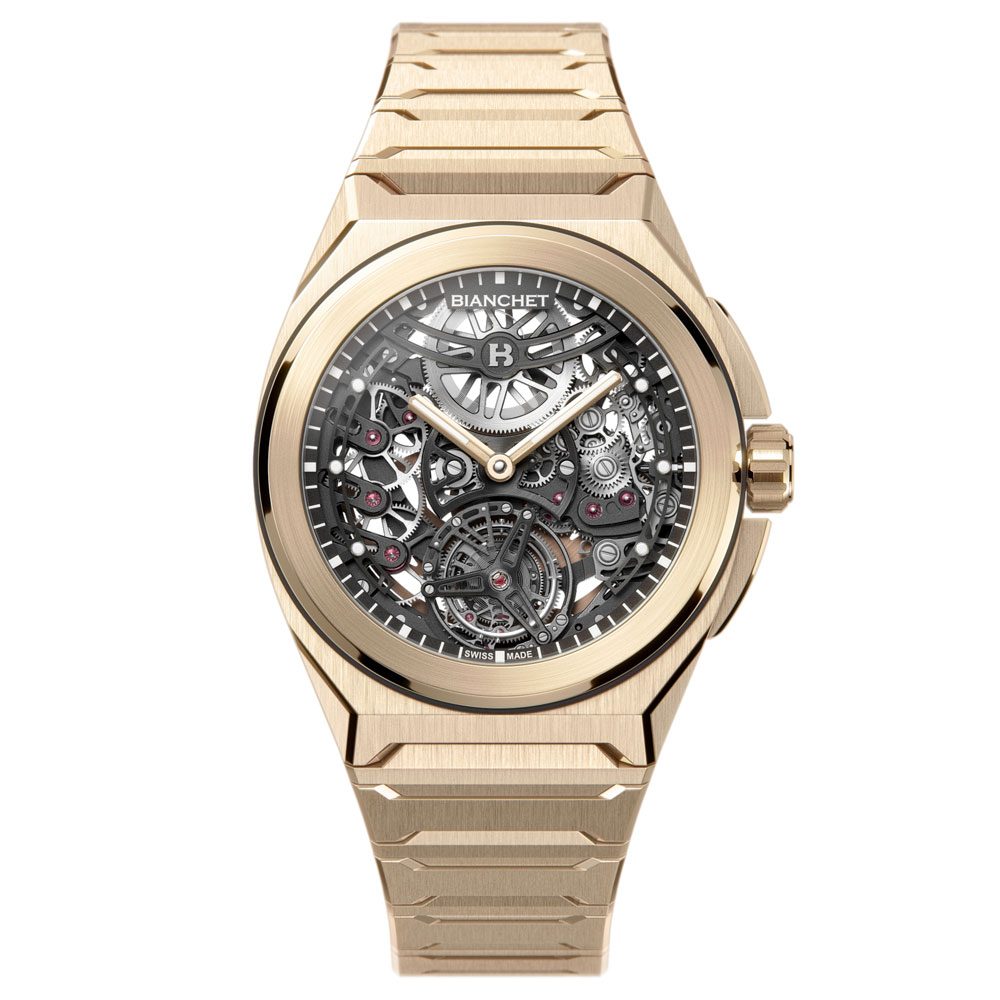
- Model: Rotondo UltraFino
- Movement: UR01, automatic, flying tourbillon, 60-hour power reserve
- Functions: Hours, Minutes
- Case: Rose gold, 39.5 x 8.9 mm, water-resistant to 10 bar
- Dial: skeletonized
- Strap: Rubber or rose gold
- MSRP: 85,500 CHF or 119,500 CHF
Richard Mille: RM HJ-02
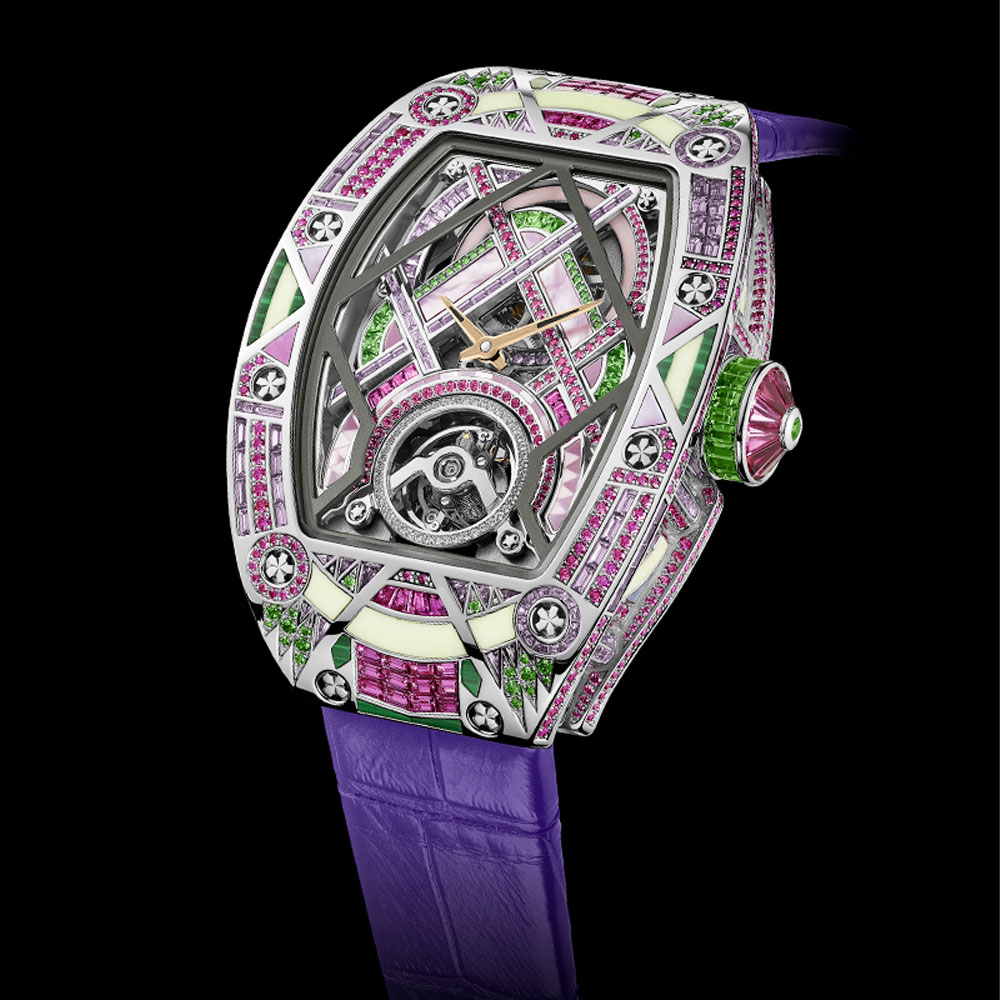
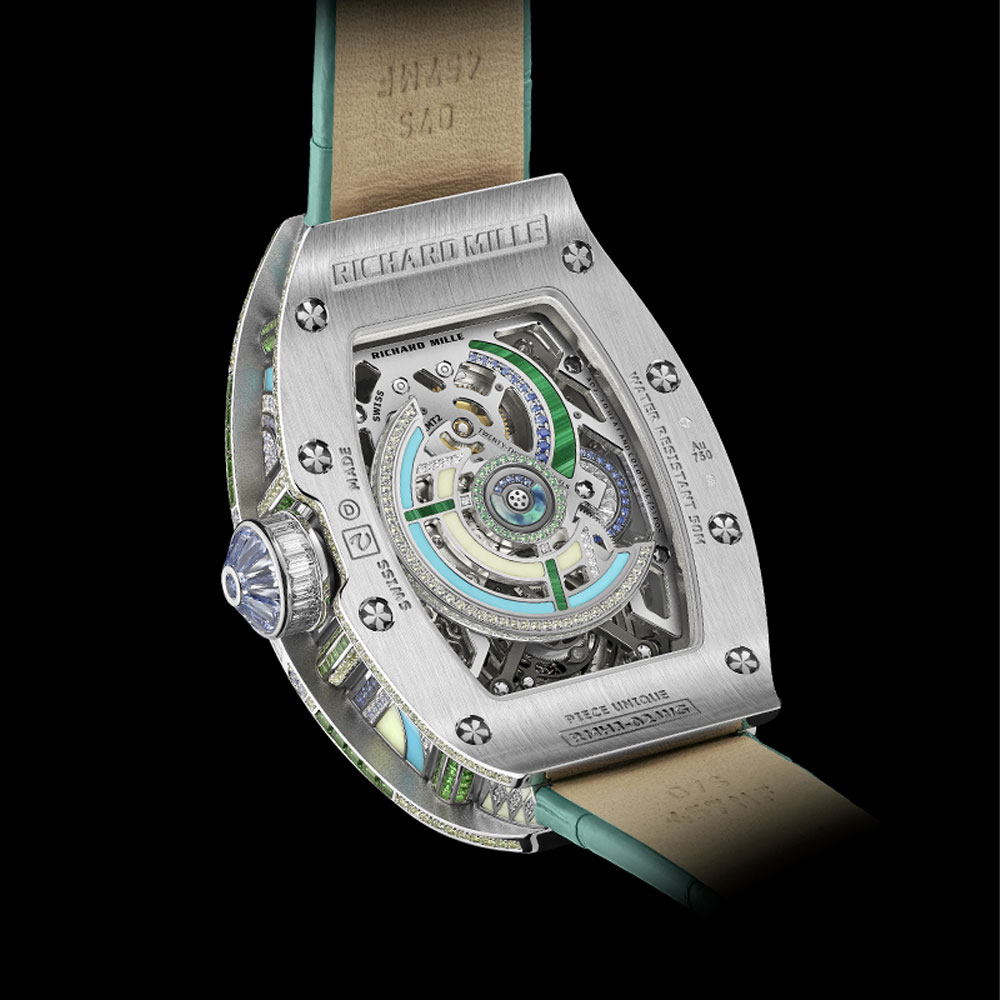
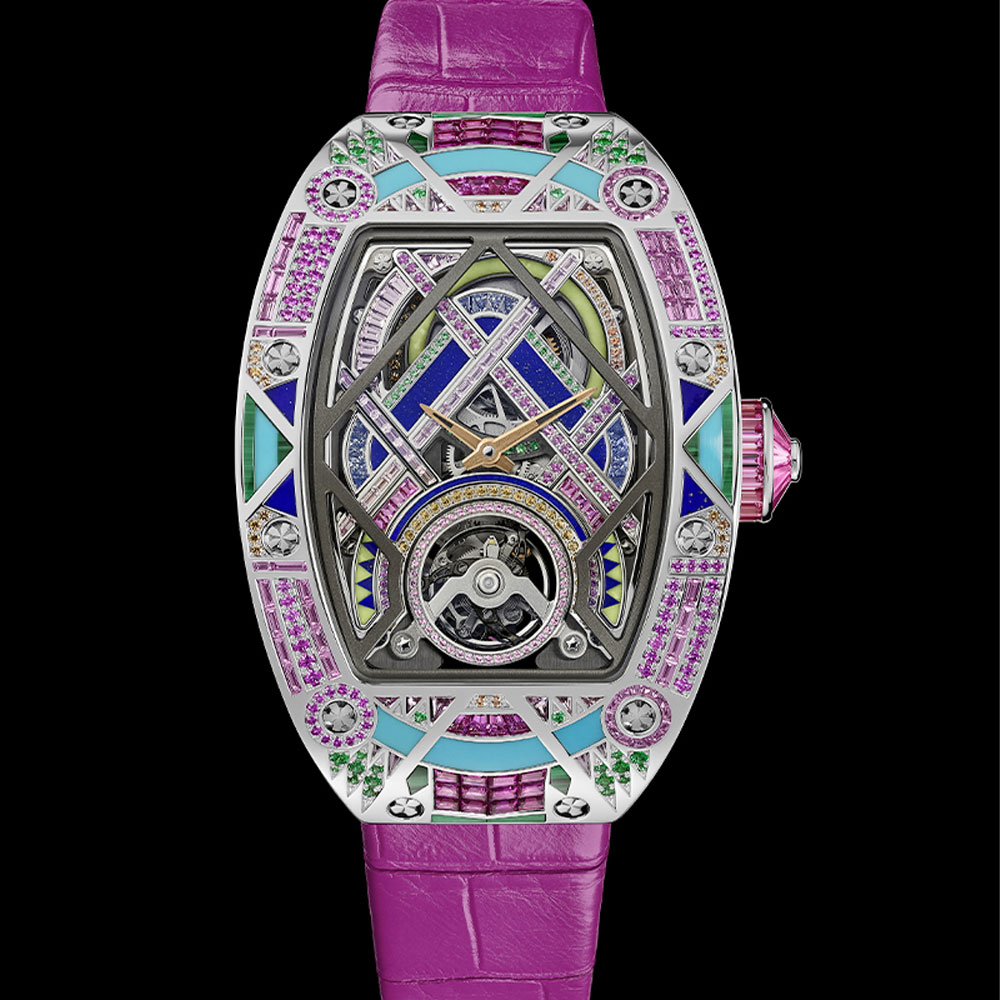
The RM HJ-02 In-house Automatic Tourbillon marks the second chapter in the brand’s haute joaillerie, combined with haute horlogerie. The collection comprises twelve timepieces, divided into four color themes: pink, violet, blue, and green. The lavish gemstone setting is just as integral to the watch as its inner workings. The in-house, skeletonized automatic tourbillon caliber CRMT2. The skeletonized movement was developed in parallel with the case and dial to seamlessly integrate the mechanical and decorative elements from the very beginning. richardmille.com
- Model: RM HJ-02
- Movement: CRMT2, automatic, tourbillon, 50-hour power reserve
- Functions: Hours, Minutes
- Case: White gold and titanium, 36 x 52.48 x 12.5 mm, water-resistant to 5 bar
- Dial: skeletonized
- Strap: Rubber
- Special feature: Limited to 12 pieces, each featuring 1,399 gemstones
- MSRP: Upon request