
Square Watches: Icons, History, and Current Models
To many people, round watches seem like the quintessential timepiece. That’s precisely what makes rectangular and square watches so intriguing—their shape is usually not taken for granted.
The history of square watches is rich and varied. It tells a story of Art Deco, the art of watchmaking, and iconic designs, while also presenting designers with unique technical challenges.
A strong historical tradition
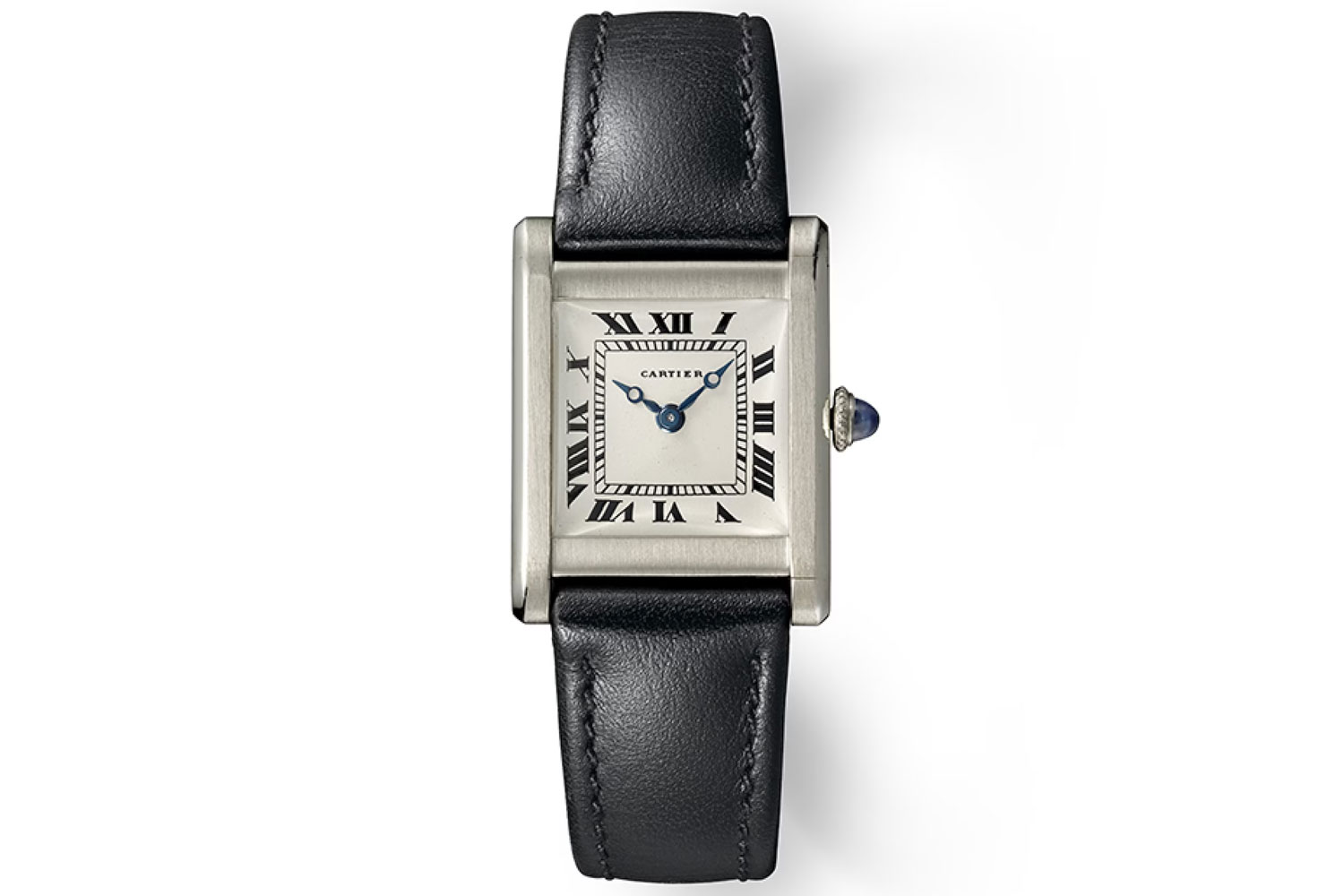
Rectangular and square wristwatches have a long tradition. As early as the 1920s and 1930s, numerous iconic models with geometric cases were created. An early example is Cartier’s “Tank” from 1917. Its shape was a perfect fit for the Art Deco style of the time, which favored geometric lines, symmetry, and clean surfaces. Cartier itself describes the Tank, designed by Louis Cartier in 1917, as an icon of modern watchmaking.
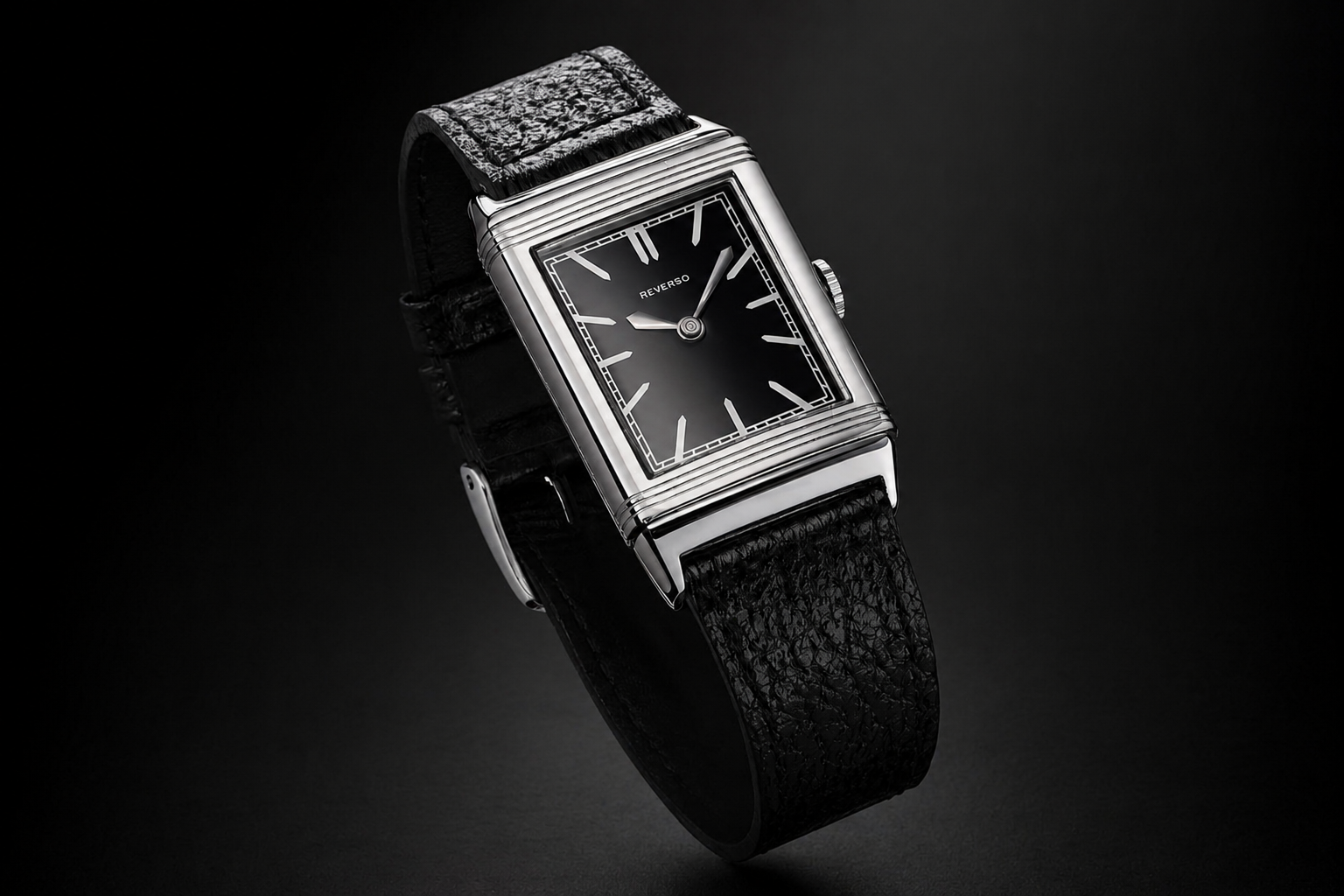
Another significant milestone in the history of rectangular watches is the “Reverso” by Jaeger-LeCoultre, introduced in 1931. It was originally designed for polo players. The case could be flipped over to protect the watch crystal while playing polo. The rectangular shape thus had a functional origin.
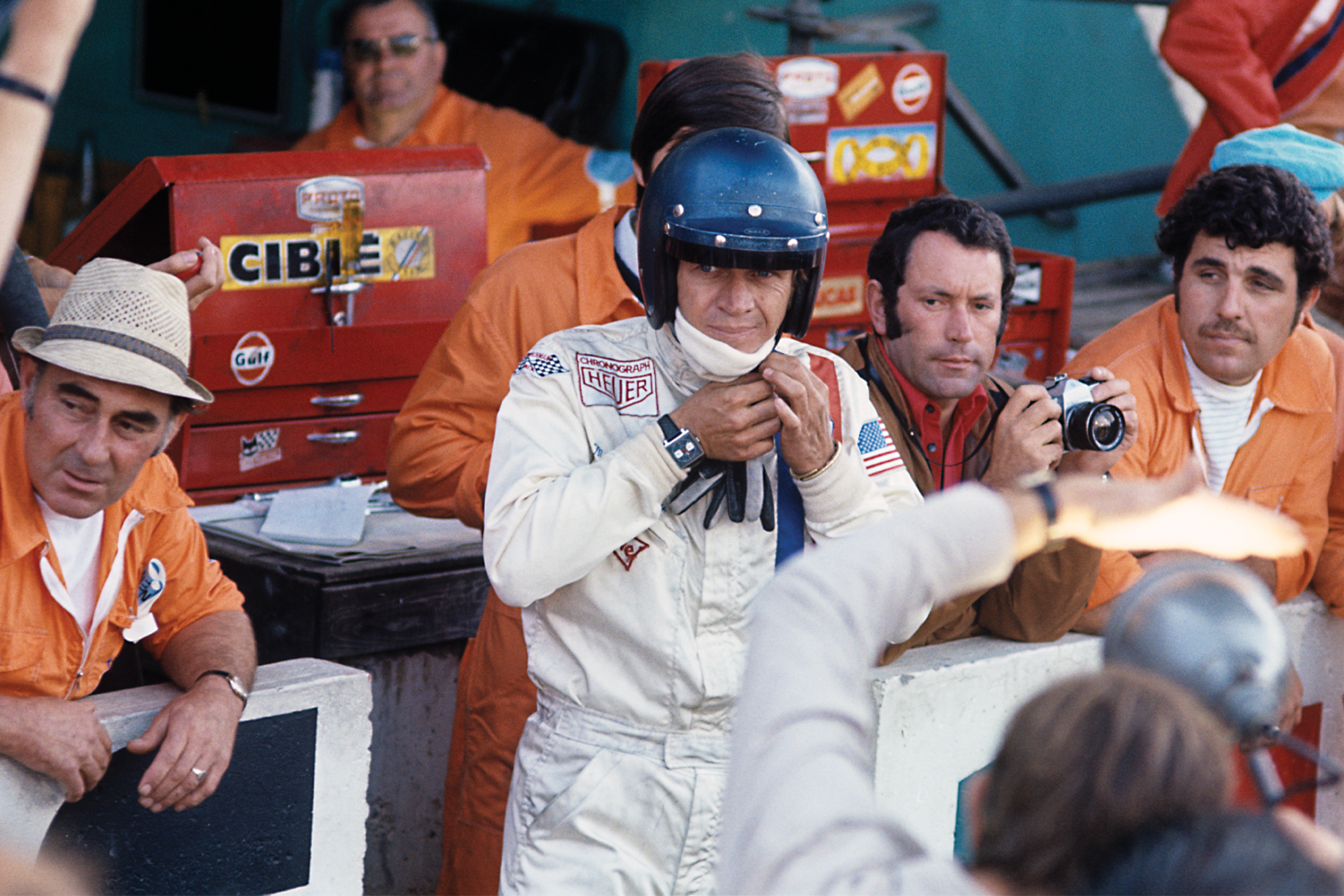
The TAG Heuer “Monaco” was introduced in 1969 and is also one of the most famous historic square wristwatches—though stylistically, it’s in a completely different category. Its square, angular case, blue dial, and striking red hands made it one of the most eye-catching chronographs of its time. It is considered the first square, water-resistant chronograph. It also gained fame thanks to Steve McQueen, who wore the “Monaco” on his wrist in the 1971 film *Le Mans*.
TAG Heuer: Monaco Speed 12
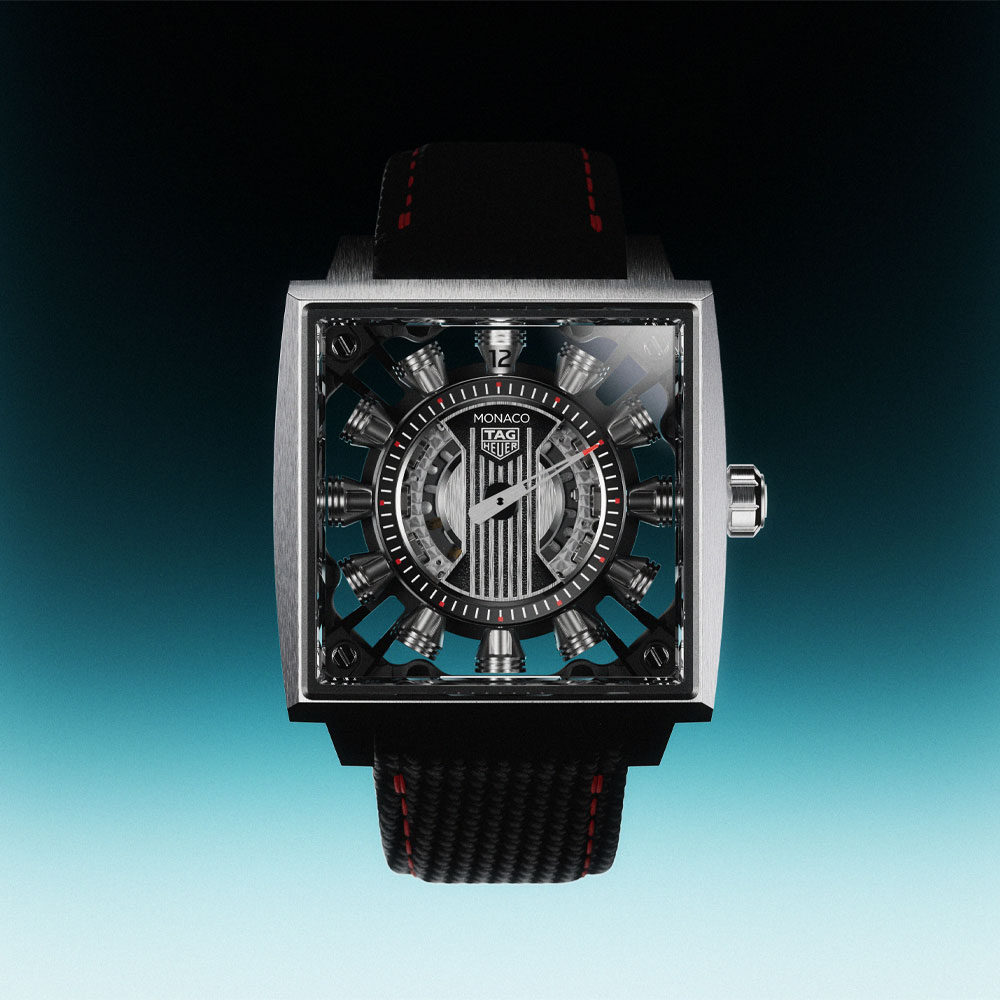
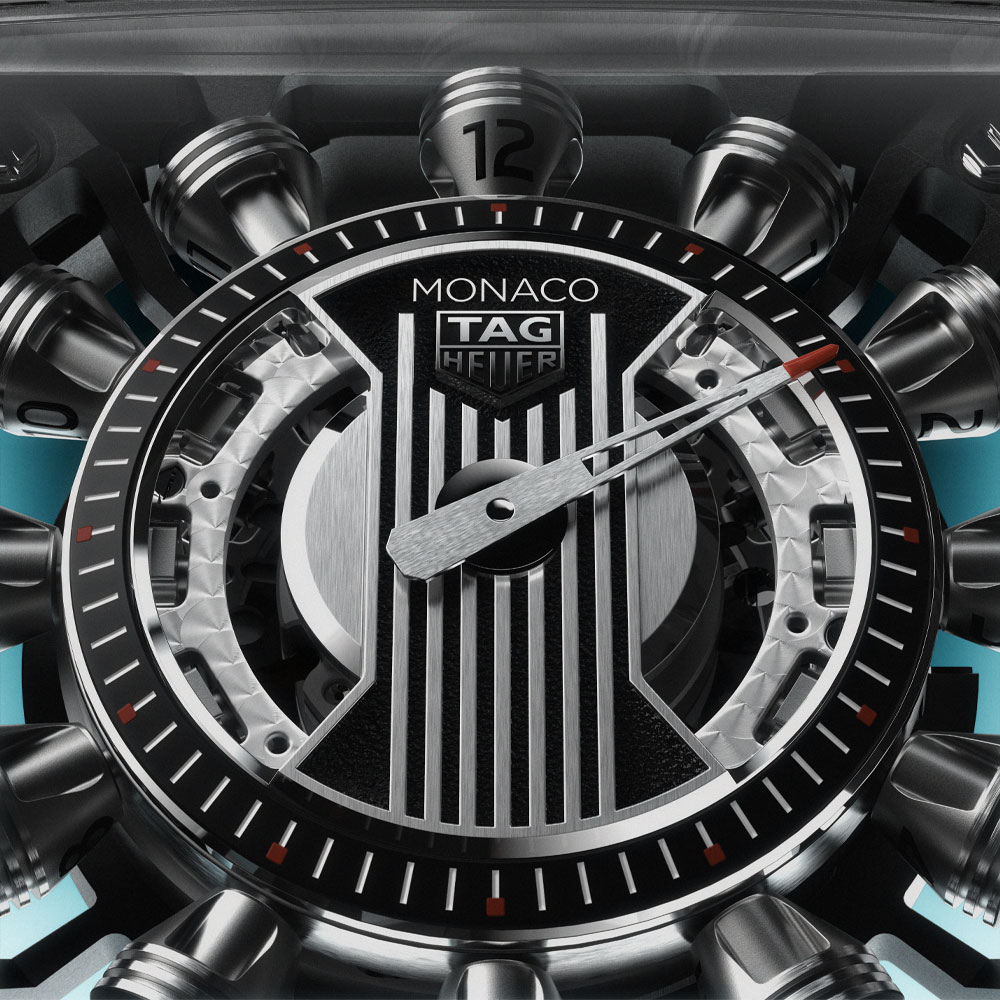
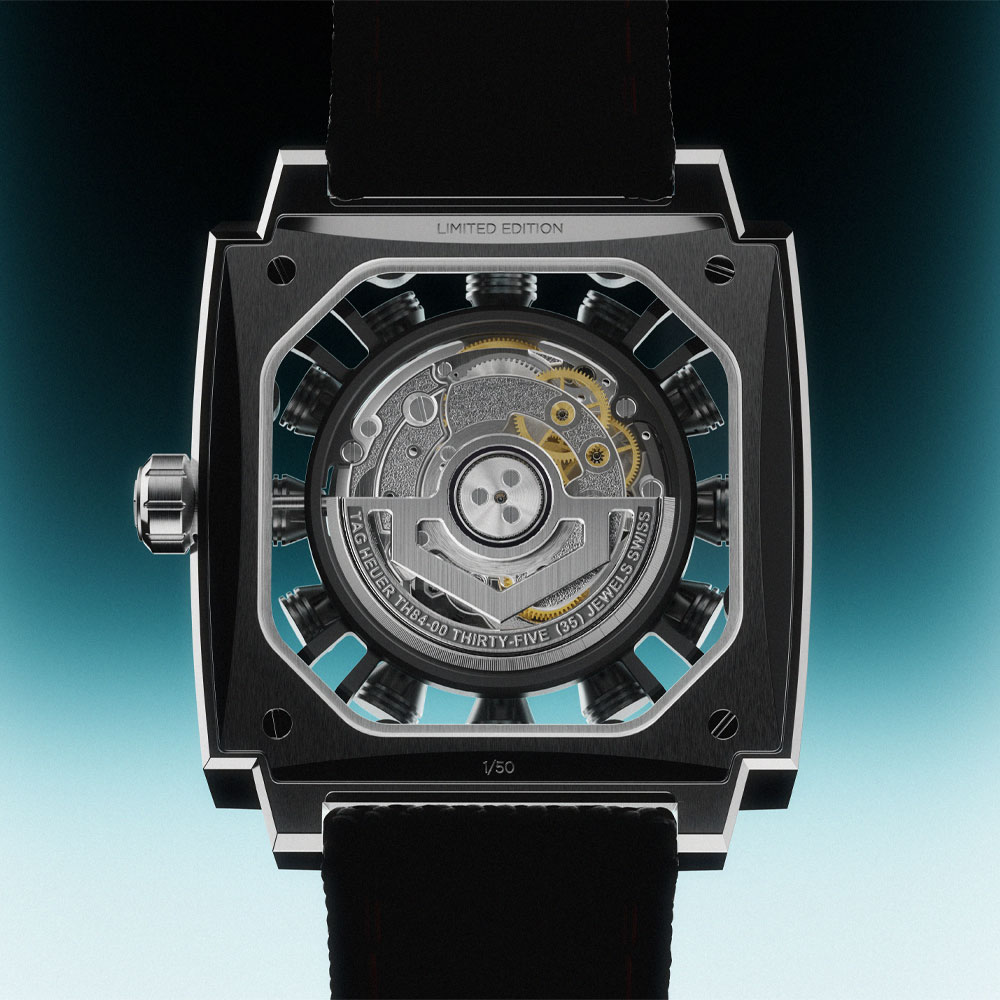
The “Monaco Speed 12” is based on a movement developed and manufactured by La Fabrique du Temps Louis Vuitton that incorporates the Spin-Time principle. Both La Fabrique du Temps Louis Vuitton and TAG Heuer are part of the luxury goods group LVMH. The open dial is surrounded by twelve rhodium-plated, rotating hour pistons featuring black-lacquered Arabic numerals arranged in a striking circular pattern. As the minute hand completes a full rotation around the dial, one piston returns to its starting position. The next hour hand performs an exact 90-degree rotation, revealing the previously hidden hour. The design of this jumping hour display is inspired by a twelve-cylinder racing engine. tagheuer.com
- Model: Monaco Speed 12
- Movement: Caliber TH84-00, automatic, 45-hour power reserve
- Functions: Hours, Minutes
- Case: Titanium, 40 mm, water-resistant to 3 bar
- Dial: Rhodium-Black
- Strap: Rubber with a folding clasp
- Special feature: limited to 50 copies
- MSRP: €77,000
Square watches look different on the wrist
A round watch derives less of its appeal from the shape of its case, as this seems almost self-evident. Above all, the simple, round wristwatches from the 1950s—which we would call “dress watches” today—continue to shape our image of a classic wristwatch to this day.
Rectangular watches, on the other hand, have always exuded both elegance and classic style, while a square timepiece is perceived as modern and, in some cases, avant-garde. Then there’s the tonneau or cushion shape—a sort of hybrid with a more organic look.
Rectangles and squares present designers with unique challenges
The challenge in developing and designing a square watch is that most movements are round. This makes sense from a design perspective because the essential components of a mechanical movement—such as the mainspring barrel, gear train, and balance wheel—can be arranged in a circular pattern.
Round movements can be easily installed in a square case. However, this sometimes leaves unused space, and the shape of the movement can affect the layout of the function indicators on the dial.
A so-called custom-shaped movement, on the other hand, is designed to fit the specific shape of the watch case. This is considerably more complex than with a round movement.
So a square watch does not necessarily require a square movement—and this also applies to quartz watches. However, while designing a movement to match the shape of a mechanical watch can pose a significant engineering challenge, a quartz movement can be adapted to the case shape with relative ease.
Bell & Ross: BR-03 Helipad
Founded in 1994, the Bell & Ross brand is committed to the principle that function always dictates form. In 2005, this philosophy reached a decisive turning point with the introduction of the “BR-01”: this model, so to speak, brought a cockpit watch directly to the wrist. The concept of a circle within a square, held in place by four screws at the corners, became the brand’s unmistakable visual signature and laid the foundation for the “BR-03” collection, which continues to evolve today while preserving its genetic heritage. The dial of the “BR-03 Helipad” depicts an aircraft hovering directly above its landing pad. The front tip of the helicopter serves as the minute hand, and the helicopter’s rotor blades serve as the second hand. bellross.com
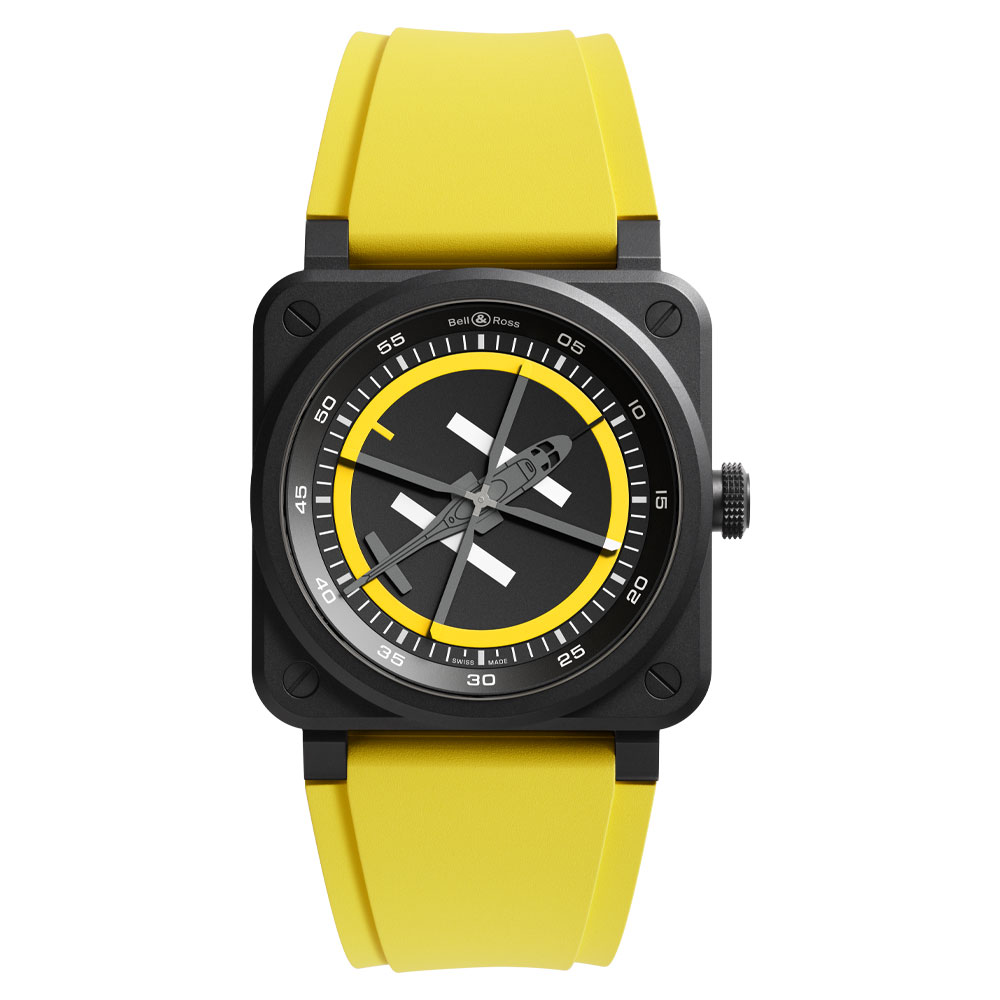
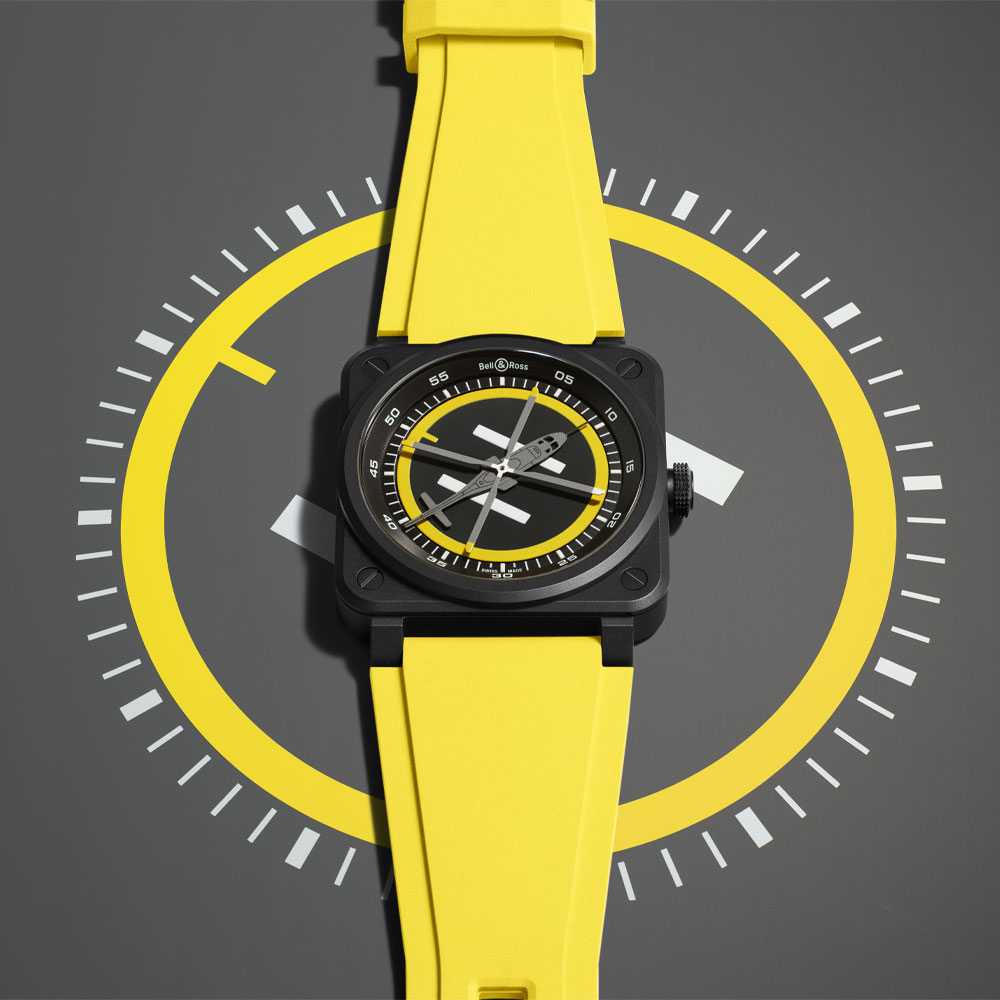
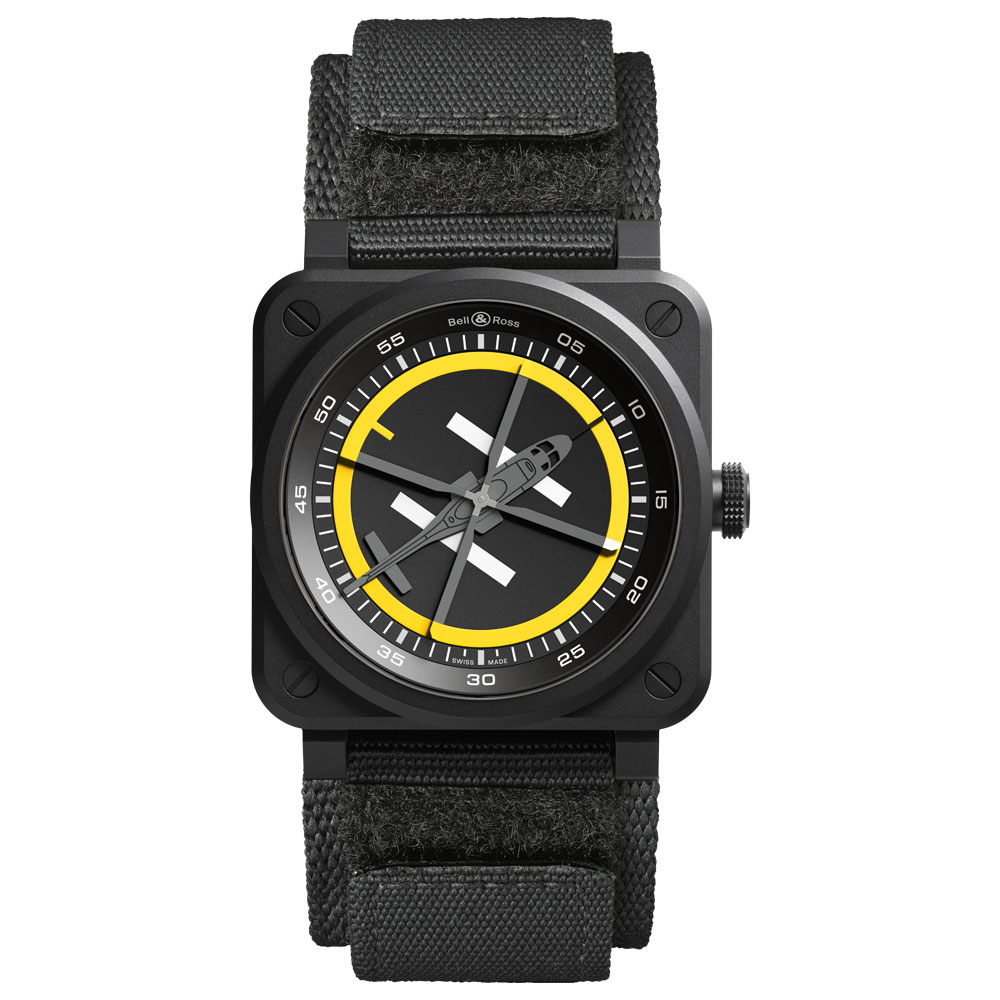
- Model: BR-03 Helipad
- Movement: Caliber BR-CAL.327, automatic, 54-hour power reserve
- Functions: Hours, Minutes, Seconds
- Case: black ceramic, 41 x 10.6 mm, water-resistant to 10 bar
- Dial: Black with a yellow ring
- Strap: Rubber or synthetic
- Special feature: limited to 500 copies
- MSRP: €4,700
Nomos Glashütte: Tetra 27 Duo
“Tetra” is the square watch from the Saxon watchmaker Nomos Glashütte. With details such as the narrow bezel and the stepped, double lugs, it evokes Art Deco—a reference that is no coincidence, as numerous influential angular watches were created during that era. The “Tetra 27 Duo” is available with either a stainless steel case back or a sapphire crystal case back. It features just two hands and omits a seconds hand—hence the name “Duo.” nomos-glashuette.com
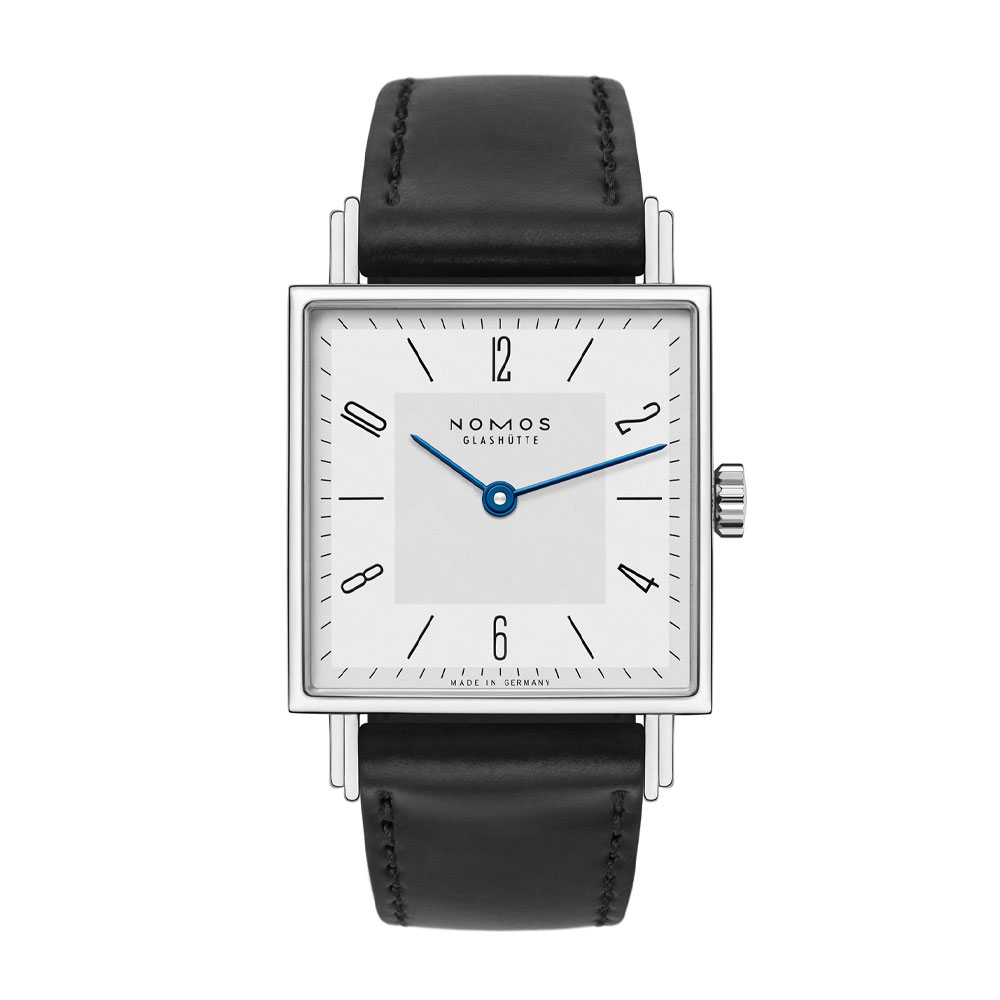
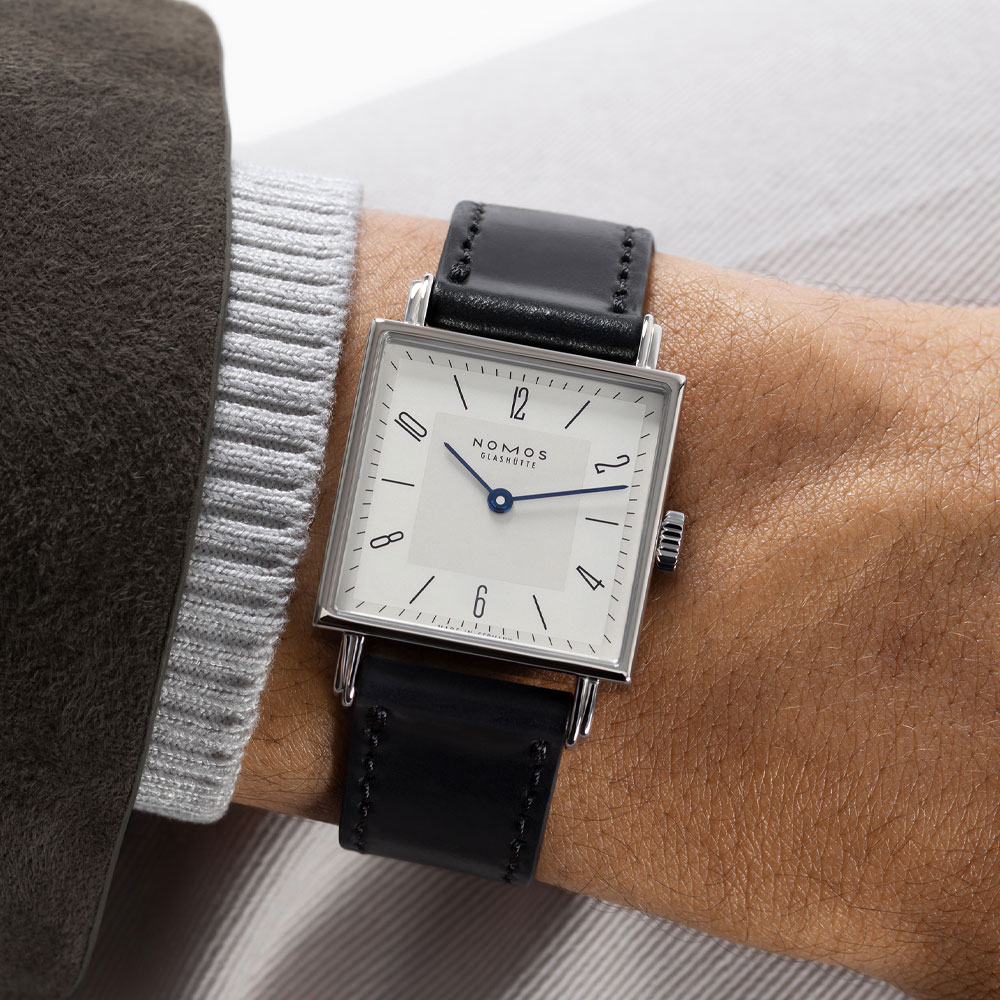
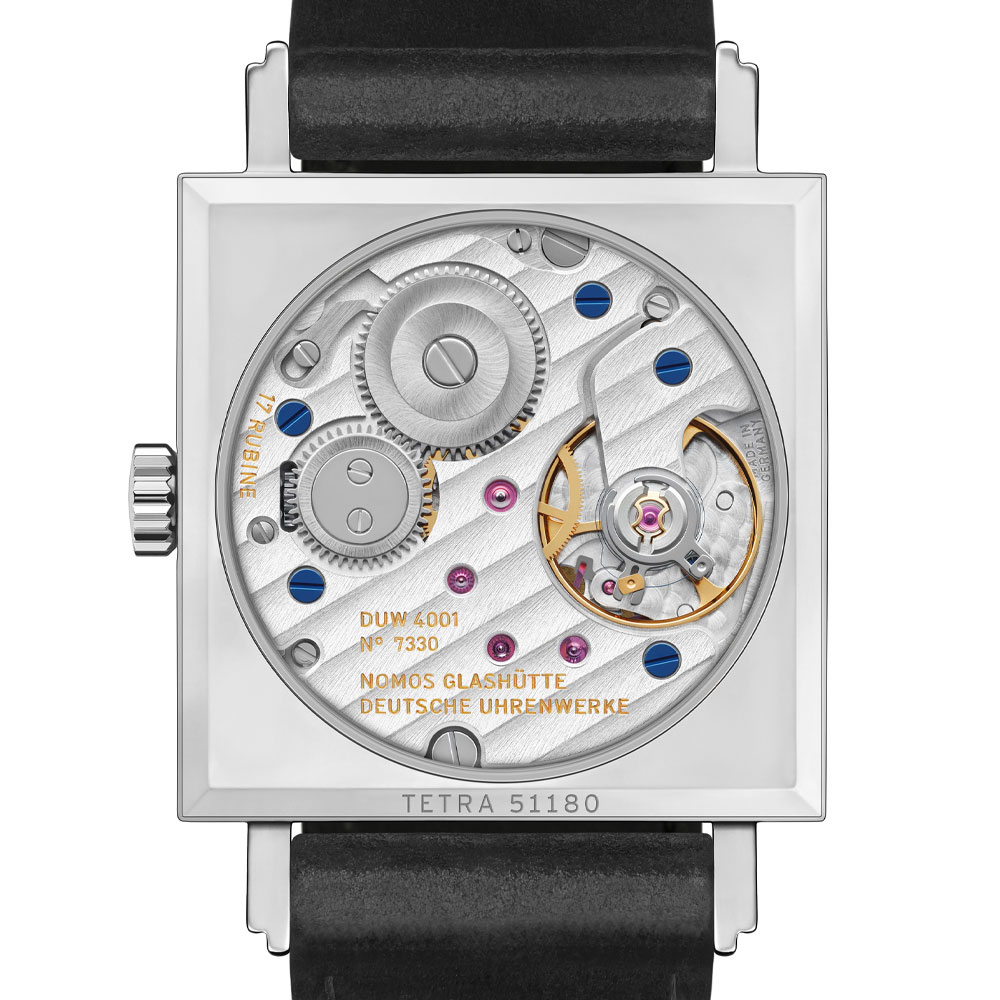
- Model: Tetra 27 Duo
- Movement: Caliber DUW 4001 Duo, manual winding, 53-hour power reserve
- Functions: Hours, Minutes
- Case: Stainless steel, 27.5 x 27.5 x 6.4 mm, water-resistant up to 5 bar
- Dial: electroplated, white and gray silver-plated
- Strap: Horween Genuine Shell Cordovan
- MSRP: €1,660 or €1,880
Swatch: What if…Jelly?
The “What if…Jelly?” collection featured the first non-round Swatch watches. The five new models combine transparent cases with vibrantly colored dials. These are paired with transparent straps in a uniform, vibrant shade. Each model features the collection’s signature square 33 × 33-millimeter dial, which is made from bio-based materials. swatch.com
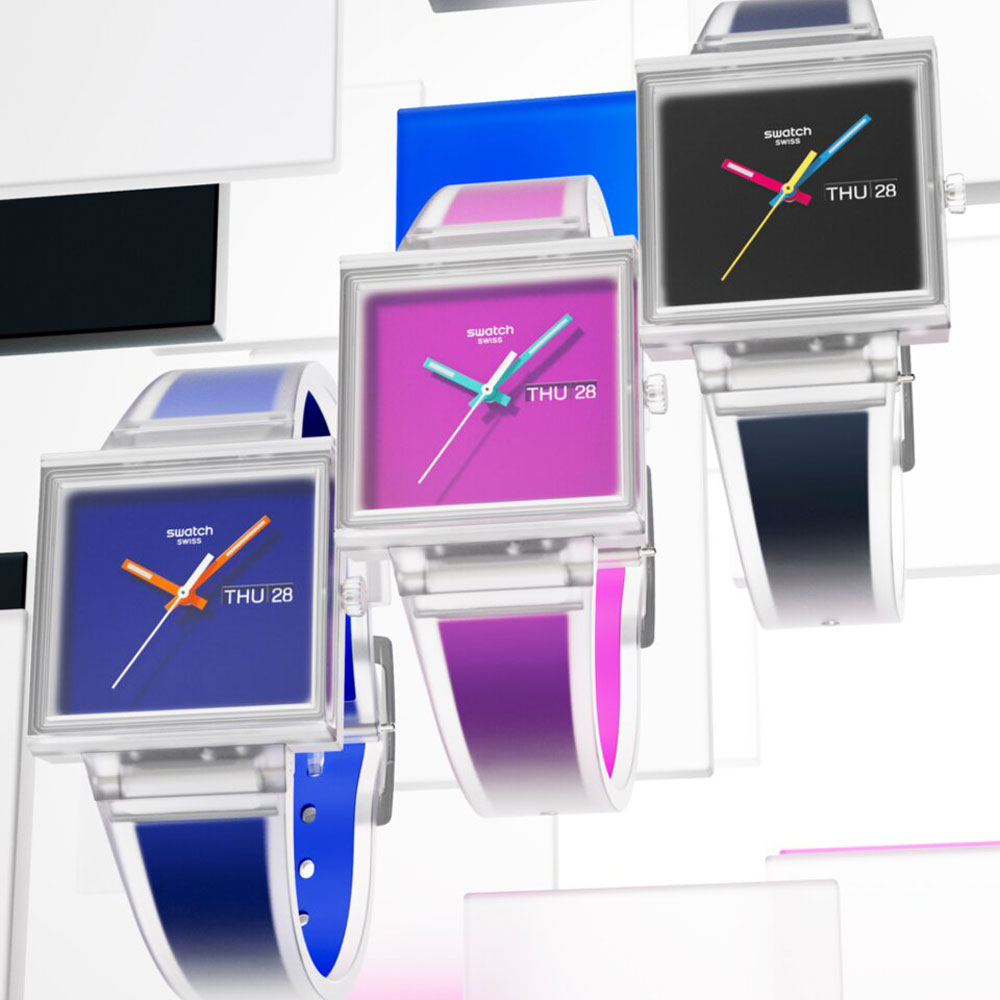
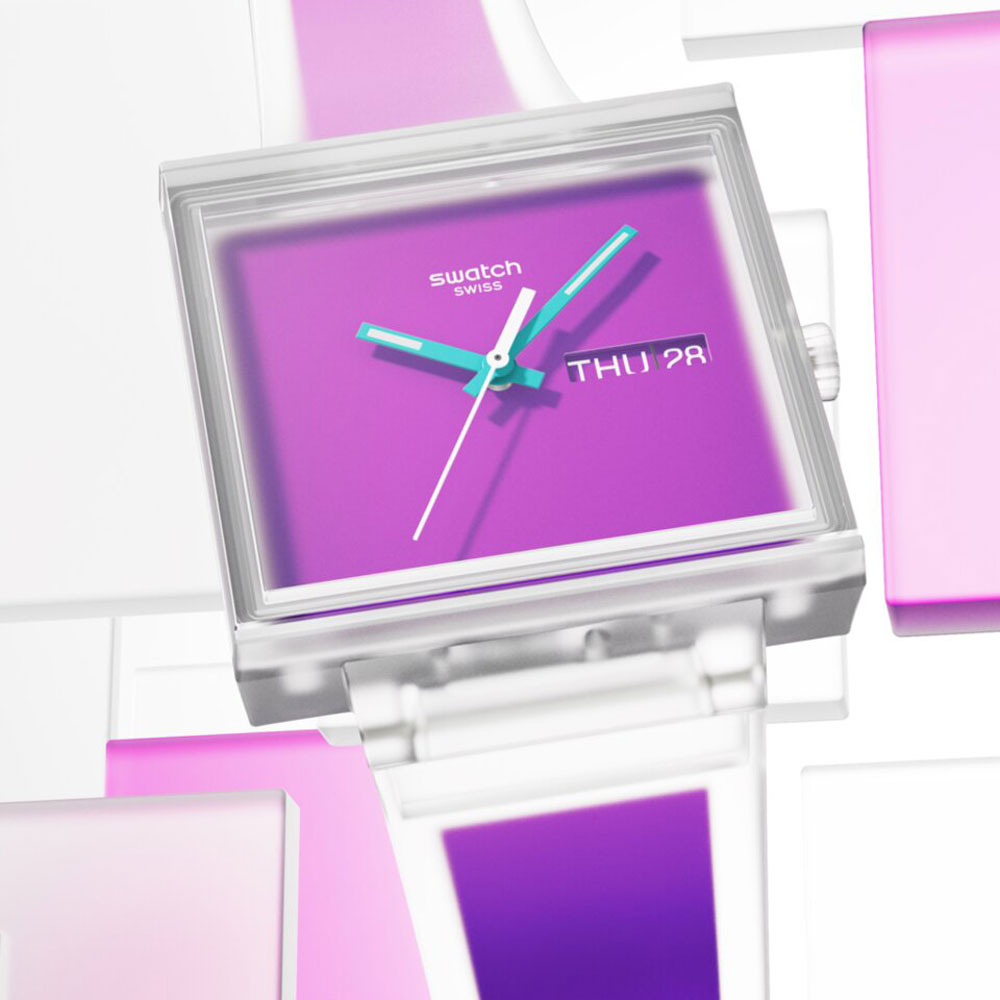
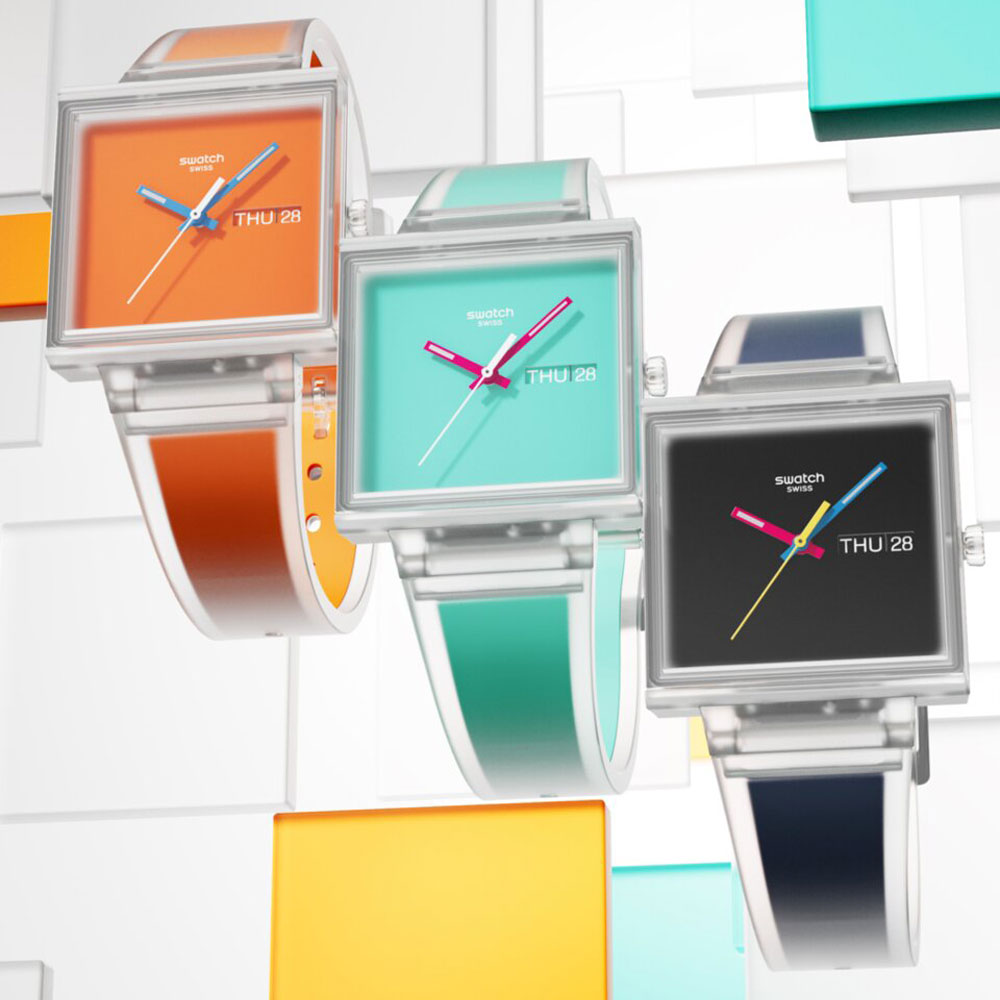
- Model: What if…Jelly?
- Movement: Quartz
- Functions: Hours, Minutes, Seconds, Date
- Case: transparent bio-based material, 33 mm, water-resistant up to 2 bar
- Dial: Black, Green, Blue, Orange, or Pink
- Wristband: Silicone
- MSRP: 100 €
Union Glashütte: Averin Chronograph Limited Edition Sachsen Classic 2026
The tile-like structure of the white dial on this “Averin” model lends it depth and a striking visual dynamism, while bold stripes in signal red, Nardo gray, and Daytona gray create a visual connection to the world of racing. The counters echo the look of classic instrument panels and emphasize the watch’s functional character. The striking red chronograph hand adds a bold accent and symbolizes speed and precision. union-glashuette.com
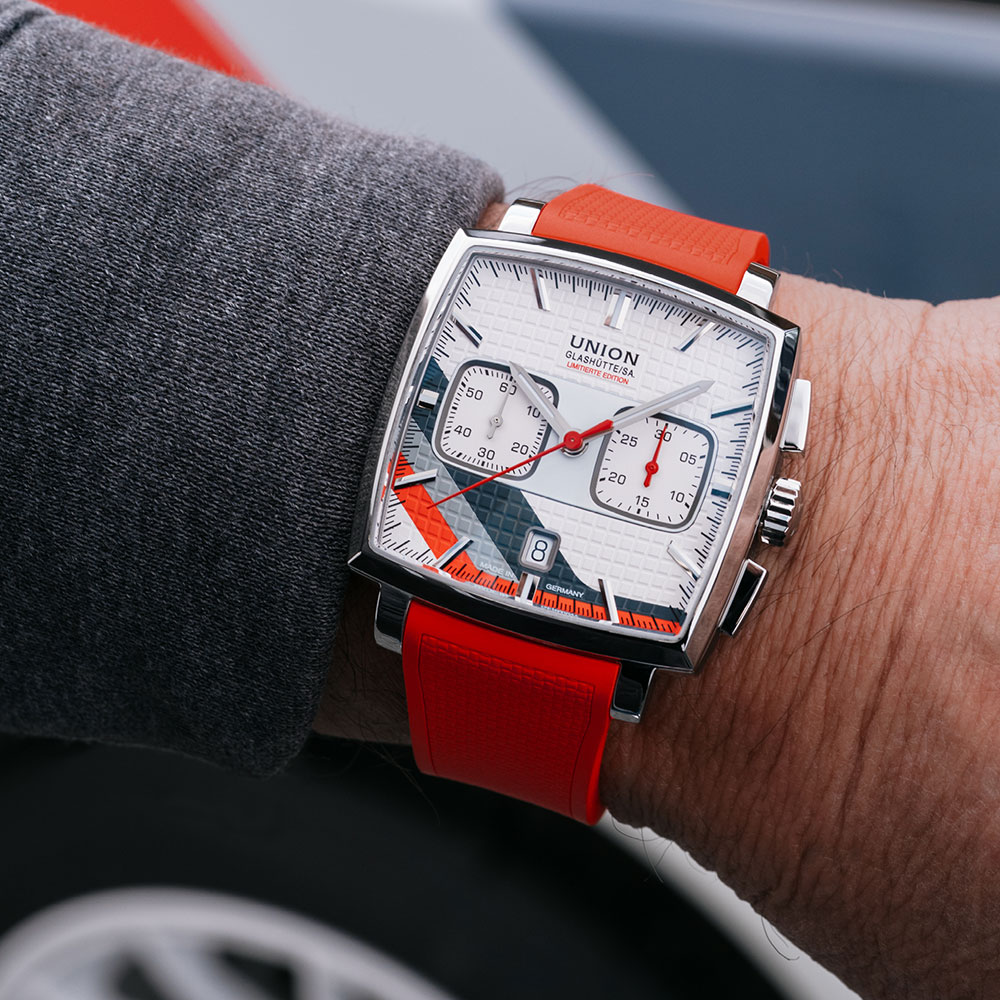
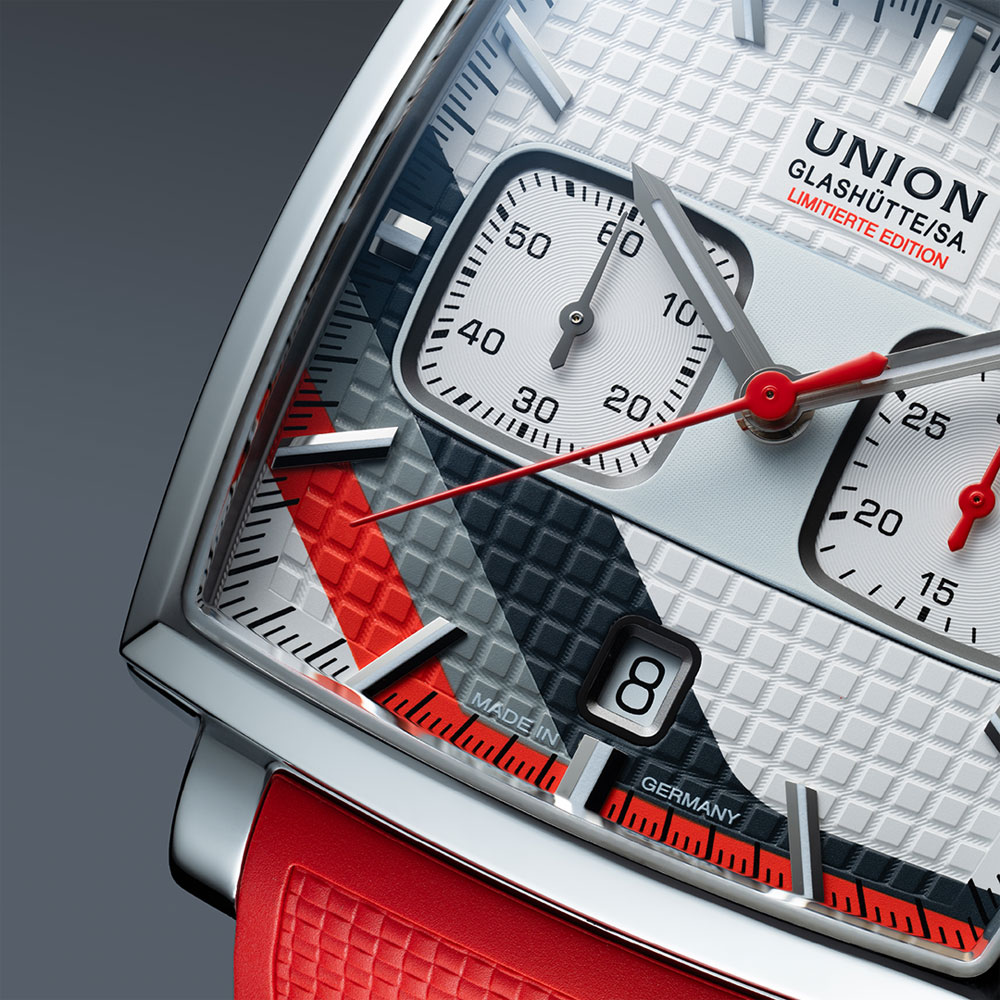
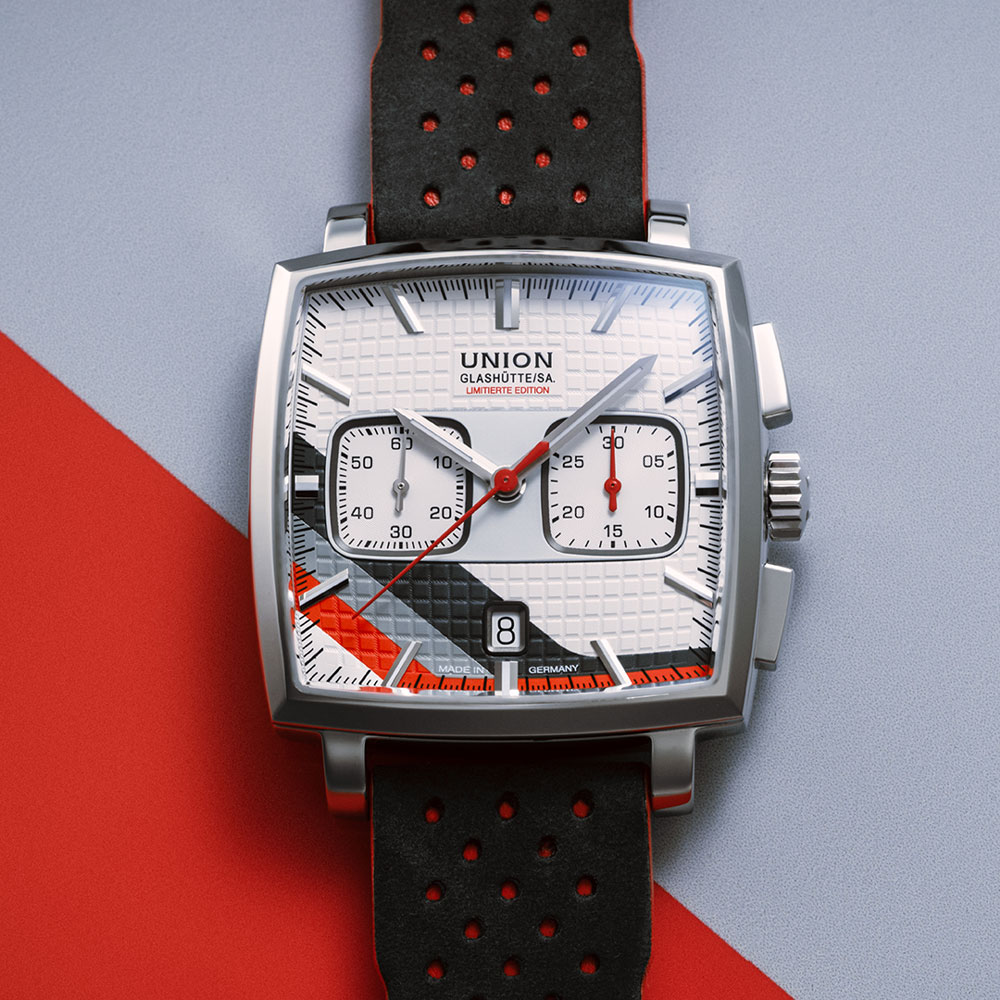
- Model: Averin Chronograph Limited Edition Sachsen Classic 2026
- Movement: Caliber UNG-27.S2, automatic, 65-hour power reserve
- Functions: Hours, minutes, small seconds, date, chronograph
- Case: Stainless steel, 41 x 15.54 mm
- Dial: White with gray and red accents
- Strap: Rubber with a pin buckle or leather with a double folding clasp
- Special feature: limited to 350 copies
- MSRP: €3,700