

Gallet: What's Behind the Relaunch of the 200-Year-Old Watch Brand
Admittedly, until Breitling announced its acquisition of Gallet last year, the name wasn’t really on our radar here at the editorial office—despite all the stories surrounding the brand’s watches. That said: Can we—and should we—really be familiar with every old brand? Well, maybe so. But now that Gallet is back in the watch world, we have the chance to rediscover the brand.
Cover photo: Gallet Multichron Pilot
Exactly 200 years after its founding, the historic chronograph brand made its comeback during the Geneva Watch Days.
Breitling is behind the relaunch. The company acquired Gallet in 2025 and has now incorporated the brand into its “House of Brands” alongside Breitling and Universal Genève. Georges Kern is the CEO of this new structure.
Gallet as part of the “House of Brands”
Breitling is and will remain the established core brand of the House of Brands—sporty, functional, and positioned in the modern luxury segment.
Universal Genève occupies a significantly more exclusive and elegant position. Its historic self-description, “Le Couturier de la Montre,” sums up its ethos well: sophisticated watchmaking combined with refined, almost couture-like design.
Gallet rounds out the portfolio at the other end of the spectrum. The brand is designed to open the door to the world of luxury mechanical watches and deliberately targets a segment from which many Swiss manufacturers have distanced themselves price-wise in recent years. The Financial Times describes Gallet accordingly as an entry-level brand within the House of Brands—as “Entry Luxury,” intended to provide access to the world of luxury watches.
Even though Breitling supports Gallet and provides a great deal of infrastructure and technology, Gallet is an independent brand with its own history, design, and target audience. Prices start at around 2,600 euros and go up to about 6,100 euros for the anniversary models.
It is no coincidence that Breitling has turned to a historic brand to round out its House of Brands. Gallet brings something that cannot be reinvented: an extensive archive and a history closely tied to functional chronographs and a pioneering spirit.
A brand with a spirit of discovery
Gallet was founded in La Chaux-de-Fonds in 1826. The brand became best known for its timepieces and chronographs designed for aviation, motorsports, sailing, and expeditions.
One of the most unusual artifacts from this story is a Gallet stopwatch called “The Sun.” It was used by Wilbur and Orville Wright to time their flights on December 17, 1903, in Kitty Hawk, and that very stopwatch is now on display at the Smithsonian National Air and Space Museum.
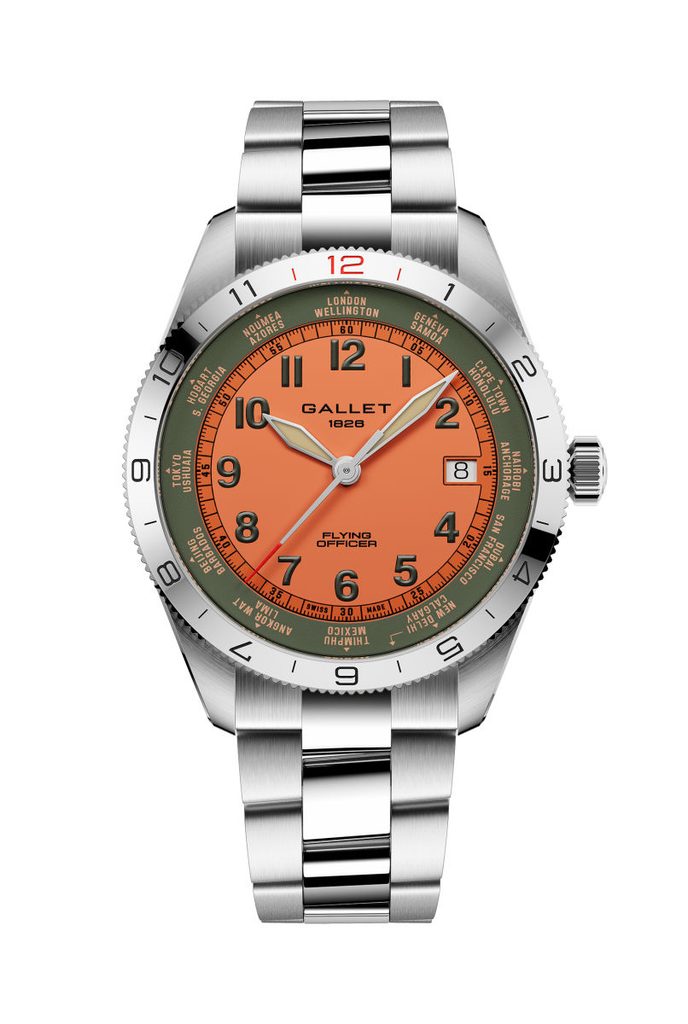
Later, watches such as the MultiChron Clamshell and the Flying Officer—introduced in 1939—were developed. The latter was designed for the early era of intercontinental flights. Pilots could use the city ring on the rotating bezel to track the time at their upcoming stopovers. A well-known example was later worn by Harry S. Truman.
Looking back, Gallet was known less for classic elegance than for watches that accompanied people on the go—in the air, on the road, at sea, or on expeditions. Functionality, reliability, and the drive to keep moving forward shaped the brand’s character.
And that’s exactly where the fresh start begins.
Adventure Turns into “Wanderlust”

The brand’s historic connection to travel, aviation, motorsports, and expeditions is translated into a new, contemporary brand concept: “The Great Escape – Wanderlust Since 1826.”
“Wanderlust” doesn’t simply mean traveling. Gallet describes the term as the desire to leave the familiar behind, seek new paths, and venture into the unknown. The past provides the starting point for this, without the revived brand becoming a museum of its own history.
The concept extends to the visual identity of the brand and its products. The bezel of the historic Flying Officer is not the only element that appears on the new watch. Gallet also drew inspiration for the orange-green color scheme from the patina of a historic model.
And the people with whom Gallet tells the story of this new world also follow this line of thought.
Instead of traditional testimonials, the brand collaborates with photographers, filmmakers, and adventurers. These include Donal Boyd, who documents conservation projects in Kenya; polar photographer Benjamin Hardman; paraglider Benjamin Kellett; wildlife photographer Dhir Jakharia; and Teresa Corti and L. Renee, who explore the landscapes around San Francisco.
Her journeys are documented in what are known as “Field Notes,” which reveal how Gallet interprets the concepts of movement and discovery today.
The new Gallets follow the archive
When it comes to watches, too, the company’s own history serves as a starting point.
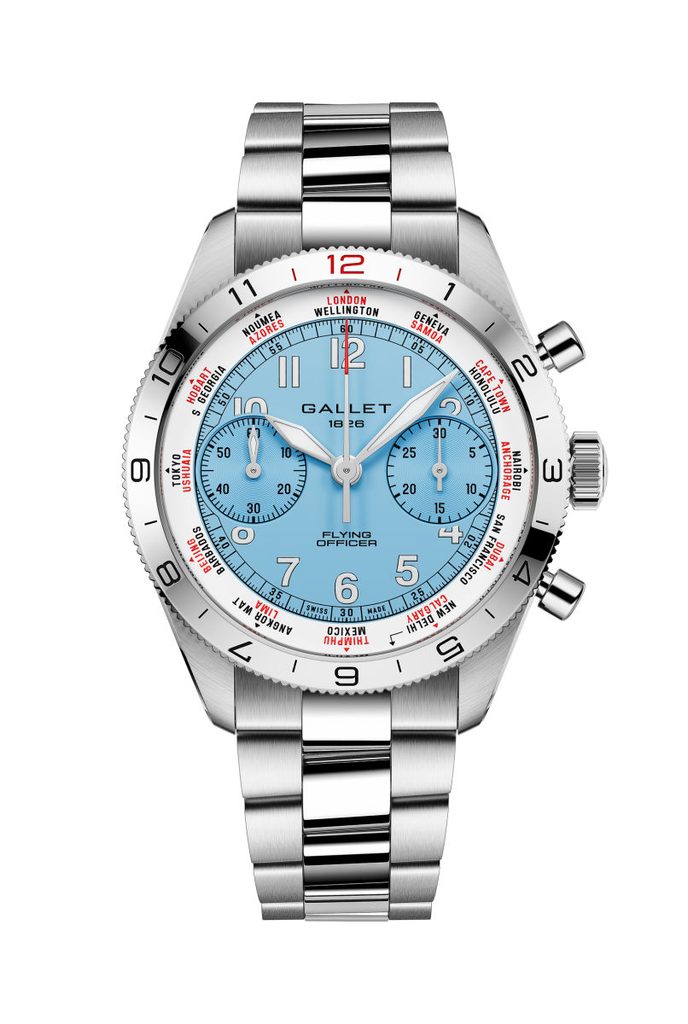
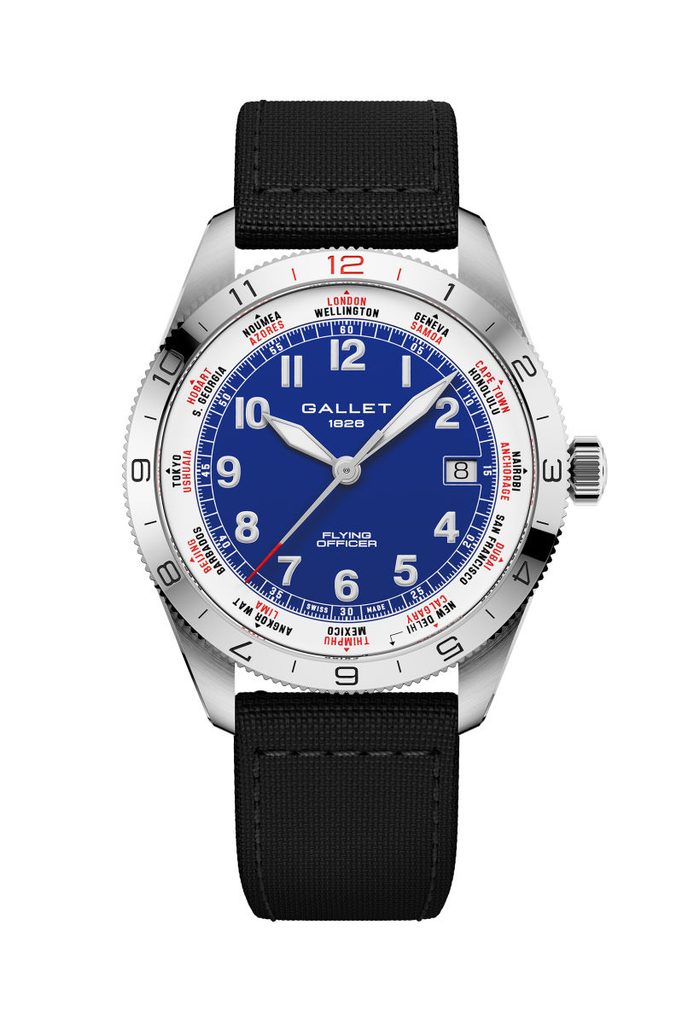
The Flying Officer
It incorporates what is arguably the brand’s best-known historical design. With a 40-millimeter case, it is available as both a three-hand automatic watch and a chronograph.
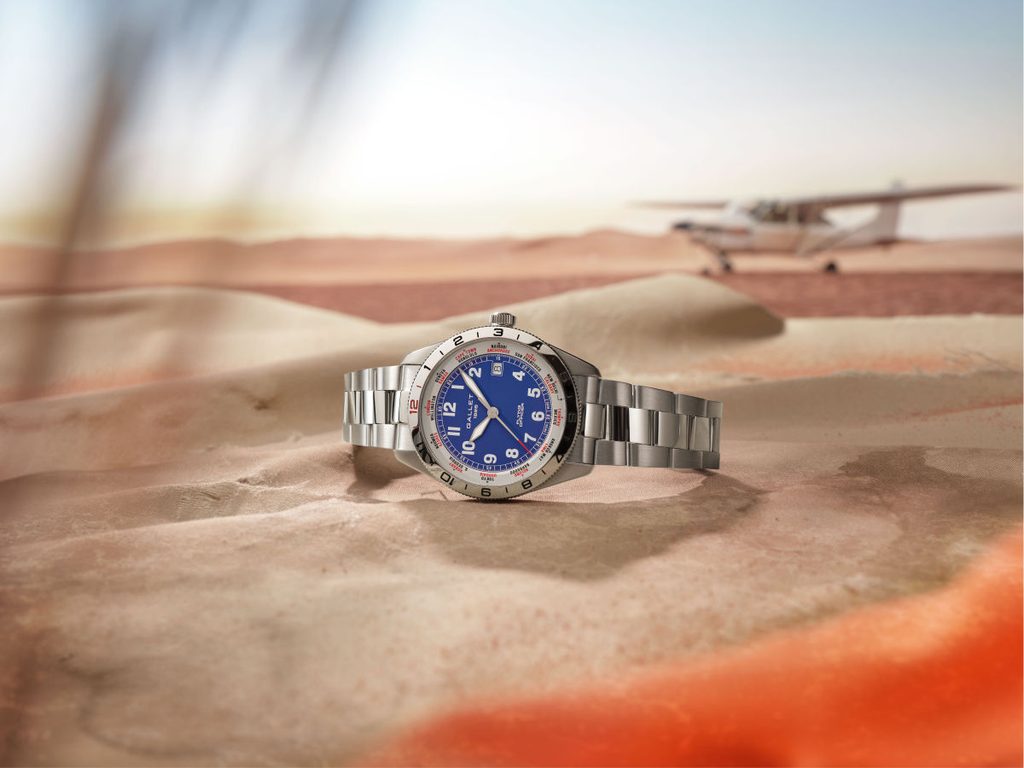
The characteristic city ring remains. However, instead of the stopovers on intercontinental flights of the past, the bezel now features 24 international destinations, some of which are deliberately more remote. The principle remains the same, but the context has changed.
The Flying Officer Automatic is powered by the Gallet 17 automatic movement and starts at around 2,600 euros. The Flying Officer Chronograph features the automatic Gallet 23 movement, based on the Sellita SW510, with a power reserve of approximately 65 hours. The price for this model starts at about 4,100 euros.

Multichron: the tool clocks
With the Multichron Pilot and Multichron Sport, Gallet draws on two more aspects of its past.
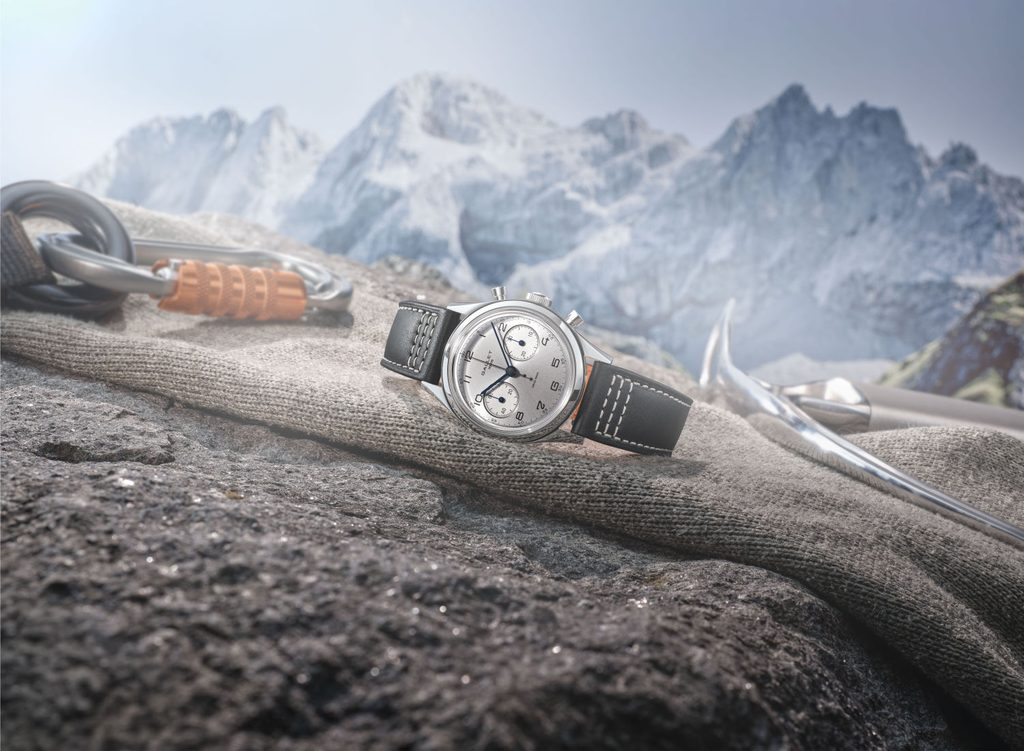
The 42-millimeter Multichron Pilot is inspired by the brand’s historic aviation and expedition chronographs. A bidirectional bezel allows for the display of a second time zone, and it also features a telemeter scale. This model is also powered by the Gallet 23 automatic movement.
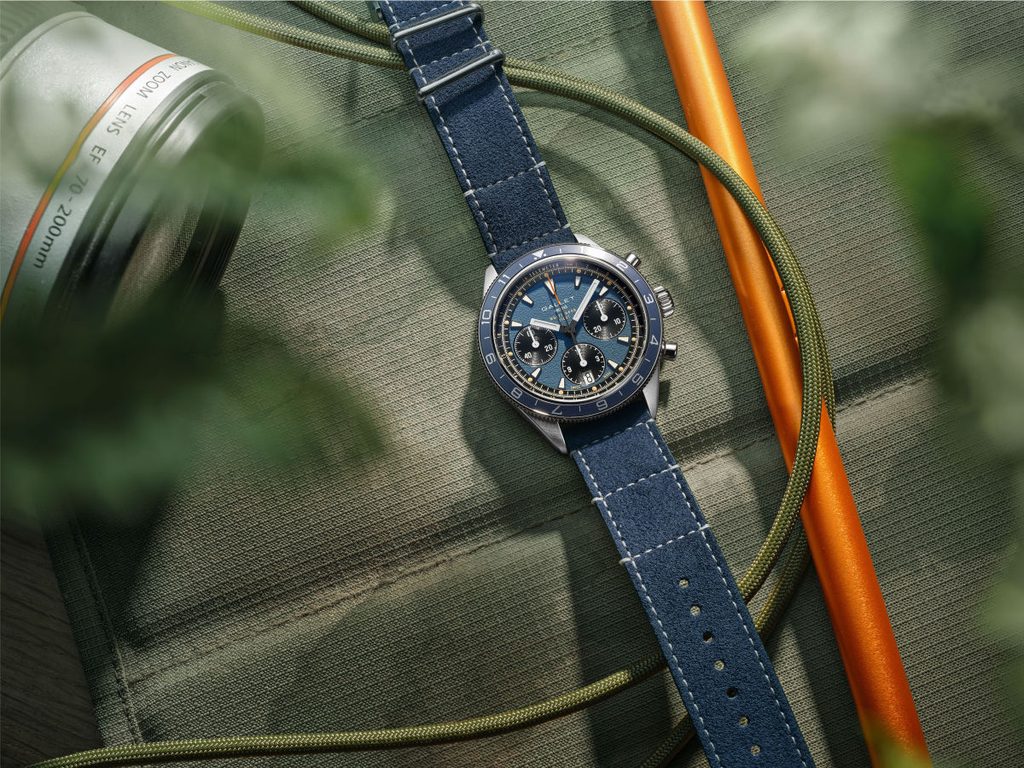
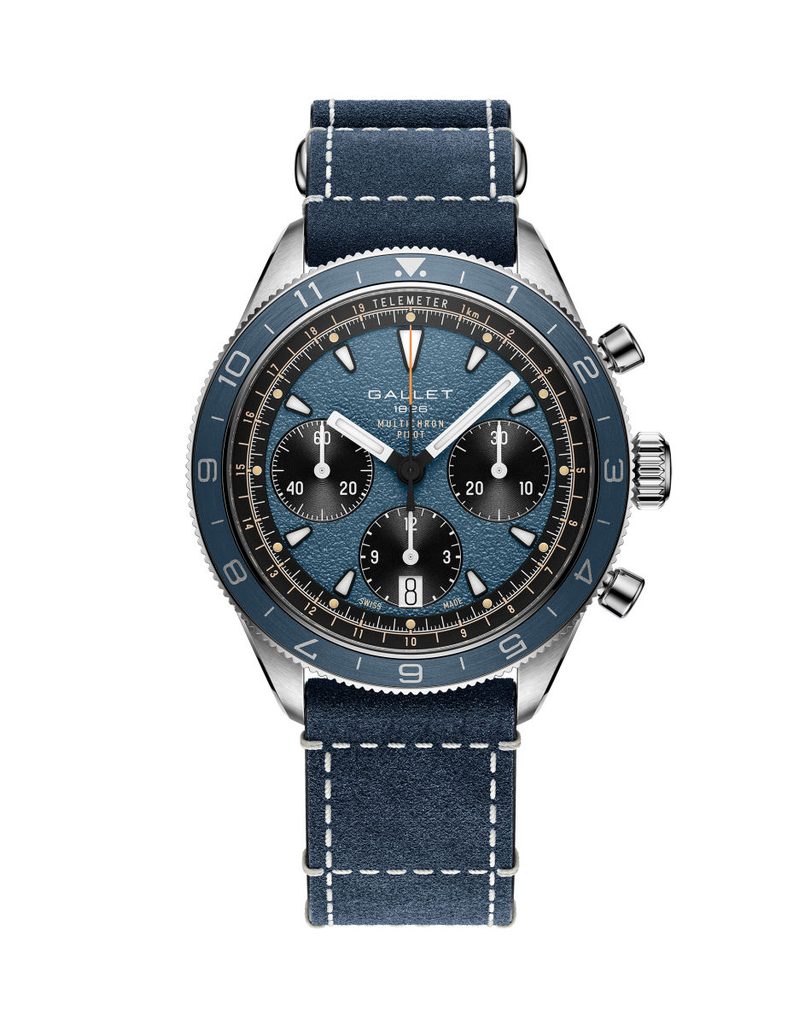
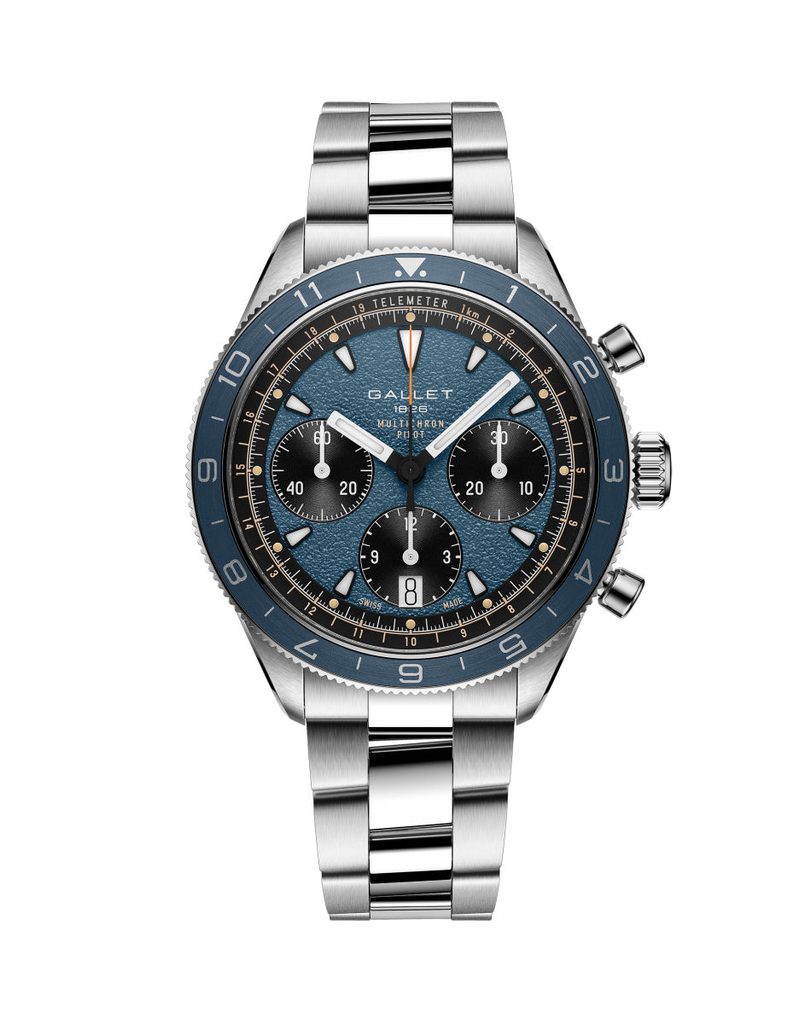
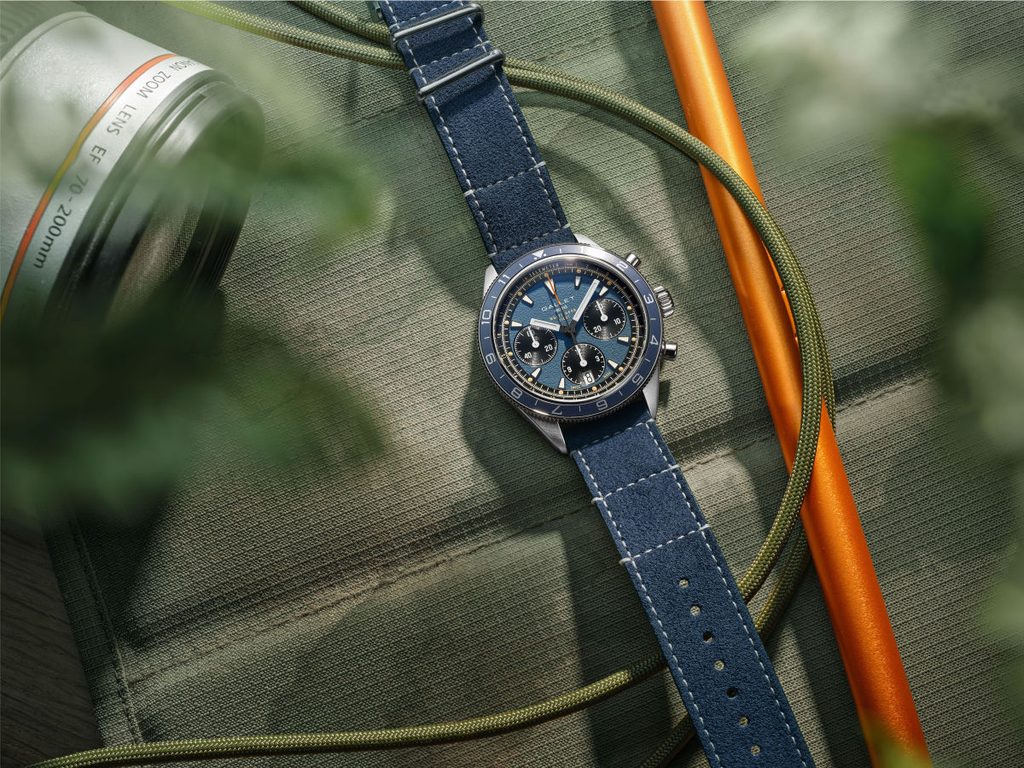
Gallet Multichron Pilot Models
The 41-millimeter Multichron Sport, on the other hand, draws inspiration from motorsports. Its tachymeter scale is, accordingly, one of the watch’s defining design elements.

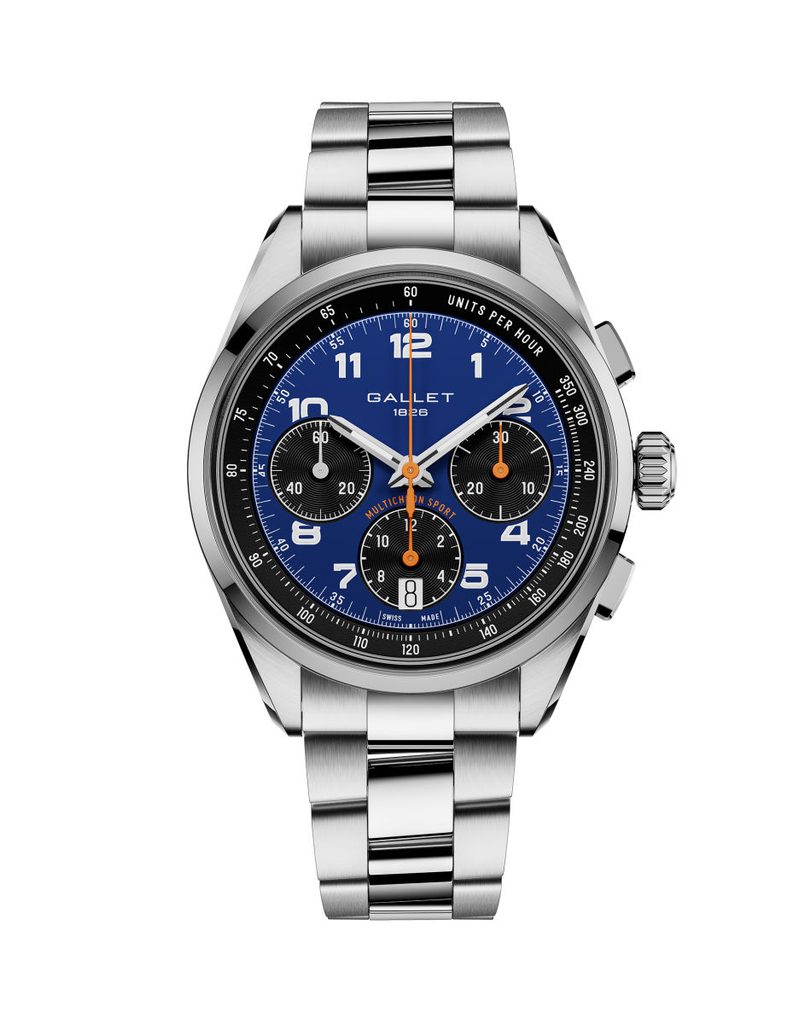
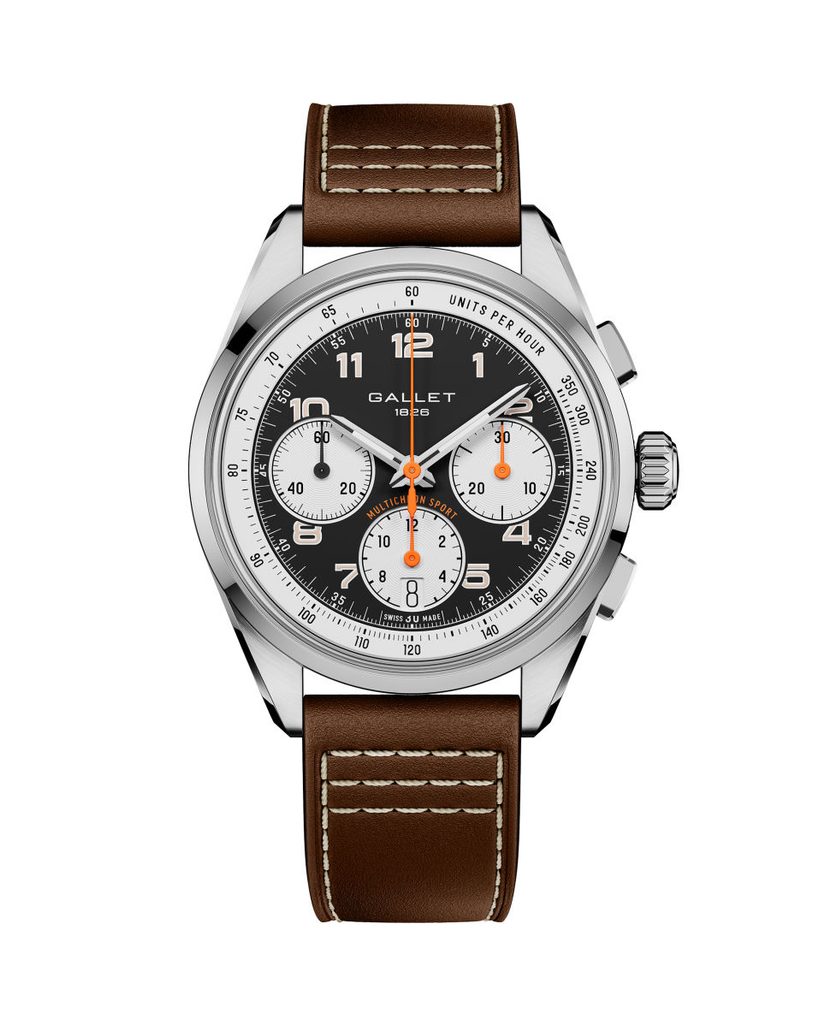
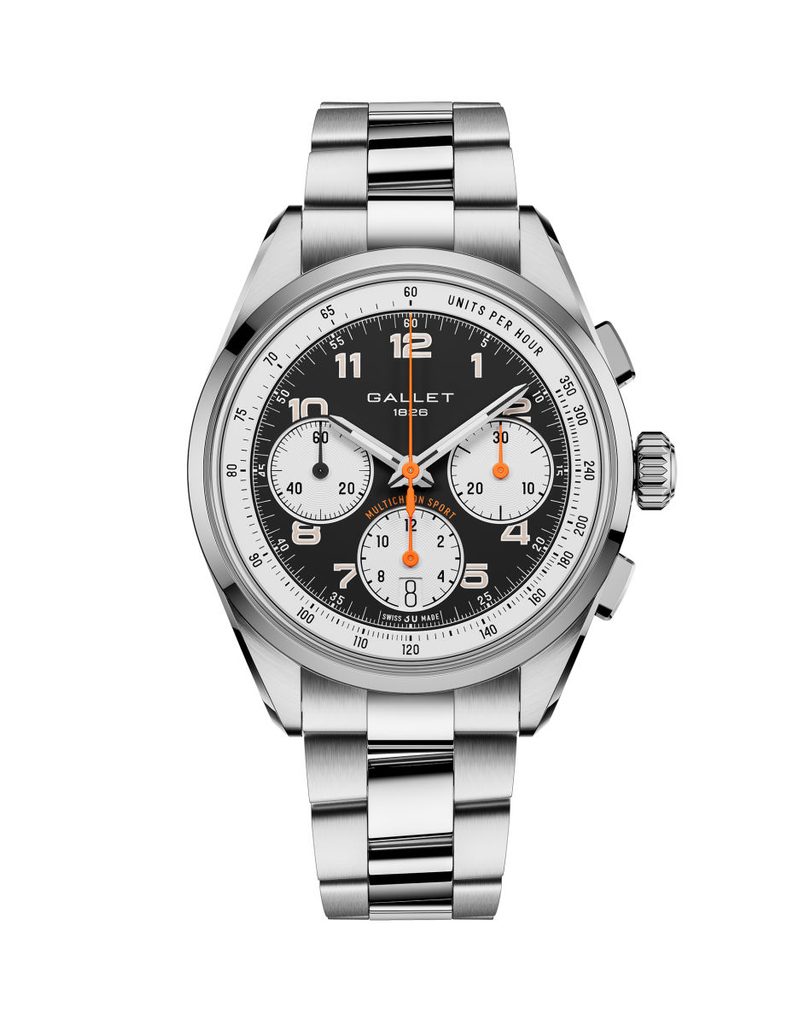
Gallet Multichron Sport Models
Neither model is an exact reproduction of a historical watch. Rather, the archive serves as the starting point for contemporary designs. Gallet himself describes the Multichron family as an expression of his “tool watch” heritage.
The Classics stay closer to the original
The three Gallet Classics, released to mark the 200th anniversary, delve even deeper into history.
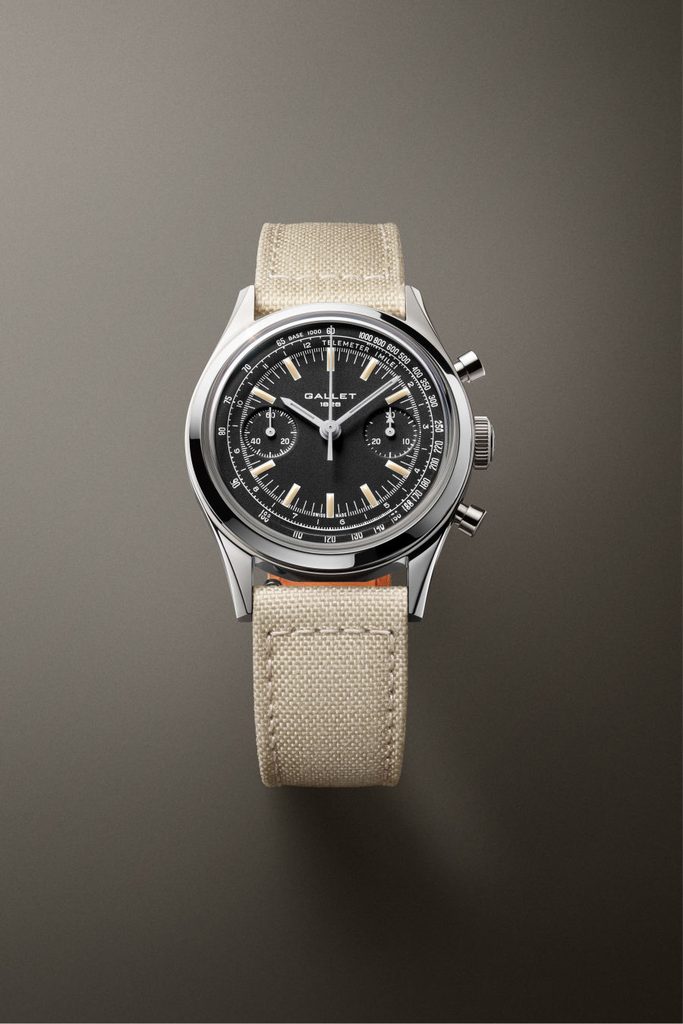

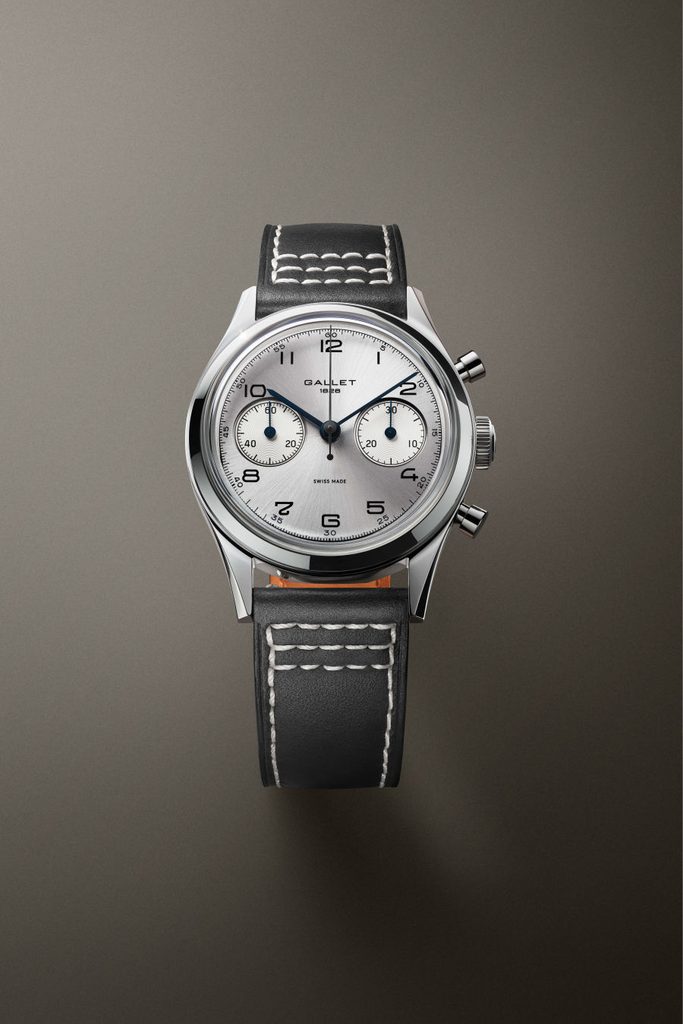
With their 38-millimeter cases, the “Tribute to Multichron 45,” “Tribute to Yachting Big Eye,” and “Tribute to Silverlight” models are much more closely modeled after their historical predecessors.
They also differ from the standard models in terms of technical specifications. All three are powered by the Breitling B09 hand-wound chronograph movement, which offers a power reserve of approximately 70 hours. Each of the Classics models costs around 6,100 euros.
This also highlights an important aspect of the new Gallet model: The brand operates independently but can draw on Breitling’s industrial infrastructure. Production, technical expertise, sales, and after-sales service are all provided by the existing network. Gallet therefore explicitly refers to the watches as “Manufactured by Breitling.”
More Than Just a Heritage Relaunch
Gallet has a rich history, occupies a clearly defined place within the House of Brands, and translates its former context of air travel, motorsports, and expeditions—embodied by “Wanderlust”—into a new, modern brand universe.
The watches also follow this approach: the Flying Officer and Multichron draw on historical concepts and build on them, while the Classics remain more faithful to their original models.
With this move, Breitling is not only reviving a historic name but also repositioning Gallet as a contemporary watch brand.