
The Art of Time – Patek Philippe in Milan
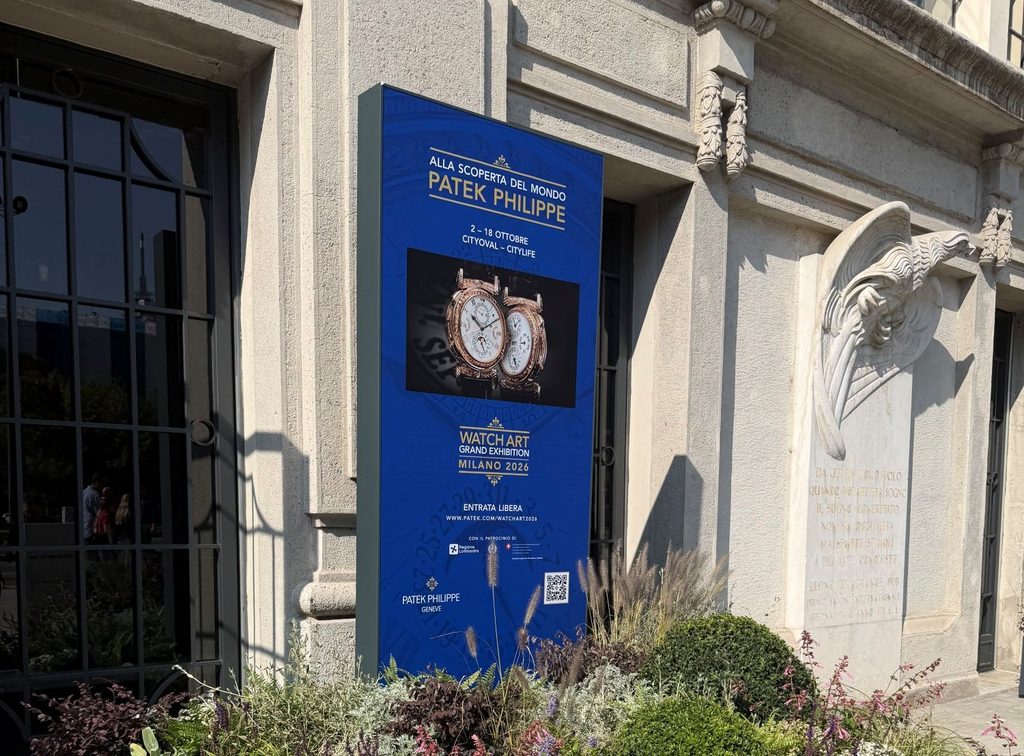
On October 2, Patek Philippe opened the “Watch Art Grand Exhibition 2026” in Milan—bringing to life the history, craftsmanship, and present-day legacy of one of the world’s most prestigious watch manufacturers. In doing so, Patek Philippe also demonstrates the immense cultural significance of fine watchmaking today.
INSIGHT-LUXURY was there and took a look around.
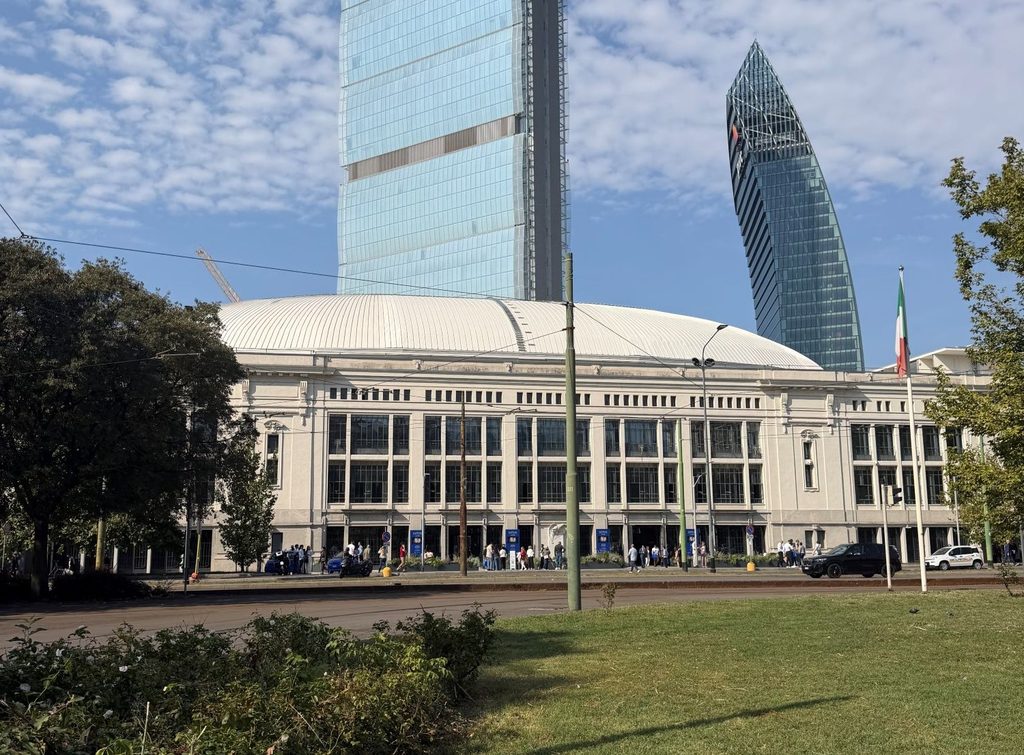
The CityOval is not located right in the center of Milan, nor is it on one of the major shopping streets. Nevertheless, for an exhibition of this scale, the venue is nearly ideal: spacious, stylish, and airy, without seeming oversized.
As soon as visitors step inside the former Palazzo delle Scintille—now CityOval Milano—Patek Philippe makes a strong statement. Taking center stage is a glass sculpture of Geneva’s Jet d’Eau, approximately nine meters tall—one of Geneva’s most iconic landmarks. It brings Geneva to Milan while also serving as the focal point of the entire exhibition.
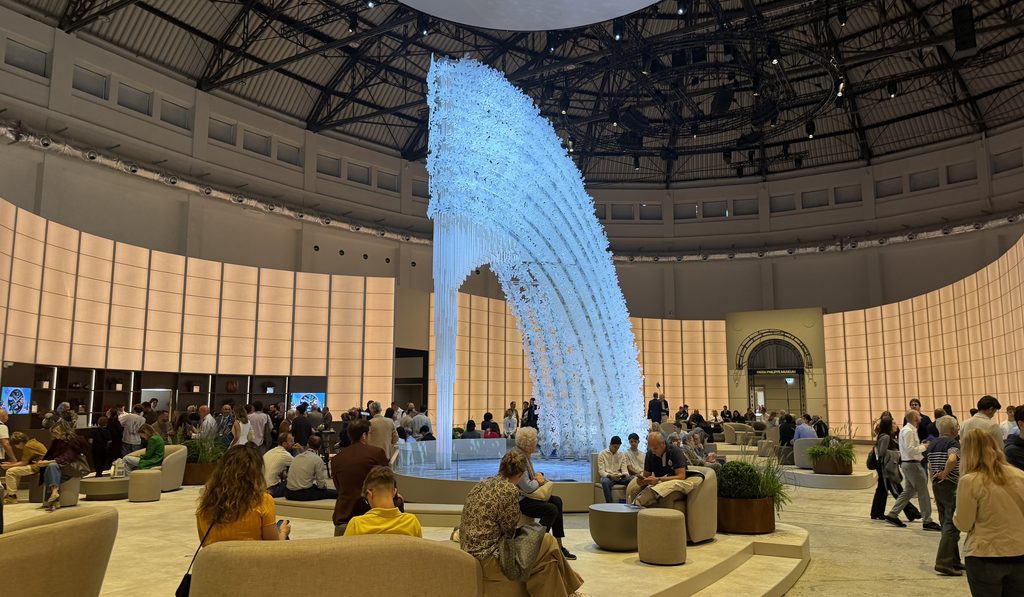
The individual sections follow the oval shape of the building. Surrounding the Jet d’Eau is a spacious area designed for socializing, conversation, and taking a break between the various stations. Three separate passageways lead to the exhibition’s three main sections: the first is the Patek Philippe Museum, the second is “The World Today,” and the third is entirely dedicated to the Manufacture and its technical achievements—the movements, the patents, and the craftsmanship.
Anyone who has been following the watch industry for many years has seen quite a bit. Yet the scope, content, and presentation of this exhibition are unparalleled and truly impressive.
An exhibition that tells a story down to the last detail
Patek Philippe has created an exhibition space entirely of its own design within the CityOval. Each area follows a clear theme, and the design extends from the space itself down to each individual display case.
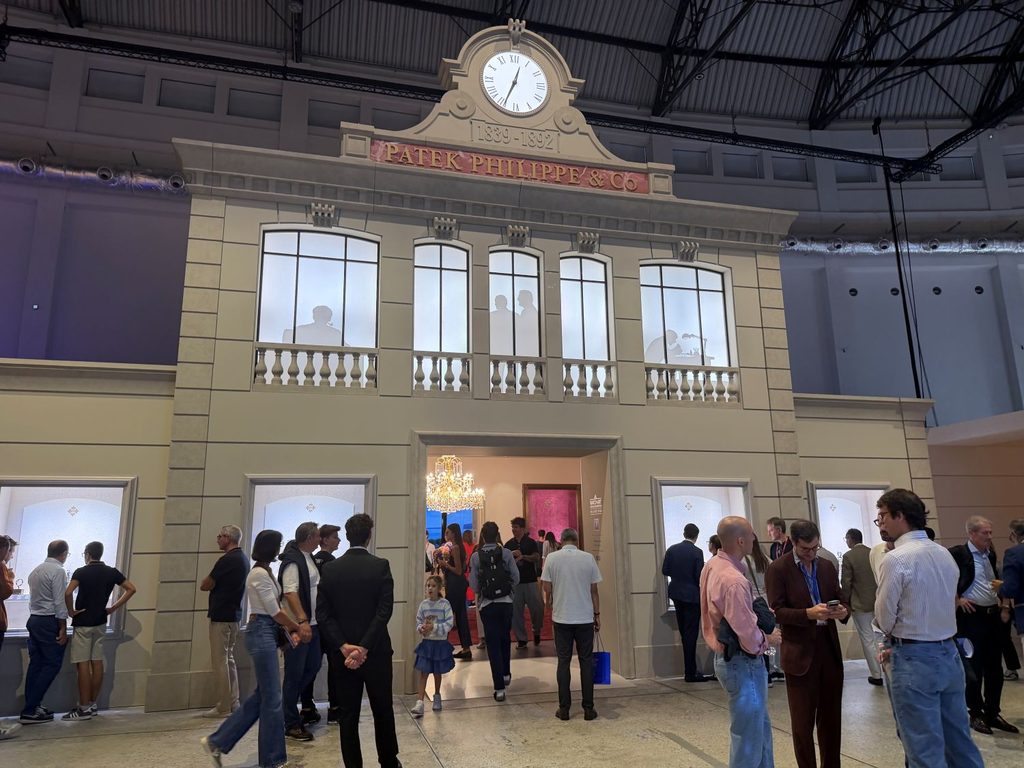

The entrances to two of the three exhibition areas in the oval section of the hall.
The museum area has a deliberately more classic and understated feel. Other rooms are designed in a distinctly more modern style. In particular, the section focusing on production and watch movements presents technical topics in a contemporary setting.
The presentation of the current collection also follows this principle. Both inside and out, this space is modeled after the Patek Philippe Salon on Rue du Rhône in Geneva—including a window that offers a view of the city and the lake, just as if you were actually there.

The storytelling here does not rely on lengthy explanations, but rather on spaces, materials, light, objects, and transitions. History, technology, and craftsmanship are not presented side by side, but are interwoven.
From Geneva to Milan
Since 2012, Patek Philippe has been bringing its Watch Art Grand Exhibitions to major international cities. Following stops in Dubai, Munich, London, New York, Singapore, and Tokyo, Milan is the seventh stop and the first in Italy.
With just under 2,900 square meters, 15 themed areas, and more than 500 watches, movements, and objects, it is also the largest edition to date. There are 152 models from the current collection on display, along with numerous historical pieces and 21 watches in the “Master of Sound” section.
But numbers alone do not do justice to the scale of the experience. What is even more impressive is how seamlessly the individual areas flow into one another. You move through a succession of different worlds without ever losing the sense of connection.
Watchmaking: More Than Just What’s Behind the Glass
A significant portion of the exhibition is dedicated to the people behind the watches. Watchmakers demonstrate their craft on site. Visitors can also watch artisans at work using traditional techniques such as enamel painting, engraving, guilloché, and gem-setting.
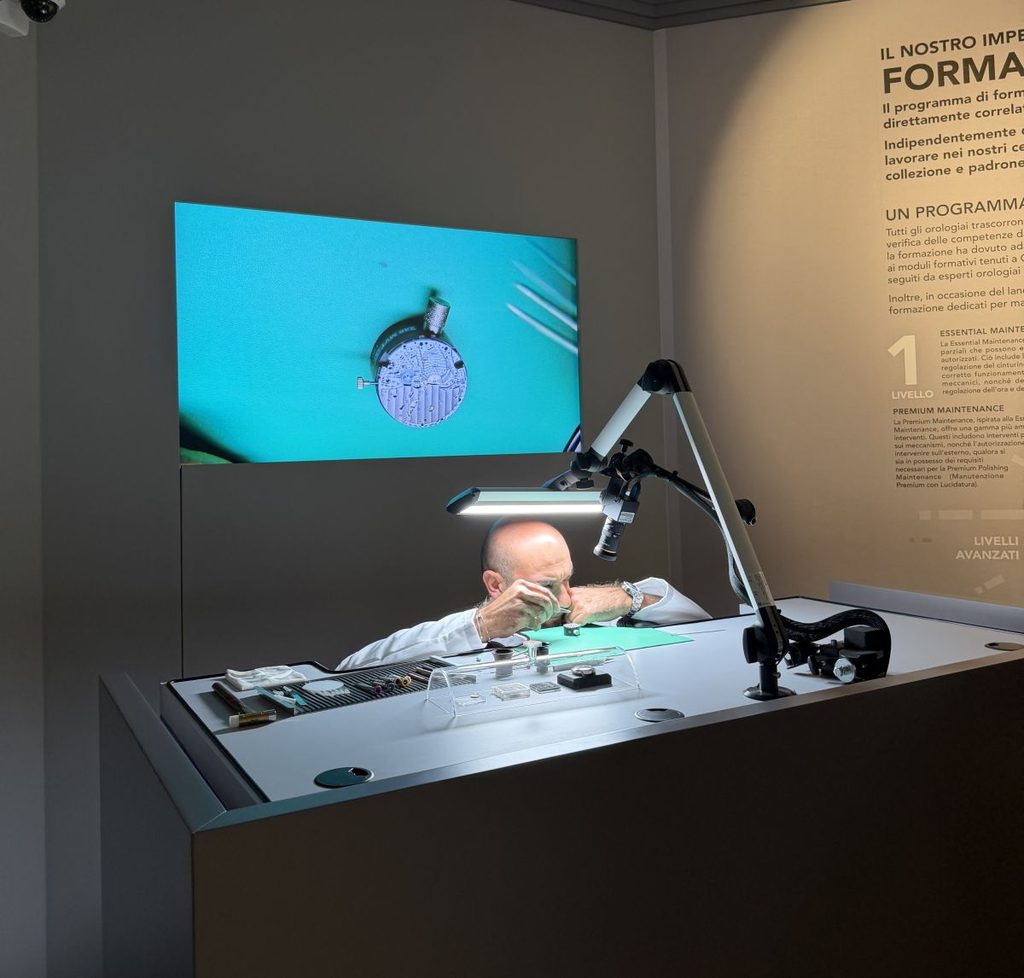
Terms commonly used in haute horlogerie thus take on a different meaning. One can immediately see the effort and skill that go into each individual detail.
When it comes to these traditional techniques in particular, Patek Philippe is not merely concerned with creating exceptionally elaborate timepieces. The manufacture also uses them to keep alive skills that only a few people still master today.
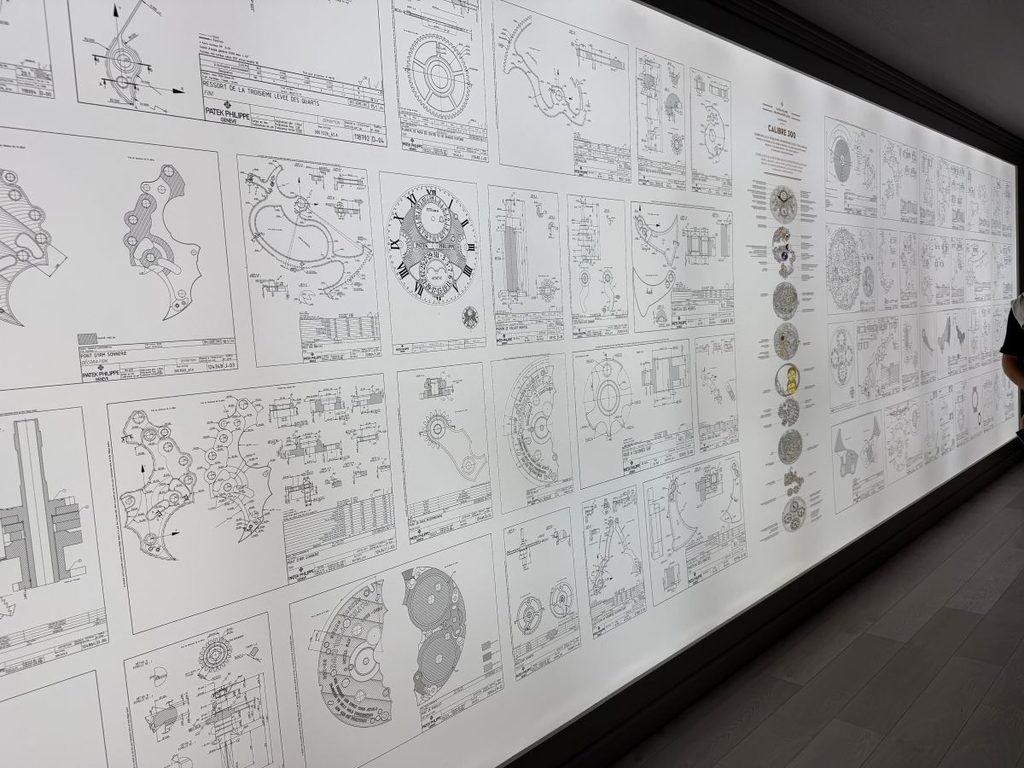
The technical aspects of watchmaking are also given ample attention. Movements, components, and manufacturing processes are showcased, as are large and very large complications. A separate section is devoted to striking mechanisms and minute repeaters.
A story that makes a particularly strong impression
The history of Patek Philippe is just as impressive as the exhibition itself.
Calibre 89: Created in 1989 to mark Patek Philippe’s 150th anniversary, this pocket watch combines 33 complications and was considered one of the most complex mechanical watches in the world when it was unveiled. The Caliber 89 combines 33 complications—including a tourbillon, perpetual calendar, sidereal time, sunrise and sunset times, minute repeater, grande and petite sonnerie, split-seconds chronograph, and the calculation of the date of Easter.
Of course, anyone who has spent any time studying watches is familiar with many of the key moments in this history. In Milan, however, they are brought together in such a way that new connections become apparent.
Historic Patek Philippe pieces, brought to Milan specifically from the company’s own museum, are first placed within the broader context of early forms of watchmaking—here, too, with numerous original exhibits. From there, the exhibition traces the evolution through various eras and technical advancements, culminating in the manufacturer’s contemporary timepieces and complications.
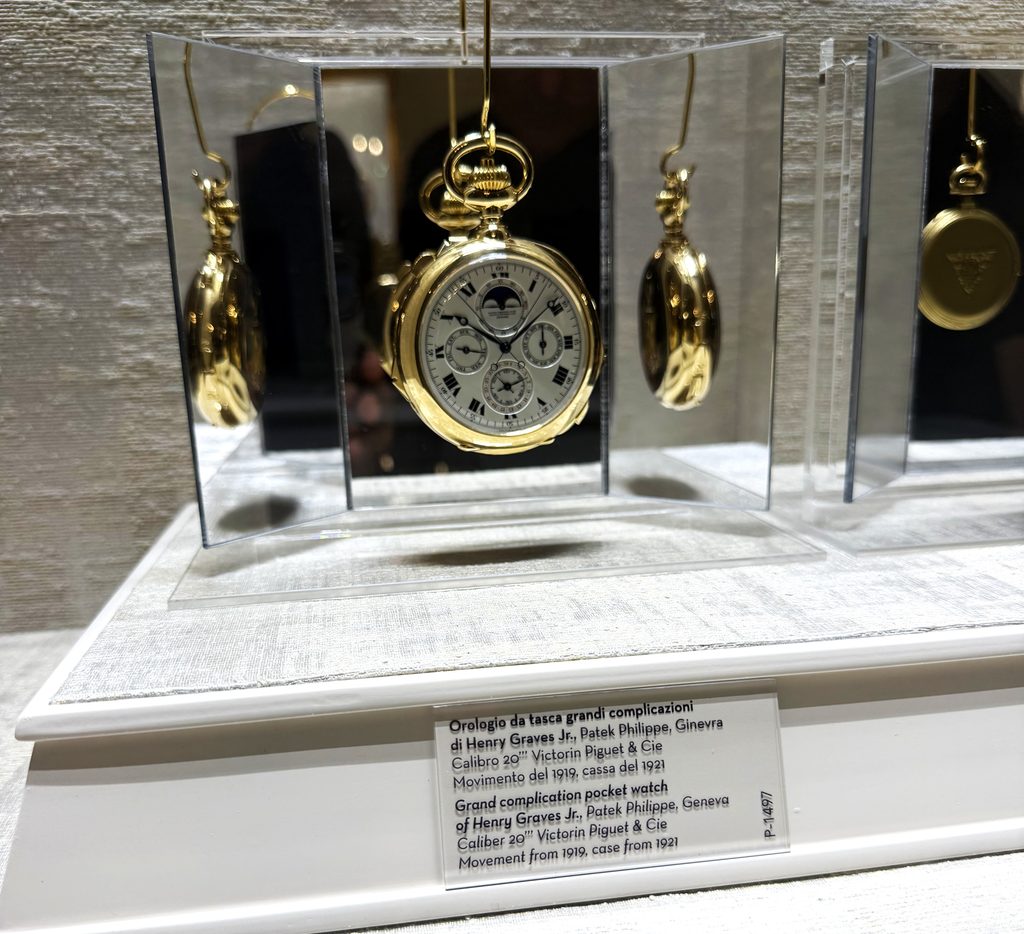
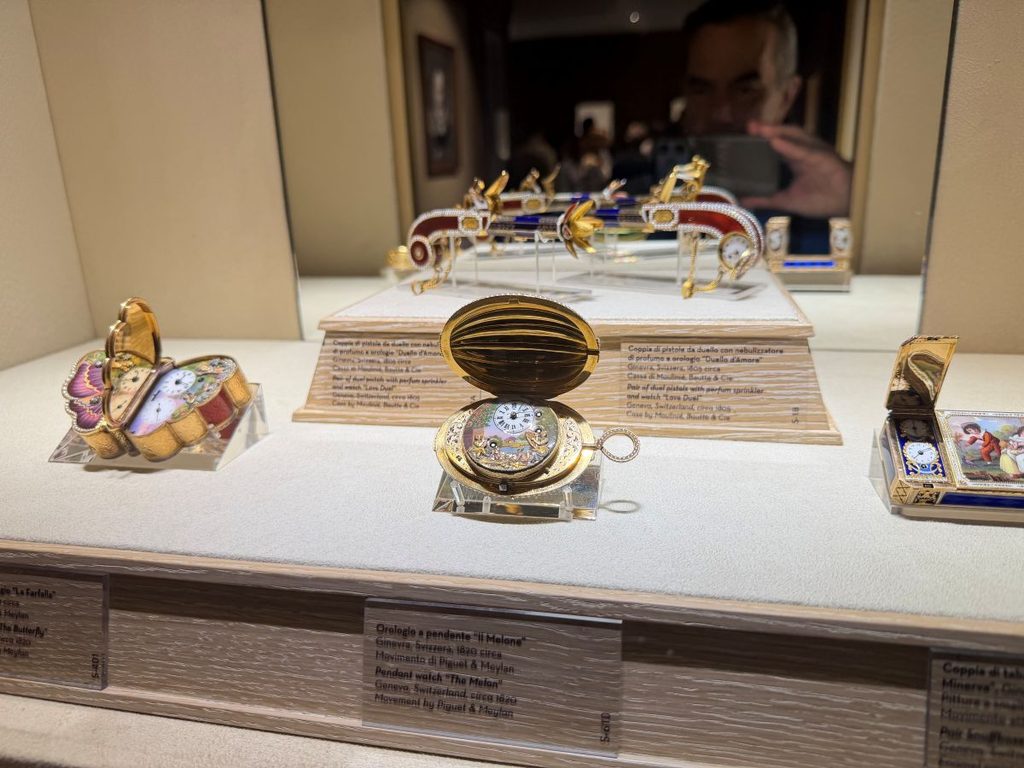
Image 1: Historic pocket watch with grand complications for Henry Graves Jr., Patek Philippe, Geneva. The movement, by Victorin Piguet & Cie, dates from 1919; the case from 1921. Image 2: Historic jewelry and fob watches in the museum section of the exhibition. In the center is the pendant watch “The Melon,” Geneva, circa 1820, with a movement by Piguet & Meylan.
Italy as Part of the Exhibition
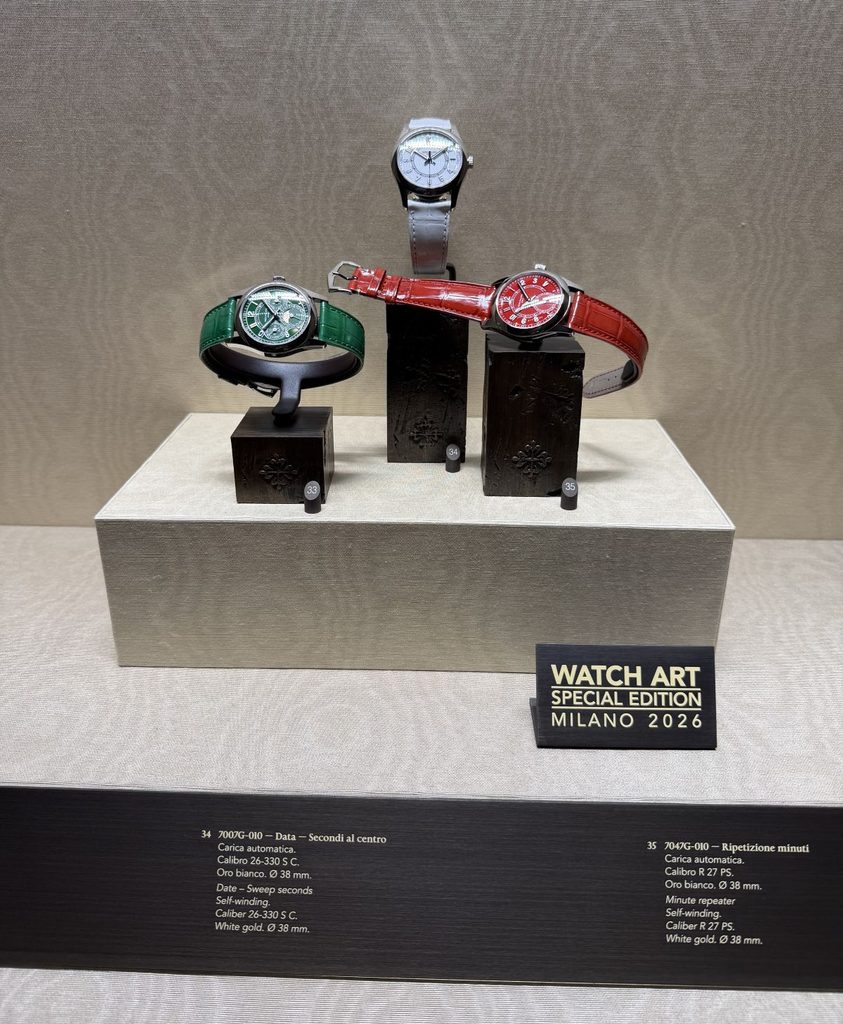
Milan is not just a venue. For the Watch Art Grand Exhibition, Patek Philippe has created 25 Rare Crafts pieces featuring motifs inspired by Italy. Milan, Venice, Tuscany, Naples, Capri, Apulia, and Sicily are interpreted using traditional techniques.
Seven watches created especially for Milan.
The range extends from a steel Aquanaut to the Calatrava and Perpetual Calendar, all the way to minute repeaters and world time watches. Two World Time Minute Repeaters depict the center of Milan on cloisonné enamel dials, showing the city by day and by night, respectively.
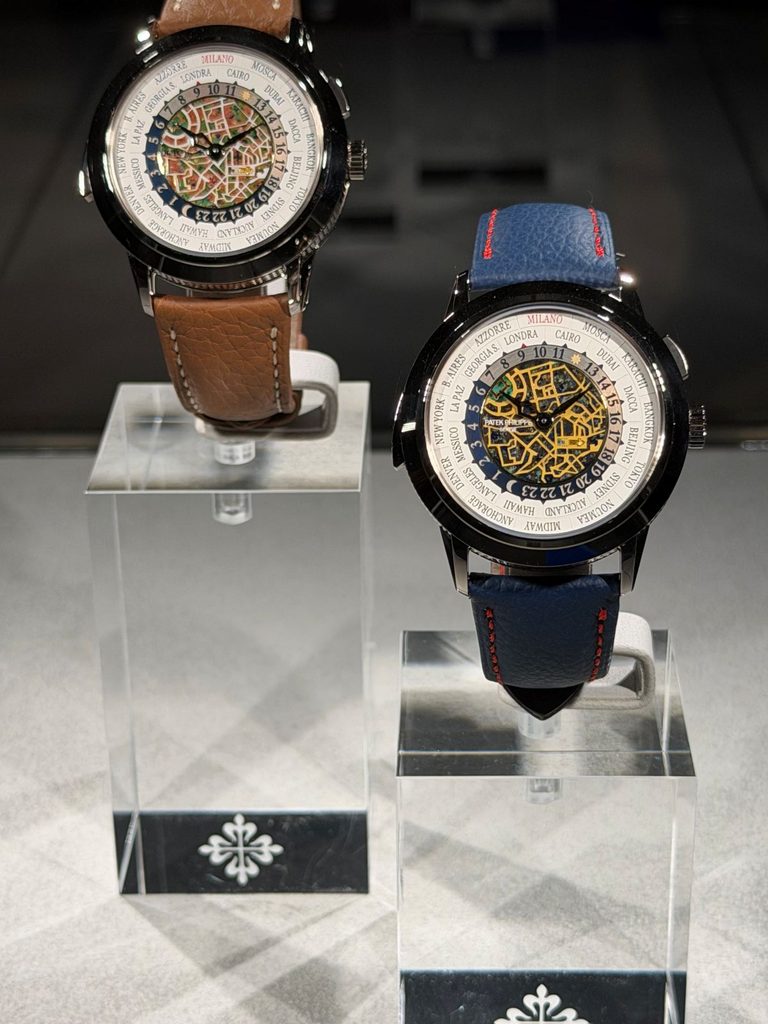
The most significant technical debut is the Ref. 5978P-010. For this model, Patek Philippe has, for the first time, combined its hand-wound chronograph movement with an instant-switching perpetual calendar.

The New Gondolo Ladies First
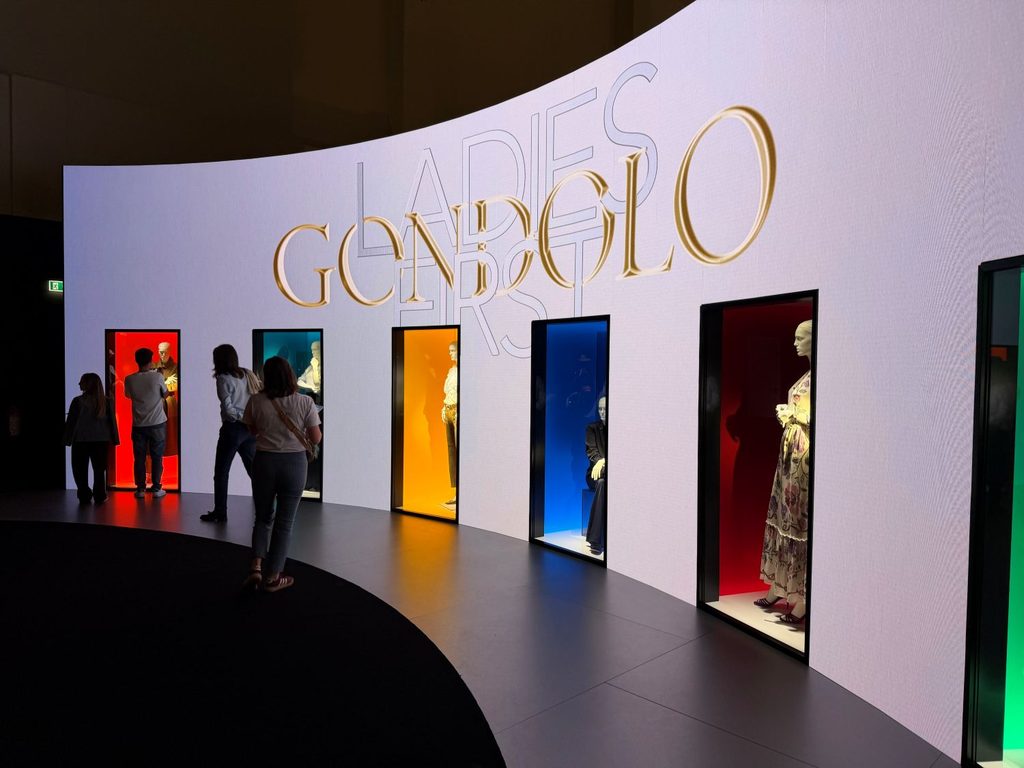
With this exhibition, Patek Philippe is also launching a new chapter in its line of ladies’ watches: the Gondolo Ladies First. The collection takes its cue from the 2009 Ladies First Chronograph, whose design language has now been reinterpreted in a more modern and colorful way. Distinctive features include the cushion-shaped case with softly rounded contours, flexible lugs, and a distinct Art Deco aesthetic.
The collection includes six models in white gold, rose gold, and a combination of both gold tones. Three variants are designed more as jewelry watches; the most elaborate versions feature a total of 687 brilliant-cut diamonds and an additional twelve trapezoid-cut topazes as hour markers. All models share the E15 quartz caliber, which Patek Philippe crafts with the same attention to detail and finishing as the manufacture’s mechanical movements.
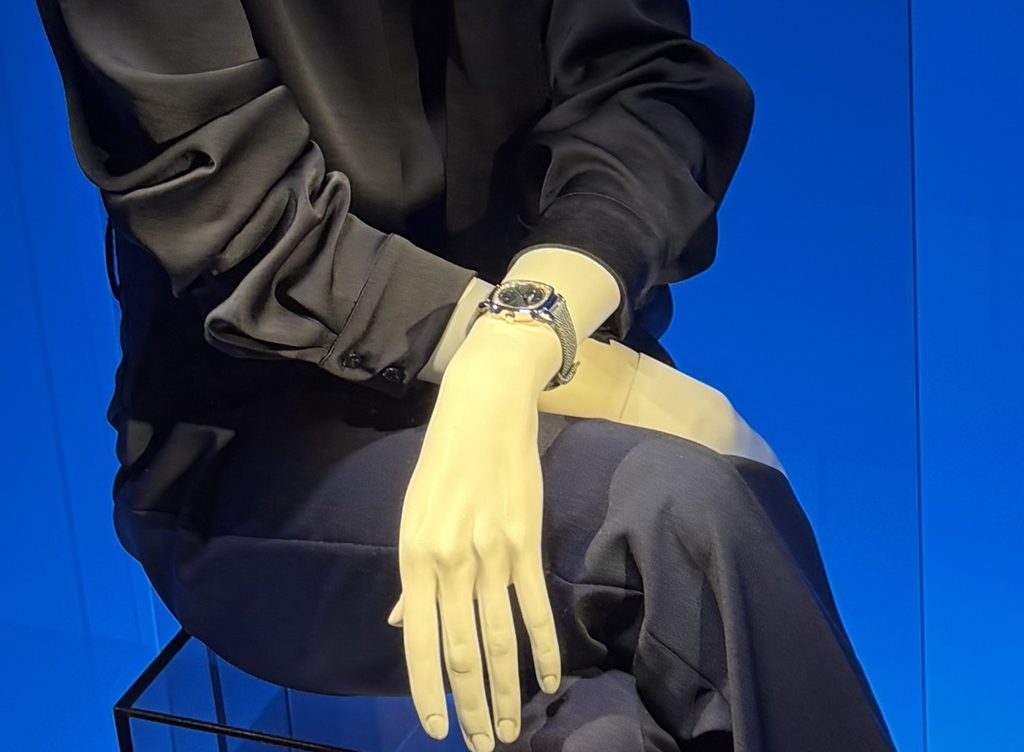
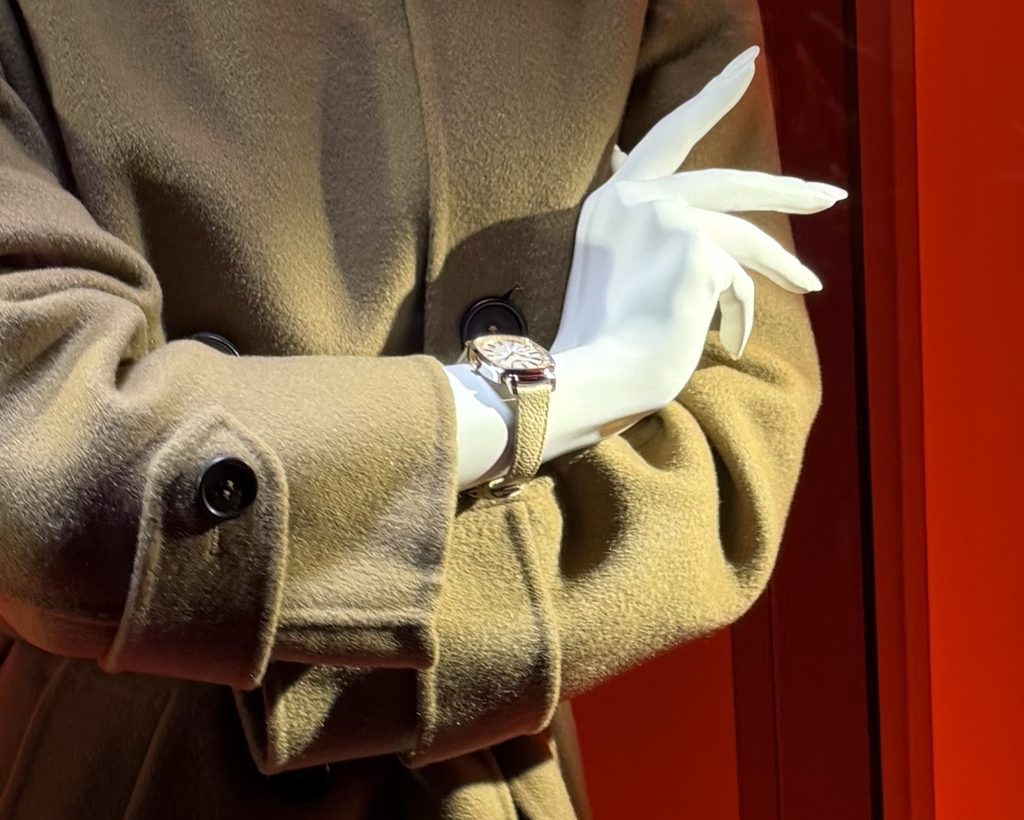
Image 1: Patek Philippe Gondolo Ladies First Ref. 7043G-001 in white gold with a blue-gray opaline dial and a color-coordinated calfskin strap with a denim texture. The 31 × 34.8 mm case features the characteristic cushion-shaped Gondolo design; the bezel is set with 108 diamonds. Image 2: Patek Philippe Gondolo Ladies First Ref. 7043GR-001 in white and rose gold with a silvery opaline dial and a beige calfskin strap. Rose gold details on the crown, lugs, and dial provide contrast; here, too, the bezel is set with 108 diamonds.
The launch is accompanied by the new “I AM. I WEAR.” campaign. Rather than conveying a traditional product message, it aims to emphasize self-identity and independence: The watch is defined not by the occasion or status, but by the woman who wears it.
Unlike the seven models released specifically for Milan, the Gondolo Ladies First is not a limited edition for Italy, but rather part of the regular collection and available internationally.
More Than Just a Brand Exhibition
Perhaps that is precisely the key point. In Milan, Patek Philippe does not simply showcase its collections, nor does it focus solely on its history. The manufacturer creates a world of its own, in which products, craftsmanship, technology, and history are interwoven.
The watch always remains the center of attention. Patek Philippe doesn’t need a big production featuring celebrities or prominent brand ambassadors to achieve this. The brand tells its story through its products, its heritage, and the story behind them.
And she does so with a level of consistency that is remarkable even for an industry accustomed to elaborate presentations.
Perhaps that is precisely what makes this exhibition so special: it helps us understand why watches like those from Patek Philippe cannot be viewed merely as luxury items, but also as an expression of a history of craftsmanship and culture that has evolved over the centuries.
This also explains the name of the exhibition, “Watch Art Grand Exhibition.” Here, “Art” does not merely refer to the numerous artisanal techniques cultivated by Patek Philippe. The term also reflects the brand’s commitment to presenting watchmaking as a cultural achievement—where technical expertise, design, craftsmanship, and history converge, and watchmaking becomes understood as an art form.
The Watch Art Grand Exhibition thus also demonstrates the impact that can result when a brand not only tells its story but also brings it to life.
The exhibition at CityOval in Milan will remain open through October 18, 2026. Admission is free.
For more information and admission details: https://www.patek.com/en/manufacture/inside-patek-philippe/watch-art-grand-exhibitions/milan