
Seiko Between Mangroves and Crystals: Limited-Edition Marinemaster and Astron
Seiko translates two natural motifs into three limited-edition watches: The Marinemaster Save the Ocean draws inspiration from the green of mangroves, while two Astron GPS Solar Chronographs capture the play of light on crystals in turquoise and burgundy.
Marinemaster Save the Ocean HBF003J1
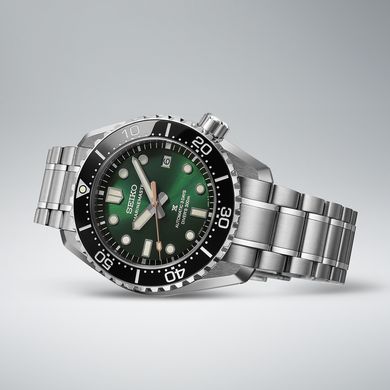
The Marinemaster 1968 Heritage Automatic Diver’s Save the Ocean Limited Edition features a 42.6-millimeter-wide and 14.1-millimeter-high case made of hard-coated stainless steel. The green dial pays homage to mangrove forests; a portion of the proceeds from sales goes toward marine conservation projects.
The automatic Caliber 8L45 offers more than 72 hours of power reserve and operates at 28,800 vibrations per hour. The watch is water-resistant to 300 meters. The steel bracelet can be extended by up to 16 millimeters in 2-millimeter increments using the slide adjuster. The edition comprises 900 pieces, costs 3,800 euros, and will be available starting in November 2026 at Seiko boutiques and the official online store.
Astron HAB009J1 and HAB010J1
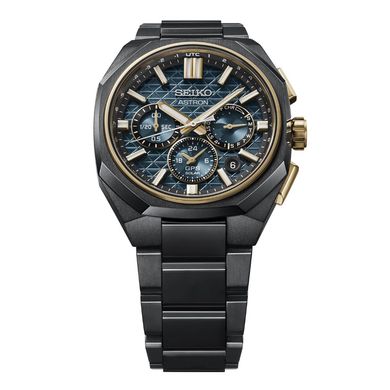
The two Astron GPS Solar Dual-Time chronographs draw inspiration from the structure and play of light in crystals. The HAB009J1 comes in turquoise with gold accents, while the HAB010J1 is available in burgundy with rose gold-colored details. Both feature a 43.4-millimeter titanium case with a black hard coating and a titanium bracelet with ceramic elements. An additional leather strap is included.

The GPS Solar Caliber 5X63 sets the time and time zone via satellite, offers a second time zone, and includes a chronograph capable of measuring up to 24 hours in increments of one-twentieth of a second. The perpetual calendar is programmed through February 2100. Both models are limited to 1,500 pieces each, will be available starting in November 2026, and cost 3,200 euros.