



Coloured gemstone of the month September: The sapphire
The birthstone of September is the sapphire. It is one of the kings of gemstones and is best known for its deep blue color, but in reality, it possesses many more nuances and enriches the most creative and colorful jewelry creations with its beauty.
Left: Royal blue cabochon-cut sapphires from Bulgari's "Polychroma" collection. © Bulgari
Sapphire, the nuanced one
The sapphire is certainly one of the most well-known colored gemstones. Most people associate its name with a strong, dark blue. In reality, sapphire occurs in a wide variety of colors, ranging from violet to pink, orange, yellow, white, and green, all the way to its iconic shade of blue. The sapphire's many color nuances make it a popular candidate for rainbow jewelry, which has been a constant theme for many manufacturers for years.


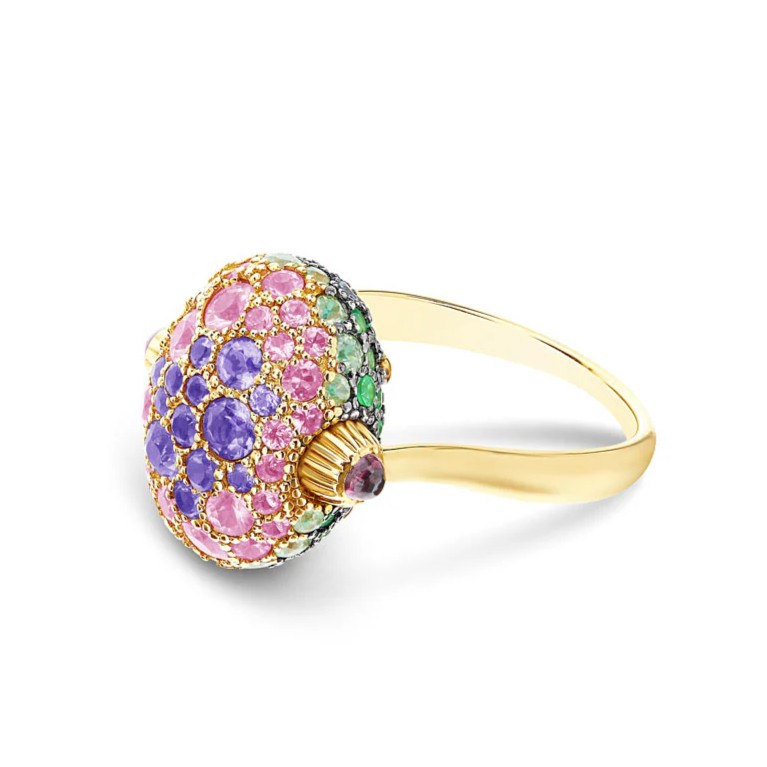
The reason red is excluded from sapphire's diverse color palette is because it is associated with ruby. Sapphire and ruby are actually siblings, both belonging to the corundum mineral group, but in sapphire, deposits of iron and titanium provide the color, while ruby derives its color from deposits of chromium.
But first, let’s go back to the beginning…
The story of the sapphire
Sapphire has been known since ancient times. Its name is derived from the Greek word "sappheiros," which simply means "blue." For this reason, sapphire, like emeralds and many other gemstones, suffered at a time when chemical differentiation was not yet possible: Many other blue gemstones were mistakenly called sapphires in ancient times—including iolite, lapis lazuli, and kyanite.


Origin and properties
Sapphires of outstanding quality come from countries such as Sri Lanka, Vietnam, Madagascar and Tanzania – in these countries one also finds the particularly rare and sought-after “Padparadscha sapphire” – the word translates as “lotus-colored” and describes sapphires with shades between pink and orange.
Experts can often draw conclusions about a sapphire's origin at first glance, because the color of many sapphire deposits is unique.
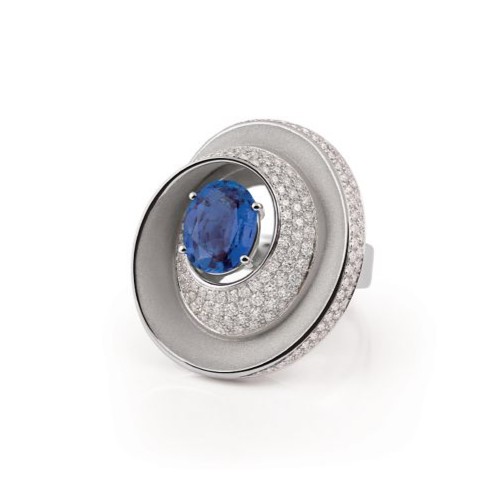
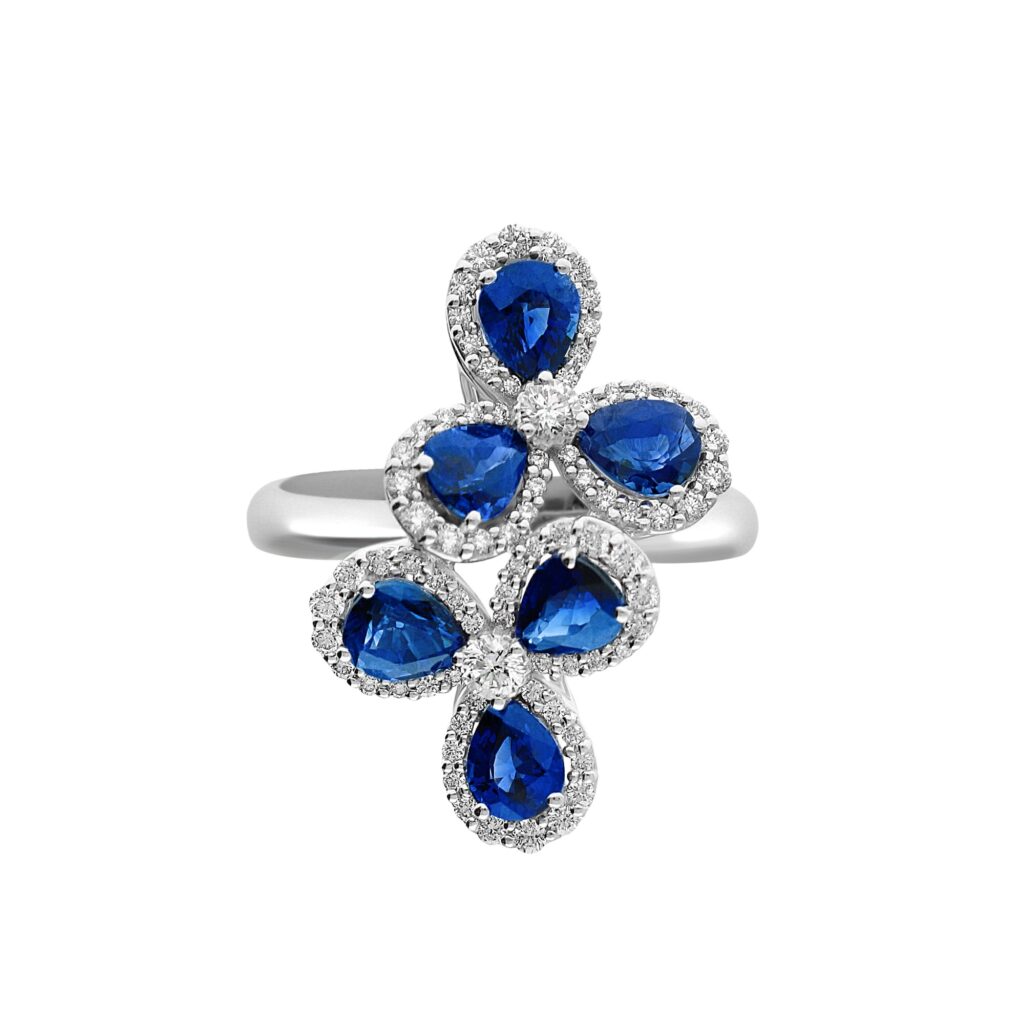
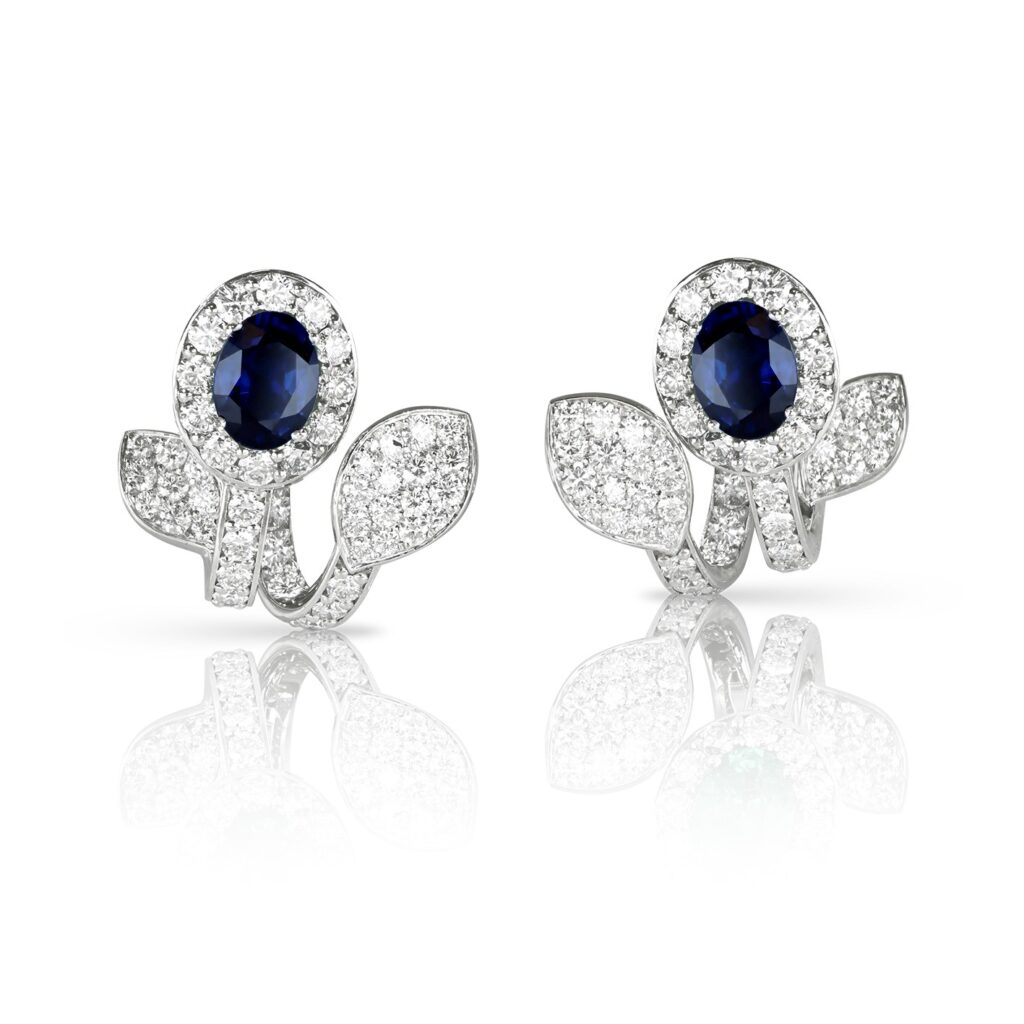
Kashmir sapphires, for example, exhibit a velvety mid-blue. The Ceylon blue of sapphires from Ceylon, or Sri Lanka, is the ideal cornflower blue. The Pailin sapphire from Thailand is royal blue to blackish blue, and Kanchanaburi sapphire is characterized by a cloudy character and the so-called twilight blue, which has a hint of green.
Origin and properties
Sapphires of outstanding quality come from countries such as Sri Lanka, Vietnam, Madagascar and Tanzania – in these countries one also finds the particularly rare and sought-after “Padparadscha sapphire” – the word translates as “lotus-colored” and describes sapphires with shades between pink and orange.
Experts can often draw conclusions about a sapphire's origin at first glance, because the color of many sapphire deposits is unique.
Kashmir sapphires, for example, exhibit a velvety mid-blue. The Ceylon blue of sapphires from Ceylon, or Sri Lanka, is the ideal cornflower blue. The Pailin sapphire from Thailand is royal blue to blackish blue, and Kanchanaburi sapphire is characterized by a cloudy character and the so-called twilight blue, which has a hint of green.


Although sapphire is indeed found in so many different natural colors, a large proportion of gemstones used for jewelry are further treated to improve their color or clarity – this is done by firing. Heating to between 1,700 and 1,800 degrees Celsius changes the oxidation state of the color-giving elements – iron and titanium – and the sapphire acquires its characteristic, vibrant blue.
Synthetic sapphires also exist. One of sapphire's special properties is its extreme hardness—it ranks 9 on the Mohs hardness scale. Sapphire crystal, which often protects watch dials from scratches and impacts, is actually synthetic sapphire, made from aluminum oxide.
Discover sapphires at the Gemworld/Munich Show
Anyone who wants to experience the fascination of sapphires and other gemstones and minerals firsthand has the perfect opportunity in Munich in October. The Gemworld/Munich Show will take place there from October 23rd to 26th. Saturday and Sunday are open to the public from 9 a.m. to 6 p.m. and also offer a program for children and families.
More information about the fair and tickets can be found here.

 Deutsch
  English (UK)