
Novelties · Watches
Blancpain Carrousel Incliné: A New Angle on Precision
A one-minute flying carrousel inclined at 30 degrees, an entirely new calibre and Blancpain’s first case made wholly from sapphire: the Carrousel Incliné pairs mechanical transparency with individually documented chronometric performance.
At a Glance
- The inclination is more than a visual flourish: the one-minute flying carrousel is tilted at 30 degrees to reduce rate variations across six positions.
- Each watch receives an individual Blancpain chronometry certificate specifying a mean rate tolerance of 0 to +2 seconds per day and documenting performance over its power reserve.
- The all-sapphire case reveals the extensive finishing of calibre 222ISQ: 210 hours of handwork, 253 sharp inward angles and components finished on both their upper and lower surfaces.
When a watch reveals its inner workings this completely, architecture inevitably commands the first glance. Blancpain’s new Carrousel Incliné rewards a closer look: its unusual three-dimensional arrangement is not simply an aesthetic device, but serves a chronometric purpose. At its heart is a one-minute flying carrousel inclined at 30 degrees, designed to reduce rate variations in different positions.
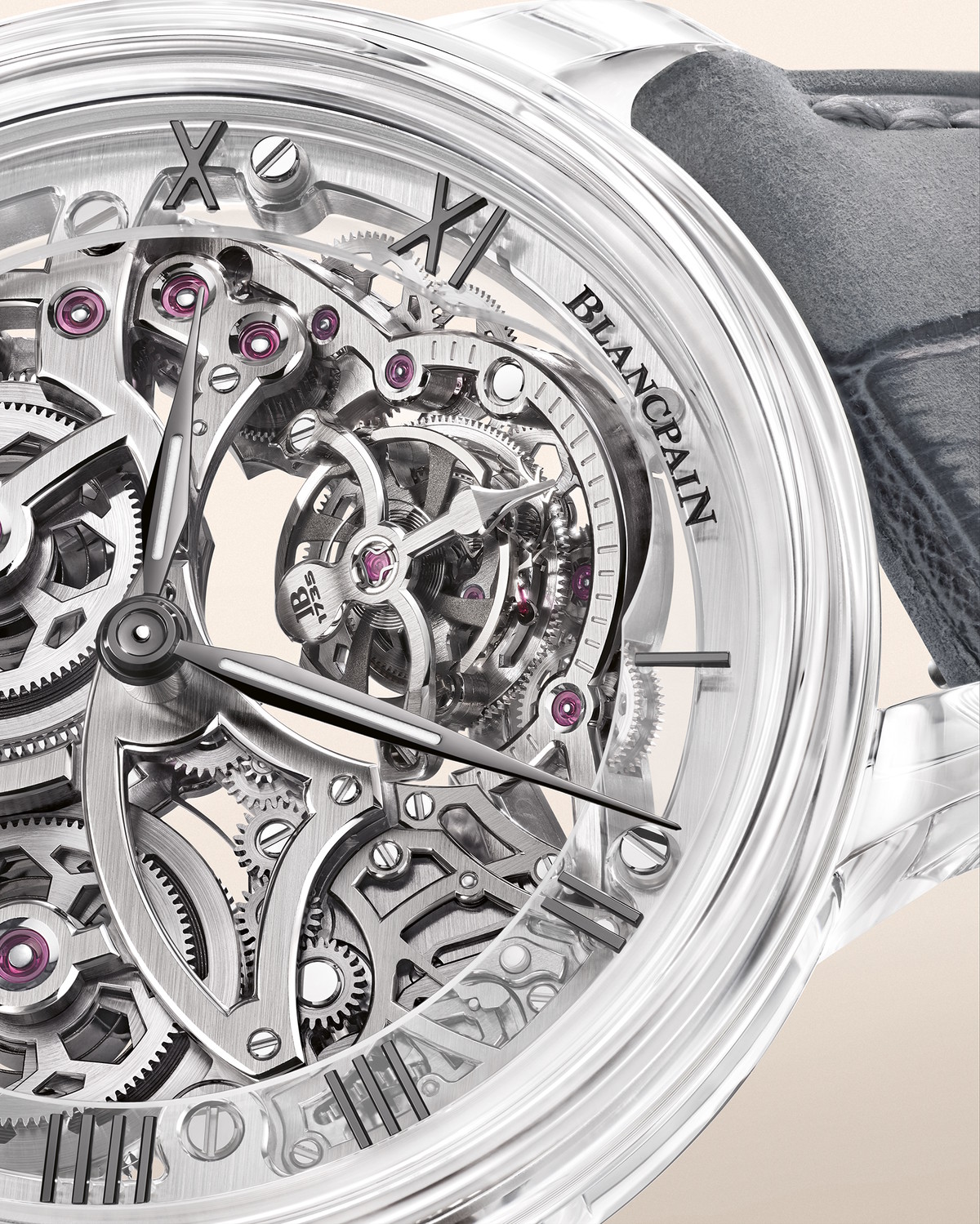
Carrousel and Tourbillon: Same Purpose, Different Construction
Like the more familiar tourbillon, the carrousel is designed to compensate for positional variations in the rate of a mechanical watch. Both mechanisms rotate the balance wheel and escapement within a cage. The key difference lies in how they are driven: In a traditional tourbillon, the rotation of the cage forms an integral part of the power transmission to the escapement. In a carrousel, two separate gear trains drive the escapement and the rotation of the cage. Invented by Bahne Bonniksen in 1892, the carrousel largely fell into obscurity during the 20th century. Blancpain revived the mechanism in 2008 and further developed it for wristwatches. However, the different drive systems do not inherently make one more accurate than the other. What matters is how each mechanism is designed and executed.
30 Degrees in Pursuit of Accuracy
With the Carrousel Incliné, Blancpain takes the concept a step further. While a conventional carrousel rotates its regulating organ parallel to the movement’s mainplate, the new construction features a rotational axis inclined at 30 degrees. As a result, the balance wheel continuously changes its orientation relative to gravity with every rotation – even when the watch is lying flat. This allows positional rate variations to be compensated for more effectively.
Blancpain tested inclination angles ranging from 0 to 35 degrees. The 30-degree angle proved to offer the best balance between rate stability, amplitude and compact construction. The aim of the four-year development process was to reduce rate variations across all six testing positions. The additional visual depth of the movement is therefore an aesthetic benefit rather than the primary motivation behind the design.
Behind this lies the ambition of Blancpain President and CEO Marc A. Hayek not merely to reinterpret the carrousel, but to advance its original purpose: chronometric performance. For the Carrousel Incliné, Blancpain also translates this ambition into a specific, individually documented measure.
Each watch is delivered with its own Blancpain chronometry certificate. This specifies a mean rate tolerance of 0 to +2 seconds per day and documents rate performance throughout the power reserve. The key word here is ‘mean’: the figure describes the certified mean rate tolerance, rather than a blanket assurance for every individual moment.
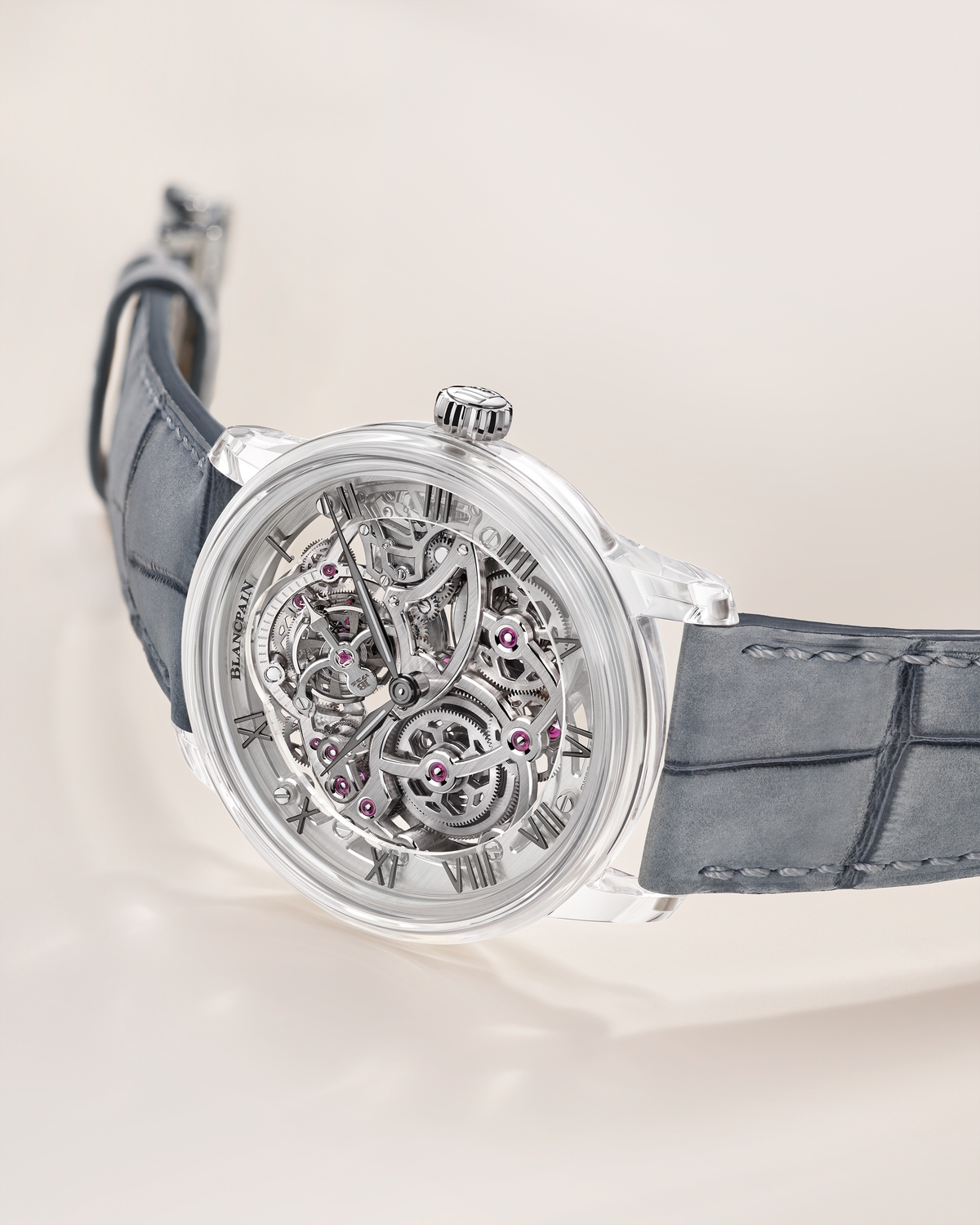
A New Calibre, Conceived from Scratch
Calibre 222ISQ was developed entirely from scratch for this construction. It is also intended to provide the foundation for future Blancpain carrousel watches. The Carrousel Incliné therefore introduces more than a new expression of an established complication: it marks the beginning of a new movement generation.
Its extensively openworked architecture exposes both the mechanical functions and the finishing. Available in 5N red gold or rhodium-plated gold, these options concern the movement, not the case. The latter takes a different direction: for the first time at Blancpain, it is made entirely from sapphire.
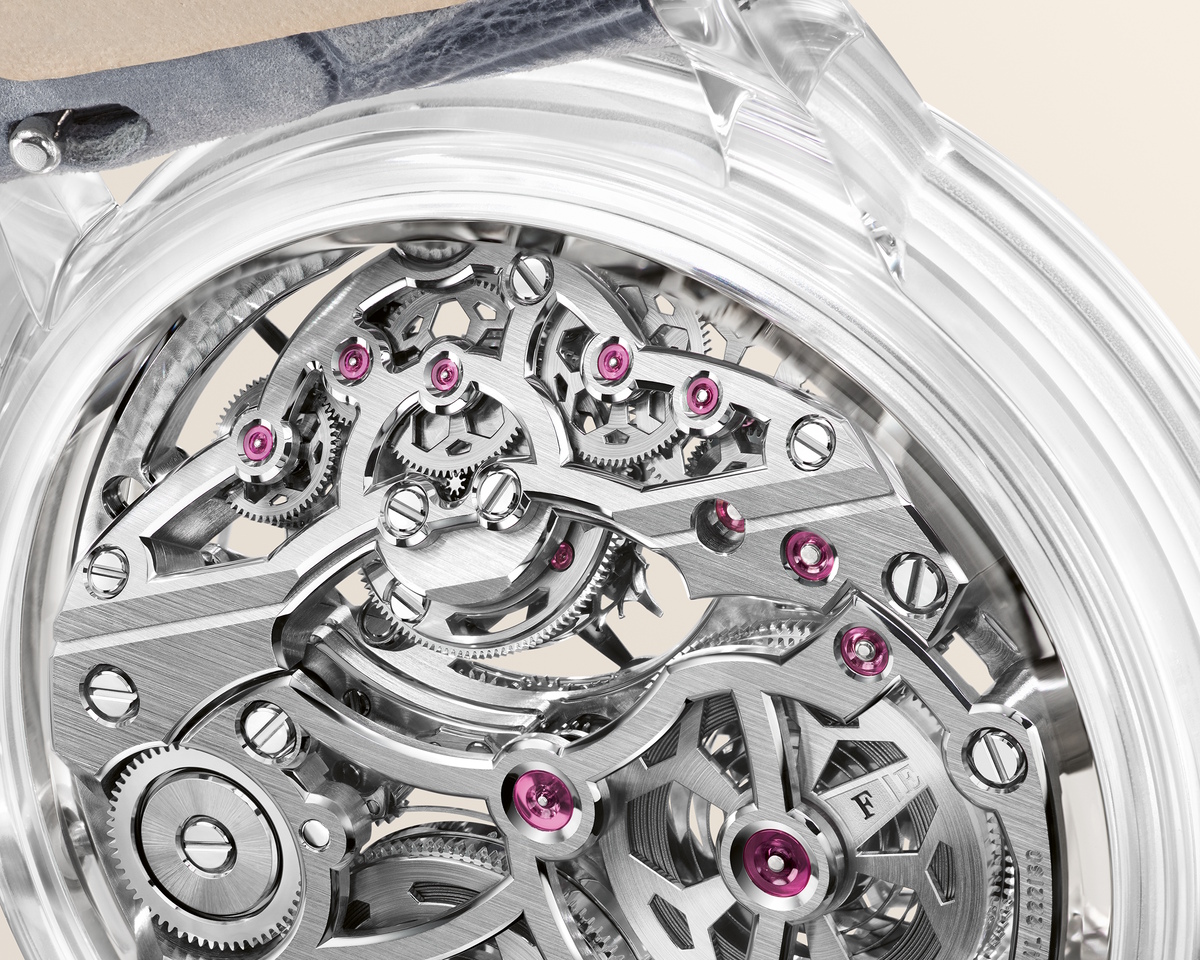
Transparency Taken to Its Logical Conclusion
The sapphire case extends the openness of the calibre to the exterior. It allows the movement to be viewed from every angle, making its spatial arrangement the defining element of the design. At 40.3 mm in diameter and 11.3 mm thick, the watch remains compact: technical presence and refined dress-watch proportions are intended to coexist.
Such transparency draws attention to surfaces and edges that would be less visible in a more enclosed construction. Blancpain finishes the calibre’s components on their lower as well as their upper surfaces. The approach to decoration is thus as comprehensive as the approach to the architecture itself.
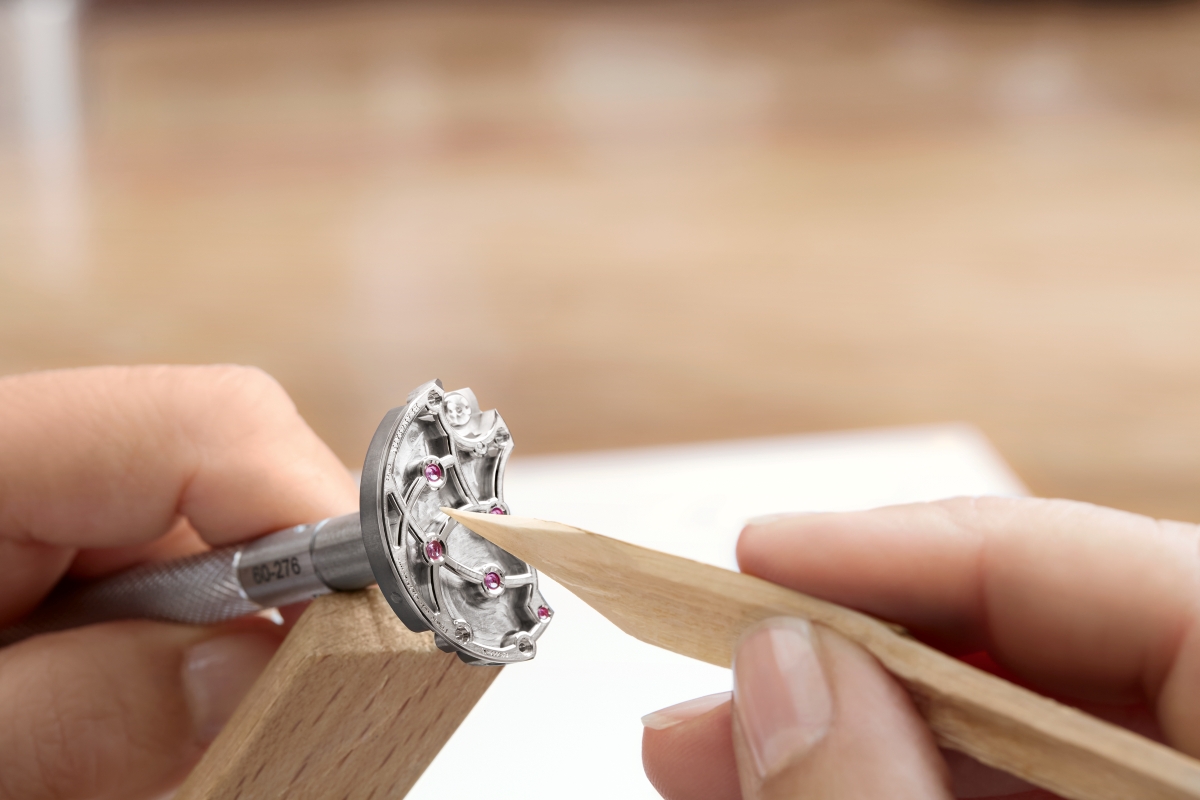
210 Hours Behind the Details
Finishing takes 210 hours of handwork in Blancpain’s Decoration Workshop in Le Brassus, Switzerland. Among the demanding details are 253 sharp inward angles. Together with components finished on both sides, they create a movement whose craftsmanship extends well beyond the view from the front.
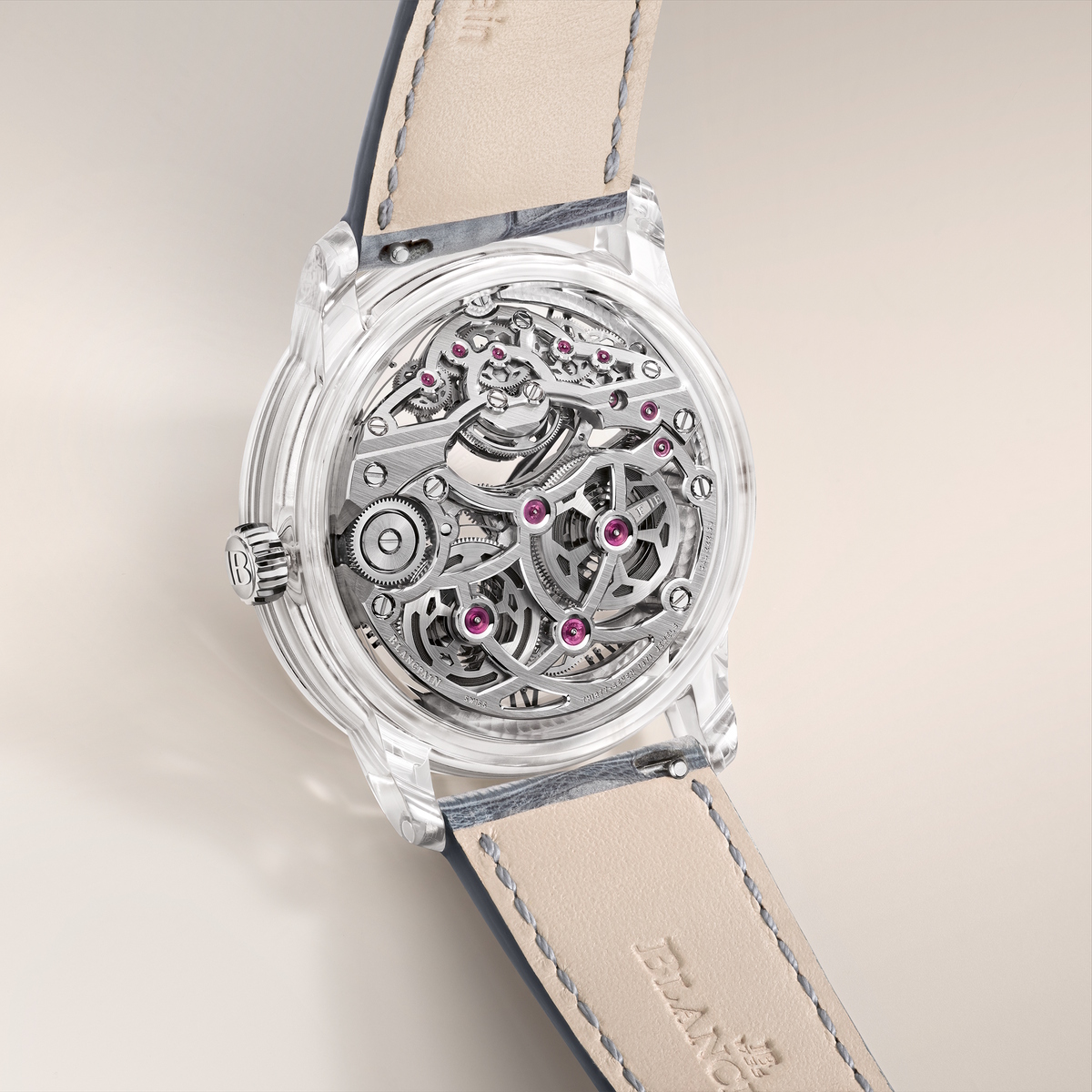
The real interest of the Carrousel Incliné lies in how these elements work together. The inclination addresses rate performance, the openworking reveals the construction, and the sapphire case makes the craftsmanship accessible from different perspectives. The individual chronometry certificate adds a documented performance standard to the watchmaking on display.
Editor’s Picks