

IsabelleFa – Craftsmanship in Motion
The IsabelleFa workshop specializes in jewelry that is consistently handcrafted, drawing on the tradition of chain-making; to this day, it is still produced in Eisingen near Pforzheim.
IsabelleFa: On display at the Jewellery Geneva Show, Hotel President Wilson, 47 Quai Wilson, 1211 Geneva

The Roots of the Manufactory
date back to the 1950s, when goldsmith Emil Mössner laid the foundation for the company. With the launch of the IsabelleFa brand in the 1980s, this artisanal approach was deliberately refined and transformed into a distinct creative identity—characterized by continuity, specialization, and a clear commitment to craftsmanship.
The workshop produces only a few hundred pieces per year—not as a strategic move to create scarcity, but as a direct result of its approach. Each piece of jewelry is crafted entirely by hand using traditional tools and techniques whose origins date back to the Middle Ages. The craft known as “chaîniste”—the art of chain-making—remains at the heart of the brand to this day.
Flix.Flex – Flexibility as a Craftsmanship Principle
This approach is particularly evident in the Flix.Flex collection, which is based on a concept that is as simple as it is unusual: creating flexibility not through technology, but through the material itself.
The necklaces and bracelets can be opened and closed with a gentle twist—without hinges, springs, or additional materials. Instead, the flexibility is achieved solely through a nearly invisible opening, hand-crafted into the interior of the piece.
What makes them special:
The pieces are made entirely of 18-karat gold. There is no steel, no titanium, and no hidden mechanisms. The material itself serves the function—the piece of jewelry essentially becomes the spring itself.


Reduction and Effect
Formally, the collection features a clean, minimalist design. Smooth surfaces, precise lines, and a tangible sense of materiality take center stage. The pieces are complemented by versions set with diamonds, mostly in understated pavé, which enhances the form without overwhelming it.
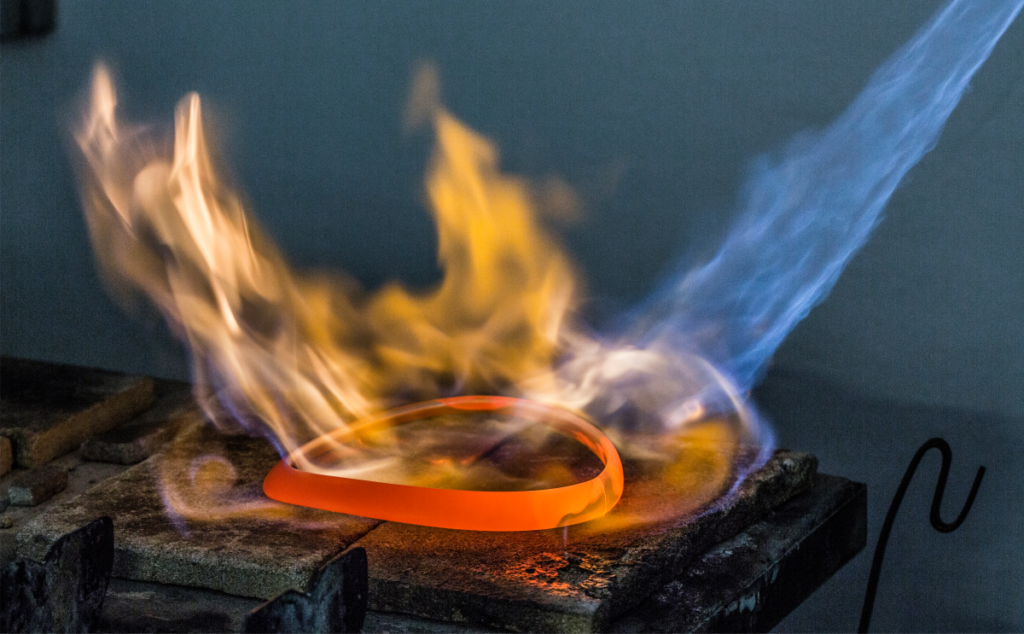
While much of today’s jewelry production relies on casting or digital techniques, IsabelleFa deliberately sticks to the traditional process. Drawing benches, rollers, and manual finishing define the manufacturing process—step by step, without cutting corners.
This approach is driven not only by aesthetic considerations but also by cultural ones. Techniques that have been developed over centuries have become rare today. IsabelleFa sees itself as a guardian of this knowledge—not out of nostalgia, but as a contemporary stance within the industry.
Substance over style
IsabelleFa’s strength lies in the consistency of her approach. Here, jewelry emerges as the result of a process in which material, function, and craftsmanship are inextricably linked. This perspective gives rise to spectacular pieces whose movement is not contrived, but is inherent in the material itself.
Learn more: https://www.isabellefa.com/