
Gucci High Jewelry: When Fashion Codes Become Jewelry
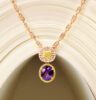
Gucci is unveiling a new high-jewelry collection, deliberately blurring the lines between jewelry, fashion, and imagery. Flora, Nodo, Everlasting G, Horsebit, and Marina Chain are not random motifs. They draw from the house’s visual heritage—silk scarves, loafers, necklaces, logos, and maritime references—and are now reimagined in precious stones, gold, titanium, and diamonds.
Cover photo: Gucci Nodo
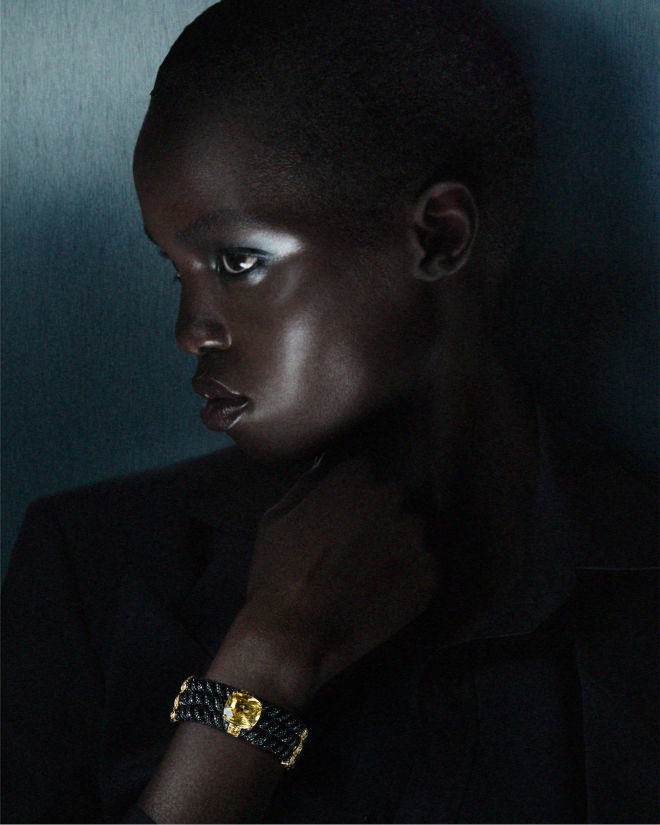
That is precisely what makes this collection so appealing. Gucci does not view high jewelry as separate from its fashion history, but rather as an extension of it. What is usually expressed through fabric, leather, prints, silhouettes, or hardware takes on a different materiality here—a continuation of the Gucci universe.
Gucci’s history in jewelry differs significantly from that of classic joaillerie houses. The brand does not come from the traditional world of jewelry or watchmaking, but rather from fashion, leather goods, accessories, ornamentation, and visual language. High jewelry is a relatively new field for Gucci: In 2019, the house made a visible entry into this segment with “Hortus Deliciarum” and simultaneously opened its high jewelry boutique on Place Vendôme in Paris. This makes Gucci’s approach to jewelry all the more interesting: it sees it as a precious extension of its core business.
Flora: A Motif Is Translated
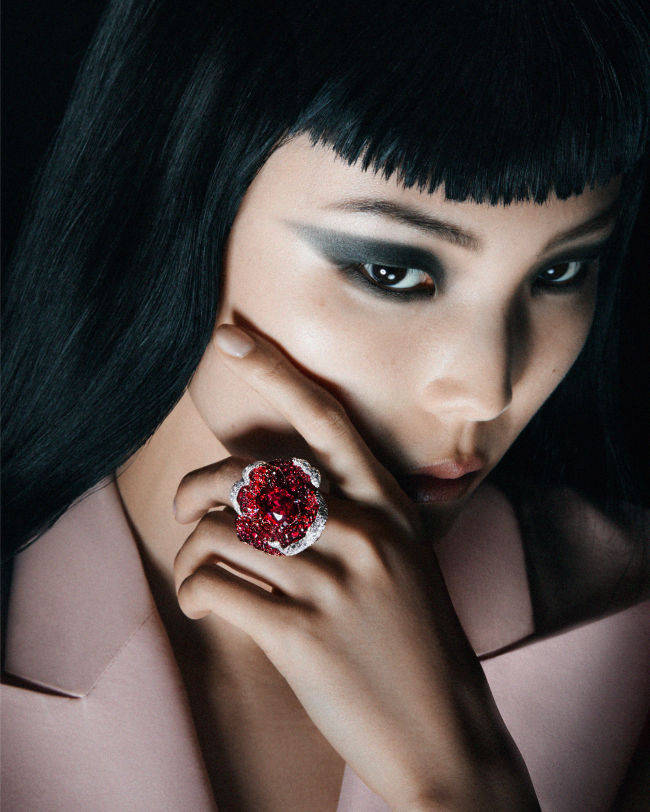
The Gucci Flora line is the most visible reference to the brand’s own history. The motif traces its origins to the Flora pattern designed by Vittorio Accornero in 1966, which was originally created for a silk scarf intended as a gift for Grace Kelly. In the High Jewelry collection, it has been transformed into a series of floral jewelry pieces that interpret the motif in terms of material, color, and volume.
Poppies are depicted with rubies and rubellite tourmalines, while titanium lends the petals a sense of lightness. The Lily models draw inspiration from the lily as a Florentine symbol and feature sapphires and diamonds in varying shades of blue. Orchids, peonies, and other flowers round out the collection.
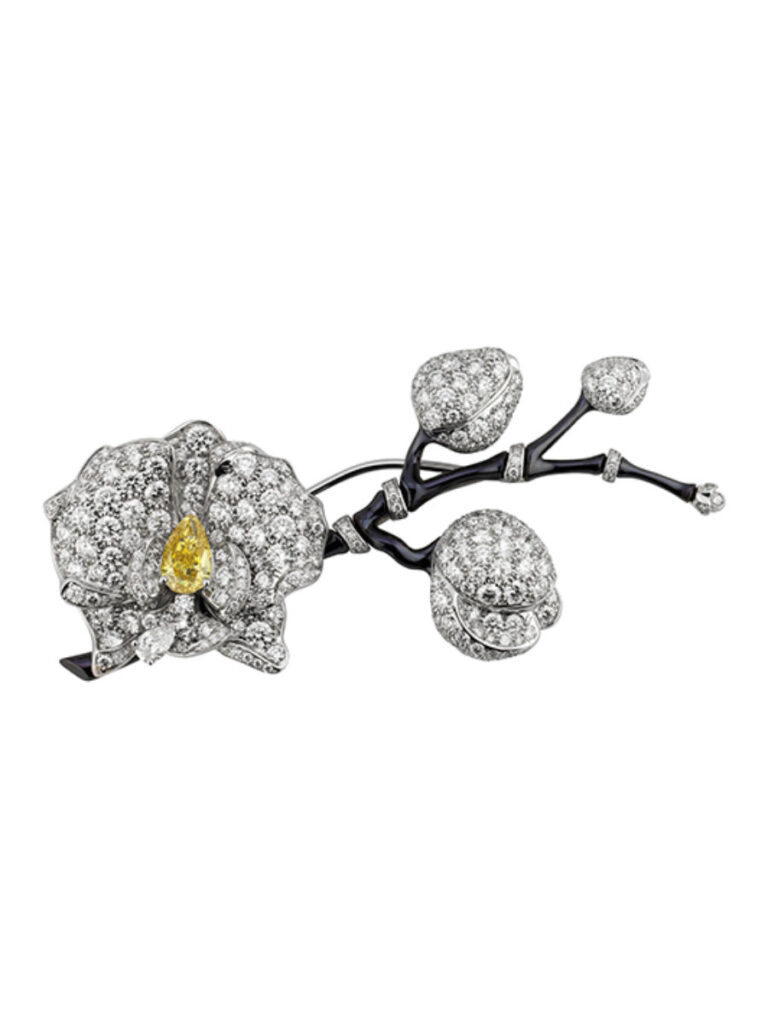
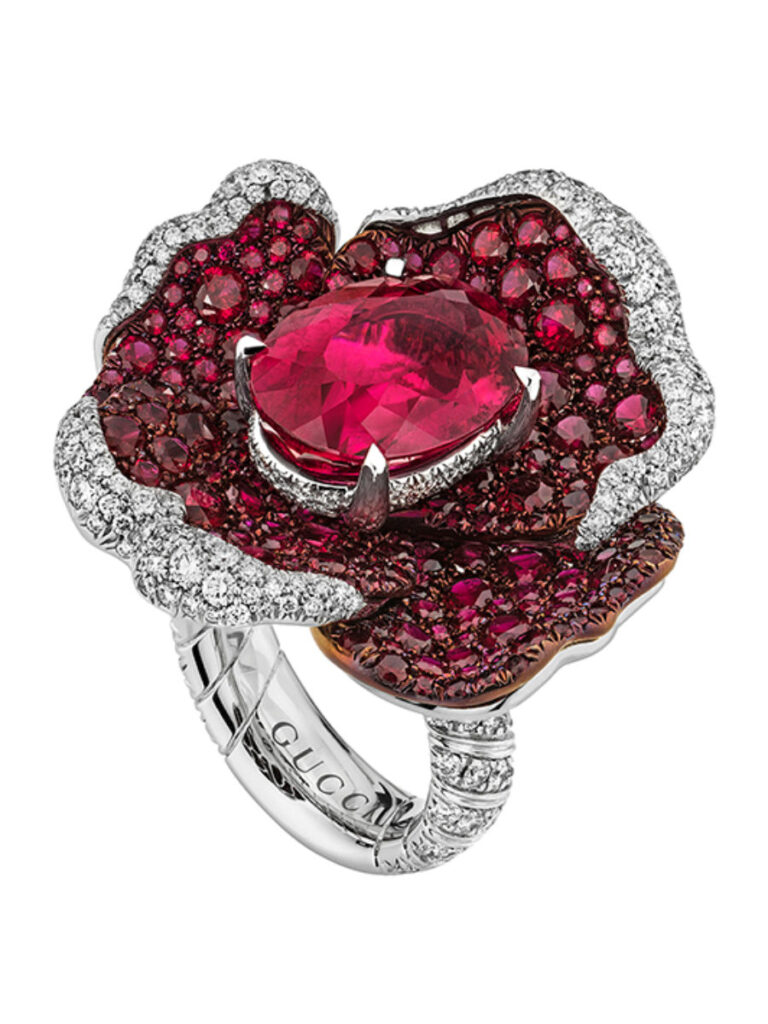
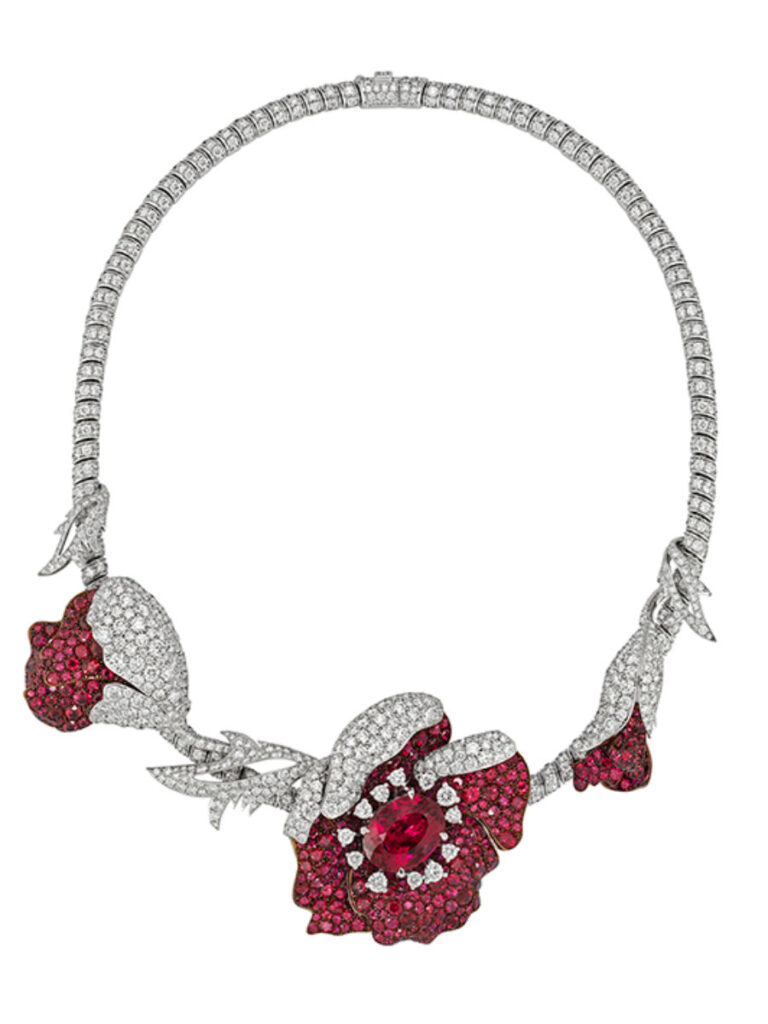
Gucci: Flora
What matters is not so much that Gucci is revisiting Flora once again. What’s more interesting is how the motif is detached from its original context. What was originally a print, fabric, and image becomes, here, a body, a setting, and a stone. The collection thus exemplifies how Gucci translates familiar symbols into the language of high jewelry.
Nodo: Nautical Elements as Structure
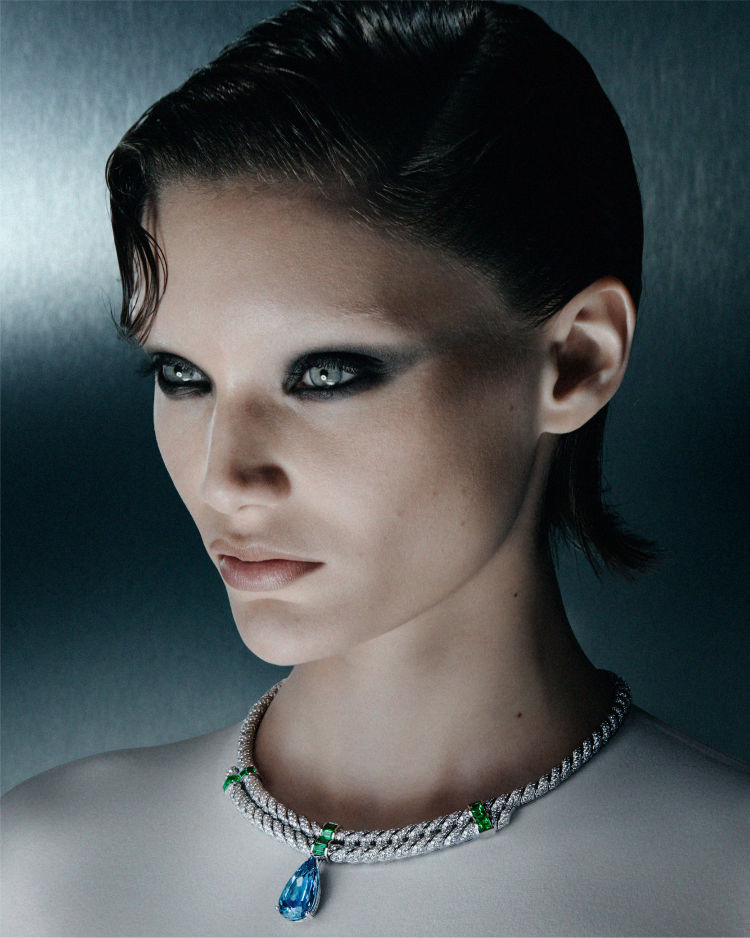
With Gucci Nodo, another element of the Gucci vocabulary is introduced into the collection. The line draws inspiration from ropes, knots, and nautical shapes—motifs that have been part of Gucci’s identity since the 1960s. In high jewelry, these motifs are reimagined as flexible chain structures.
Aquamarines, emeralds, Paraiba tourmalines, sapphires, and diamonds give the collection a color palette ranging from blue to green to white. Other variations feature black ruthenium, black diamonds, yellow sapphires from Sri Lanka, and Canary Zimmi diamonds.
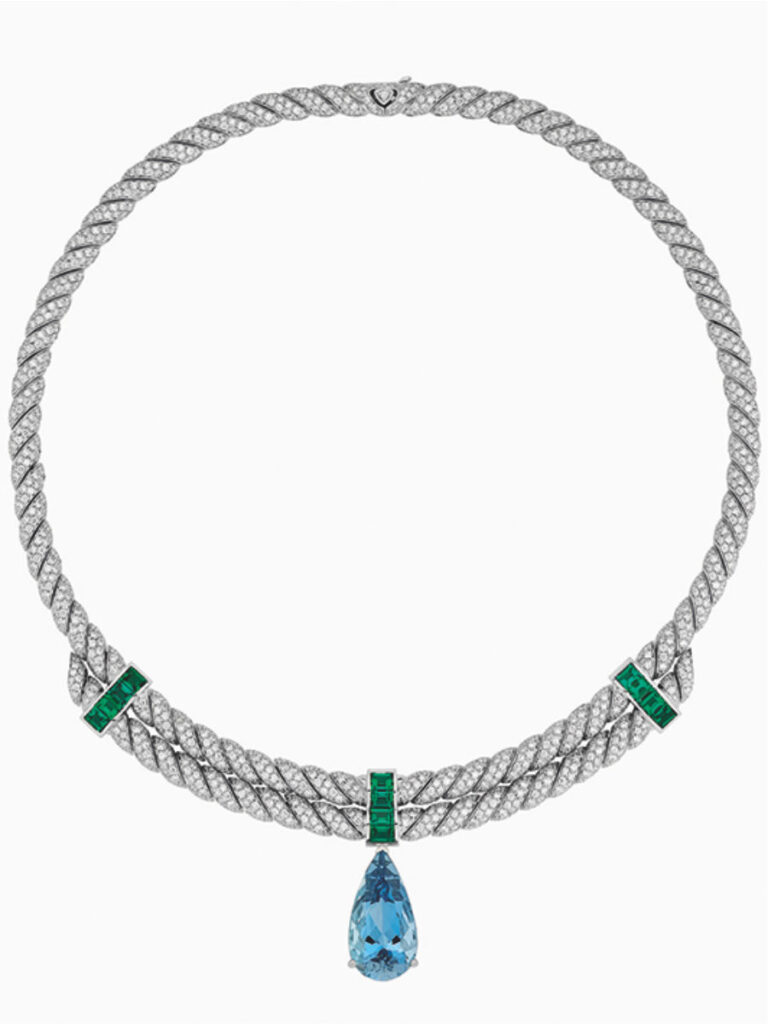
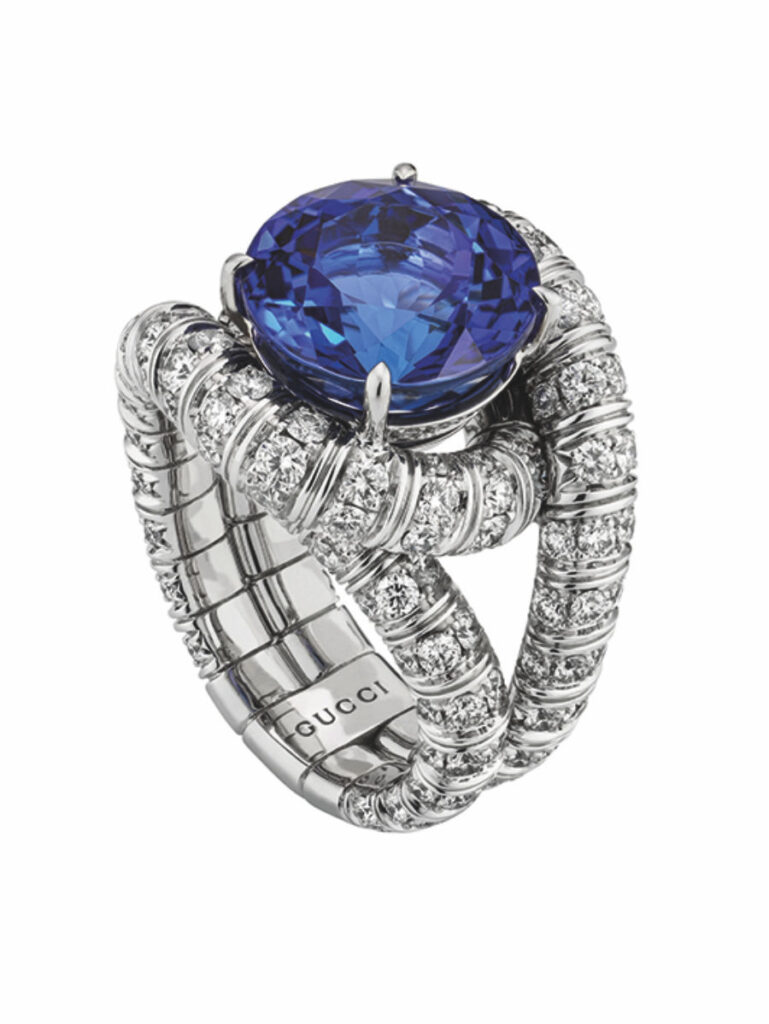
Gucci Nodo
Here, the rope is not merely a reference to yachting or leisurely luxury. It becomes a design principle. The jewelry pieces incorporate flexibility, structure, and movement. It is precisely this that makes Nodo feel more like a part of the body than a decorative motif.
Symbols Become Jewelry
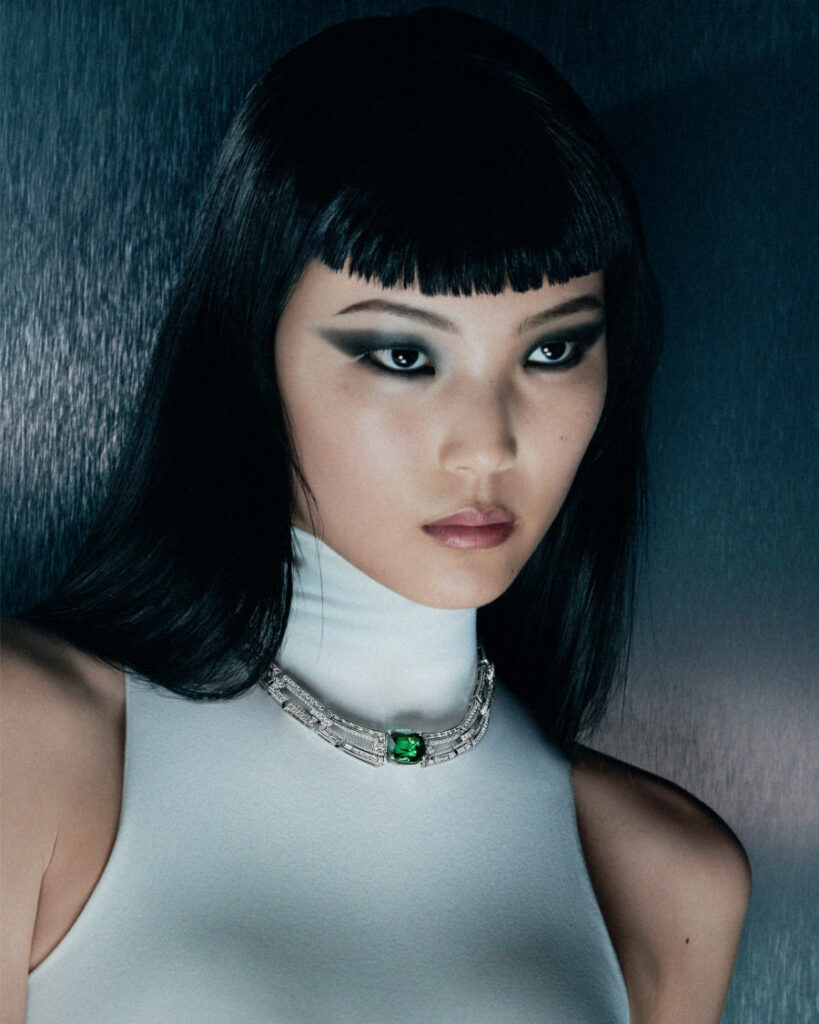
The Gucci G, the Horsebit, and the Marina Chain also feature in the collection. Everlasting G extends the G motif into a geometric jewelry design featuring pavé diamonds, tourmalines, and spinels.
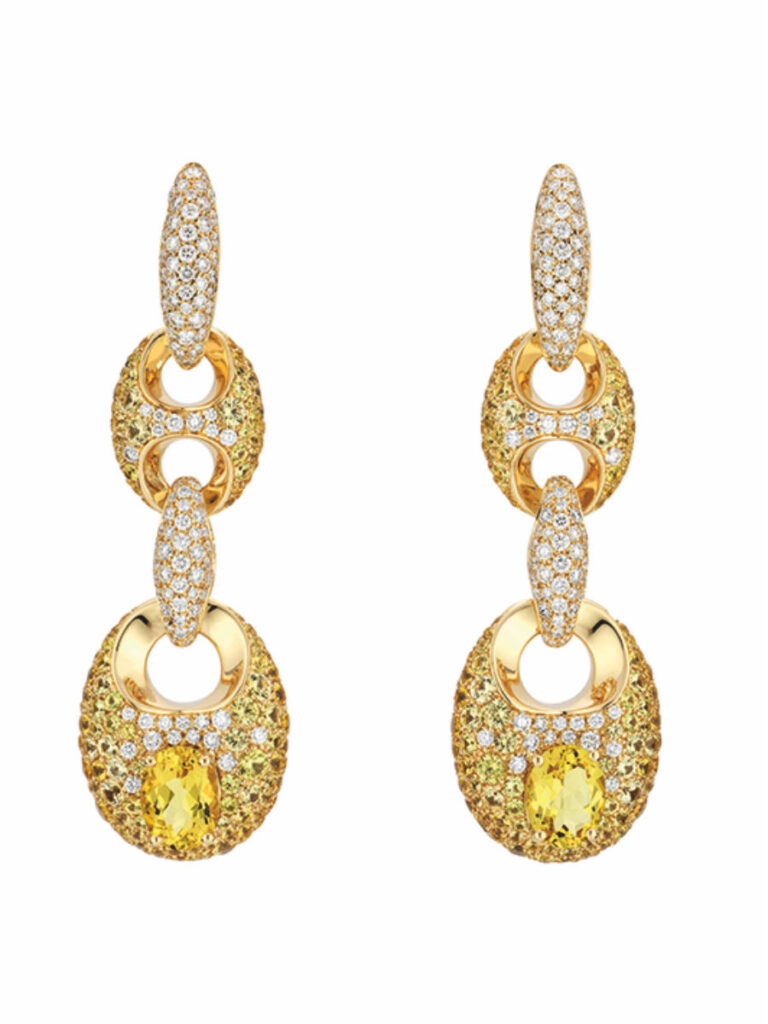
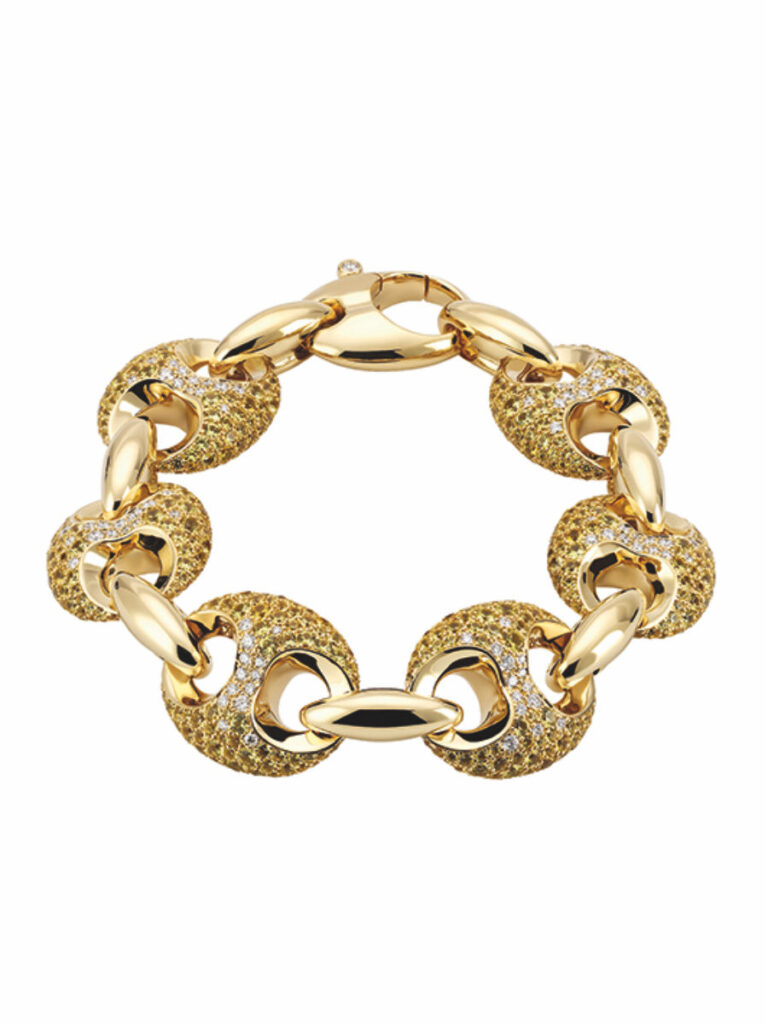
Gucci: Marina Chain
The Iconic Signatures take this approach a step further. The horsebit, originally known as a detail on loafers, appears in white gold, diamonds, tsavorites, and tanzanites. The Marina Chain draws inspiration from the world of yachting and is reimagined in a softer, more delicate form with golden beryls and yellow sapphires.
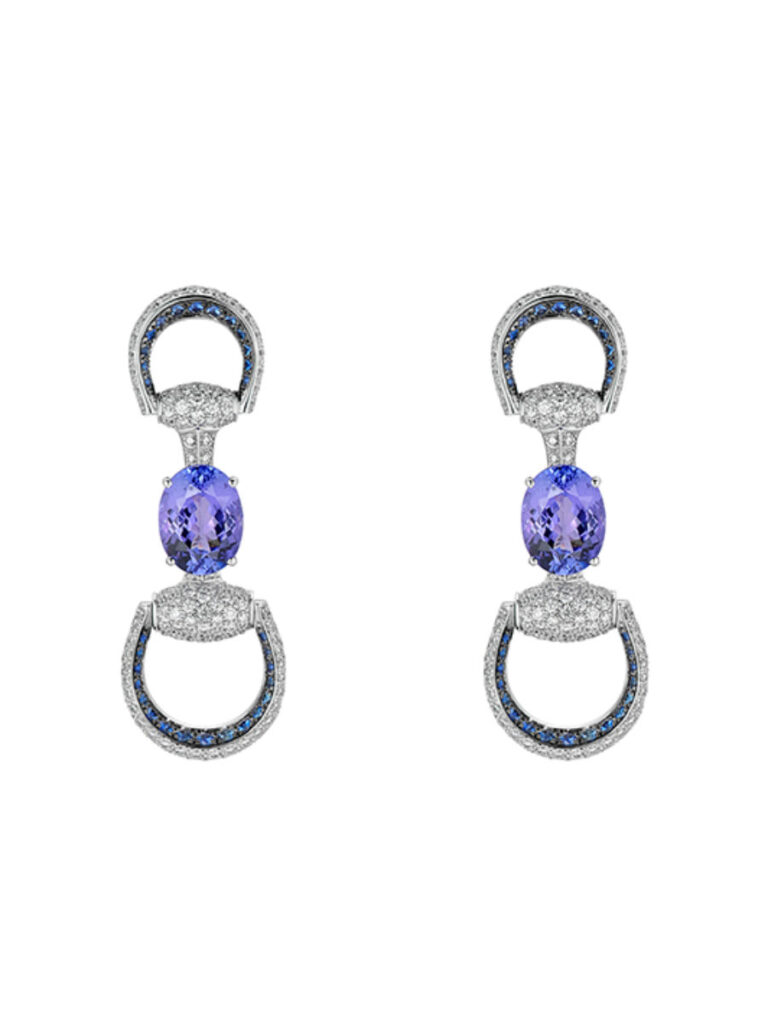
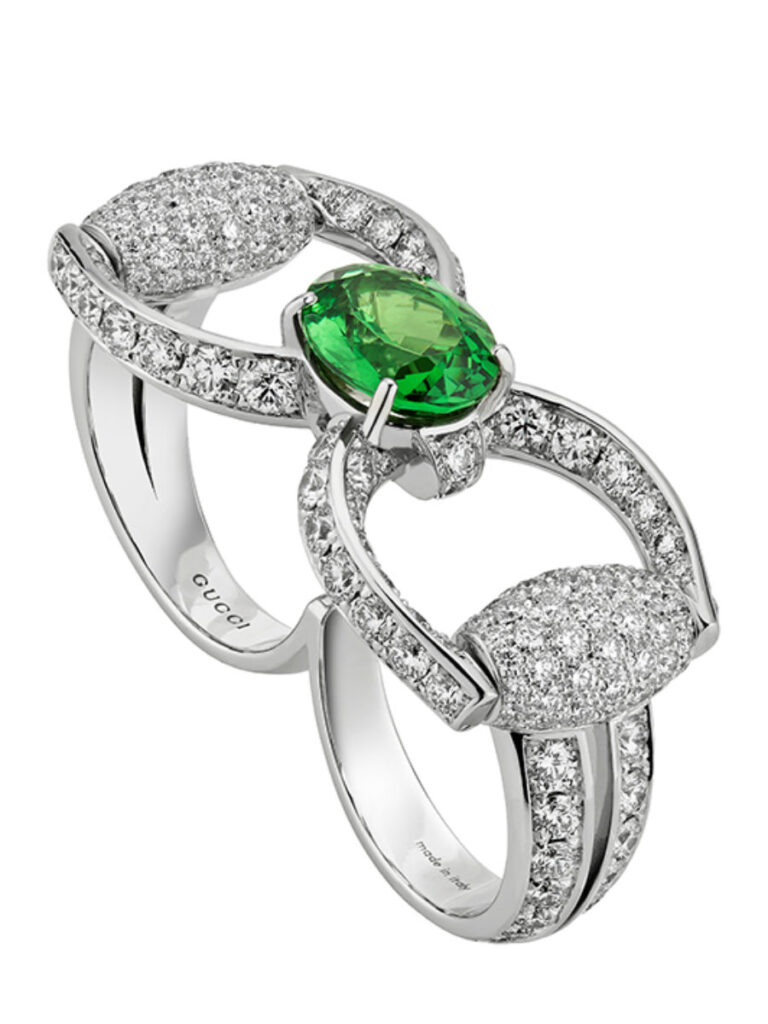
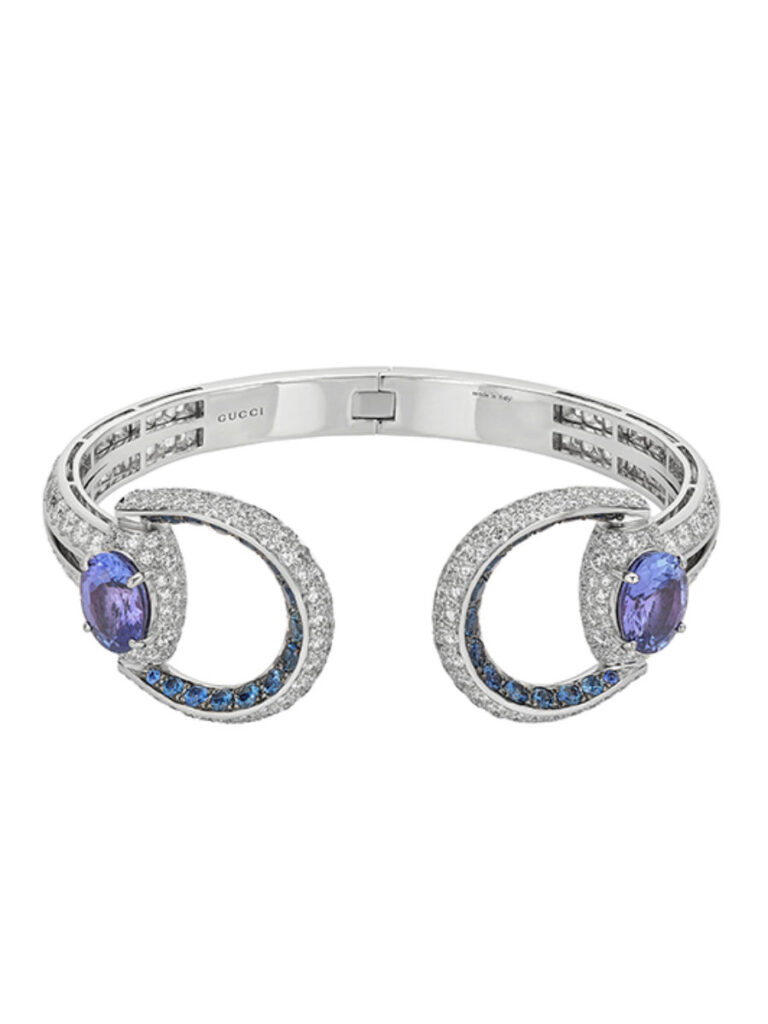
Gucci: Horse Bit
Here, the connection between fashion and jewelry becomes particularly clear. Gucci works with symbols that have already established their significance on bags, scarves, shoes, and accessories. In high jewelry, these symbols take on a new scale, material, and function. A metal fitting, a chain, or a graphic symbol is transformed into a piece of jewelry. The recognizability remains, but it is reimagined through gemstones, gold, and settings.
High Jewelry Conceived Outside the Realm of Fashion
Gucci presents its high jewelry not as part of the tradition of a classic jewelry house, but as an extension of a world of fashion and luxury that has always thrived on strong symbols. Flora, Nautik, Horsebit, Marina Chain, and the Gucci G are reimagined in precious stones, gold, titanium, and diamonds.
The craftsmanship is impressive, and the brand’s approach is consistent. At the same time, the question remains whether this will give rise to a distinct jewelry style in the long run—or whether Gucci’s high jewelry primarily serves to translate the house’s iconic codes into a new value segment. It is precisely this intermediate position that is so intriguing: the collection does not stand apart from fashion; it springs from it.
More on this: https://www.gucci.com/de/de/nst/gucci-high-jewelry
All images: Gucci