
Ulysse Nardin Freak [ONE]: Two New Sides of an Unusual Icon
The Freak is one of those watches where the name truly says it all. When Ulysse Nardin introduced the model in 2001, the design did away with the dial, hands, and crown. Instead, the movement itself served as the time display. Twenty-five years later, the manufacturer is now showcasing two new interpretations of this concept: the Freak [ONE Guilloché] and the Freak [ONE Blue Enamel].
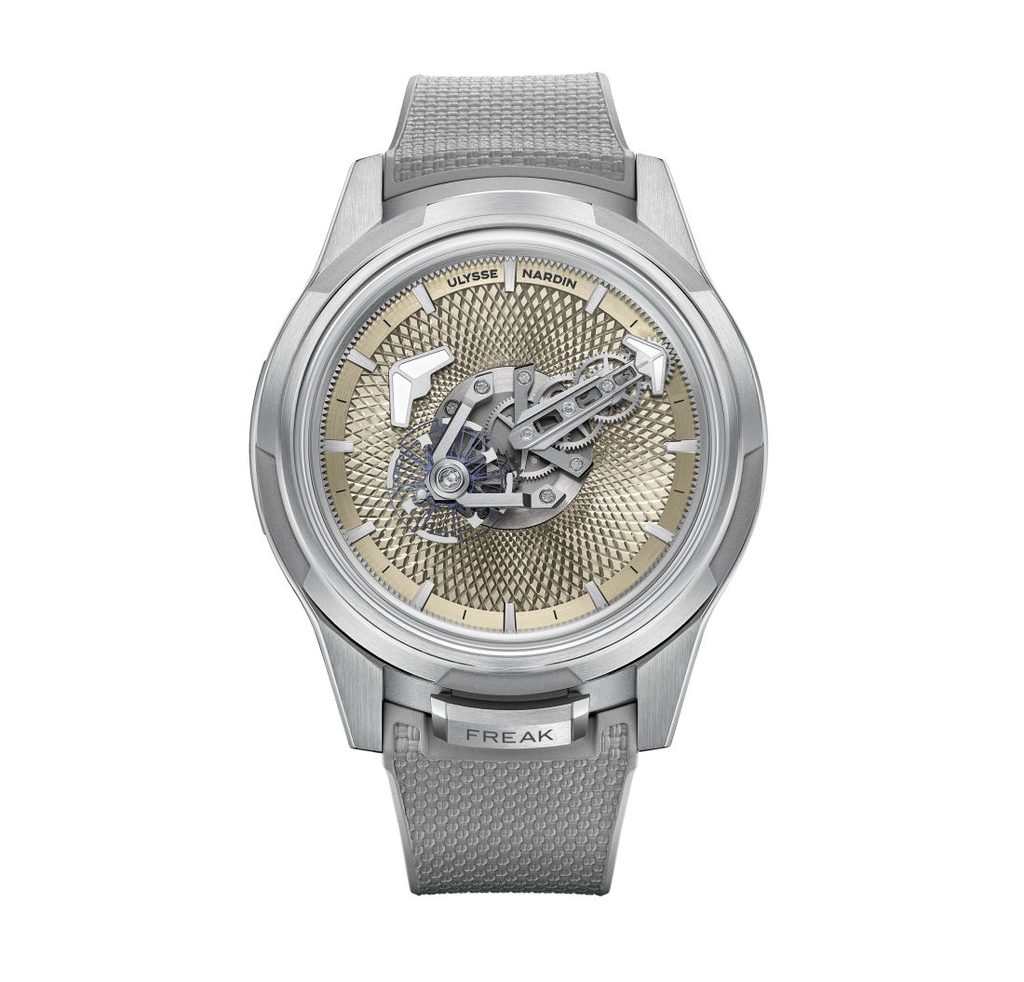
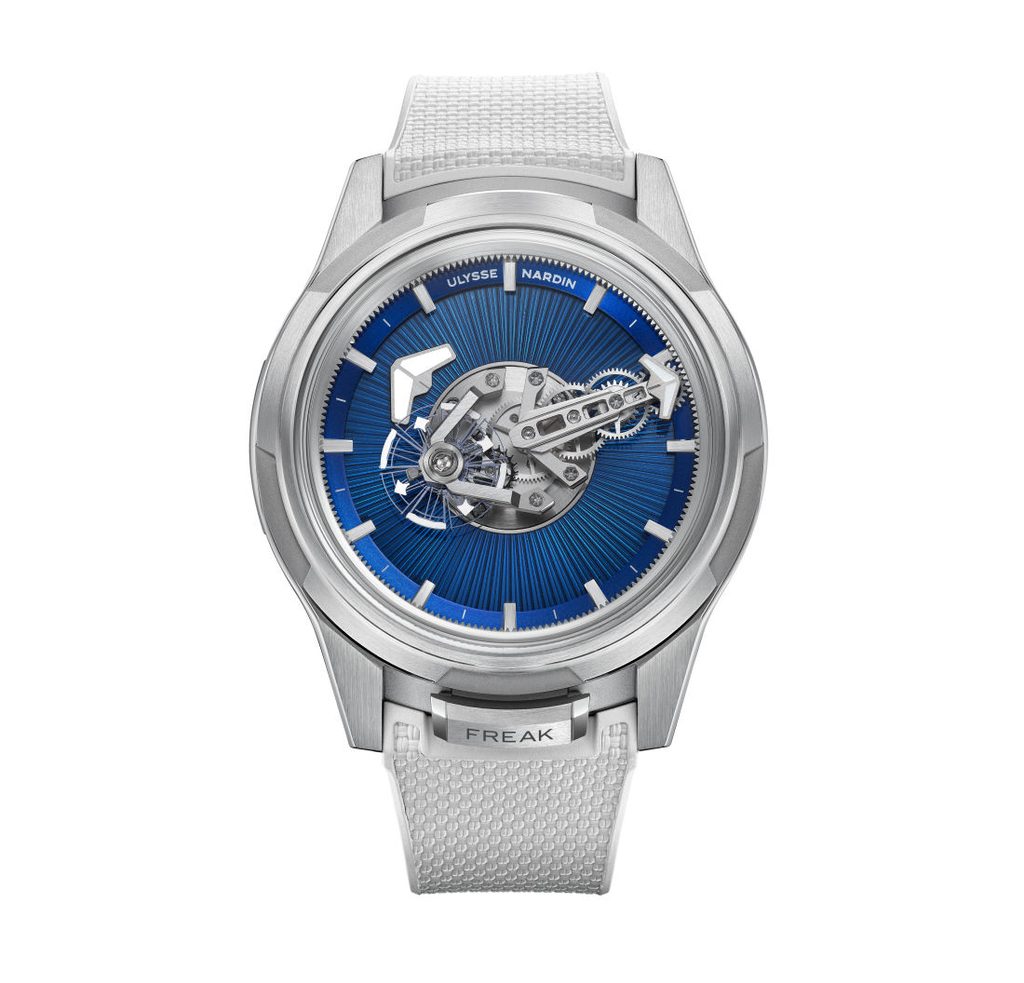
Ulysse Nardin: Freak [ONE Guilloché] and the Freak [ONE Blue Enamel]
Both models are based on the Freak [ONE], introduced in 2023, which was named “Iconic Watch” at the Grand Prix d’Horlogerie de Genève that same year. Both are limited to 99 pieces each—and both combine the Freak’s avant-garde architecture with classic decorative techniques.
No dial, no hands, no crown
The basic principle of the Freak remains unchanged. The watch has no traditional hands. Instead, the in-house UN-240 caliber displays the time itself.
The flying carousel rotates once per hour around its own axis and serves as the minute hand. Beneath it is the hour disc, which completes one full rotation every twelve hours. A mark on it indicates the hour.
You won’t find a classic crown here either. To set the watch, release the lock at the 6 o’clock position and then rotate the bidirectional bezel. The Freak is wound through the case back. The bezel has also been slightly redesigned for the new editions: the geometry is a bit softer, and the number of notches has been reduced.
Two Arts and Crafts
With the Freak [ONE Guilloché], the design focus is on the hour dial. It features a delicate diamond pattern created using the guilloché technique. This involves engraving regularly repeating geometric lines into the metal surface, which create depth and movement depending on how the light hits them. A sand-colored CVD coating gives the dial a warm, understated tone.
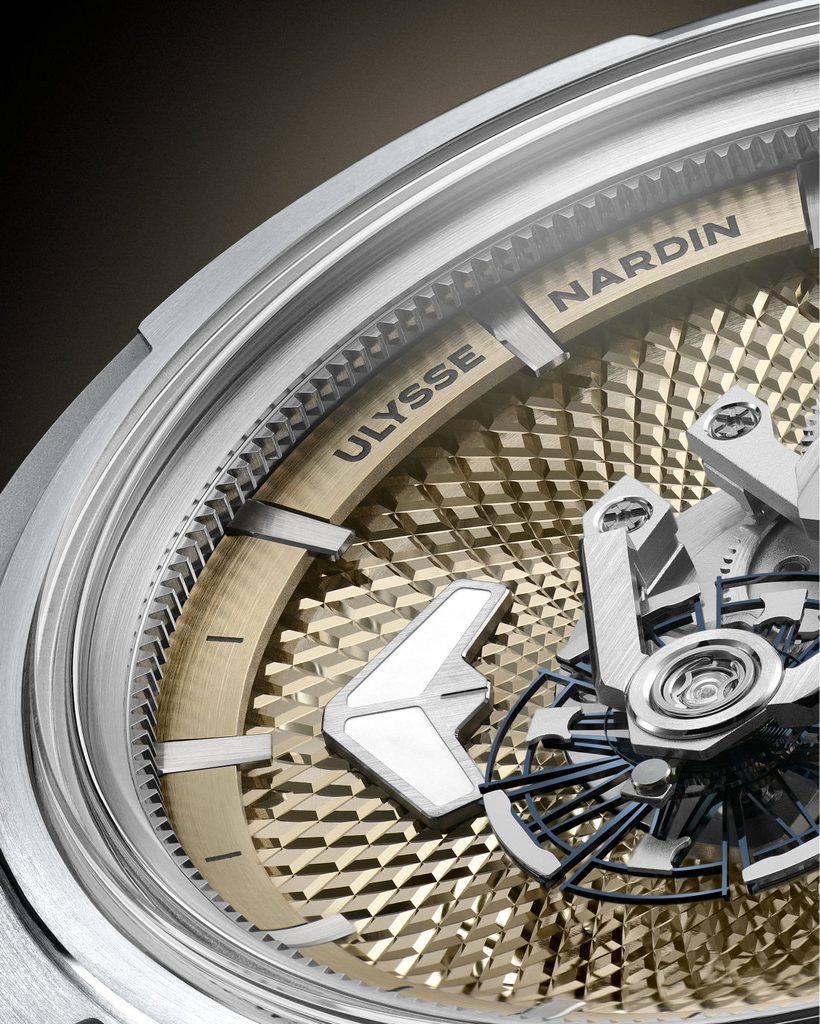
What is particularly noteworthy is the location of this finish: the guilloché is not on a traditional dial, but on a moving part of the movement that also displays the hours.
The Freak [ONE Blue Enamel] takes a different approach. Its hour dial is made of white gold, features an engraved sunburst pattern, and is hand-coated with deep blue, translucent enamel at Donzé Cadrans.
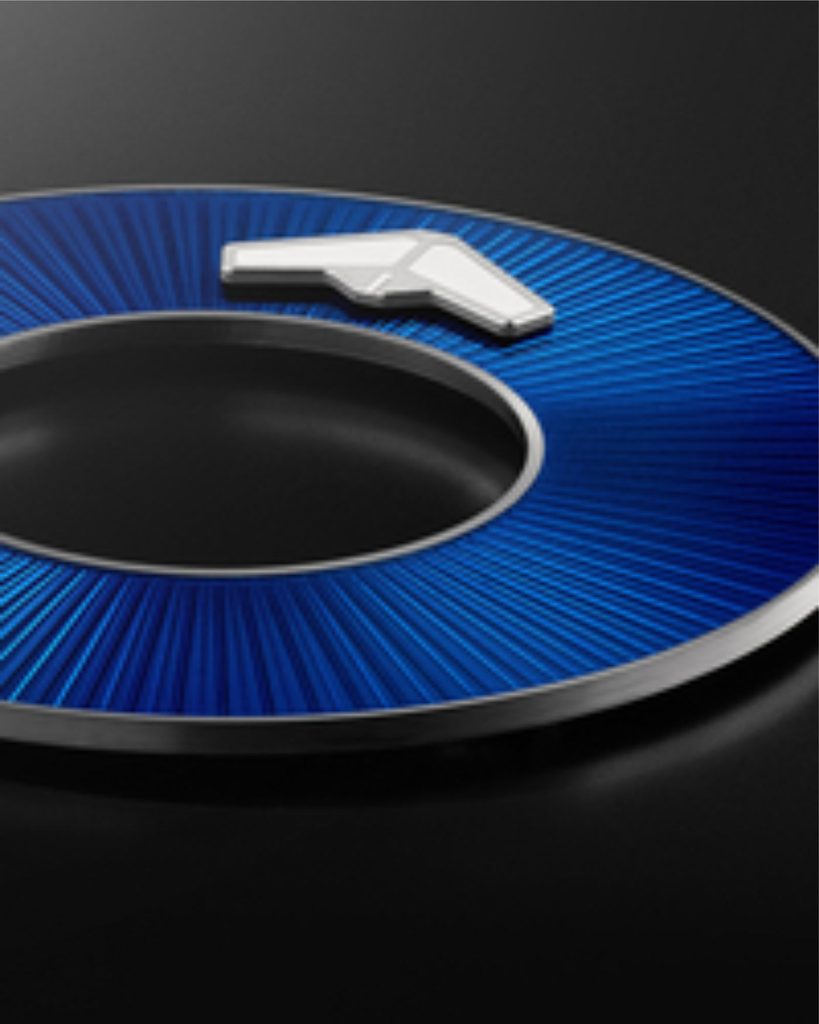
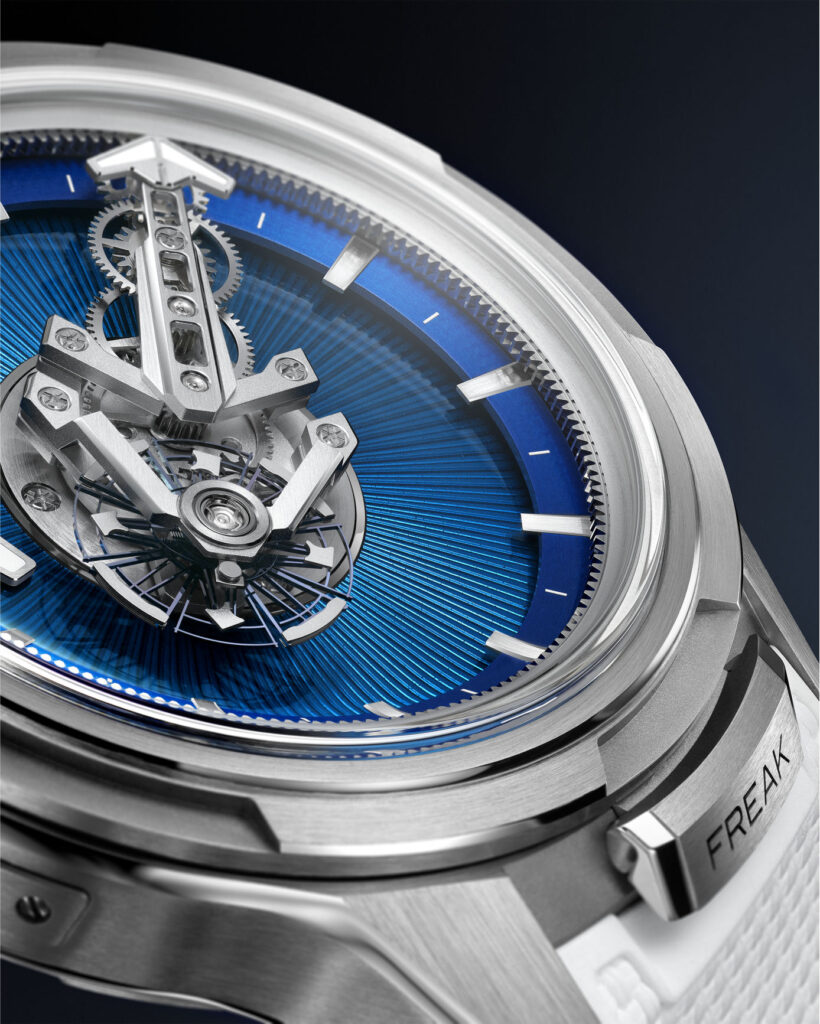
Ulysse Nardin: Freak [ONE Blue Enamel]
The enamel paste is made from ground glass, applied with a brush, and then fired at around 800 degrees Celsius. Multiple layers create depth and color intensity; after the final firing, the surface is polished by hand. Since the hour dial is also a functional part of the movement, this process requires exceptional precision.
This results in two very different interpretations of the same idea: the Guilloché plays with texture and light, while the Blue Enamel plays with color and depth.
Titanium as a common foundation
Both models feature a 44-millimeter case made of satin-finished and sandblasted titanium. The Freak [ONE Guilloché] pairs this with a sand-colored hour ring and a gray rubber strap, while the Freak [ONE Blue Enamel] features a deep blue enamel dial and a white “ballistic” rubber strap.
Thus, while the technical architecture remains the same, the visual impact of the two models differs significantly: one is calm and monochromatic, while the other is high-contrast and rich in color.
Silicon remains part of Freak’s DNA
From a technical standpoint, the Freak [ONE] remains closely linked to the innovation with which Ulysse Nardin first attracted attention back in 2001. The first Freak was one of the earliest mechanical watches to incorporate silicon.
The current UN-240 features a silicon balance wheel and a silicon hairspring. In addition, it features the DIAMonSIL escapement, in which silicon components are coated with a layer of diamond. The automatic winding mechanism utilizes the patented Grinder system, which is designed to efficiently convert even small movements into energy. The power reserve is approximately 90 hours.

229 components—and almost everything moves
The Freak’s unusual architecture is also reflected in the numbers. According to Ulysse Nardin, approximately 95 percent of the movement’s components are in constant motion. The UN-240 consists of 229 parts and operates at a frequency of 3 hertz, or 21,600 half-oscillations per hour. According to the manufacturer, each Freak [ONE] is assembled entirely by a single watchmaker.
Both editions are limited to 99 pieces. The Freak [ONE Guilloché] costs 72,700 euros, and the Freak [ONE Blue Enamel] costs 81,700 euros.
Two New Pages from *The Freak*
Technically speaking, neither model reinvents the Freak. What’s more interesting is what Ulysse Nardin does with its existing architecture.
Guilloché and enamel are among the most time-honored decorative techniques in watchmaking. In the Freak, however, they are not applied to a classic dial, but to a component that is itself part of the time display.
That is precisely what makes these two anniversary models so appealing: here, traditional craftsmanship does not meet a historical design, but rather one of the most unusual watch architectures in modern watchmaking.