
Günter Blümlein: The Strategist Behind the Rebirth of A. Lange & Söhne
October 1, 2026, marks the 25th anniversary of Günter Blümlein’s death. The executive, who passed away in 2001, was—alongside Walter Lange—one of the key figures in the reestablishment of A. Lange & Söhne. His work, however, extended far beyond Glashütte: He had previously guided IWC and Jaeger-LeCoultre through the difficult years following the quartz crisis.
From Precision Engineer to Watch Manager
Blümlein was born in Nuremberg in 1943 and studied precision engineering. He began his professional career at the Diehl Group, which at the time also included Junghans. There, he assumed leadership roles in marketing and sales. Later, VDO entrusted him with the restructuring of IWC and Jaeger-LeCoultre, which had been merged into the Les Manufactures Horlogères holding company.
Blümlein combined technical expertise with strategic brand management. At a time when quartz watches were putting pressure on the Swiss watch industry, he was among the executives who once again consistently focused on mechanical watches and their artisanal quality. At Jaeger-LeCoultre, he supported the return of the Reverso; at IWC, he shaped technically ambitious models and a new communications strategy.
The Return of A. Lange & Söhne
After the fall of the Berlin Wall, Blümlein met Walter Lange, the great-grandson of the company’s founder, Ferdinand Adolph Lange. Together, they relaunched the brand in 1990. Walter Lange contributed the family tradition and ties to Glashütte, while Blümlein provided the strategic, technical, and business expertise needed to build an internationally competitive watchmaking company.
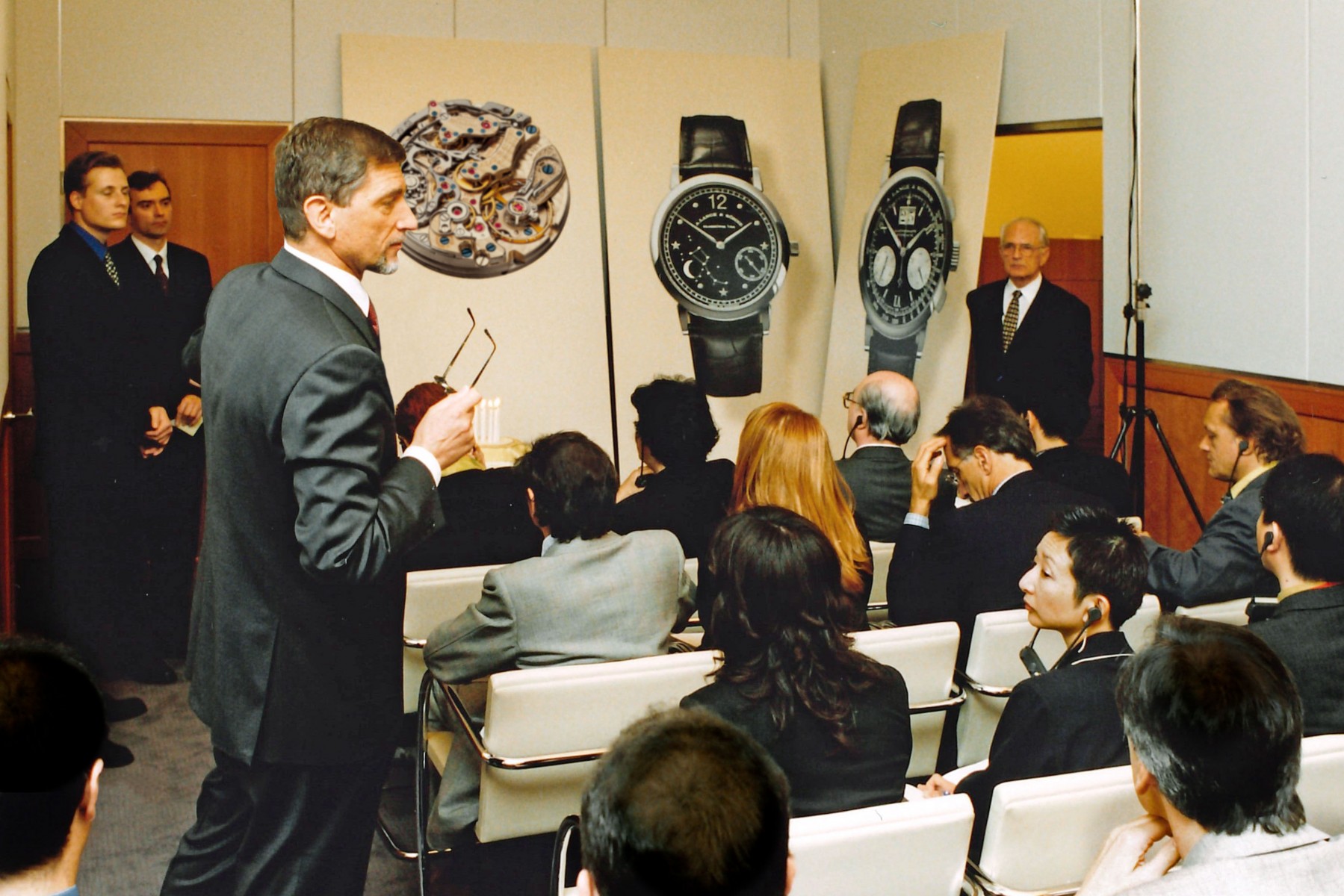
The first four wristwatches of the new era were unveiled on October 24, 1994, at the Dresden Royal Palace: the Lange 1, the “Pour le Mérite” Tourbillon, the Arkade, and the Saxonia. With its off-center dial and large date display, the Lange 1 in particular became a visible symbol of this new beginning. The Tourbillon “Pour le Mérite,” with its chain-and-worm-gear drive, also made a technical statement.
The Datograph as a Turning Point
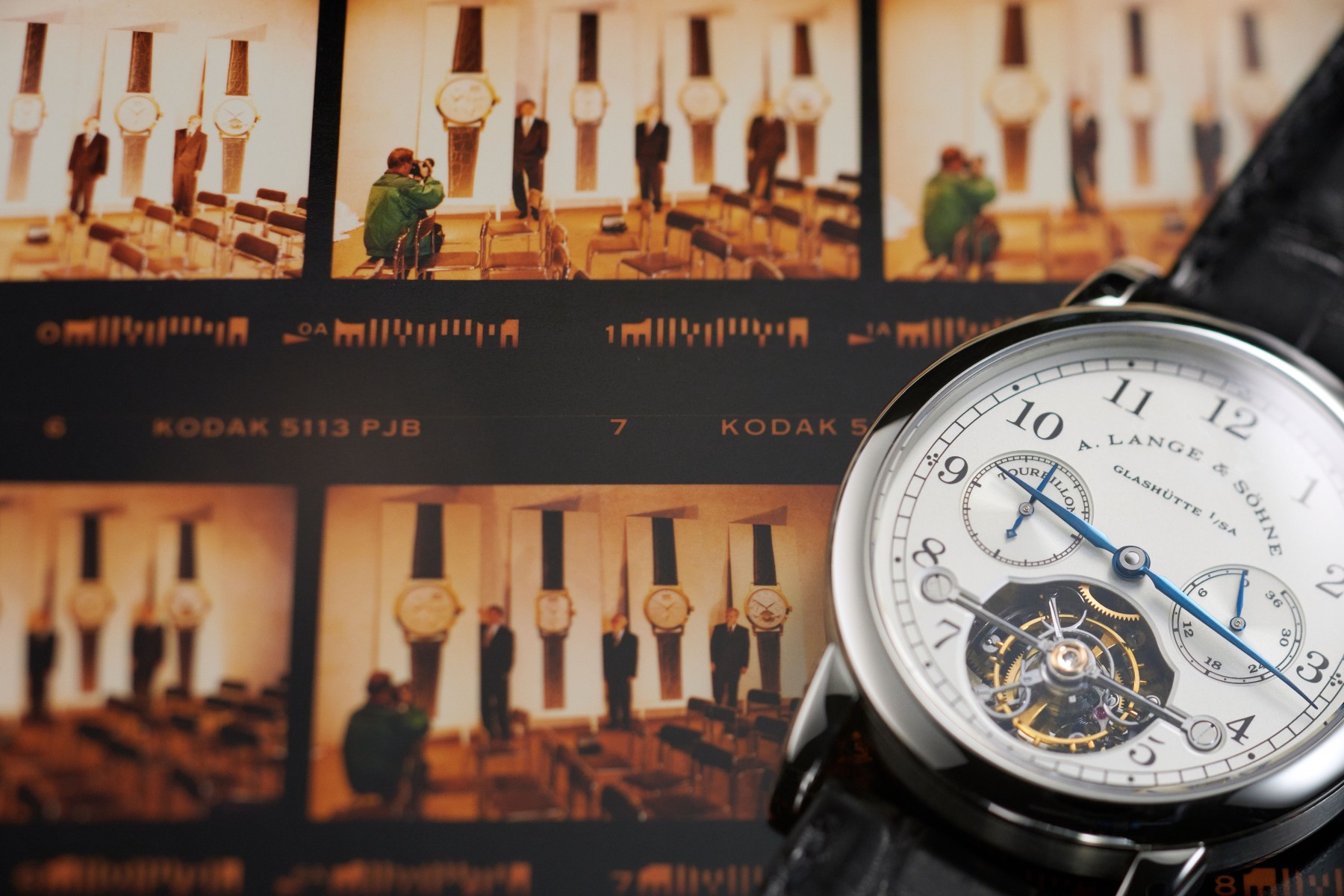
One of the most important models from Blümlein’s era is the Datograph, introduced in 1999. The in-house chronograph movement was developed during a time when in-house mechanical chronograph calibers were rare. The Datograph thus underscored the brand’s commitment not only to reviving historical designs but also to developing its own movement technology.
Other decisions continued to have an impact even after his death. Among them was the development of in-house expertise in the manufacture of balance springs. This technology was first used in 2004 in the Double Split, the launch of which Blümlein did not live to see. The independence gained as a result remained a key foundation for the manufactory’s later developments.
A Legacy in Glashütte
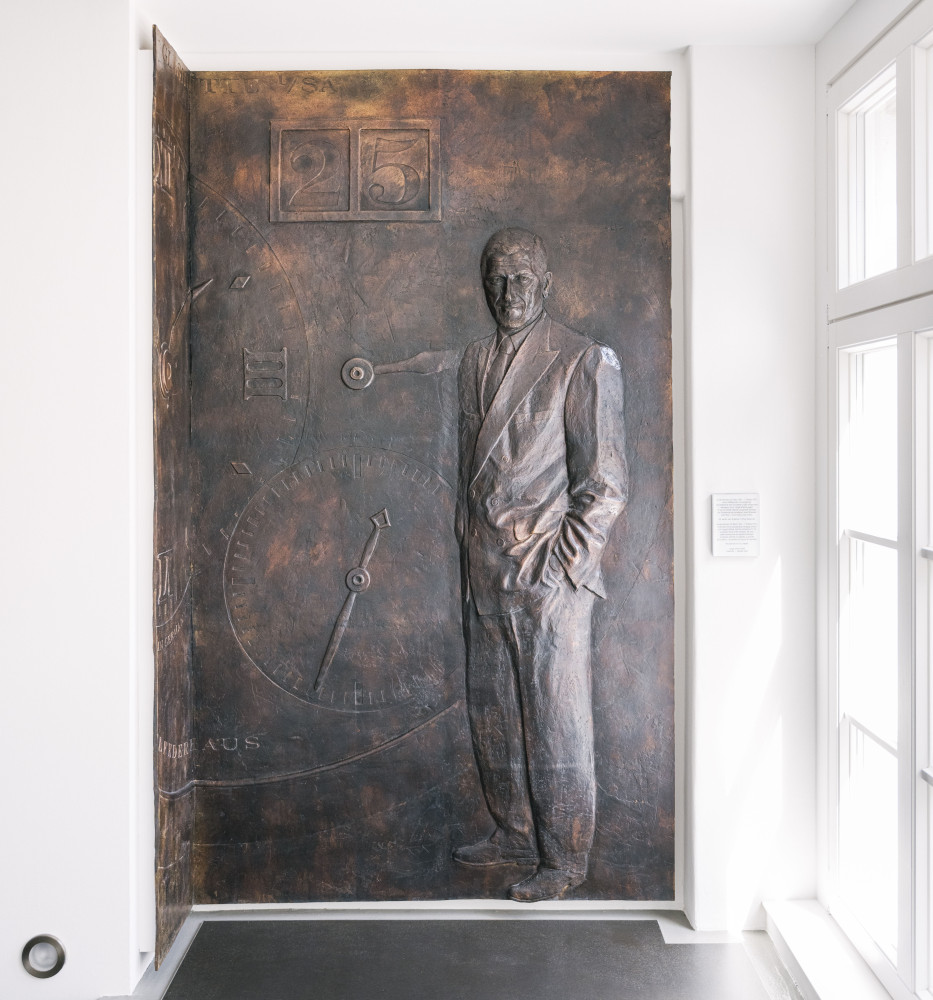
Since 2002, a bronze relief by Schaffhausen artist Beat Künzler has paid tribute to Günter Blümlein in the “Lange II” manufacturing building. The dial of the Lange 1 can be seen in the background. The work thus encapsulates two aspects of his legacy: the personality of the manager and the model that symbolized the successful new beginning of A. Lange & Söhne.
Current CEO Wilhelm Schmid describes Walter Lange as the heart and Günter Blümlein as the brain behind the brand. This characterization highlights how the two founders complemented each other. Without one, the brand would lack historical legitimacy; without the other, it would likely lack the strategic strength needed to turn its comeback into lasting international success.