



Longines celebrates 100 years of the second time zone with a third time zone
Longines celebrates 100 years of the second time zone with a third time zone
100 years ago, the Swatch Group brand presented its first wristwatch displaying a second time zone. Reason enough to present another version of the "Spirit Zulu Time" model.
It owes its name to the Zulu flag on the dial of the 1925 model. Zulu refers to the letter Z, which stands for Coordinated Universal Time (UTC +0) among aviators and sailors.
Zulu is still used today by pilots and navigators to ensure clear communication during radio contact.
In 2022, Longines reinterpreted its historic timepiece for the first time, launching the "Spirit Zulu Time" with precise GMT functionality and a striking vintage look.
100 years of GMT on the wrist and a third time zone
The new "Spirit Zulu Time 1925" remains true to the 39-millimeter format of the 2023 and 2024 versions. For the first time in this collection, the stainless steel case features a bidirectional rotating bezel crafted from 18-karat rose gold and equipped with a 24-hour scale. This allows wearers to even read a third time zone.

The choice of material for the bezel is no coincidence, but rather cites the copper strip in the floor of the Royal Observatory Greenwich, built 350 years ago, which marks the prime meridian.
The rose gold is picked up by hands and indices, which make their rounds on the matte black dial in high contrast and are coated with Superluminova for comfortable readability at all times.
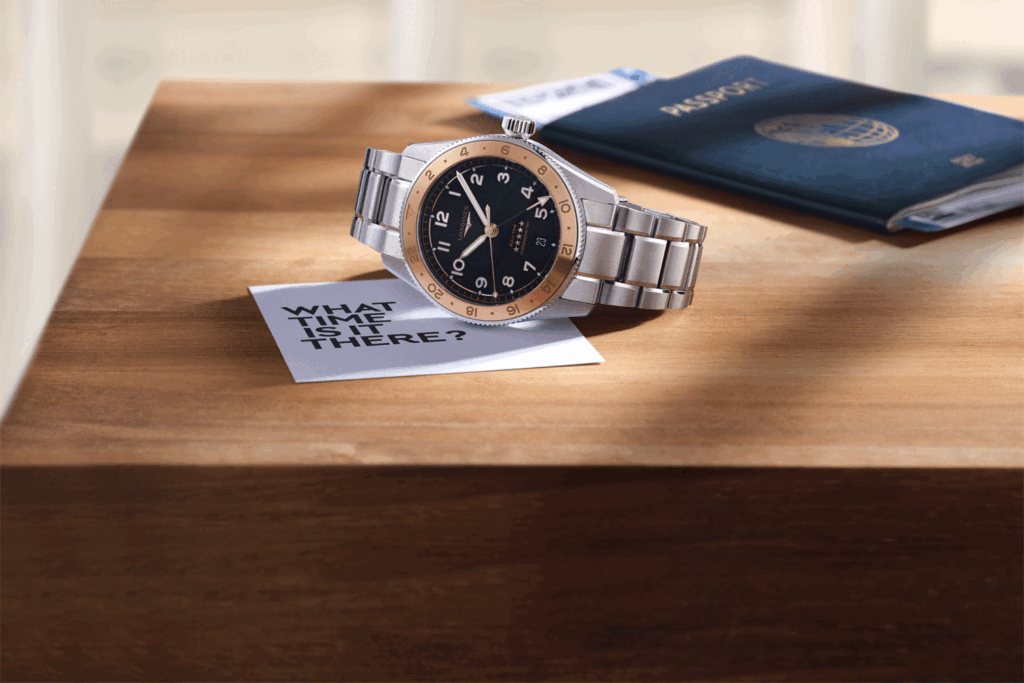
The dial is further enhanced by five stars positioned above the 6 o'clock index. This also houses a discreet date window and the tone-on-tone engraved inscription "1925 – 2025" as a reference to the centenary.
Like its predecessors, the "Spirit Zulu Time 1925" is powered by the COSC-certified automatic caliber L844.4 with a 72-hour power reserve. It features a silicon hairspring, which also grants it certification according to ISO standard 764 as a magnet-resistant watch. Incidentally, the timepiece exceeds these requirements by a factor of ten.
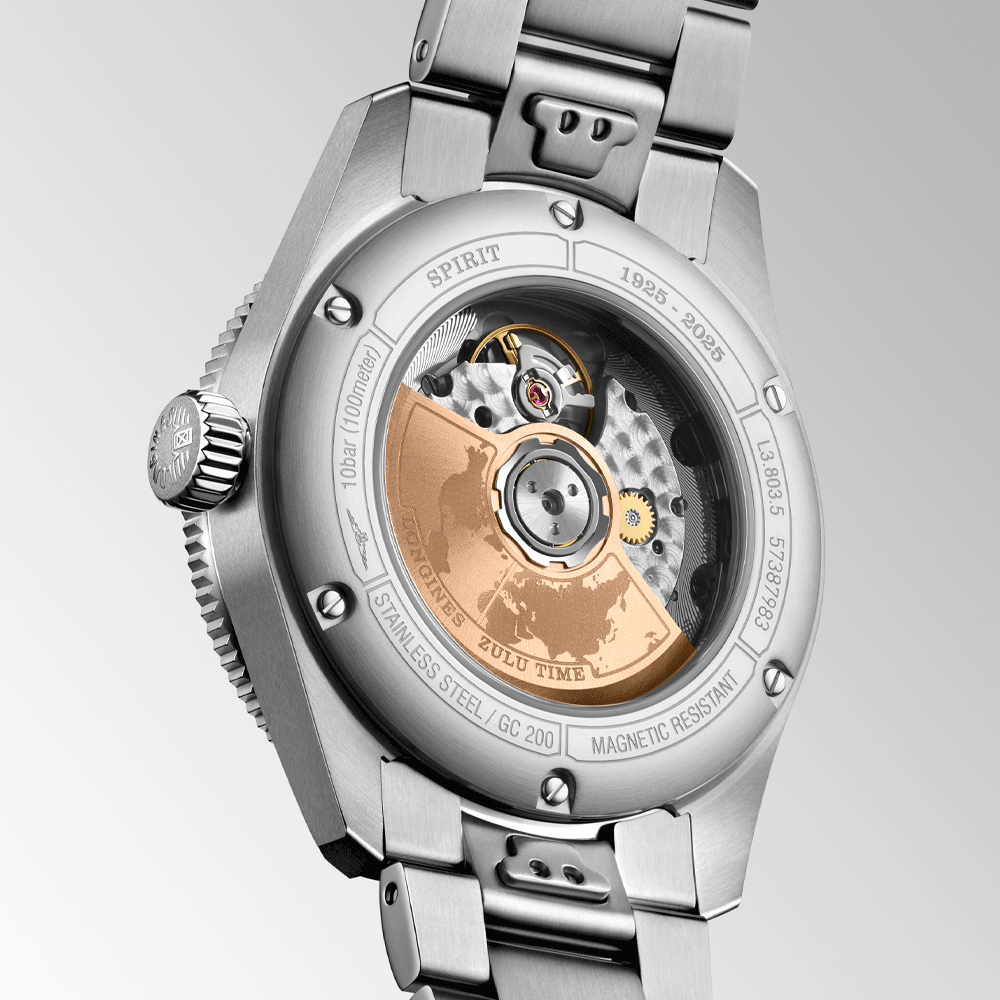
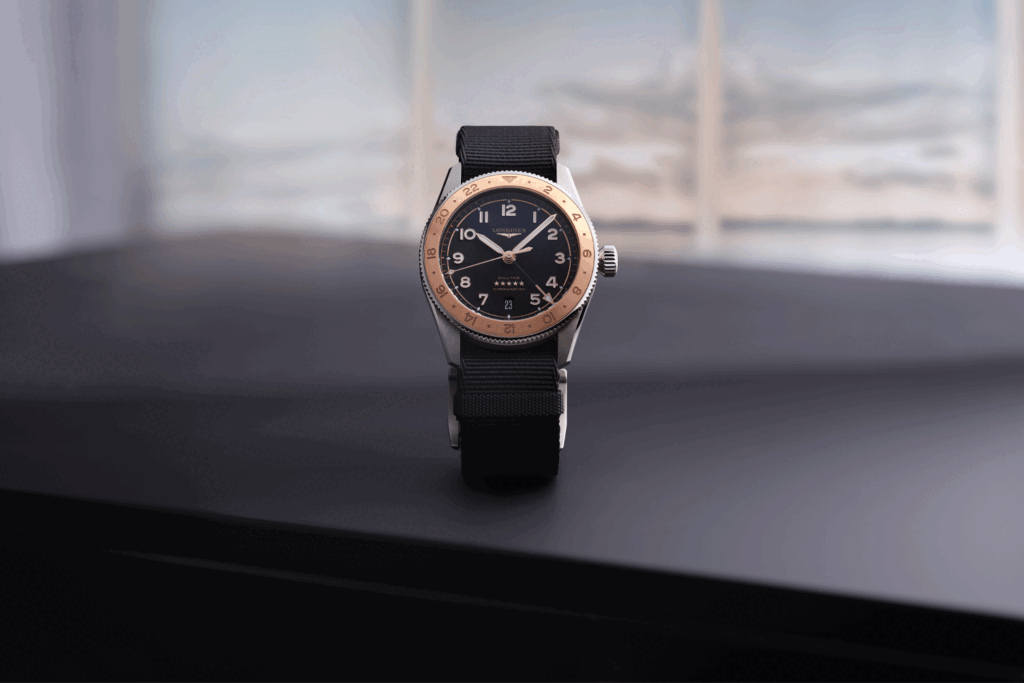
A stainless steel strap with a double safety folding clasp or the included black NATO strap ensures secure fastening.

In addition to the special edition, Longines presents two other models with 38- and 42-millimeter cases featuring a bezel with a colored ceramic insert.
Staying connected across time zones – with Henry Cavill
The new campaign for the Longines Spirit Zulu Time 1925 explores a timeless question that connects people across distances: “What time is it there?”
Starring Longines ambassador Henry Cavill, the campaign captures the emotional connection between two people traveling on international flights, yet remaining inextricably linked over time.
As Cavill moves through the world's airports and destinations, his Longines watch serves as a means of communication that transcends continents and time zones.
The campaign illustrates that a “Spirit Zulu Time” can be more than just a high-precision timepiece:
It becomes a symbolic connection between loved ones, helping them to synchronize their lives despite physical separation.

"For me, the 'Spirit Zulu Time' not only embodies precise timekeeping, it also represents a connection. These days, our loved ones and colleagues are often far away. However, the 'Spirit Zulu Time' creates an immediate connection with them at a glance, with the elegance that characterizes Longines," explains Henry Cavill.
The history of time zones
The standardization of time zones in the late 19th century revolutionized global travel and communication. Before this decisive change, every city had its own local time based on the position of the sun, but this led to practical problems with the expansion of rail networks and the increase in international travel.
By establishing Greenwich as the prime meridian in 1884 and subsequently dividing the Earth into 24 time zones, a universal system was created that allowed people to synchronize their activities over long distances.
The term "Zulu" comes from the NATO phonetic alphabet and refers to the letter "Z," as in "Zero," or GMT +0, for Greenwich Mean Time. The term gained particular importance in aviation and maritime transport, where precise time coordination across different regions proved crucial for safety and navigation.
Longines established itself as an expert in multi-time zone watches and developed solutions for this new global reality.
The brand made history in 1908 with its famous Turkish watches – the first pocket watches with two time zones – and secured this innovation with a patent in 1911.
In 1925, Longines presented another milestone in watchmaking with the world's first dual-time-zone wristwatch: the "Zulu Time" for the Royal Canadian Navy, which displayed both local time and Greenwich Mean Time (UTC +0). The watch features the signal flag for the letter "Z"—a symbol used by sailors and aviators in international communication to indicate time.
In the early 1930s, Longines developed one of the first true GMT cockpit watches, which became an indispensable companion for aviation pioneers such as Hugh Herndon and Clyde Pangborn during their historic non-stop crossing of the Pacific in 1931.
This legacy of precision across multiple time zones continues today with the Spirit Zulu Time collection.


 Deutsch
  English (UK)