



Coloured gemstone of the month July: The ruby
The colored gemstone of the month for July is the ruby, one of the most well-known and popular colored gemstones, which impresses with its intense bluish-red tones. There's a lot to love about the ruby. We've compiled the highlights of this special colored gemstone.
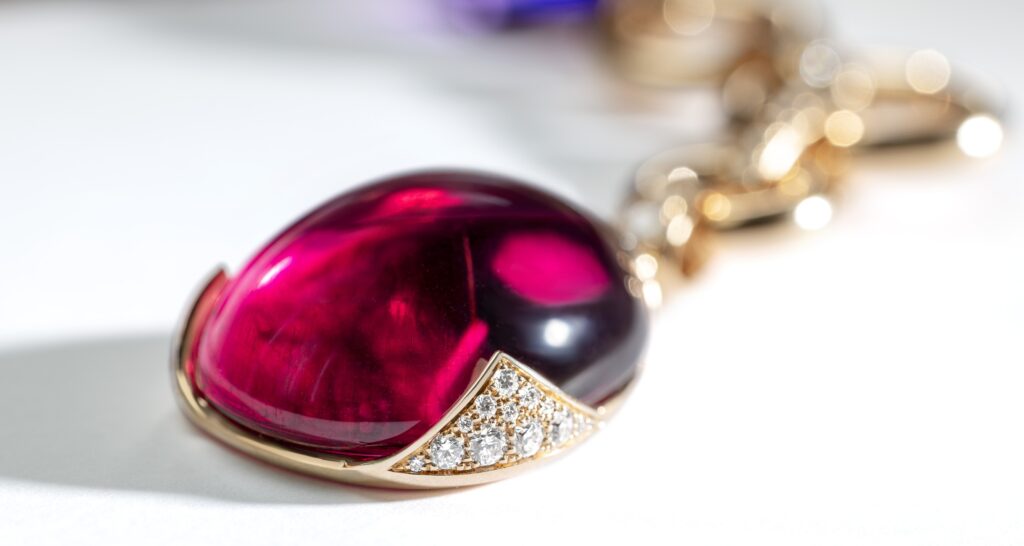
Left: Cut ruby from Bulgari's "Polychroma" collection. © Bulgari
Ruby: The King of Gemstones
The ruby is the colored gemstone of those born in July. Its red color makes it one of the most well-known and popular gemstones and is associated with royalty and nobility.
The name ruby comes from the Latin word "rubeus," meaning "red" or "the red one." In Sanskrit, the ruby is called "ratnaraj," meaning "king of gemstones."
Nina Switzer-Spano, gemologist at the Gemmological Institute of America (GIA) says:
"The ruby has been highly valued since ancient times, and we still value it today. Rubies have been popular for thousands of years because they are beautiful stones that evoke symbolism of love, romance, and power. Rubies continue to command the highest prices per carat of all gemstones."
Secrets and danger of confusion of the ruby
A fun fact about rubies: if you look closely, they're actually sapphires. Both gemstones are varieties of the mineral corundum. However, this has only been known since the 19th century. The ruby gets its red color from chromium deposits, while the sapphire gets its blue color from iron, titanium, or cobalt deposits.
Since it was recognized that sapphire and ruby both belong to the corundum family, sapphire can also be distinguished from other red gemstones such as garnet and spinel.
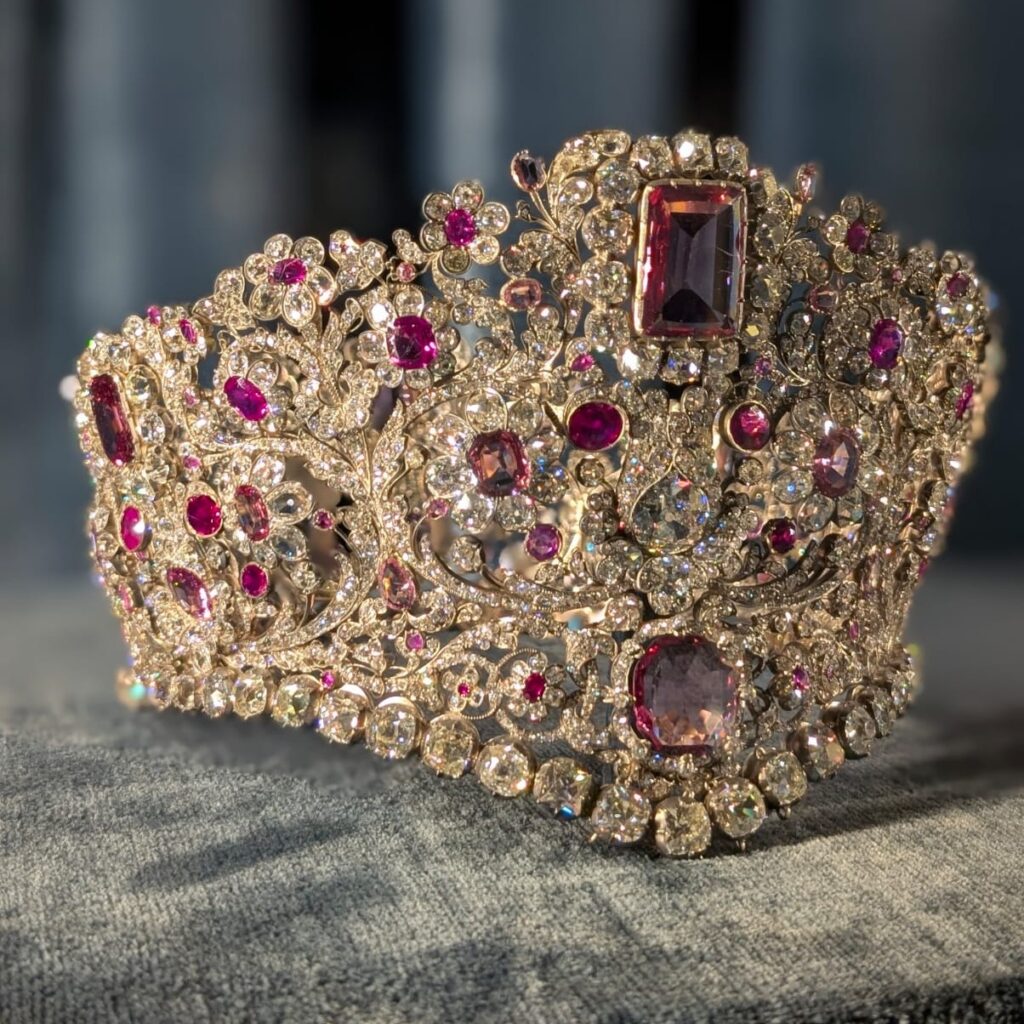
In fact, many crowns of European nobility are adorned not only with rubies, but also with spinels, which were mistaken for rubies. For example, the famous 170-carat "Black Prince's Ruby" in the British royal crown is not a ruby, but a spinel.
Origin and properties of the ruby
With a Mohs hardness of 9, the ruby is even harder than spinel, which has a Mohs hardness between 7.5 and 8. Spinel is also composed of magnesium and aluminum compounds. However, purely aesthetically, it can be a more affordable alternative for fans of red colored gemstones. Thanks to its hardness, the ruby is a gemstone that's ideal for everyday jewelry.
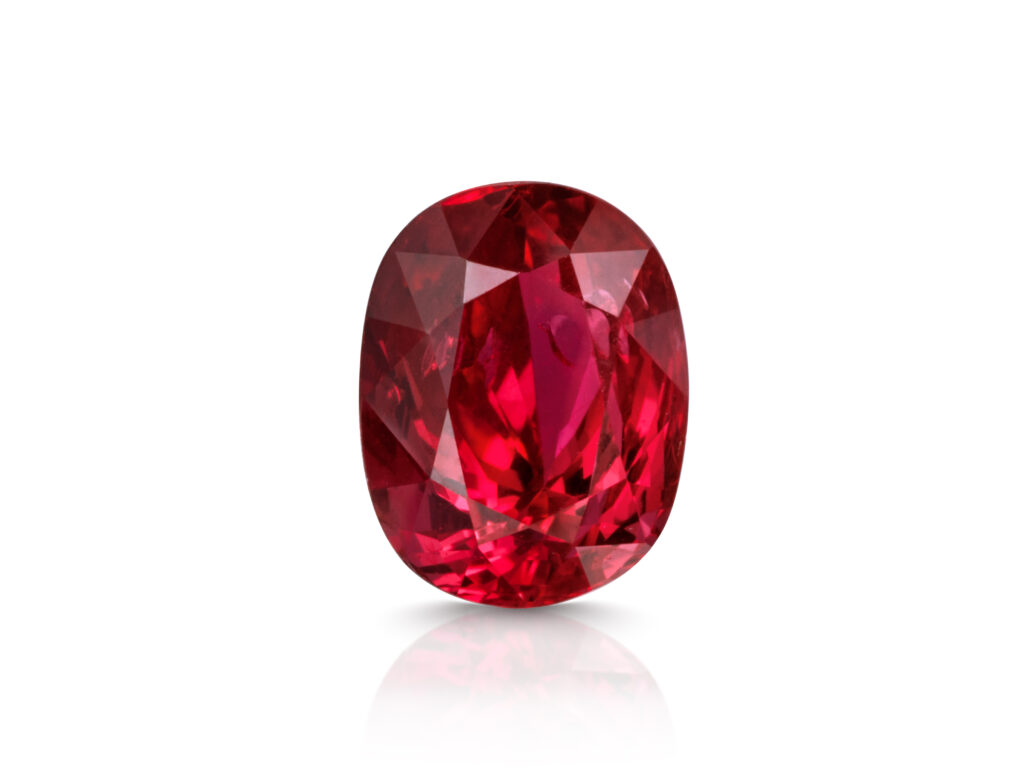
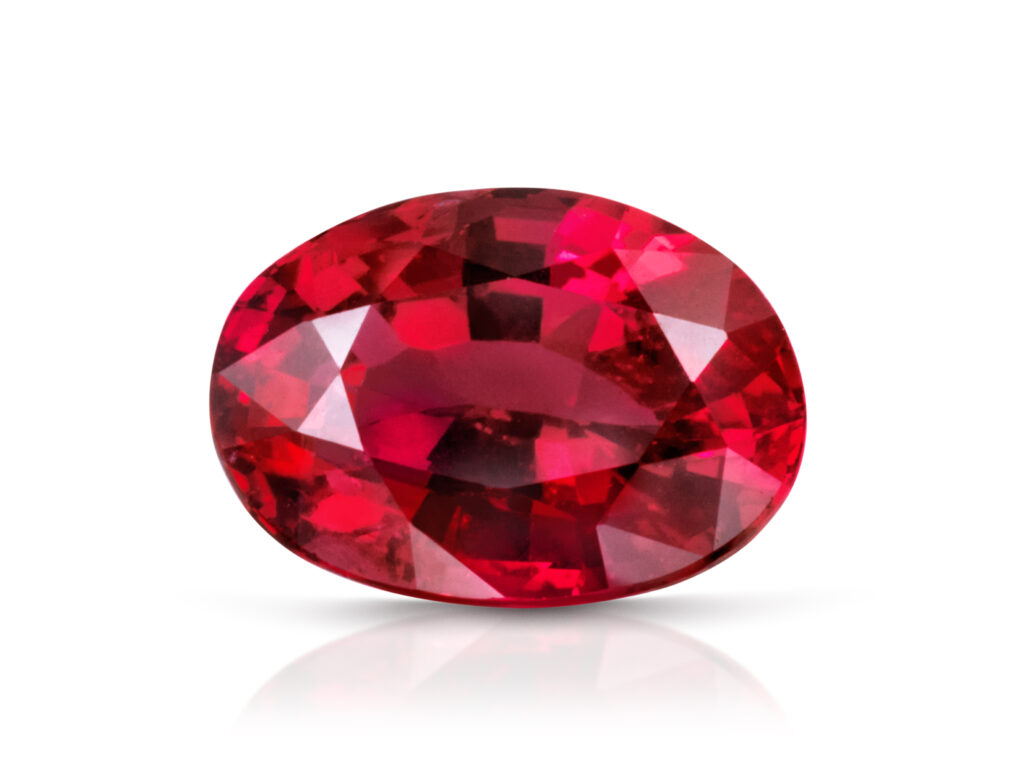
© Gemfields
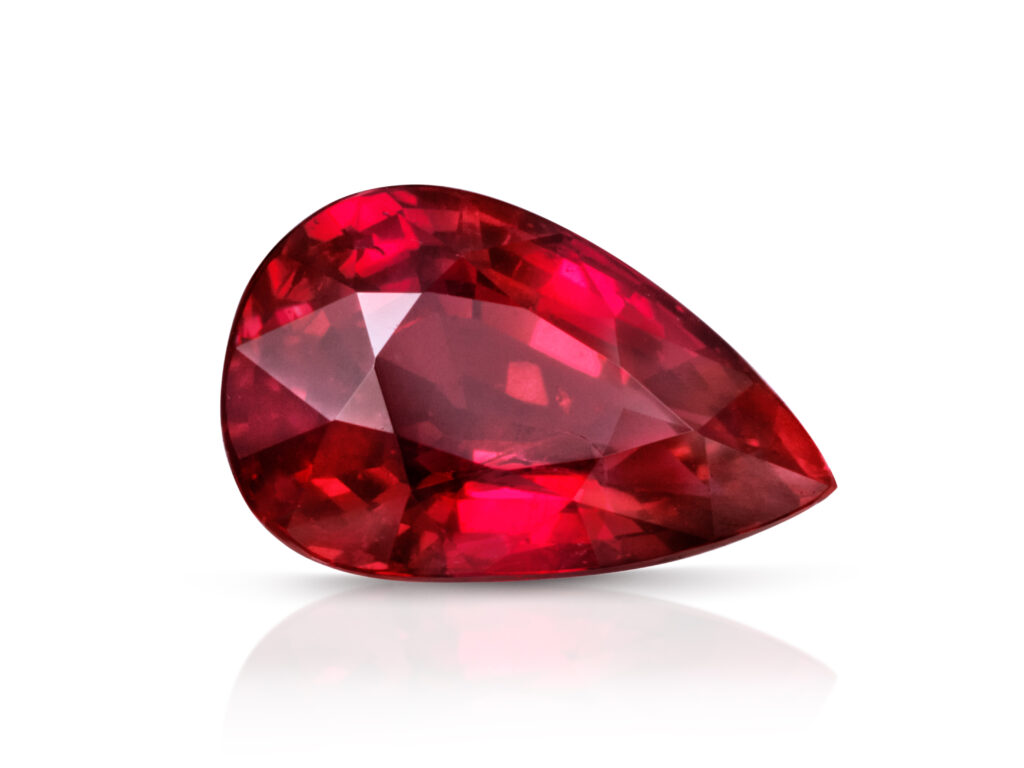
The GIA reports that almost all rubies today have been heat-treated to enhance their color properties and recommends always assuming that the stones have been treated unless explicitly stated as untreated. The natural color spectrum of rubies ranges from orange-red to violet-red. A particularly desirable hue is a vibrant shade historically referred to as "pigeon blood"—however, there is no standardized definition of what this hue means. Therefore, the term is now avoided as a marketing tool.
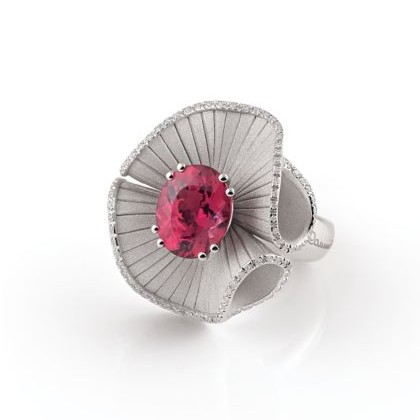
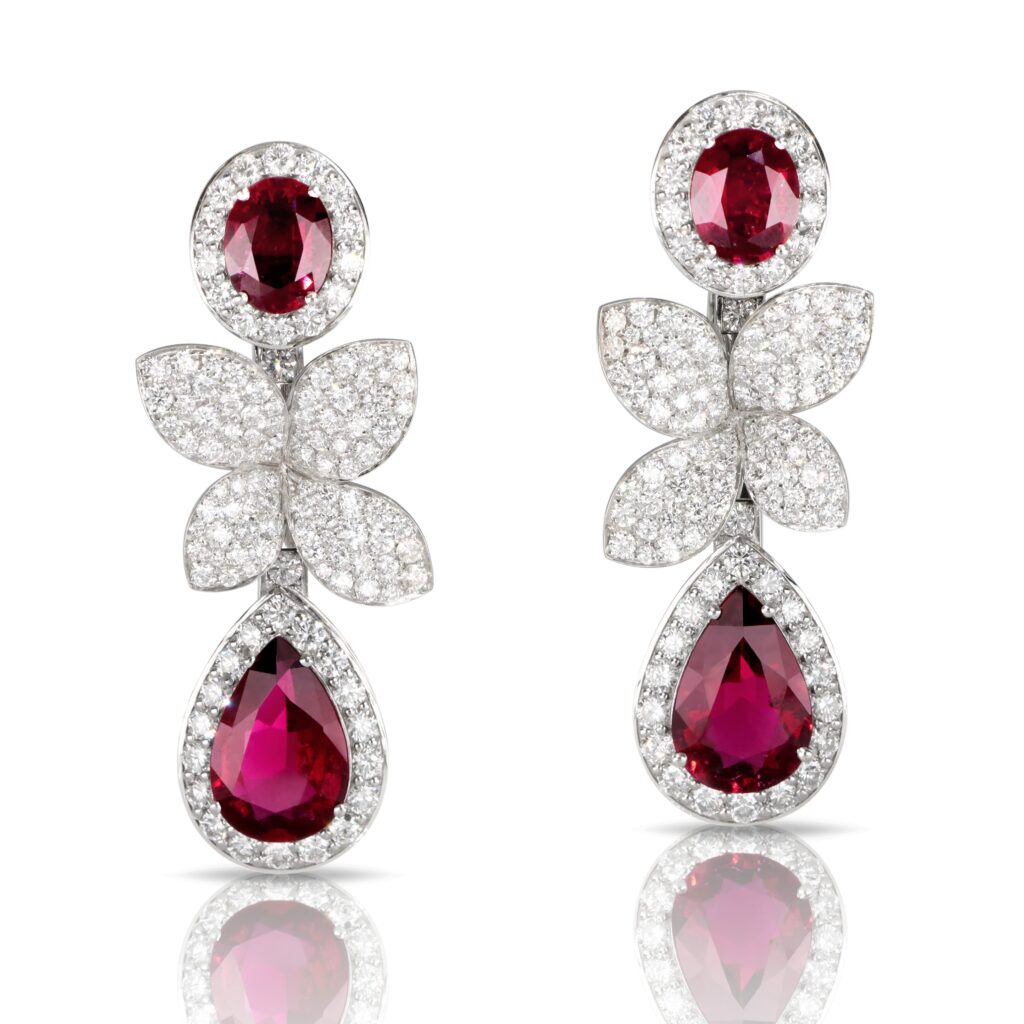

High-quality rubies can be found in Mogok and Mong Hsu in Myanmar, as well as in Madagascar, Cambodia, Sri Lanka, and Vietnam. Rubies from Sri Lanka become more intense with heat treatment and lose their brownish hues. Mong Hsu rubies lose their dark-colored interior.
Of course, untreated rubies are many times more expensive than treated rubies, but, as already mentioned, the latter is far more common. Synthetic rubies have also been produced since the late 19th century. This is legitimate as long as it is stated that they are not natural stones.
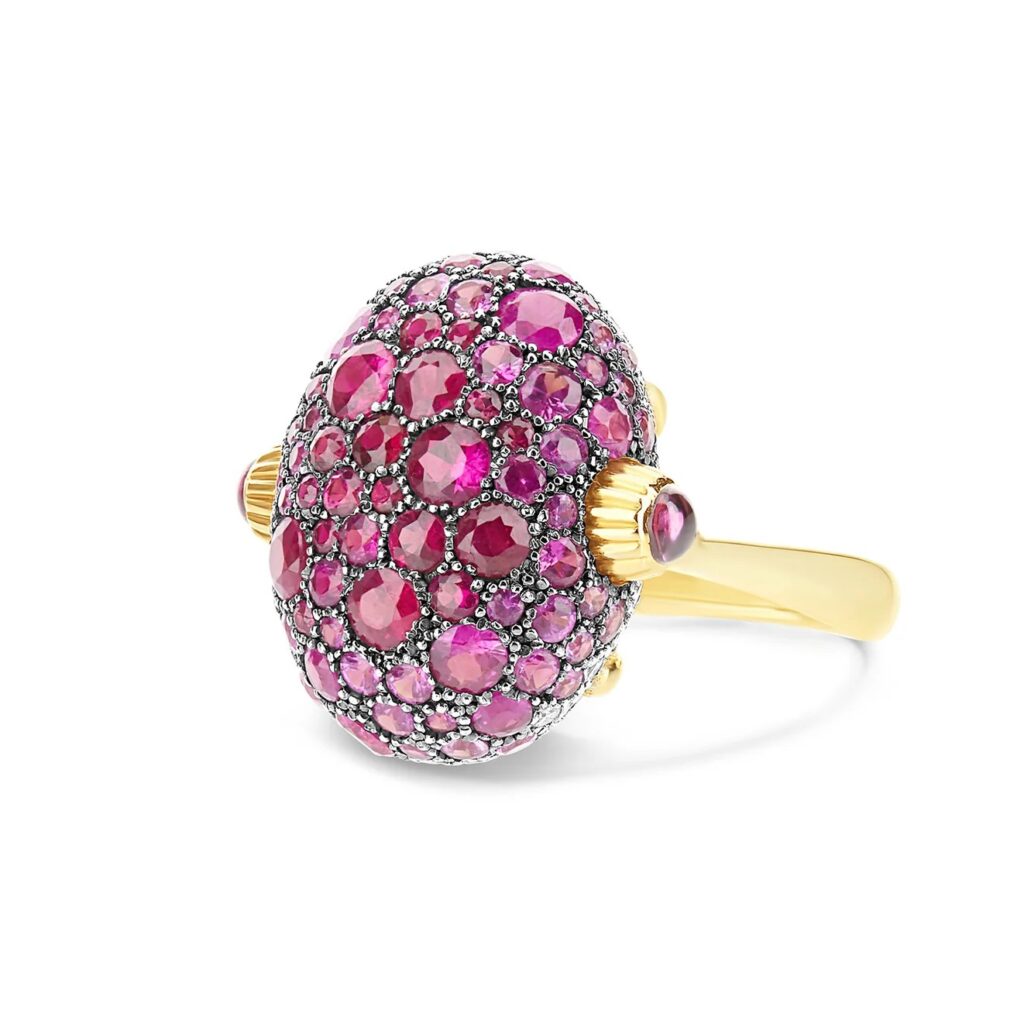
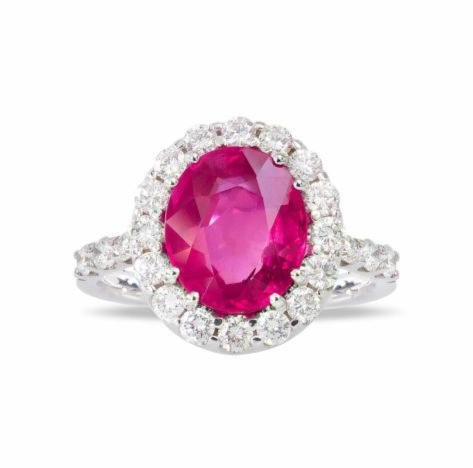
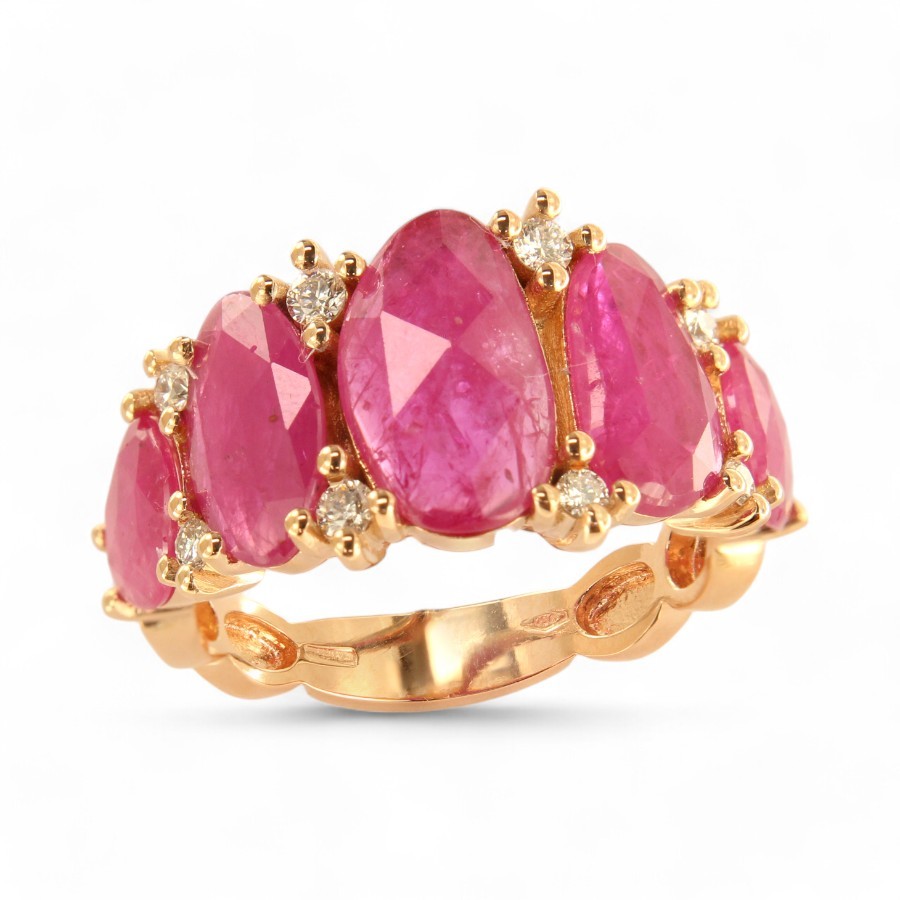
Because rubies have a special value and significance, they are often set in classic shapes like cushion or oval cuts to preserve as much material as possible while retaining their value. Fancy cuts could become out of fashion and also result in a lower weight, which is undesirable for precious stones.
One of the most famous rubies, the "Estrela de Fura," is considered one of the largest rubies ever found. When discovered in Mozambique in 2022, it weighed 101 carats and was eventually cut into a 55.22-carat gem. Its color is still described as "pigeon blood." It was auctioned by Sotheby's in 2023 for $34.8 million—making it the most expensive ruby ever sold at auction.
 Deutsch
  English (UK)