Column: After Watches & Wonders 2026 comes the real test
After Watches & Wonders 2026 comes the challenge of getting all those beautiful watches into jewelers’ storefronts and/or—depending on the sales strategy—directly into the hands of consumers.
The shuttle jungle outside the Watches & Wonders exhibition halls was a perfect illustration of just how difficult it is right now to find your way. Large buses labeled A–F, smaller vans numbered 1–12, separate exhibitor pickup zones outside the Palexpo halls, countless destinations and stops listed on the several-meter-tall timetable pillars, and an armada of taxis for those who preferred the individual and simpler—but more expensive—alternative to the shuttles: There were quite a few bewildered faces to be seen and extra miles to cover at the fairgrounds.
Inside the halls themselves: business as usual in the glamorous bubble of Watches & Wonders. Almost. Because here, a consistently broken escalator served as a reminder that even the world of luxury doesn’t run perfectly smoothly, and that more initiative than ever is required to get where you want to go. And at the very least, the trip to the restrooms in the basement of the Palexpo halls—with their sometimes questionable wall colors—as well as the occasional peek through the curtains into the trade show’s service areas brought you back to real life, where everyone is, after all, just human. And not sipping Veuve Clicquot, which is always available for free everywhere.

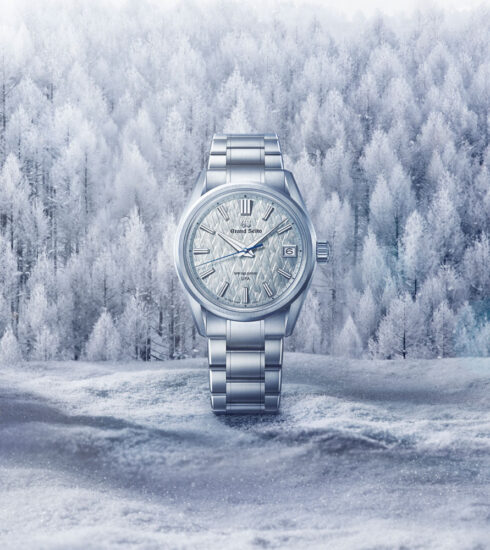
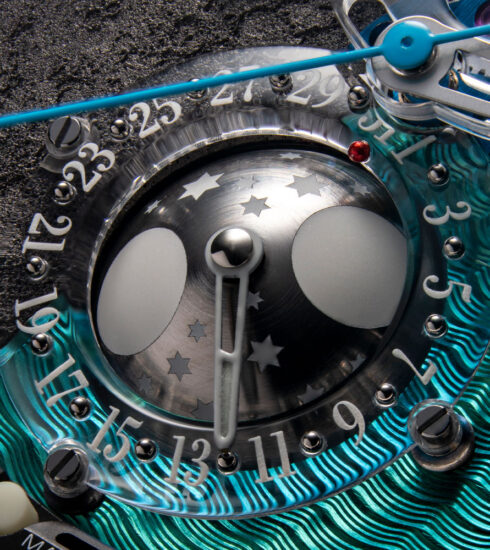
The brands had fulfilled their core mission: the creation and production of fantastic watches. It was striking to note that the dial increasingly serves as a playground where designers can let their creativity run wild—either purely for visual effect or by showcasing a wide variety of complications, whether they’re actually needed or not. At the same time, the vintage theme and the so-called “good old days” are still well represented everywhere.
The current and coming times are less promising. They hold many challenges in store for the watch industry. Uncertainty is the most challenging factor here.
“2025 was a year of uncertainty—and required agility, discipline, and strategic clarity from CEOs across the Swiss watch industry,” Oliver Müller, an industry expert and owner of LuxeConsult, recently summarized on his LinkedIn account.
But that sounds easier than it is. “They tell themselves, ‘It can’t get much worse,’ and make the best of the situation,” Oris CEO Rolf Studer told the NZZ, describing the current mood among many Swiss watchmakers—which borders on a kind of fatalism.

At Watches & Wonders 2026, visitors were able to enjoy the beautiful, idyllic world of luxury for one more week. Now it’s time to prove oneself in the real world.
Antje Heepmann (Insight Luxury)
The Global Watch Industry and Its Challenges in 2026
USA: The multi-act drama surrounding U.S. tariffs is far from over. Since February 24, an additional 10% tariff has been in effect, on top of the base tariff (0 to 5%, depending on the category). This is manageable, as evidenced by the continued strong performance of Swiss watch brands in the U.S. However: This agreement is only valid until July 24, 2026. What comes after that is completely up in the air—anything is possible with the Trump administration. A long-term strategy for Swiss watchmakers is therefore currently also a gamble on the whims of the U.S. president.
China: Since the record year of 2021, when exports were valued at CHF 2.966 billion, the Swiss watch industry’s exports to China—the literal translation of the country’s name—have fallen by nearly 40 percent to date. Last year alone, the decline was 12 percent. And a genuine recovery is not in sight. Compounding the issue is the fact that while Swiss luxury watch brands continue to enjoy a high reputation in China, Chinese manufacturers such as Seagull are catching up—in terms of desirability, prestige, design, and technical expertise alike. This could become a particular problem for brands for which China is one of the most important markets.
Gen Z: Those born roughly between 1996 and 2012 are reaching an age where they have disposable income and are thus becoming a target demographic for the luxury industry—one marked by significant financial uncertainty. Furthermore, this generation is proving to be more discerning and unpredictable than its predecessors.
According to the “Deloitte Gen Z and Millennial Survey 2025,” their biggest concern—besides the ongoing climate crisis—is the rising cost of living. The study also reveals that Gen Z no longer buys luxury primarily for status, but rather for “Money, Meaning & Well-being.” Luxury is interpreted in a more emotional and value-oriented way. Traditional logo-driven status consumption is losing its significance; instead, individuality, sustainability, and personal identity are what matter. Watch brands must therefore develop credible strategies to convince this discerning group of buyers in the future to spend their money on something that no one really needs.
Global Uncertainty: How are the newly flared-up and ongoing global hotspots of unrest affecting the appetite for luxury? While until just a few years ago the super-rich wouldn’t let anything dampen their spending mood—top-tier luxury always sells, according to the manufacturers’ mantra—even in these circles, the first signs of restraint are beginning to appear here and there. Not so much because they can no longer afford it, but—in the watch sector—because, in the face of frequently rising prices, they feel they are being shamelessly fleeced by the corporations.
Below the top luxury segment, one still encounters a well-off clientele in the upper and mid-range price brackets. However, this group is becoming more price-sensitive and cautious.
Oris CEO Rolf Studer says, “Convincing a customer in this price range can be even more difficult than in the absolute high-end segment.”
So here, too, the strategy for the future amounts to a gamble: Will the general appetite for consumption resurface as a sort of counter-movement to the bleak reality? Or is it time to wait for better days? The catch is that consumers themselves haven’t yet decided which way to go.
Middle East: The uncertain situation in the Middle East is further exacerbating the situation. The region accounts for about ten percent of Swiss watch exports and was recently one of the most important drivers of growth. But now war is raging in parts of the Middle East, and even Dubai and Abu Dhabi must fear for their reputation as absolutely safe luxury hubs, far removed from the turmoil of our times, in light of the conflicts in the region. Several brands are reporting declining local sales, writes the NZZ, quoting Jean-Christophe Babin: “In many countries, the clientele consists almost entirely of tourists or expats—and they are simply no longer there.”
Inflation and a strong Swiss franc: Globally, inflation is also dampening consumer sentiment—not just in the lower price ranges below 500 CHF in export value. Sales are stagnating in the 500–3,000 CHF range. This particularly affects watch brands that have positioned themselves in the so-called “affordable luxury” segment.
The strong Swiss franc is further complicating pricing and making Swiss watches more expensive in every country. This, too, is hitting brands in the affordable luxury segment—up to CHF 3,000—the hardest. Maintaining this positioning while securing margins is becoming increasingly difficult. “We raised our prices in the U.S. by 13 percent last year, which merely offset the currency effect,” Oris CEO Rolf Studer told the Luxury Tribune. The publication also quotes Niels Eggerding, CEO of Frederique Constant, as saying: “Maintaining affordable prices has put our business model under pressure.”
Gold Price: There’s no such thing as an affordable luxury here. While the price of gold fluctuates and occasionally drops, the overall trend is upward. While an ounce of gold cost around €2,900 in April 2025, it currently stands at just over €4,000. The price of platinum is no exception and has doubled over the past twelve months; it currently stands at just over €1,760 per ounce.
Both are popular metals for watches. And if you look at the new releases from Watches & Wonders 2026, manufacturers are by no means shying away from high prices—and are, of course, passing these costs on to the end consumers. Whether consumers are willing to shell out these amounts, given the factors mentioned, remains to be seen in the coming months.