
Cartier “Le Chœur des Pierres” – When the Gemstone Defines the Design
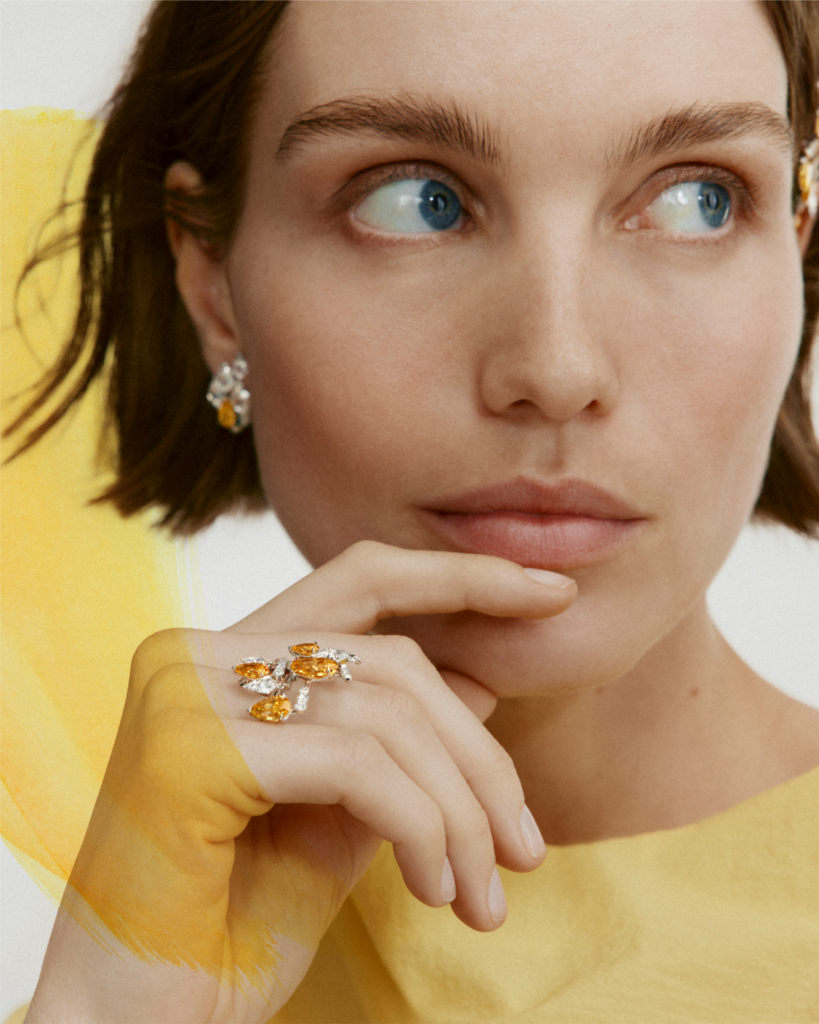
With its new haute joaillerie collection, “Le Chœur des Pierres,” Cartier consistently places the gemstone at the heart of its creations. It is not the design that comes first, but the stone itself—its color, shape, origin, and radiance determine the resulting jewelry composition.
Cover photo: Cartier TETRAYA_STRATELIA ©Cartier ©Annaïck Lejart
The collection’s title plays on the French double meaning of “chœur” (choir) and “cœur” (heart). It refers to the interplay of individual gemstones, which function like voices within a larger composition. Cartier describes the collection accordingly as an “ode to gemstones.”
The stone as a starting point
It is striking how strongly Cartier emphasizes the individual identity of each stone. Rather than a purely symmetrical presentation, many of its creations feature organic forms, asymmetrical lines, and deliberately visible contrasts. In doing so, the Maison combines classic haute joaillerie with an increasingly sculptural and architectural design language.
This approach is particularly evident in creations such as “Solenara,” whose design was inspired by two extraordinary emeralds. The asymmetrical construction combines graphic clarity with fluid movement.
“Tellura” also plays with movement and volume. The composition of 30 extraordinary diamonds evokes volcanic formations and, through its spiral elements and openwork, creates a sense of constant motion.
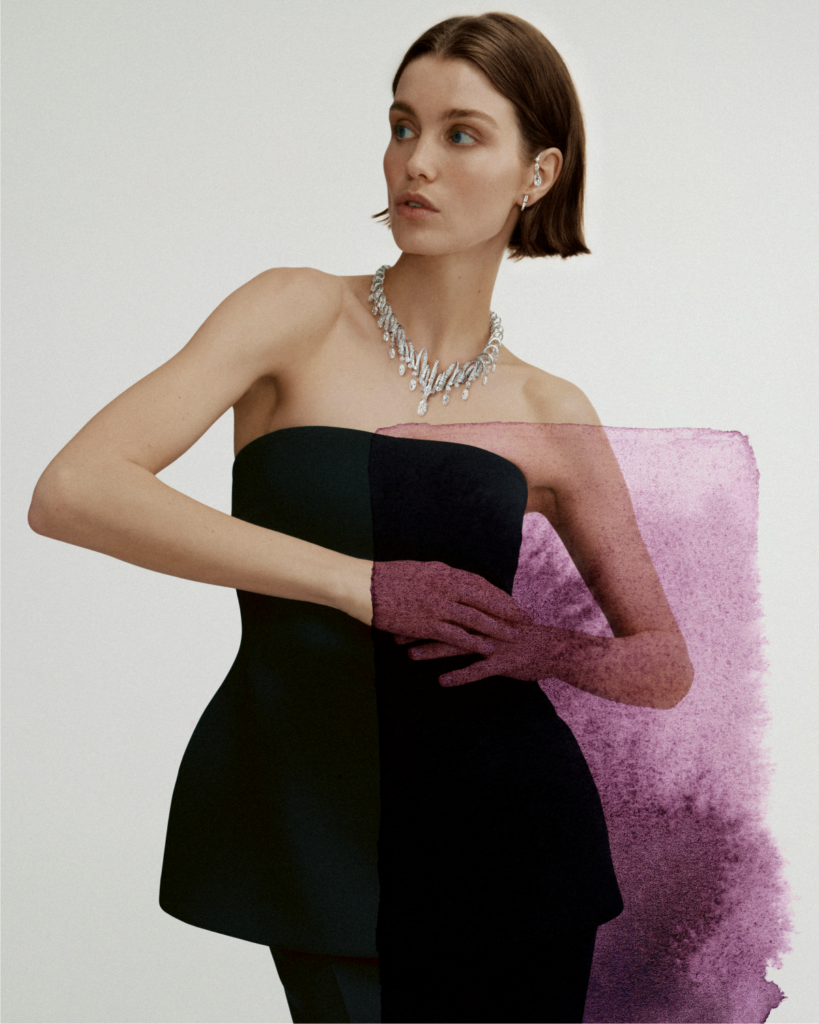
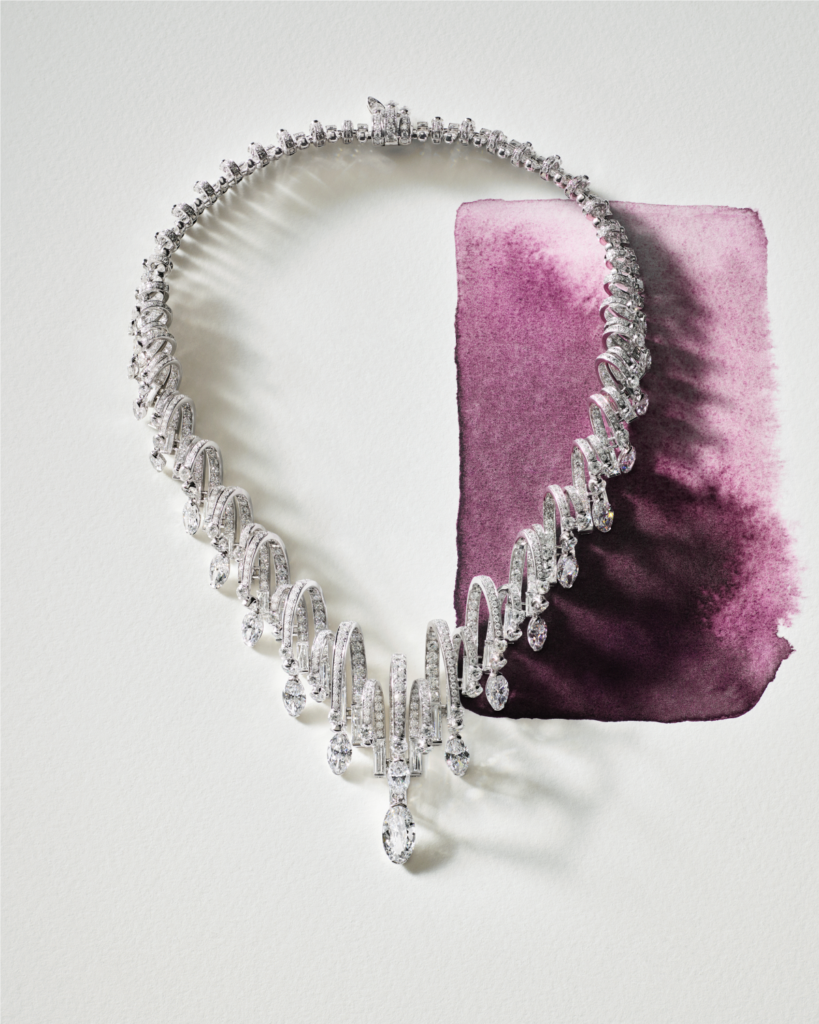
Cartier: WORN TELLURA ©Cartier ©Agnes Lloyd Platt and TELLURA ©Cartier ©Annaïck Lejart
Color as a central design element
Color plays a central role in the collection. Cartier frequently draws on the Maison’s historical color codes—in particular the so-called “peacock motif,” which was a defining feature of Louis Cartier’s designs as early as the beginning of the 20th century.
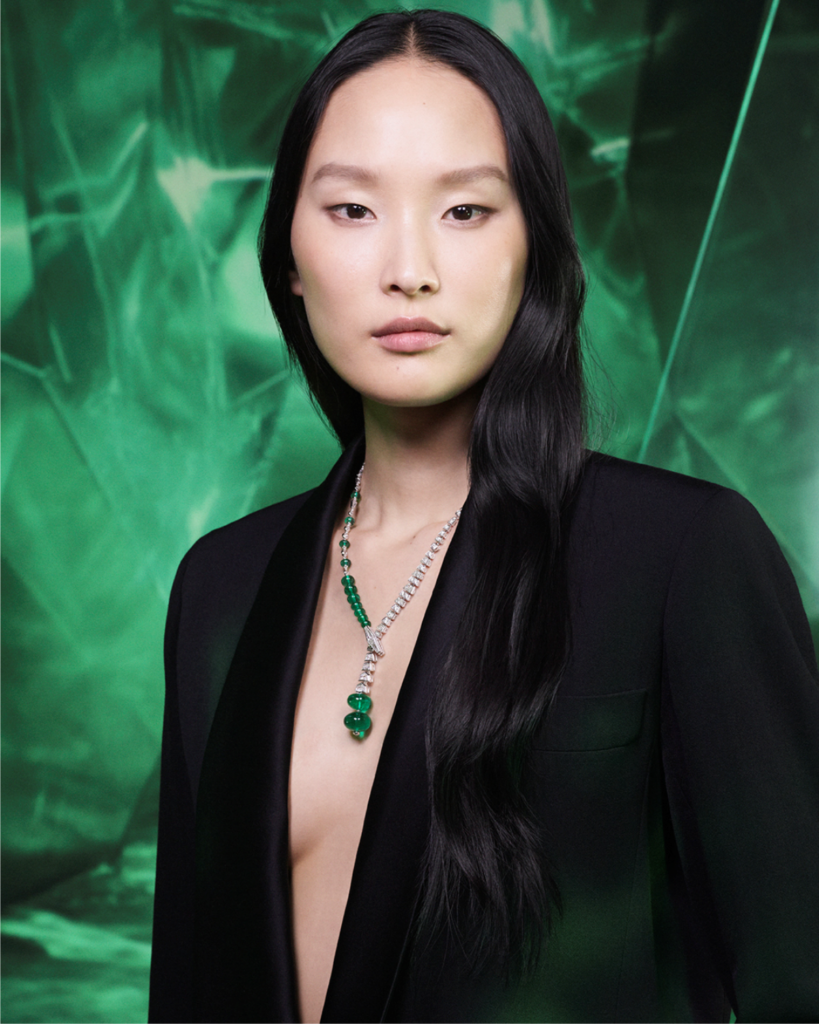
The “Olorra” necklace combines Colombian emeralds with turquoise, lapis lazuli, and diamonds to create a rhythmic, almost graphic color composition.
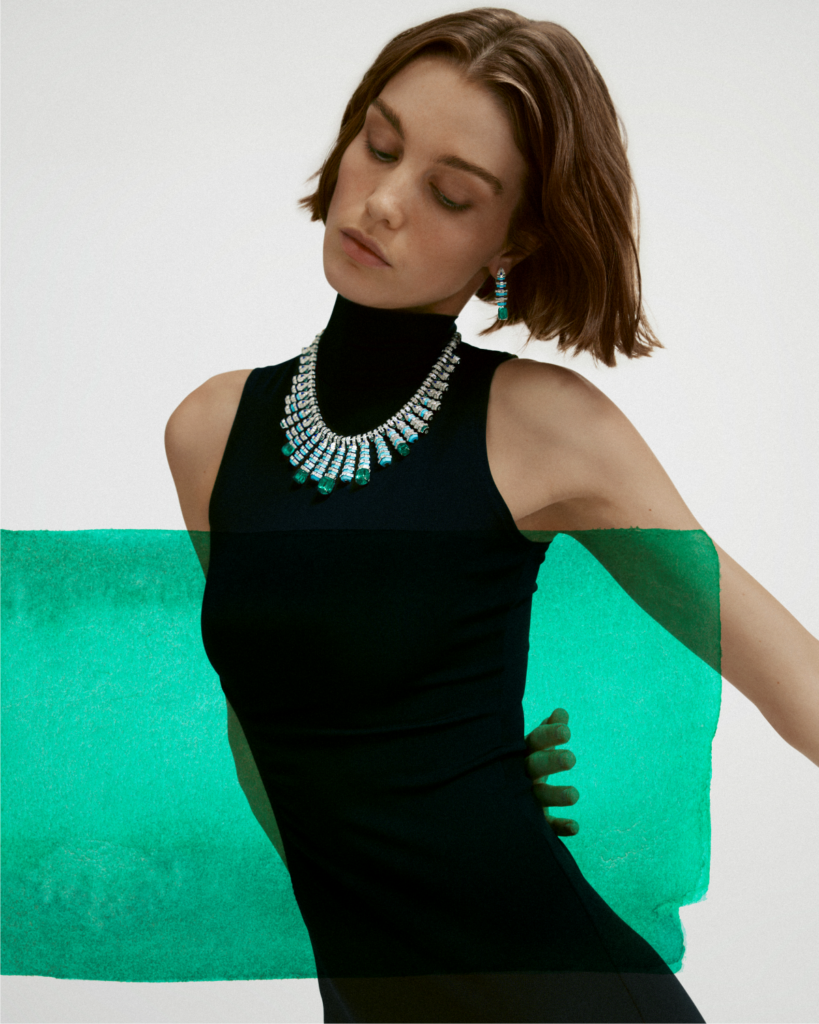
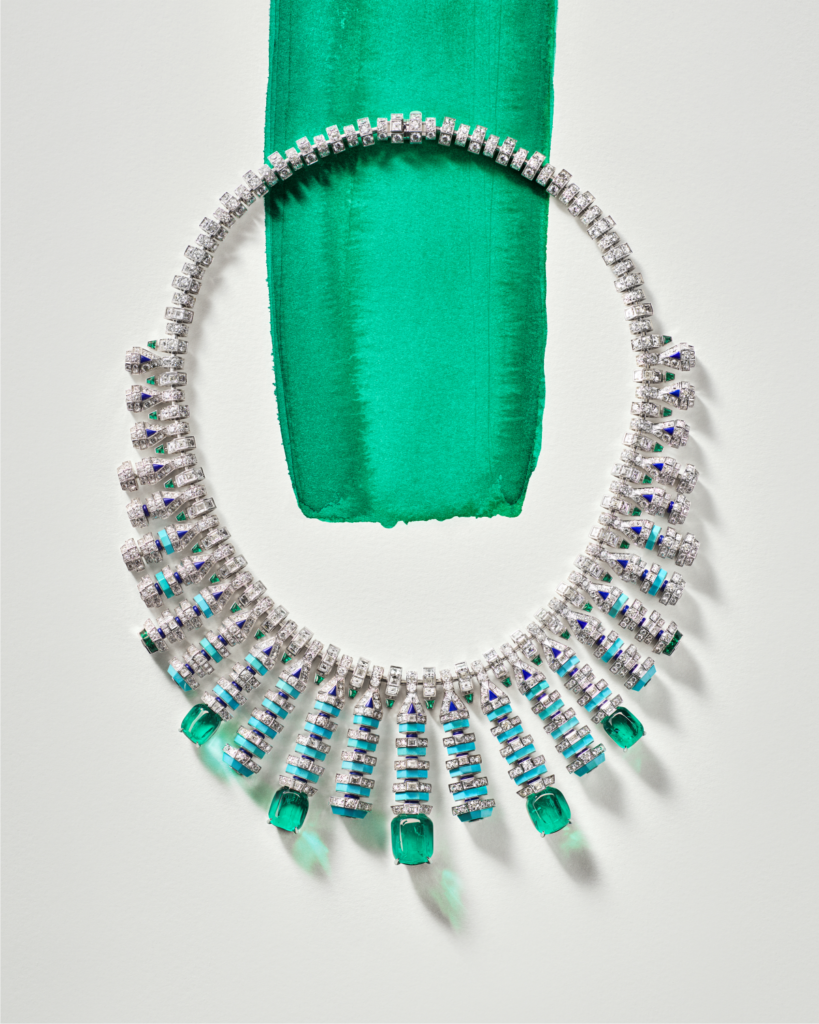
Cartier: WORN OLORRA ©Cartier ©Agnes Lloyd Platt and OLORRA ©Cartier ©Annaïck Lejart
The “Kinkō” ring also reinterprets the classic Toi-&-Moi style through a blue-green color palette, combining geometric clarity with asymmetrical elegance.
In general, it is striking that Cartier now uses color less for decorative purposes and more to evoke emotion and define identity. Emeralds, rubies, sapphires, and colored diamonds not only define the visual appearance of the creations but also shape their overall atmosphere.
Versatile Haute Joaillerie
Several pieces in the collection also explore the theme of versatility—an aspect that is currently regaining prominence in the world of haute joaillerie.
The “Pyra” design reinterprets a historic tiara motif and can be worn as earrings, hair jewelry, or a brooch.
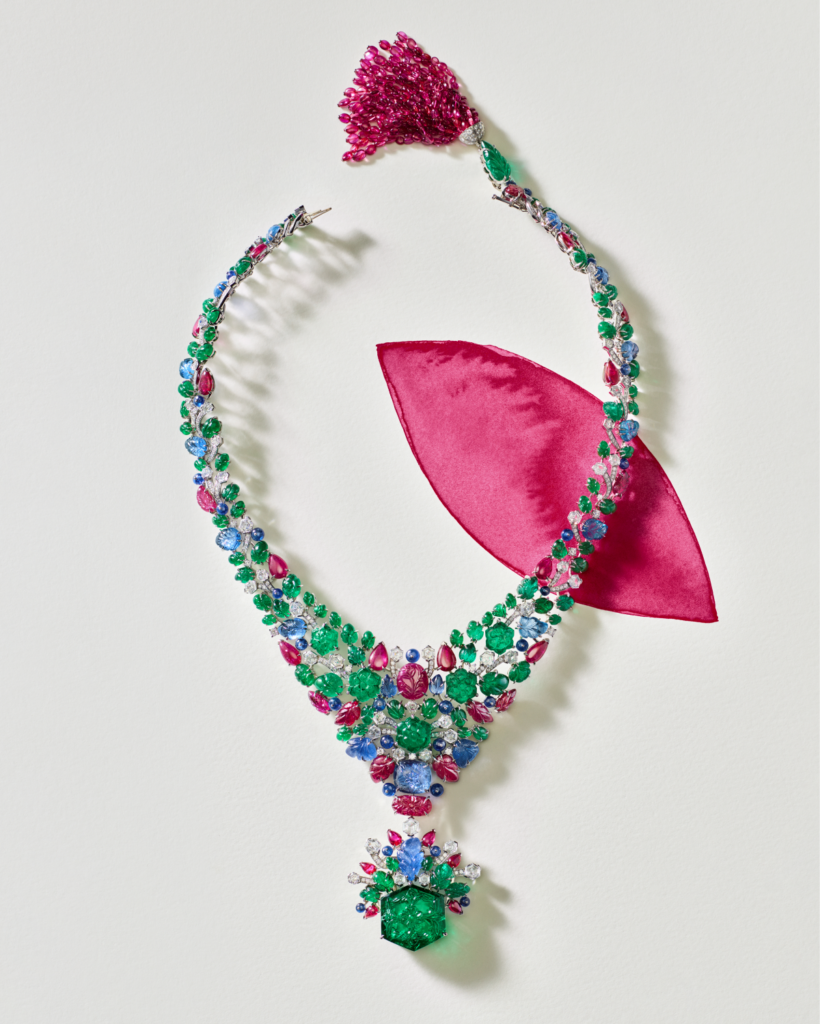
With “Tutti Kanya,” too, the main motif can be worn as a brooch, while the ruby tassel can be positioned as desired.
With this, Cartier is responding to a modern understanding of luxury, in which jewelry is increasingly worn in more flexible, personal, and individual ways.
Between tradition and modern sculpture
At the same time, the collection remains deeply rooted in the Maison’s history. Panther motifs, Toi-&-Moi interpretations, geometric lines, and the combination of organic gemstones with graphic designs all reflect key Cartier design elements.
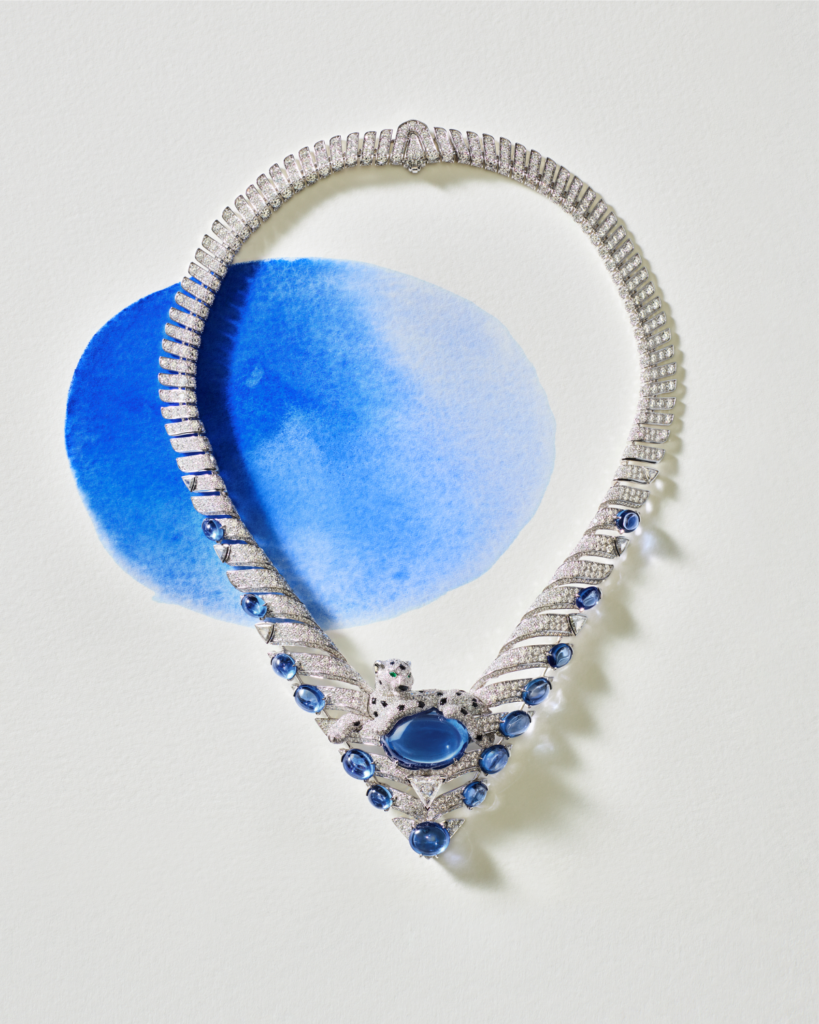
“Panthère Kentia,” in particular, combines this tradition with a modern, sculptural aesthetic. The three-dimensional panther is paired here with a 50.13-carat cabochon sapphire from Sri Lanka and a fully articulated design.
Haute Joaillerie: The Intersection of Art and Materials
Overall, “Le Chœur des Pierres” demonstrates just how strongly Haute Joaillerie is once again defining itself through materiality, rare gemstones, and artisanal craftsmanship. Cartier reports that more than 85,000 hours of work went into the collection, which features over 125 one-of-a-kind pieces.
The collection thus deliberately straddles the line between traditional craftsmanship, sculptural design, and a more emotional interpretation of jewelry—less as a mere status symbol and increasingly as an artistic composition of color, form, and personality.