Munich Show & Gemworld 2026: From Origin to Design
From October 22 to 25, 2026, the Munich Show & Gemworld in Munich will once again bring together minerals, fossils, gemstones, jewelry, and design. In addition to more than 1,150 exhibitors from over 60 countries, special exhibitions, competitions, national pavilions, programs for emerging talent, and an extensive supporting program will shape the four days of the fair.
As you walk through the five halls, you’ll experience a wide variety of worlds. Halls B1 through B3 are dominated by minerals, fossils, meteorites, and raw materials, while Halls A1 and A2 feature Gemworld, with gemstones, pearls, jewelry, and gemstone art. More than 1,150 exhibitors from over 60 countries are expected; Gemworld alone brings together more than 300 exhibitors from over 30 nations.
The People Behind the Mineral Market
In 2026, the major special mineral exhibition “The Pioneers of the Mineral Market” will focus on the people and institutions that have shaped the international mineral market: dealers, collectors, museums, universities, trade publications, auctions, and major trading centers such as Tucson and Munich.
It also traces the journey of a single mineral—from its discovery through specimen mining and preparation to photography, provenance, and presentation. The exhibition is being organized in collaboration with the trade magazine Lapis, which will celebrate its 50th anniversary in 2026.
Fossils with a History
A second special exhibition focuses on Mary Anning, one of the most important fossil collectors of the early 19th century. Her discoveries along the British Jurassic Coast contributed significantly to the early development of paleontology.
Through fossils, reconstructions, and historical documents, the exhibition illustrates how closely discovery, trade, and science are intertwined when it comes to fossils.
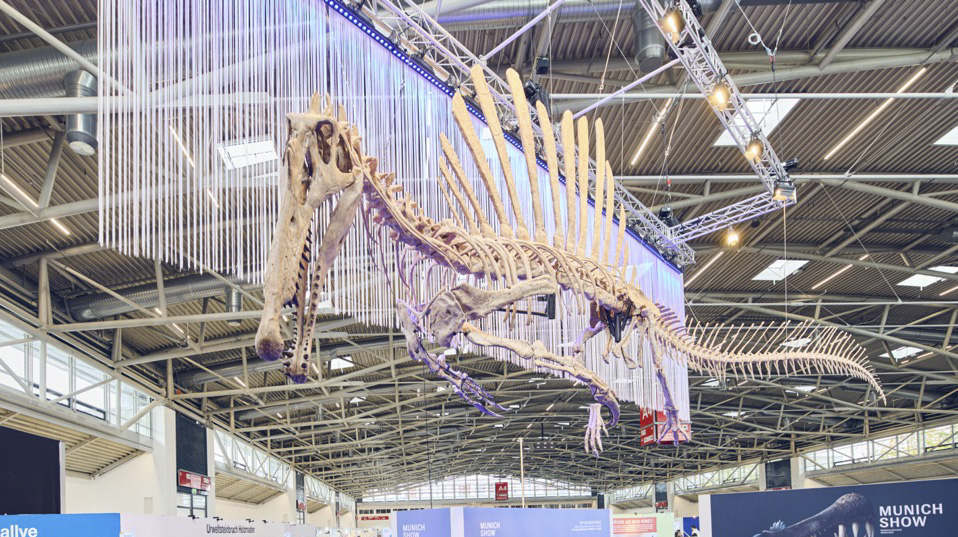
Right at the West Entrance, the installation “Into the Blue – Art Meets Evolution” connects Earth’s history with the present. An ichthyosaur skeleton and a human skeleton are displayed above a water basin; the material used consists largely of recycled PET. The work thus bridges the gap from the Jurassic Period to today’s plastic crisis.
Origin Takes Shape
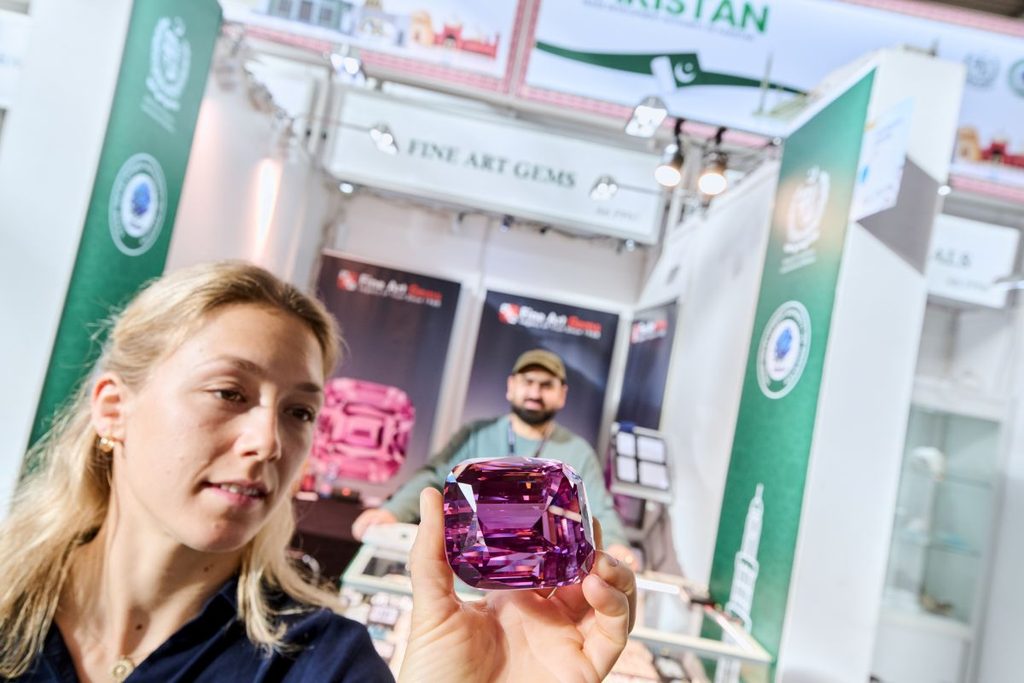
Country pavilions—including those from Pakistan and Malawi—bring suppliers from key regions of origin directly to Munich. For retailers, goldsmiths, and designers, this opens up opportunities for firsthand discussions about origin, materials, and craftsmanship.
It is precisely this direct contact with countries of origin that adds a dimension to the traditional trade show perspective—one that is often barely visible in the finished product.
Ten Years of the European Open
The European Open, an international faceting competition, will celebrate its tenth anniversary in 2026. The focus is on proportion, symmetry, and precision craftsmanship—in other words, the decisions that transform a rough stone into a distinctive, one-of-a-kind piece.
The competition also demonstrates just how much artistry is already present in the cutting process. For visitors, this is an opportunity to appreciate the quality of craftsmanship not only in the finished piece of jewelry, but also in the cut stone itself.
More Space for Young Creativity
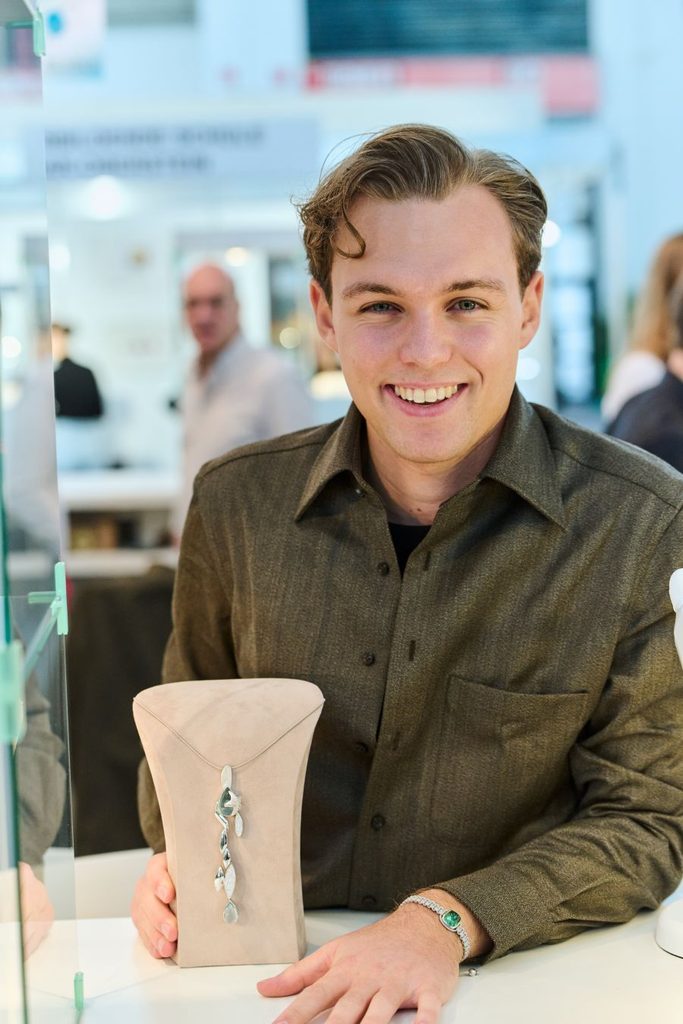
At Gemworld, young designers also gain additional visibility. In addition to the Young Designers Corner Award, there is the Future Forum for young jewelry designers, goldsmiths, and independent labels.
Schools and continuing education institutions round out this field. This creates a link between training, design, and the transition to one’s own entrepreneurial venture.
The 2026 Supporting Program
The accompanying program ranges from mineralogy, fossils, and gemstones to jewelry, design, and current industry topics. In the Forum in Hall A2, scientific presentations are complemented by practical questions and current market topics. These include, among other things, topics related to synthetic diamonds, meteorites, gemstone knowledge, processing, and historical contexts.
In addition, there are special exhibitions, the European Open, the national pavilions, and programs for young designers and goldsmiths. This makes the supporting program an essential part of the event.
The complete 2026 forum program, including presentations, speakers, and times, can be found here:
https://munichshow.com/de/highlights/2026/forumsprogramm
Many topics that are usually considered separately come together directly in Munich—from origins and materials to design, trade, and collecting.
Two days for industry professionals, two days for the general public
Thursday, October 22, and Friday, October 23, are reserved for registered trade visitors. On Saturday and Sunday, the event will also be open to the general public.
Access is through the West Entrance of the Munich Trade Fair Center. Gemworld is located in Halls A1 and A2, and Mineralientage is located in Halls B1 through B3.
Four days, many perspectives
In 2026, the Munich Show and Gemworld will bring together a wide variety of program highlights: international dealers and countries of origin, special historical and scientific exhibitions, a gem-cutting competition, emerging designers, and a professional program.
Those who are already familiar with what makes the Munich Show and Gemworld so unique will gain one thing above all else in 2026: more opportunities to explore the objects, their origins, and the people behind them.
Munich Show & Gemworld Munich 2026
October 22–25, 2026 · 9 a.m.–6 p.m.
Messe München · West
Entrance Gemworld: Halls A1/A2 · Mineral Days: Halls B1/B2/B3