
Sapphire: The Classic Shows Its Colors
Hardly any other gemstone is as firmly associated in people’s minds as the sapphire. Deep blue—often almost royal—associated with large pieces of jewelry, historic jewels, and a long tradition. This image is accurate—and yet it tells only part of the story.
Cover photo: The “Brilliant Tourbillon Baguette” by Jacob & Co. is set with 194 pastel Arlequino baguette sapphires* (~ 11.03 ct.) and 32 white diamonds (~1.67 ct.)—impressively showcasing the diversity of sapphires—Photo: Jacob & Co.
An article from the series: “Gem Perspectives,” powered by

Sapphires in Every Color
Sapphires come in yellow, green, pink, violet, and orange; they can be nearly colorless or a combination of different hues. Some of the most interesting stones even display multiple colors within a single crystal. It is precisely this diversity that is bringing sapphires more into the spotlight and is also changing the way they are used in jewelry today.
Mineralogically, the sapphire belongs to the corundum family. Pure corundum is colorless. It is only the trace elements in the crystal lattice that produce the various colors. Chromium can produce shades of pink and red, while iron and titanium are essential for the classic blue. Only the red variety has its own name: ruby. The other colors are referred to as sapphires.
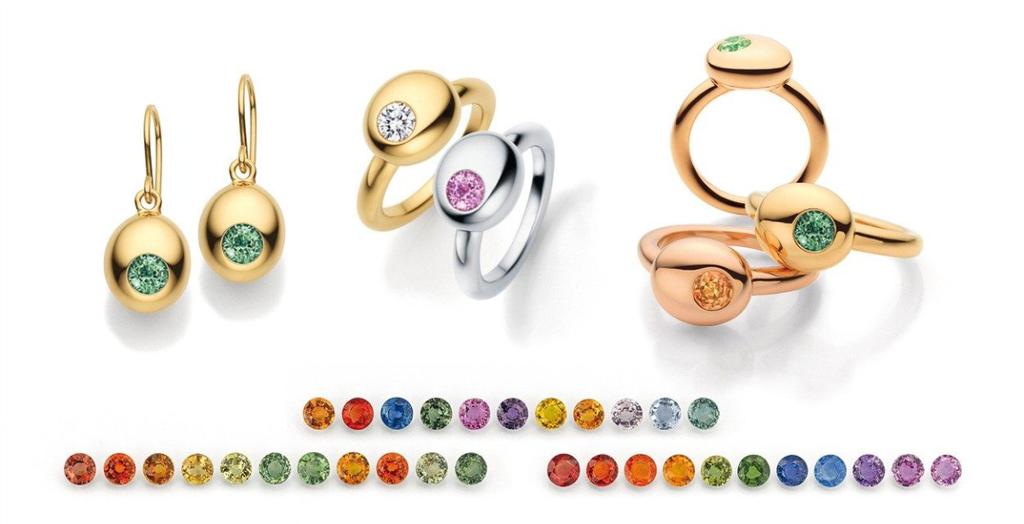
*Editor’s note:
The jewelry and watches shown are examples only—the origin of the gemstones used in the jewelry pictured is the responsibility of the manufacturers and is not related to the mines or processing methods shown.
A stone with a long history
Sapphires have been part of the history of jewelry for centuries. Royal blue was considered the color of power, loyalty, and enduring strength. These stones found their way into crown jewels, church treasures, and later into the great jewelry houses of Europe.
One of the names that comes up time and again is Ceylon. This historical name for Sri Lanka has persisted in the international gemstone trade to this day. “Ceylon sapphire” primarily refers to the stone’s geographic origin and the associated trading tradition. The term is not a general seal of quality.
Sri Lanka is one of the oldest known sources of sapphires. Gemstones have been mined and traded there for more than two millennia. Even ancient traders knew the island as a source of valuable stones.
Sri Lanka and Its Colors
Many sapphires from Sri Lanka are known for their comparatively light, vibrant blue color. The spectrum ranges from delicate shades of blue to intense blue. In addition, the island produces a remarkable variety of so-called fancy sapphires.
Padparadscha, a sapphire with a blend of pink and orange, is particularly well known. The name is usually associated with the color of a lotus flower. High-quality specimens are rare, and even slight differences in hue and saturation can significantly affect their value.
Yellow, pink, purple, and green sapphires also come from Sri Lanka. In addition, there are stones with clearly visible color zones. What may initially appear irregular in the rough crystal offers the cutter opportunities to concentrate color in specific areas of the finished stone.
This makes Sri Lanka much more than just a source of classic blue. In fact, the wide range of colors is one of the country’s distinctive features.
Ratnapura
When people talk about sapphires from Sri Lanka, the conversation quickly turns to Ratnapura. The city’s name can be roughly translated as “City of Gems.” It is located in the southwest of the island and has been one of the centers of the gem trade for generations.
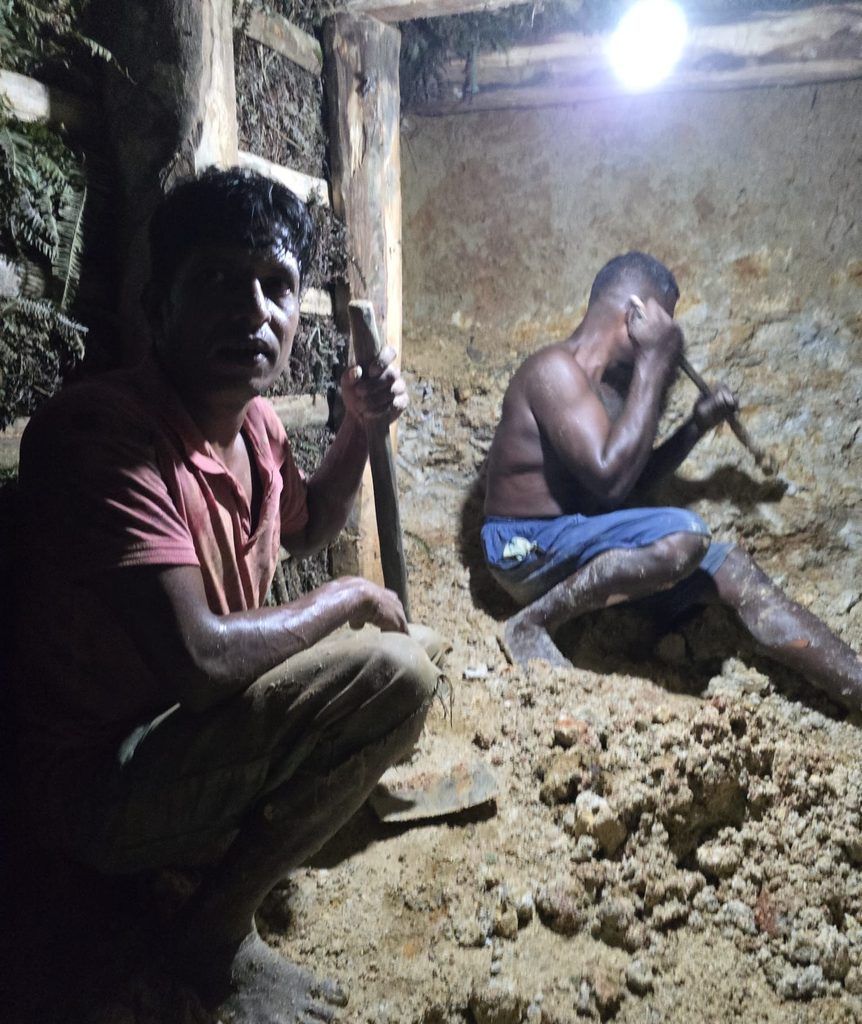
The mining process differs significantly from that of large-scale industrial mines. Many deposits are found in ancient river and sedimentary layers. Miners primarily search for a gravelly layer known locally as “illam.” Sapphires can be found in this layer along with other heavy minerals.

The shafts are often small. Horizontal tunnels lead from them into the gem-bearing layers. The extracted material is brought to the surface and then washed. This step is one of the defining features of gem mining in Sri Lanka.
The extracted illam is then washed in woven baskets. Clay, sand, and lighter particles are removed through circular motions. What remains is the heavier gravel, called dullam. Only now does the actual search for sapphires and other gemstones begin.
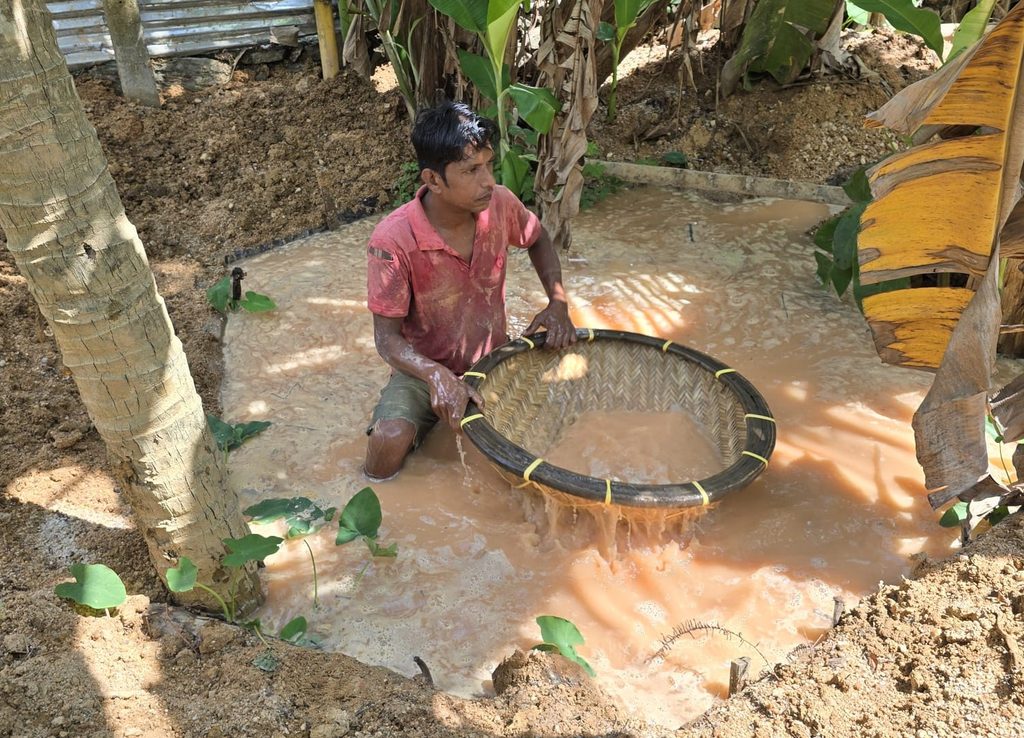
What at first glance looks like ordinary river gravel may suddenly turn out to contain a sapphire, spinel, chrysoberyl, or another gemstone. To the untrained eye, it is often difficult to tell which piece is actually valuable. Experience therefore plays a major role—both during the washing process and the subsequent sorting.
This structure continues to shape Sri Lanka’s gemstone sector to this day. Many businesses operate on a relatively small scale, and a significant portion of the knowledge about mining sites, rocks, and materials is passed down through generations.
From Discovery to Trade
There are numerous steps between a rough sapphire from a gravel pit and a finished stone in the European jewelry trade.
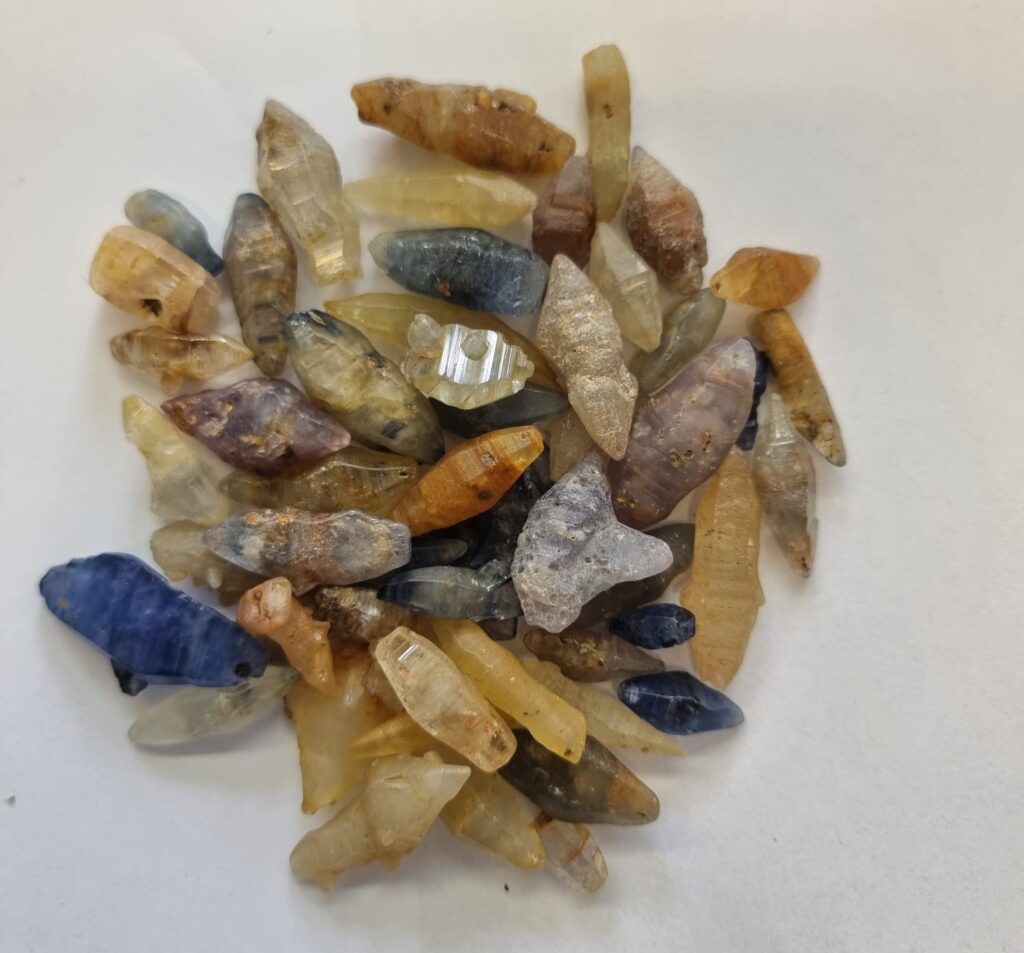
After extraction, the material is sorted and evaluated. Even at the rough stone stage, it becomes clear what possibilities it offers. Color, inclusions, shape, and any cracks influence which cut is appropriate and how much weight can be obtained.
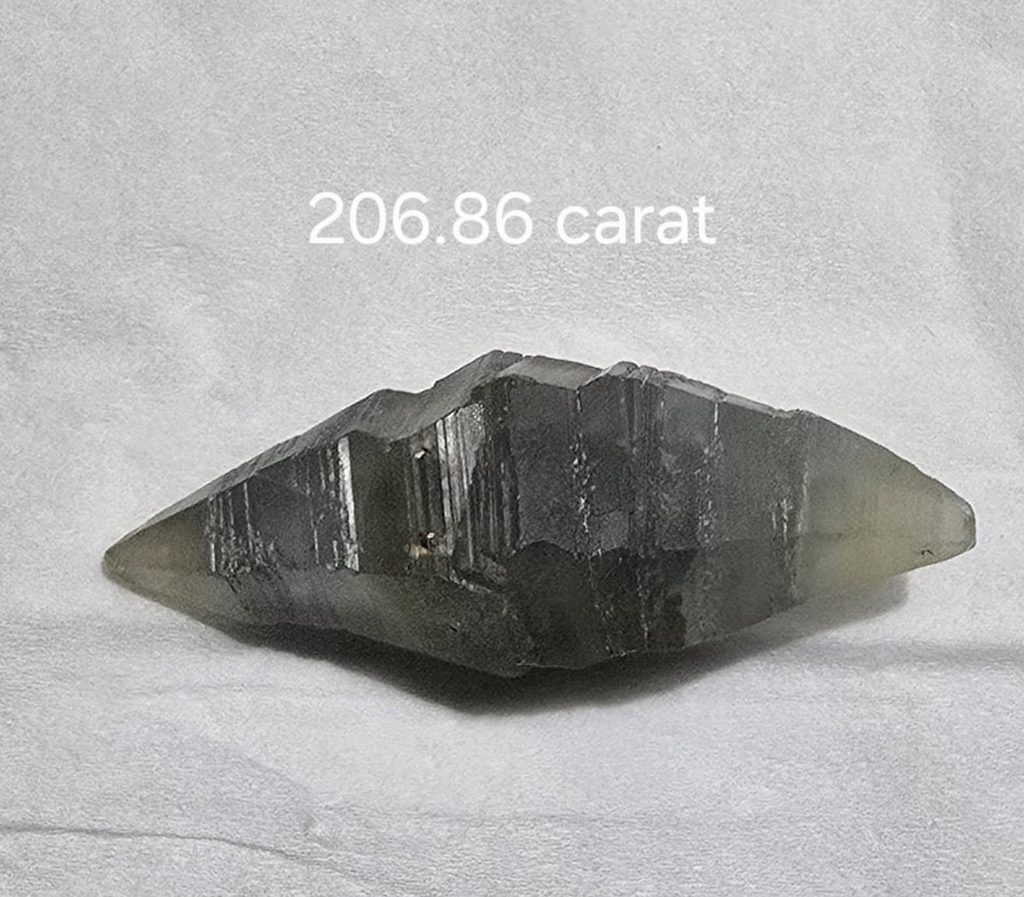
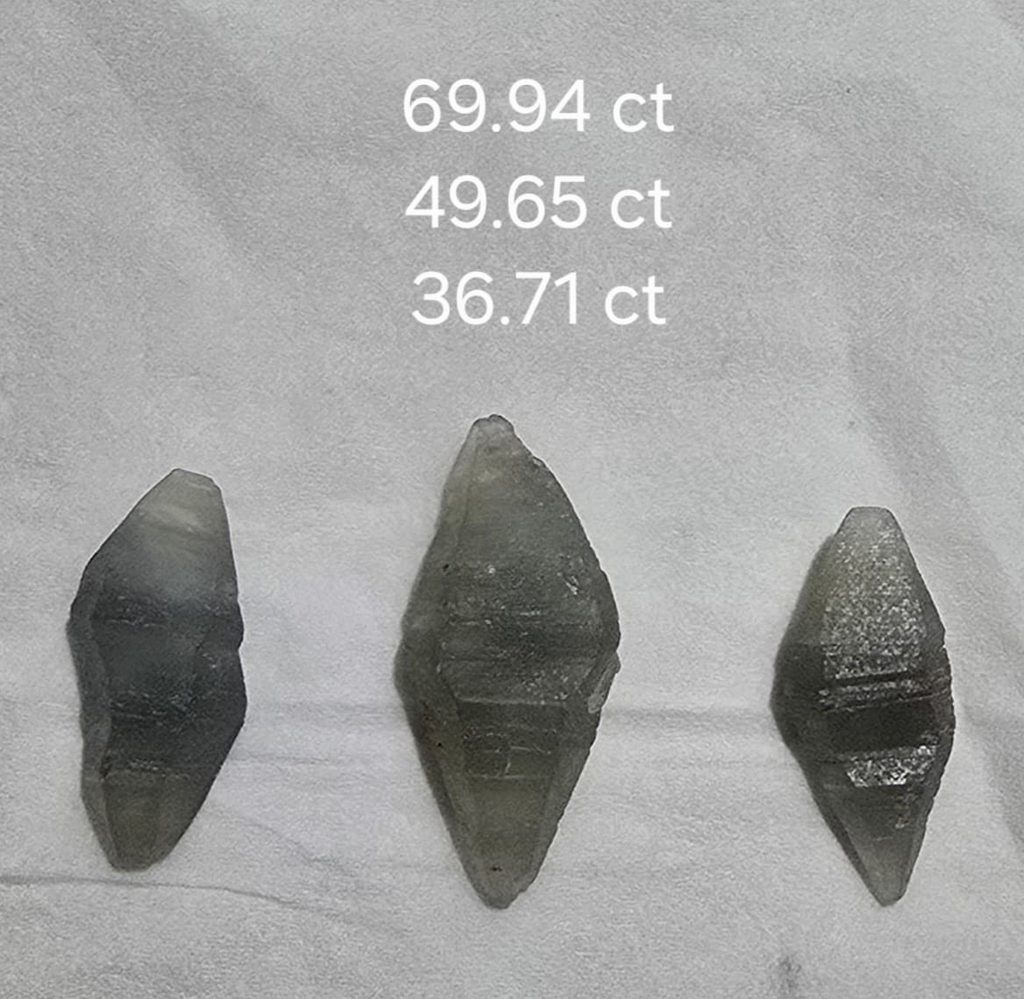
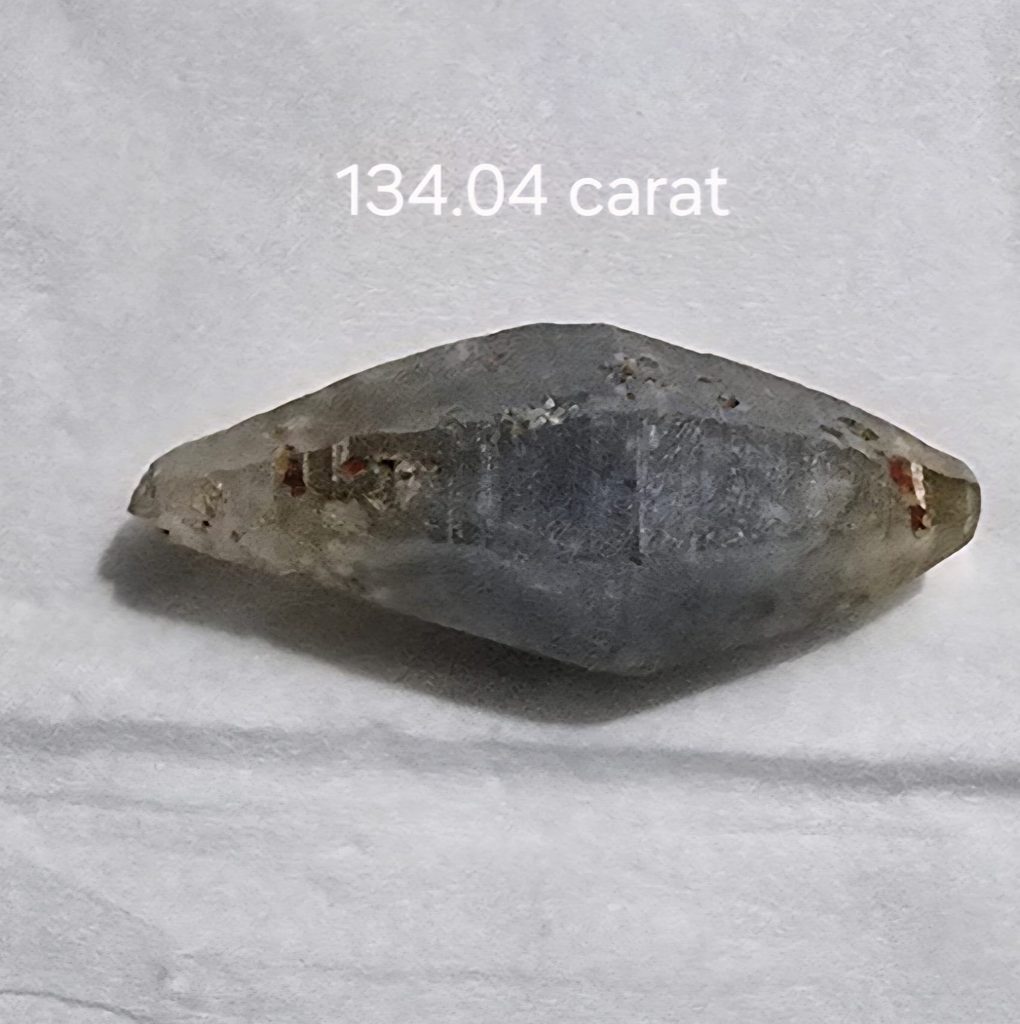
Raw sapphires with their weights—about 60–80% of the original weight is lost during cutting—Photos: Manik GmbH
The trade in rough gemstones has long been a part of everyday life in Sri Lanka. Ratnapura serves as a mining region, a trading center, and a hub all at once. There, stones often change hands several times before they are cut or exported.
Traders with connections to Europe also play a role in this system. Athula Jayatunge and Minik are prime examples of this link between Sri Lanka and the European market. Such networks bring together knowledge of origin, materials, and local trade structures with the demands of international jewelry markets.
This personal aspect of the trade remains particularly important when it comes to high-quality colored gemstones. Two sapphires of the same weight can differ so greatly in color, clarity, cut, and origin that standardized categories alone are hardly sufficient.
Meet Athula Jayatunge of Manik GmbH starting October 22 in Munich at the Munich Show, Europe’s leading platform for colored gemstones:
Munich Show / Gem World October 22–25, Messe München, West
Entrance
And, of course, many other vendors specializing in sapphire:
You can find all exhibitors offering sapphire products at the following link: https://floorplan.munichshow.com/?lang=de&q=saphir
Famous Sapphires
Some historical specimens demonstrate just how impressive sapphires can be.
The Logan Sapphire weighs approximately 423 carats. The nearly flawless blue stone comes from Sri Lanka and is now part of the Smithsonian Institution’s collection in Washington. Its cushion cut and intense color have made it one of the most famous sapphires in the world.
Even larger is the Star of India, weighing more than 563 carats. This gray-blue shimmering star sapphire also comes from Sri Lanka and is housed at the American Museum of Natural History in New York.

It owes its unique effect to fine, needle-like inclusions within the stone. When light and the cut meet at the right angle, a wandering star appears on the surface. This phenomenon, known as asterism, demonstrates that inclusions in gemstones are by no means always to be regarded as flaws. In certain cases, they are precisely what define the stone’s character.
Color in the Cut
With a diamond, the focus is often on the precise way light is refracted. With a sapphire, color is an additional decisive factor.
Raw sapphires may have color zones. One part of the crystal is an intense blue, while another is lighter or nearly colorless. The cutter must therefore decide exactly how to orient the stone.
This involves a constant balancing act between color, proportion, and weight. A deeper cut can intensify a pale color, but may result in a loss of weight. A different orientation can make a particularly beautiful color zone more visible.
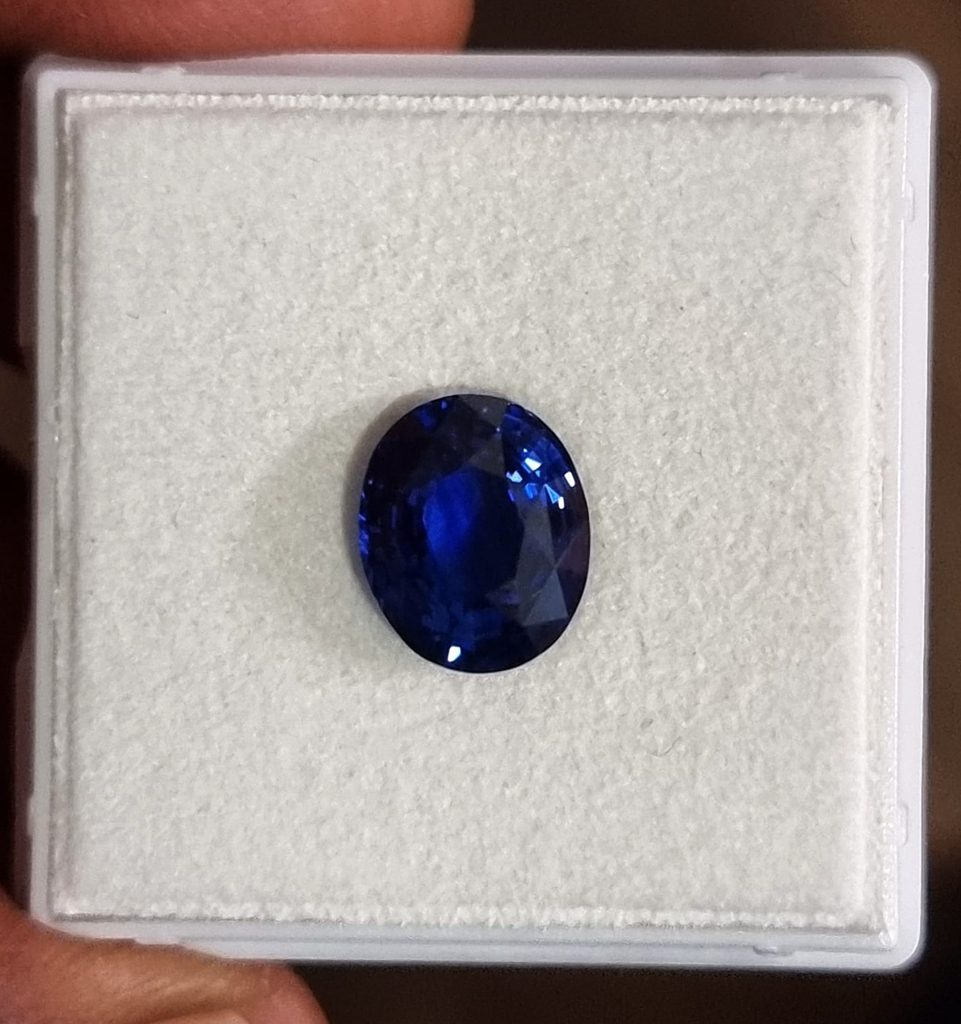
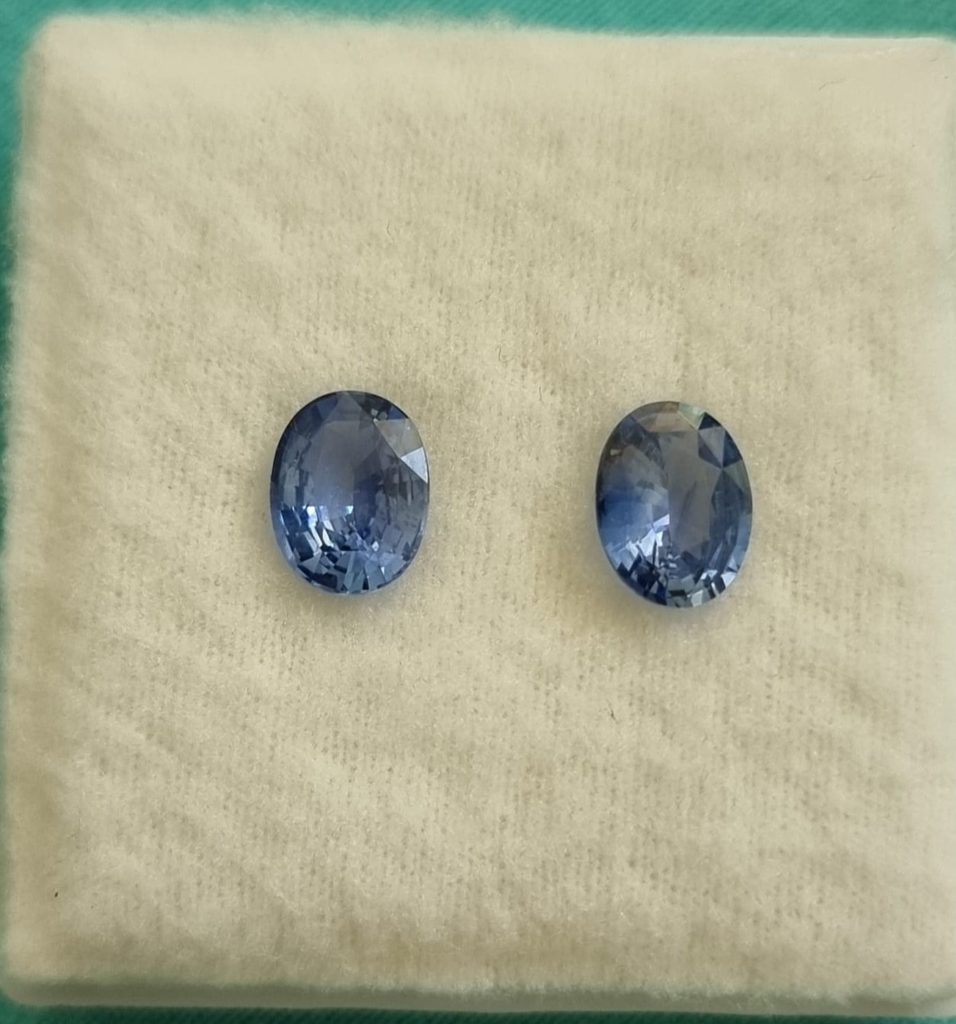
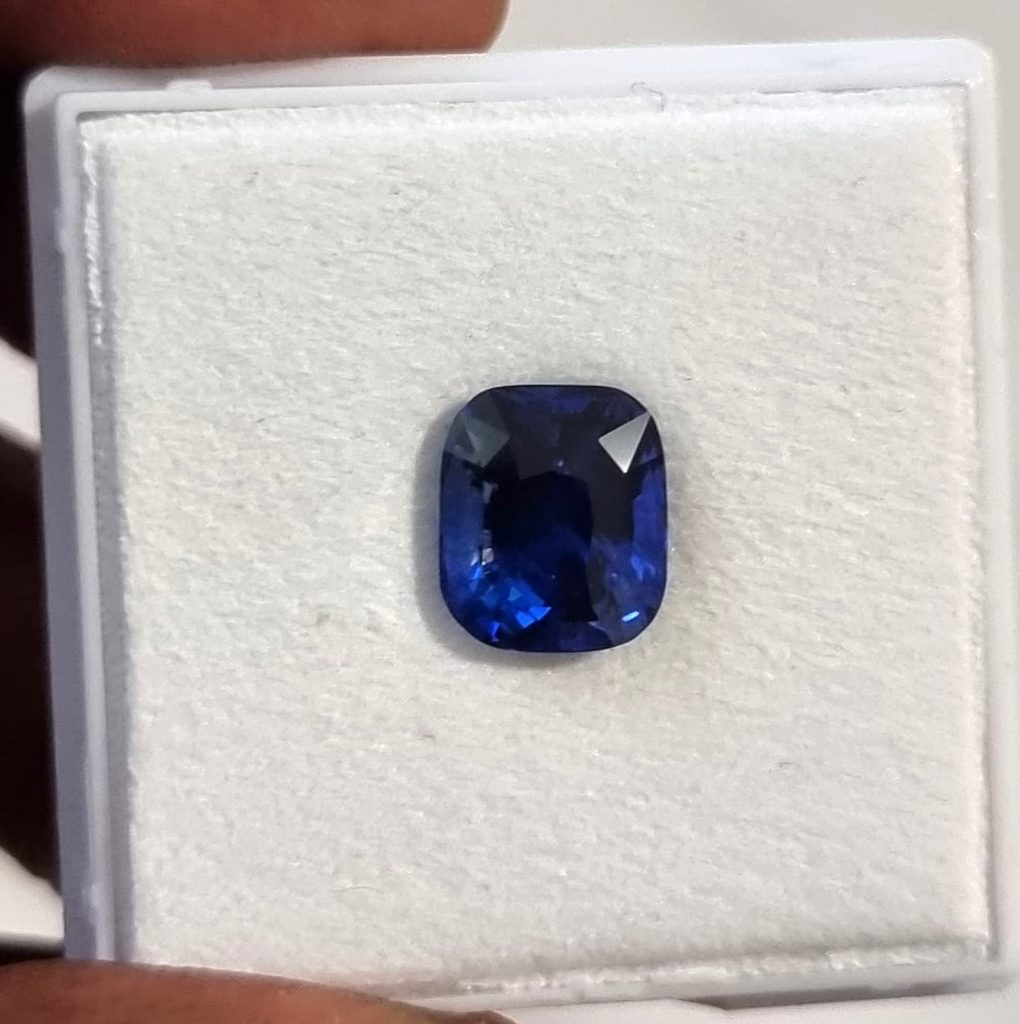
Different Cut Shapes and Colors of Sapphire – Images: Manik GmbH
The shape of the rough stone also plays a role. That’s why, in addition to classic oval and cushion cuts, sapphires come in many unique proportions. A good cut aims to bring out the very best in that specific stone.
Arlequino Sapphires
It’s also worth taking a brief look at so-called “Arlequino” sapphires. The term is used primarily for heavily zoned sapphires in which distinct color zones remain visible within a single stone. Such stones are particularly often associated with Madagascar and demonstrate just how far sapphires can go beyond a uniform blue. “Arlequino” is not an official gemmological variety, but rather a descriptive trade name for this striking play of colors.
Warmth is part of history
A large proportion of the sapphires on the international market have been heat-treated. This method has been known for centuries and can enhance a stone’s color and transparency.
In a traditional heat treatment, the existing properties of the sapphire are altered. Color centers may rearrange themselves, certain inclusions may partially dissolve, and the appearance becomes more uniform. Untreated stones with particularly good natural color and high quality are rarer and can command correspondingly high prices. Clear disclosure is crucial.
In addition, there are more advanced processes, such as diffusion treatments, in which elements penetrate into areas near the surface of the stone during heating and alter its color. From a gemmological perspective, such processes are evaluated differently than traditional heat treatments.
Synthetic sapphires have also been around for more than a century. Chemically and crystallographically, they are identical to the natural material, but they are created in a laboratory. For the jewelry trade, therefore, it is essential to clearly distinguish between natural, treated, and synthetic material.
Origin Becomes a Value Factor
For high-quality colored gemstones, geographic origin is becoming increasingly important. Names such as Sri Lanka, Kashmir, and Burma are associated in the market with specific historical qualities and color characteristics.
A stone’s origin is determined based on gemmological characteristics. Inclusions, trace elements, and other properties provide clues as to the geological conditions under which a stone was formed. For high-quality sapphires, reports from specialized laboratories are often consulted for this purpose.
Such a determination remains a gemological assessment. Natural deposits may overlap, and not every stone can be unambiguously attributed to a specific source.
Nevertheless, provenance plays a major role in the high-end market. For an exceptional sapphire, its value is determined by several factors: color, size, clarity, cut, treatment, and origin.
A classic with a broader range
Blue will remain the defining color of the sapphire. The connection between the stone and its color has become too strong over the centuries for that to change.
Today, sapphires are becoming particularly interesting precisely where this familiar image is being expanded. Padparadscha, pink, yellow, green, or bicolor stones demonstrate just how broad the spectrum actually is. At the same time, interest is growing in a stone’s origin, treatment, and journey from discovery to finished jewelry.
This way, the classic loses none of its history. It simply reveals much more of what has always been within it.
Sapphire at a Glance
| Characteristic | Description |
| Mineral | Corundum |
| Chemical Formula | Al₂O₃ |
| Hardness | 9 on the Mohs scale |
| Colors | Blue, pink, yellow, green, purple, orange, colorless, etc. |
| Red Version | Ruby |
| Major Countries of Origin | Sri Lanka, Madagascar, Myanmar, Australia, Thailand, Tanzania, and others |
| Special Varieties | Padparadscha, Star Sapphire, Fancy Sapphires |
| Typical Treatment | Heat Treatment |
| Key Value Factors | Color, Size, Clarity, Cut, Treatment, and Origin |