Jaeger-LeCoultre Caliber 101 Chain: A Mechanical Masterpiece
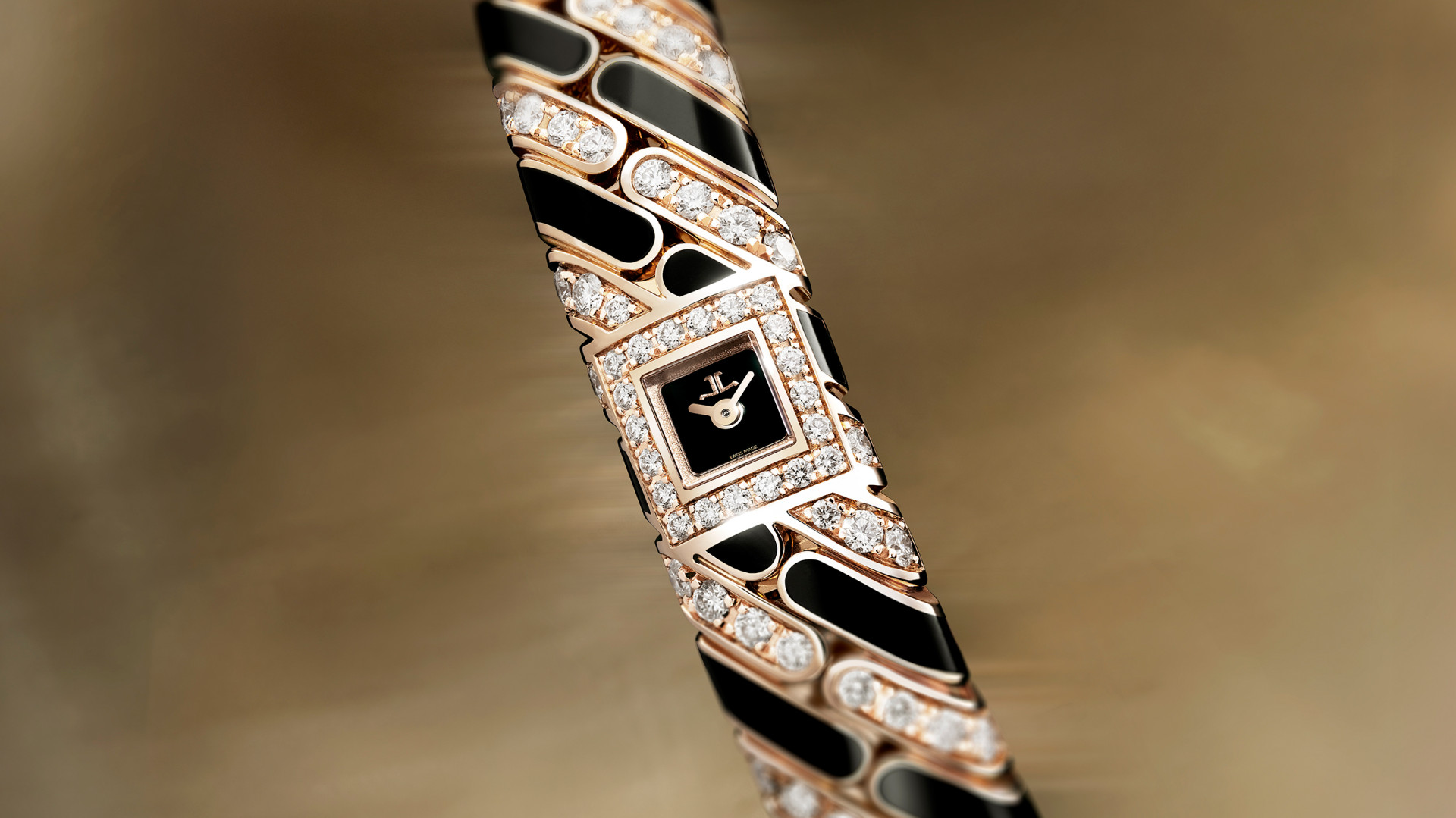
Jaeger-LeCoultre is expanding its collection of jewelry watches with the Calibre 101 Chain. A sculptural bracelet crafted from 18-karat rose gold, white diamonds, and black HyCeram houses the world’s smallest rectangular mechanical hand-wound movement.
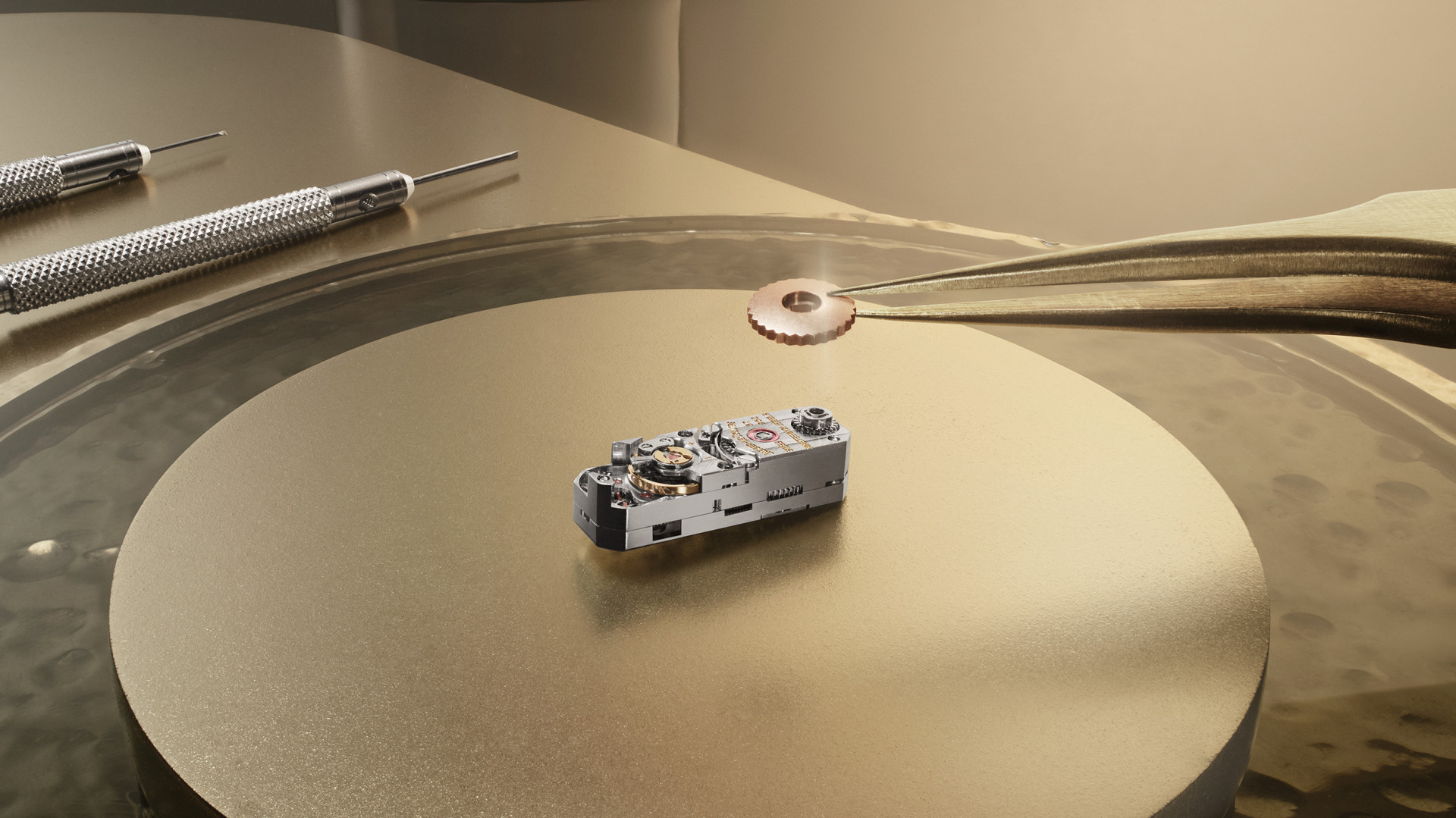
A movement weighing barely one gram
Since 1929, the Caliber 101 has been one of Jaeger-LeCoultre’s most influential innovations. What sets it apart is its combination of an extremely small size with a fully mechanical, hand-wound movement. To this day, it serves as the foundation for jewelry watches in which the time display occupies only a small part of the design.
From the Duoplan to the Caliber 101
LeCoultre took the decisive step toward miniaturization in 1925 with the patented Duoplan. The escapement and balance wheel are located on a different level than the mainspring barrel and gear train. This arrangement uses the height of the movement to reduce its footprint. The Caliber 101, introduced in 1929, adopted this principle and reduced it to a size of just 14 × 4.8 × 3.4 millimeters—about 0.2 cubic centimeters.
The original movement consisted of 74 parts. In today’s fifth generation, there are 98, while the dimensions and basic structure have remained the same. The balance wheel operates at 21,600 vibrations per hour, and the power reserve is 33 hours. The tiny components must be individually adjusted; their assembly alone takes about 40 hours. Production in a specialized workshop is therefore limited to a few dozen movements per year.
For a jewelry watch, the significance of this design lies in the creative freedom it affords: The movement takes up so little space that the time display can be integrated into a bracelet without dictating its proportions. For the new Chain, the design team therefore first developed the bangle, the decorative elements, and the gemstone setting; the case and movement were then incorporated.
A Contrast of Gold, Diamonds, and HyCeram
The new Chain translates miniaturization into a wide, sculptural bracelet. Diagonal rows of brilliant-cut diamonds alternate with deep black HyCeram panels. The small dial is not presented as a dominant element but appears as part of the graphic structure. As a result, the watch remains closer to a piece of jewelry than to a scaled-down classic wristwatch.
The Chain from 1955 as a starting point
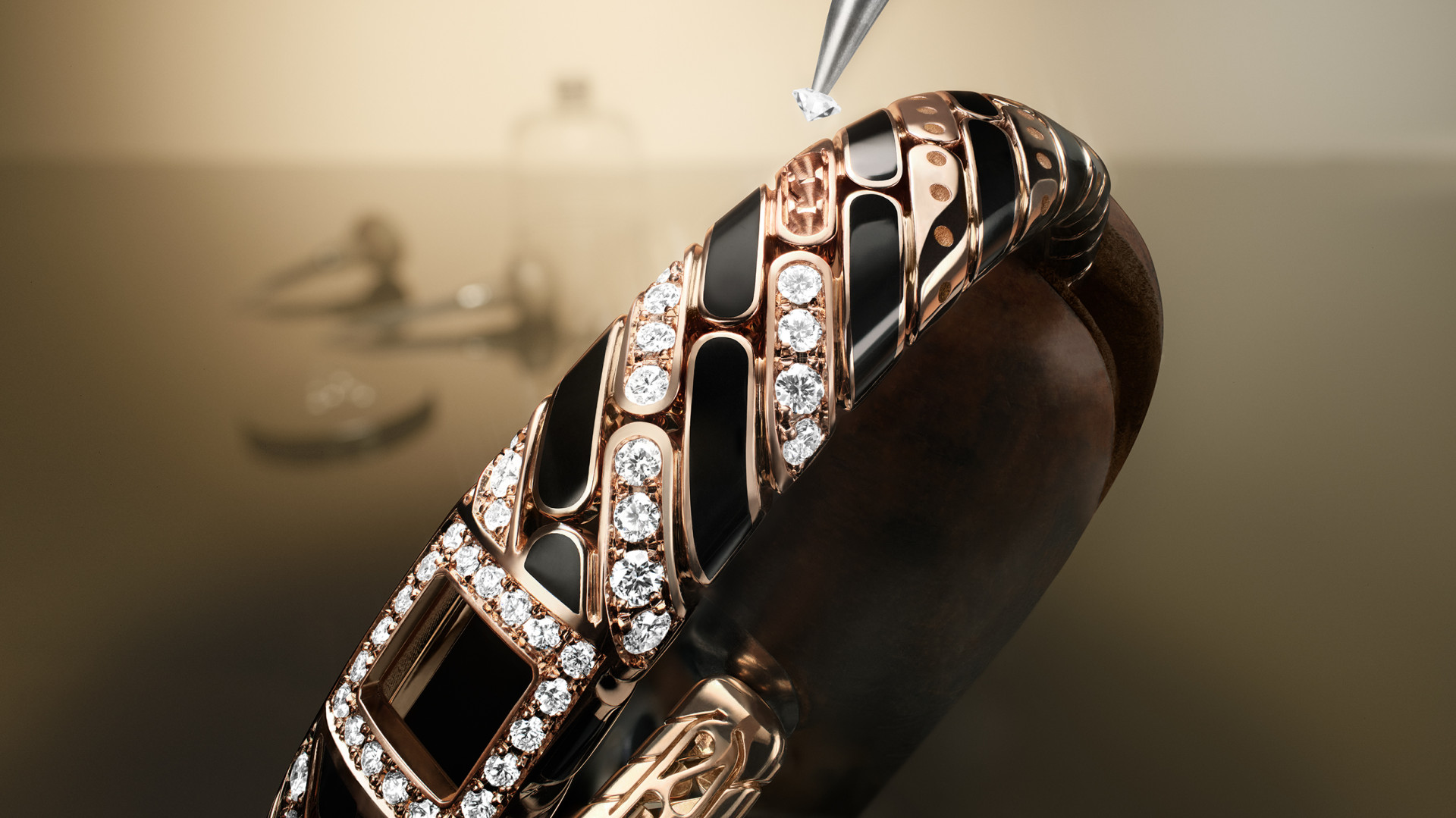
The design is inspired by a 1955 Duoplan model nicknamed “Chain.” Its braided bracelet, made of heavy, polished rose gold links, is now reflected in the side details of the bangle. For each new piece, the body is cast separately from 18-karat rose gold and then finished by hand.
The initially liquid HyCeram is poured into 36 recesses, cured under pressure and heat, and polished to a flush finish. 158 brilliant-cut diamonds totaling approximately 2.73 carats complement the black material. The watch case itself measures 18.60 × 5.98 × 6.75 millimeters; the black lacquered dial displays the hours and minutes. The reference number is Q2842270.