




After the holidays comes the resale.
What to do with unwanted gifts?
The days after Christmas have quietly changed in recent years. While in the past, queues for returns dominated department stores and shops, dealing with unwanted gifts is now increasingly shifting to the digital realm. eBay Recommerce Report 2025 as well as a recent study by ECC Cologne in cooperation with eBay Germany This shows that reselling, giving away or donating is now a matter of course for many consumers in the period after the holidays.
After Christmas, activity on online marketplaces traditionally increases. Gifted money is used for new purchases, while at the same time, products that were given twice, don't fit, or simply aren't liked are sold. What's new, however, is not so much the phenomenon itself, but its normalization: for many, recommerce is no longer an exceptional behavior, but an integral part of everyday consumer life.

Younger generations are driving change
This trend is particularly evident among younger consumers. According to the ECC Cologne study, they sell 55 percent of 18- to 29-year-olds Products actively discarded – significantly more than the overall average of 43 percent. For many, the period around Christmas is a conscious choice: they use the opportunity to create space, improve their budget, and simultaneously act more sustainably.
At the same time, young people are buying pre-loved products more frequently than last year. Used or refurbished items are no longer a compromise for them, but a conscious consumer choice. Recommerce combines several motives: financial flexibility, sustainability, and the easy way to give things a second life.
Numbers that reflect everyday life
The eBay Recommerce Report 2025 underlines this development with clear figures:
- 55 percent Of those surveyed, one has already resold or given away a Christmas present.
- 20 percent donate unwanted gifts, while only 4 percent throw them away.
- 68 percent Those willing to sell expect a revenue between 50 and 200 euros, which equates to an average resale value of around 100 euros per person corresponds.
Especially in January, a month that is financially strained for many households, this amount can represent a noticeable cushion.
Recommerce as a new consumer ritual
What was once considered secondhand and more of a niche product is now part of a functioning circular economy. Reselling is no longer perceived as a sacrifice, but rather as a pragmatic and perhaps even responsible option. Digital marketplaces and mobile applications further lower the barriers, making recommerce attractive even to people who previously wouldn't have considered themselves sellers.
Dorit Spiller, Head of C2C Selling at eBay Germany, sums it up perfectly: Reselling unwanted gifts has long since become commonplace for many – a combination of sustainability and financial relief that is gaining in importance, especially after Christmas.
A look ahead
The figures from the report and study reveal less of a short-term Christmas effect and more of a structural shift. Recommerce has arrived in everyday life – especially among younger generations, but increasingly beyond. After the holidays, people not only take stock of what they received, but also how wisely they use it. And this is precisely where it becomes clear: the conscious handling of possessions often only begins after unwrapping the presents.
What this means for watches and jewelry
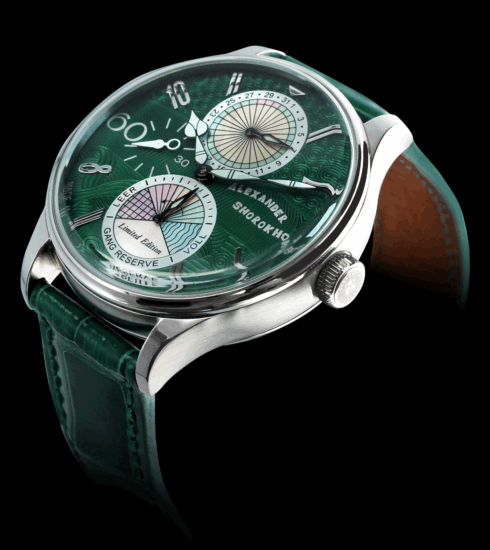
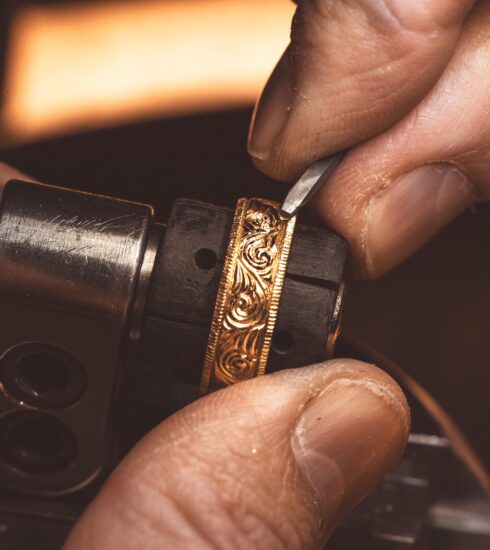
Recommerce is also gaining importance in the luxury segment, and likely even more so after the holidays. High-quality products are particularly well-suited for resale: they are durable, retain their value, and hold emotional significance – qualities that make them ideal for a second life. Watches, gold jewelry, and pieces with precious stones, in particular, are often re-evaluated after Christmas: Does the style really suit someone? Is the piece actually being worn? Or can the money be used to free up for another purchase?
For consumers, resale thus becomes part of a more conscious approach to luxury. Jewelry and watches lose their purely possession-based character and become more than just objects. Assets It is understood that these products can circulate without losing their significance. At the same time, the inhibition threshold for choosing higher-quality products when making new purchases decreases when it is clear that they can be resold later.
For the market as a whole, this development signals a cultural shift: luxury is no longer defined solely by novelty, but by Quality, durability and lasting value. Recommerce thus strengthens precisely those characteristics on which the jewelry and watch industry has traditionally built – and makes it more relevant for a new, younger target group.
Cover image: INSIGHT LUXURY generated with AI
The data for the eBay Recommerce Report 2025 is based on two online surveys conducted by Forsta Worldwide Ltd on behalf of eBay Inc. The external survey included approximately 1,780 consumers per country who are active in buying and selling pre-loved products (recommerce).
The survey was conducted by ECC Cologne on behalf of eBay in Germany in October 2025. 502 German consumers aged 18 to 69, representative of the internet population in terms of age and gender, and 102 German retailers were surveyed via an online panel.

 Deutsch
  English (UK)