
Piaget Glow: Three Rings and the Art of Surface Finishing
With Piaget Glow, the Swiss maison focuses on one of its oldest design strengths: treating gold not only as a material, but as a malleable surface. The new capsule collection features three wide, sculptural rings in rose, yellow, and white gold. Diamonds add accents, but the focus is on engraving, texture, and movement.
Three shades of gold, three styles
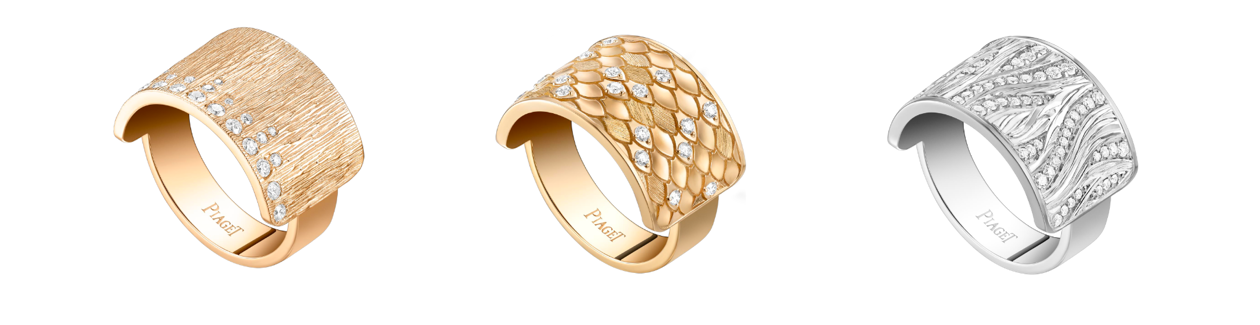
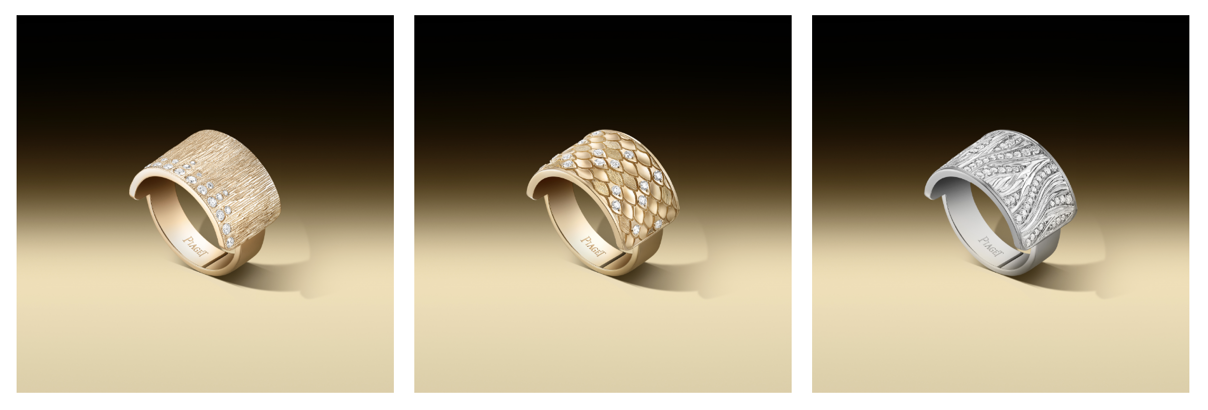
The three models are not merely color variations of a single design. Piaget gives each shade of gold its own surface texture and, with it, its own character. The rose gold ring features the “Decor Palace,” an engraving developed in 1961 whose lines are reminiscent of the regularity of guilloché work, yet appear distinctly more organic. The indentations refract the light and make the solid form appear more fluid; individual diamonds are set into the pattern.
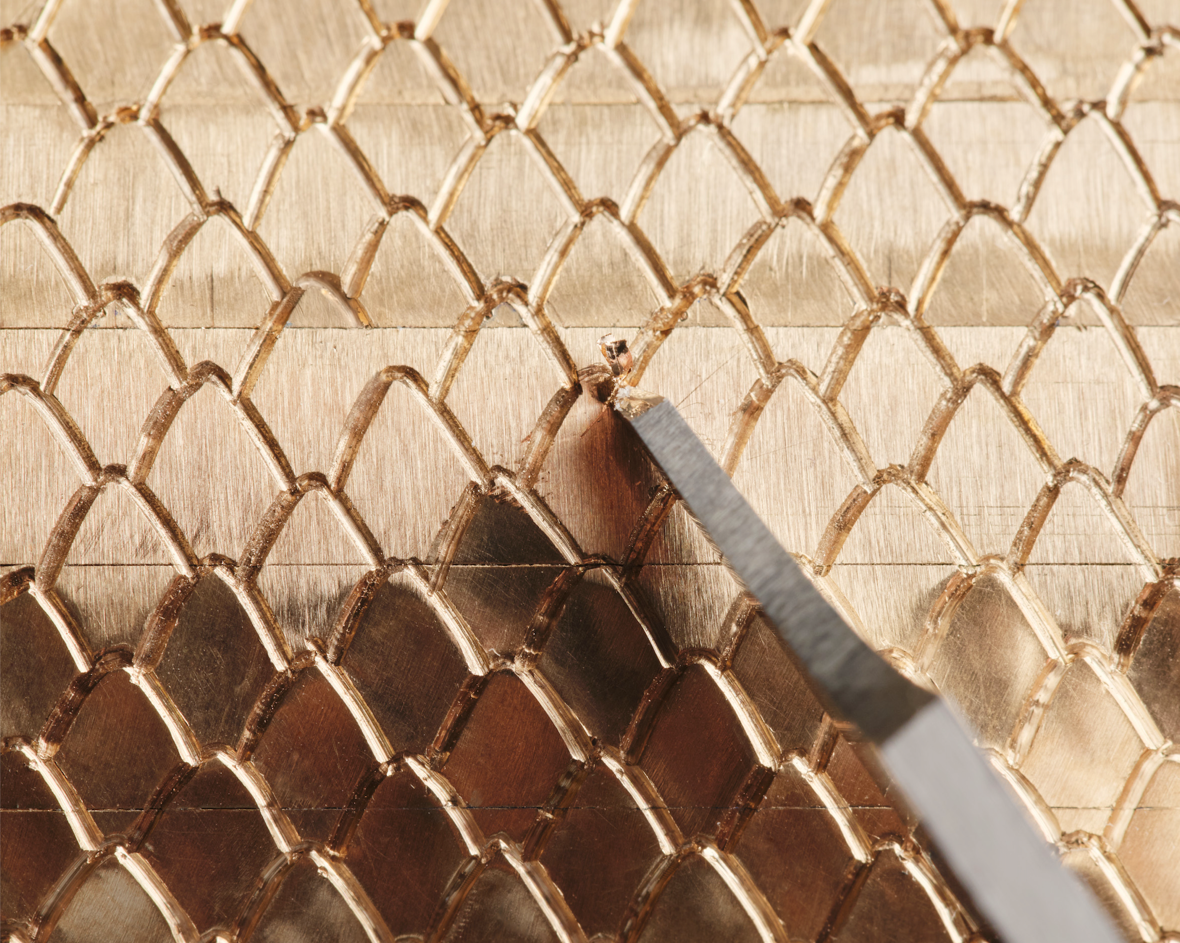
For yellow gold, Piaget opts for a denser pattern reminiscent of scales. Here, too, the diamonds do not follow the logic of a classic central stone setting but instead become part of the relief. The white gold version has a cooler, more graphic design: asymmetrical, wave-like curves run across the ring, visually softening its clean outline.
The diamond remains a focal point
It is noteworthy that, despite the ring’s generous proportions, Piaget does not aim for maximum stone impact. The diamonds define the surface rather than dominating it. The result is jewelry whose impact stems more from the interplay between polished, engraved, and set sections than from the size of individual stones.
The rings are crafted at the Ateliers de l’Extraordinaire. While the name sounds like a statement of intent, what really matters is the artisanal concept behind it: techniques from haute joaillerie are applied to a compact collection that is less formal and more suited to everyday wear.
A Look Back at Our Own History
Piaget Glow builds on the Extremely Piaget jewelry collection introduced in 2016. At the same time, the collection fits seamlessly alongside established lines such as Possession, Piaget Rose, and Piaget Sunlight. Unlike these, however, Glow relies less on an easily recognizable symbol and more on the immediate impact of the crafted metal.
Historically, this direction makes sense. In 1957, Gérald and Valentin Piaget decided to focus more on working with precious metals; they established their own foundry in the canton of Geneva. In the decades that followed, the house developed its own distinctive style of goldsmithing, in which watches and jewelry often blended seamlessly. The movable Possession rings from 1990 later turned movement itself into a hallmark of the brand.
Surface as Design
Glow carries on this tradition in a contemporary way. The three rings are prominent without relying solely on their volume. Their true focus is the surface: gold is cut, engraved, sculpted, and accented with diamonds. In this way, Piaget reminds us that a piece of jewelry’s identity does not necessarily depend on a large stone or a logo visible from afar.
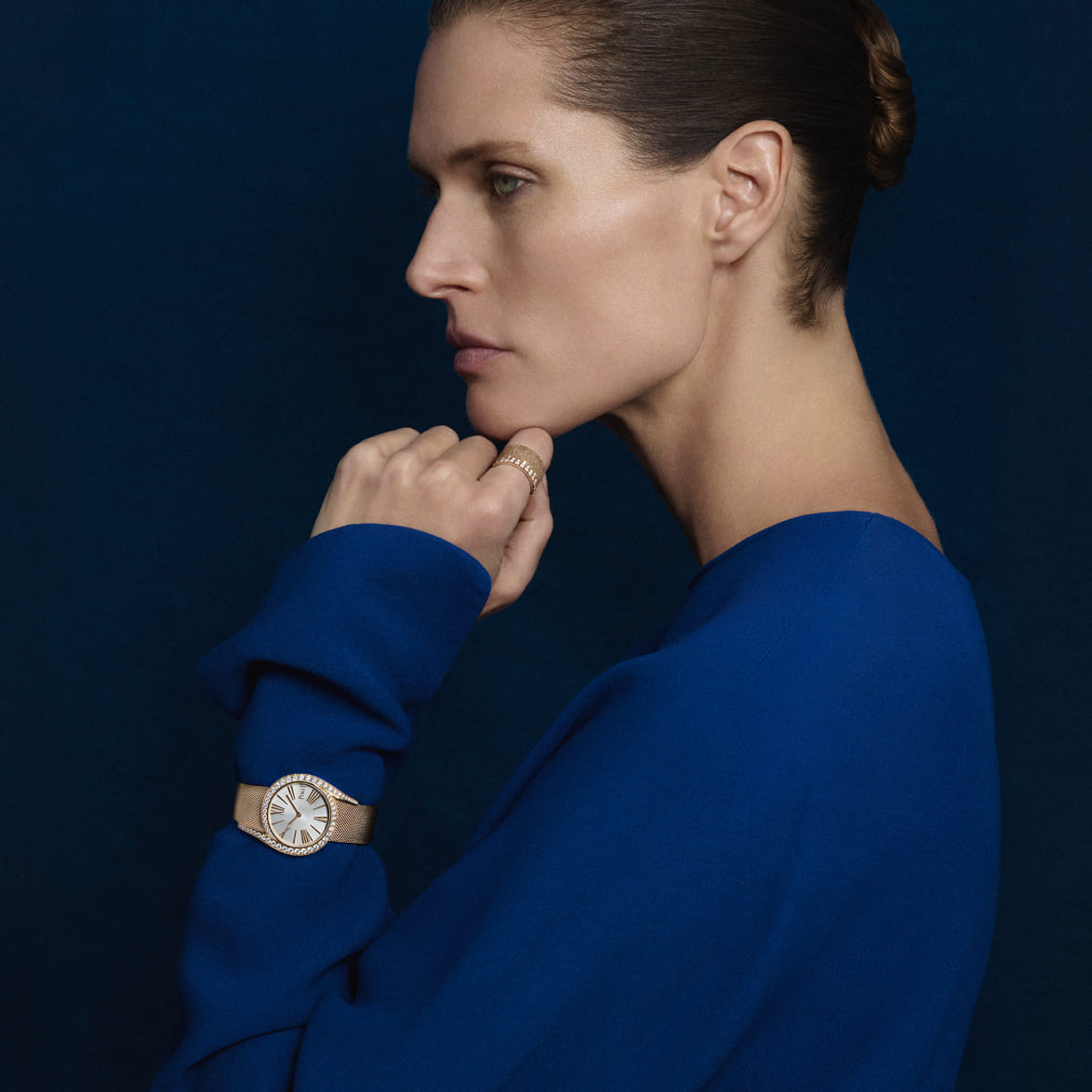
For the campaign, model Małgosia Bela was photographed by Chris Colls. The close-ups capture the essence of the collection and highlight the interplay between skin, light, and textured gold.