
A Look Behind the Scenes: Why MunichShow & GemWorld Are Different
Jewelry and gemstones are among the beneficiaries of a changing concept of luxury. What’s in demand now is substance, provenance, craftsmanship, and products whose uniqueness can be clearly explained.
This is exactly where the Munich Show and Gemworld Munich come in. Both events showcase minerals and gemstones in an unusually wide range—from naturally formed crystals to cut stones and finished jewelry.
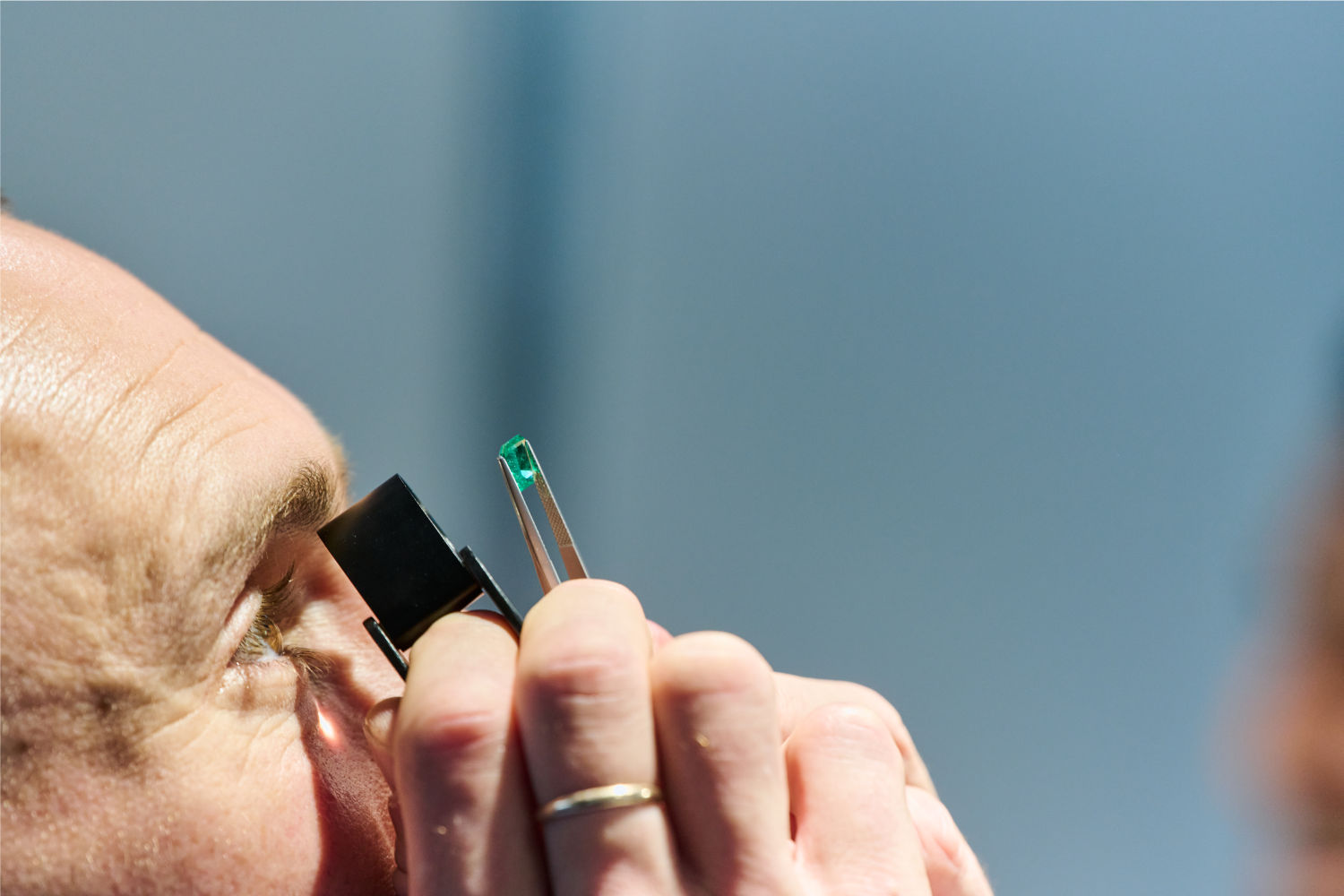
In 2025, 48,162 visitors came to Munich. 1,157 exhibitors from 67 countries showcased their products across 50,000 square meters in five halls.
From the Mountain to a Jewel
At traditional jewelry trade shows, you usually don’t come across gemstones until the key decisions have already been made. They have been cut, graded, appraised, and are often already set.
At the Munich Show, the journey begins earlier. Minerals, crystals, and rough gemstones are displayed here almost exactly as they emerge from the earth. Their surfaces are rough, their shapes irregular, and their colors are sometimes only recognizable at second glance.
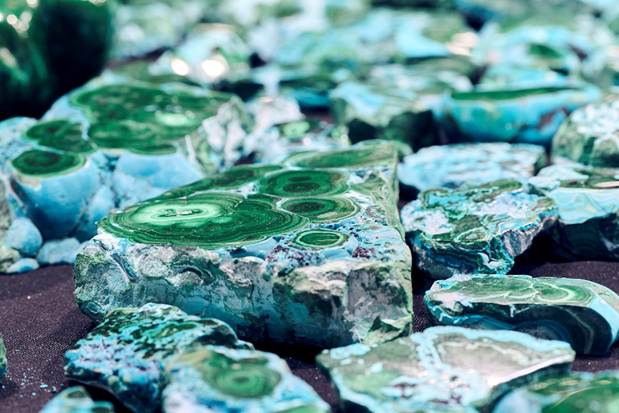
This reveals what is easily overlooked in the finished piece of jewelry: Every stone is a naturally formed, one-of-a-kind gem. Color, inclusions, growth patterns, and cracks never repeat and are always unique.
What does the grinder see?
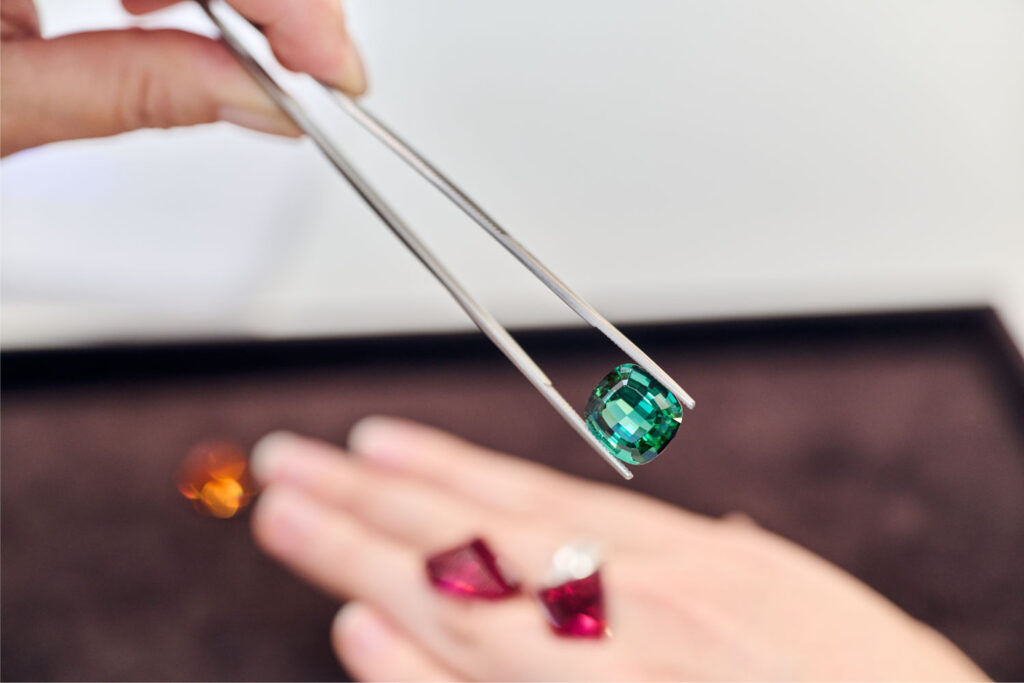
The grinder makes the key decisions about what will ultimately become of a rough stone. For the grinder, the rough stone is not an unfinished product, but a decision.
Where is the best color located? How do the inclusions run? What shape can the crystal take? How much of its weight can be preserved?
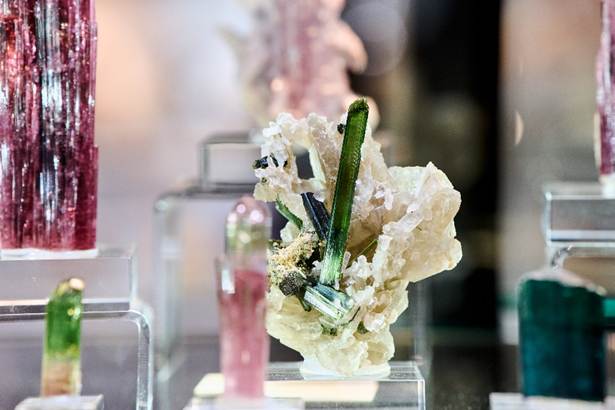
The cut follows the material. It can bring out color and play of light, but must be guided by what the stone dictates.
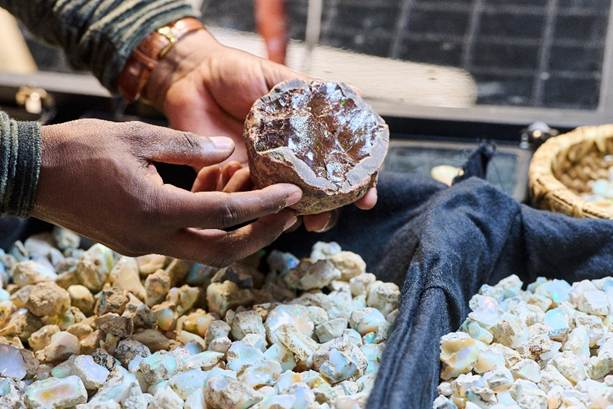
This phase usually goes unnoticed in the jewelry trade. At the Munich Show, the raw materials are also on display.
A few halls down: GemWorld
At GemWorld, you’ll find the material in various stages of processing. Faceted stones, cabochons, carvings, and finished jewelry are displayed alongside rough stones and uncut gemstones.
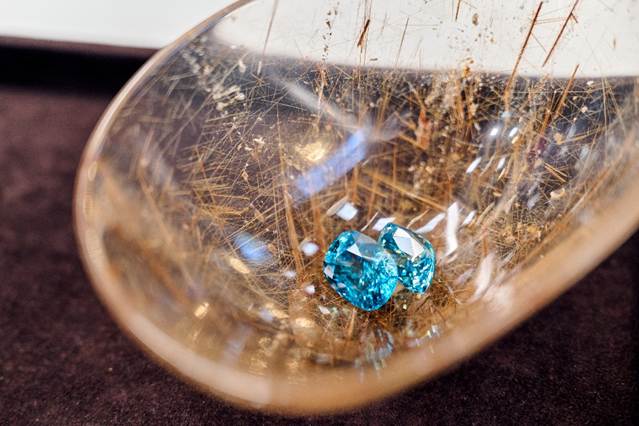
More than 300 exhibitors from over 30 countries will meet with approximately 10,000 trade visitors here.
It is precisely this transformation that makes a visit here so special. Sometimes, only a few halls separate a rough stone from a finished gemstone. This highlights just how much selection, experience, and craftsmanship go into the process between the two.
From Stone to Jewelry
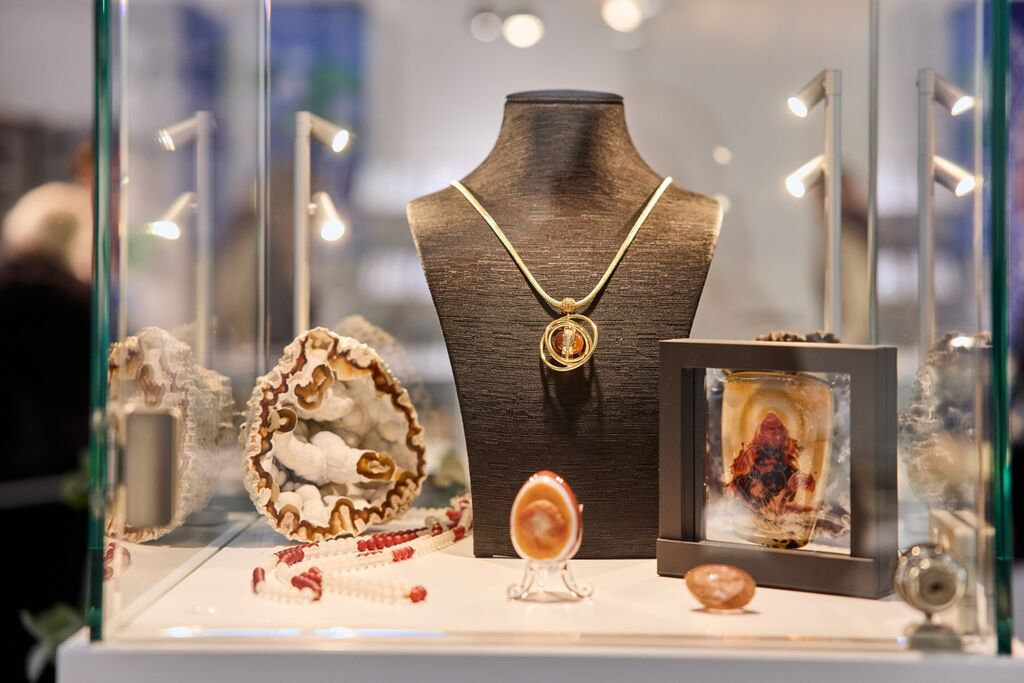
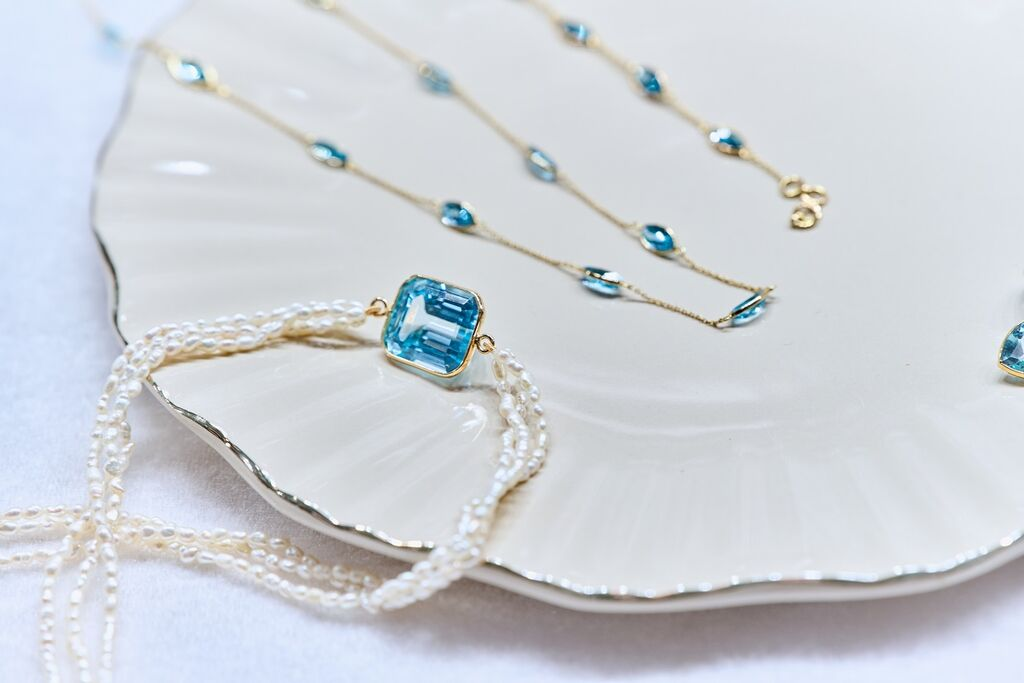
This also creates special added value for jewelry. At GemWorld, visitors can see how colors, inclusions, cuts, origin, and the nature of the material can later be translated into design. Colored gemstones offer a different kind of creative freedom than many standardized jewelry categories: They can serve as the starting point for one-of-a-kind pieces, complement existing collections, or shape custom designs. It is precisely the interplay of stone, setting, metal color, and proportions that creates the unique character that makes a piece of jewelry truly distinctive.
For goldsmiths, designers, and jewelers, this provides an important source of inspiration. Those who understand the stone better can more accurately assess its effect in jewelry—and, when speaking with customers, better explain why a particular cut, a shade of color, or a visible inclusion is not a coincidence but part of the stone’s character. In this way, the gemstone becomes not just a material, but a story-telling element in the collection.
Close to the Source
Many exhibitors work relatively close to mining sites and cutting shops. Some are from the countries of origin, travel there regularly, or have direct contacts with mines, local dealers, and processors.
This does not automatically make a stone’s origin fully traceable. However, it does allow for a different kind of conversation and a different perspective on the stone, its sources, its material properties, and the decision to choose a particular cut.
For goldsmiths, jewelry designers, and jewelers, this offers a different approach to purchasing. It’s not just carat weight, quality, design potential, and price that matter, but also character, origin, and—above all—the people behind the stones—and that’s what gives rise to stories.
More of a trading hub and experiential space than a traditional trade show
Anyone expecting a typical jewelry trade show is in for a surprise.
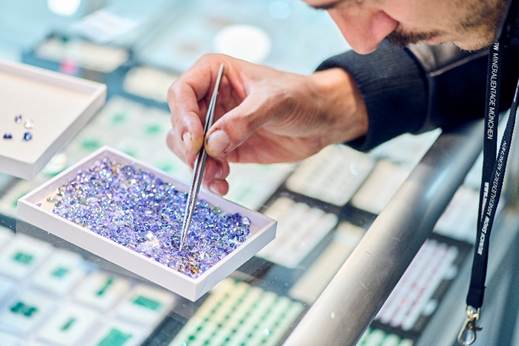
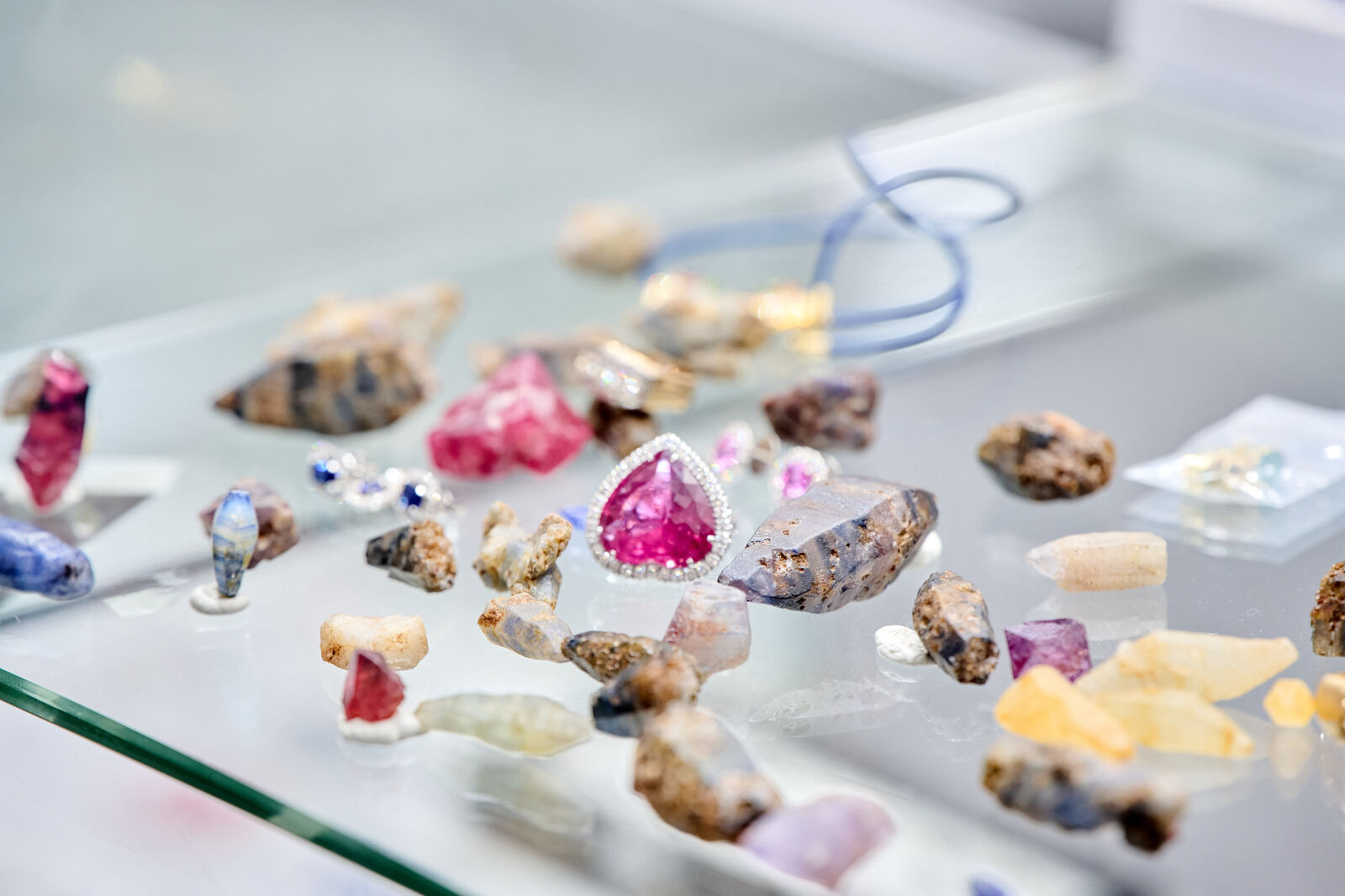
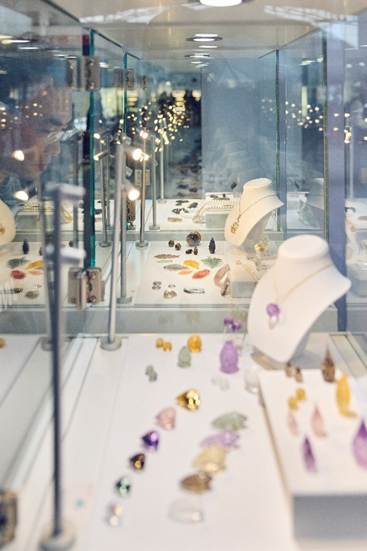
There’s hardly a stone that can’t be found at the Gem World / Munich Show
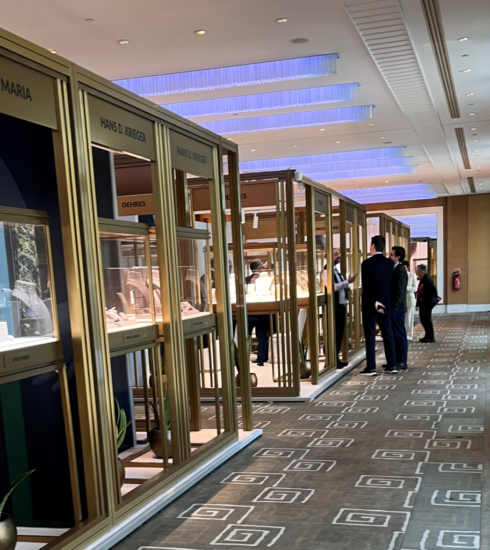
The Munich Show is not a series of self-contained brand worlds. Alongside illuminated display cases are tables bearing rough stones, finds, and tools. Dealers, collectors, scientists, gem cutters, and jewelry designers all move through the same halls.
With this mix, the event is more reminiscent of the large-scale mineral shows in Tucson: international, shaped by the raw materials on display, and featuring an atmosphere where commerce, expertise, and the joy of discovery go hand in hand.
Knowledge, Competition, and Special Finds
The program also follows this approach. The European Open Faceting Competition focuses on the precision and quality of the cut. Special exhibitions showcase extraordinary finds and collections.
The Young Designers Corner provides a platform for young designers and independent labels. The Future Forum complements the program by offering insights into the future of the industry.
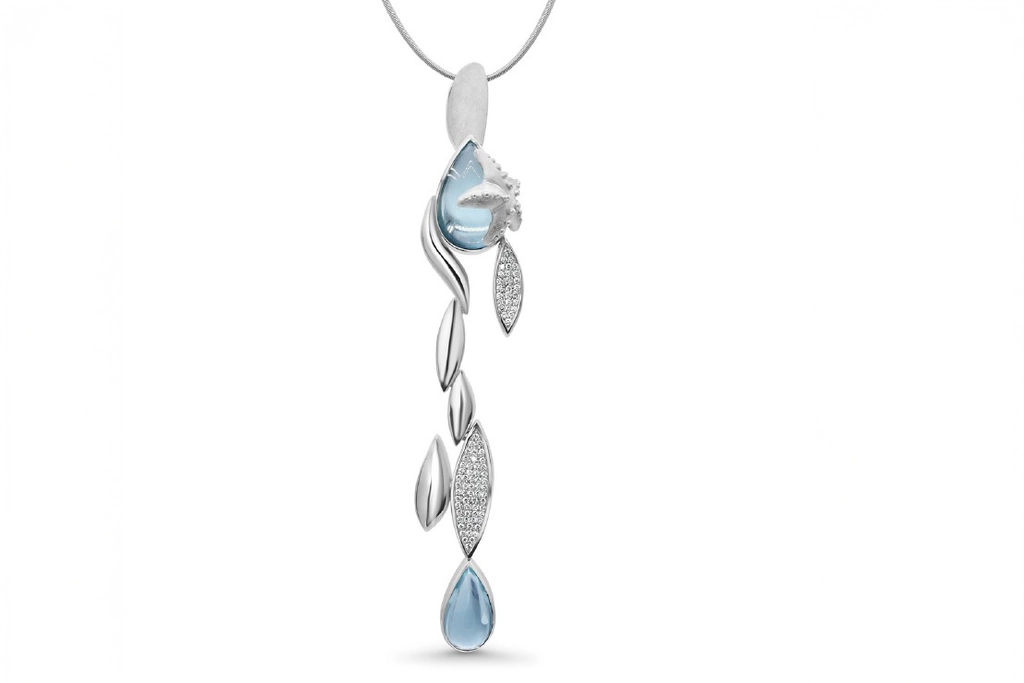
Stone isn’t just traded here. Its origin, its processing, and its creative possibilities remain visible everywhere.
What Specialty Retailers Are Taking Away From This
For specialty retailers, therefore, the value of a visit lies not solely in the selection.
When you see minerals, rough stones, and cut gemstones side by side, you develop a better understanding of the material. You also gain a clearer sense of the role the cutter plays in the final result.
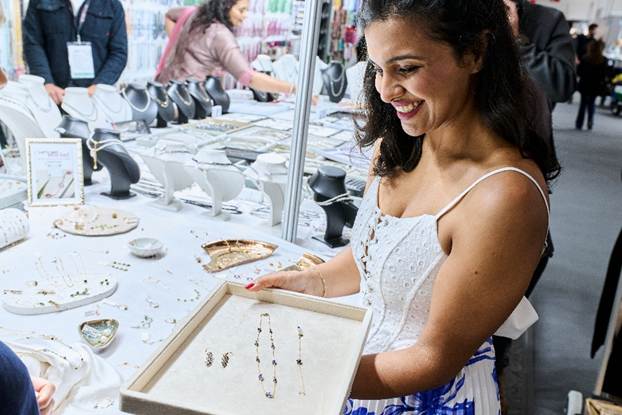
This knowledge can be incorporated into future consultations. Origin, processing, and differences in quality can be explained more thoroughly. Product knowledge becomes a selling point.
A Different Perspective on Gemstones
A gemstone is far more than just a valuable natural product. Anyone who follows its journey—from its formation, through its discovery, to its crafting—discovers, step by step, just how much knowledge, craftsmanship, and beauty it contains. That is precisely where the joy lies: the better you understand the stone, the greater its fascination becomes, long before it lies before you, cut and polished.
Hardly any other event offers such an in-depth look at the journey of gemstones and minerals as the Munich Show and GemWorld. Here, you can experience virtually the entire supply chain—by talking with dealers from distant countries as well as with experts from Idar-Oberstein, one of the world’s most important gemstone centers.
This makes the events far more than just traditional trade shows: they are a space for experiences, a hub for information, a trading platform, and an international meeting place for exchange, business, passion, and new ideas.
Anyone who traces the journey of a gemstone—from its formation through its discovery to its cutting and polishing—will later have a better understanding of the context surrounding rough stones, cut stones, and jewelry. This knowledge not only deepens one’s fascination but also leads to more informed advice: the origin, processing, and differences in quality can be explained more convincingly.
A gemstone is much more than just a valuable natural product. Those who follow its path will discover, step by step, just how much knowledge, craftsmanship, and beauty it holds. It is precisely this that gives it its fascination and provides the foundation for more informed advice.