



Watch News Briefing: Kerbedanz, Carl Suchy, and Louis Erard × Vianney Halter
Kerbedanz places the tourbillon at the center of a white ceramic watch set with baguette-cut diamonds. Carl Suchy & Söhne brings the Table Waltz to Geneva. Louis Erard and Vianney Halter take a different approach with the Futur Antérieur: two separate automatic movements drive the hours, minutes, and seconds.
Maxima GR8 Kerbedanz: White Ceramic and Diamonds on Titanium
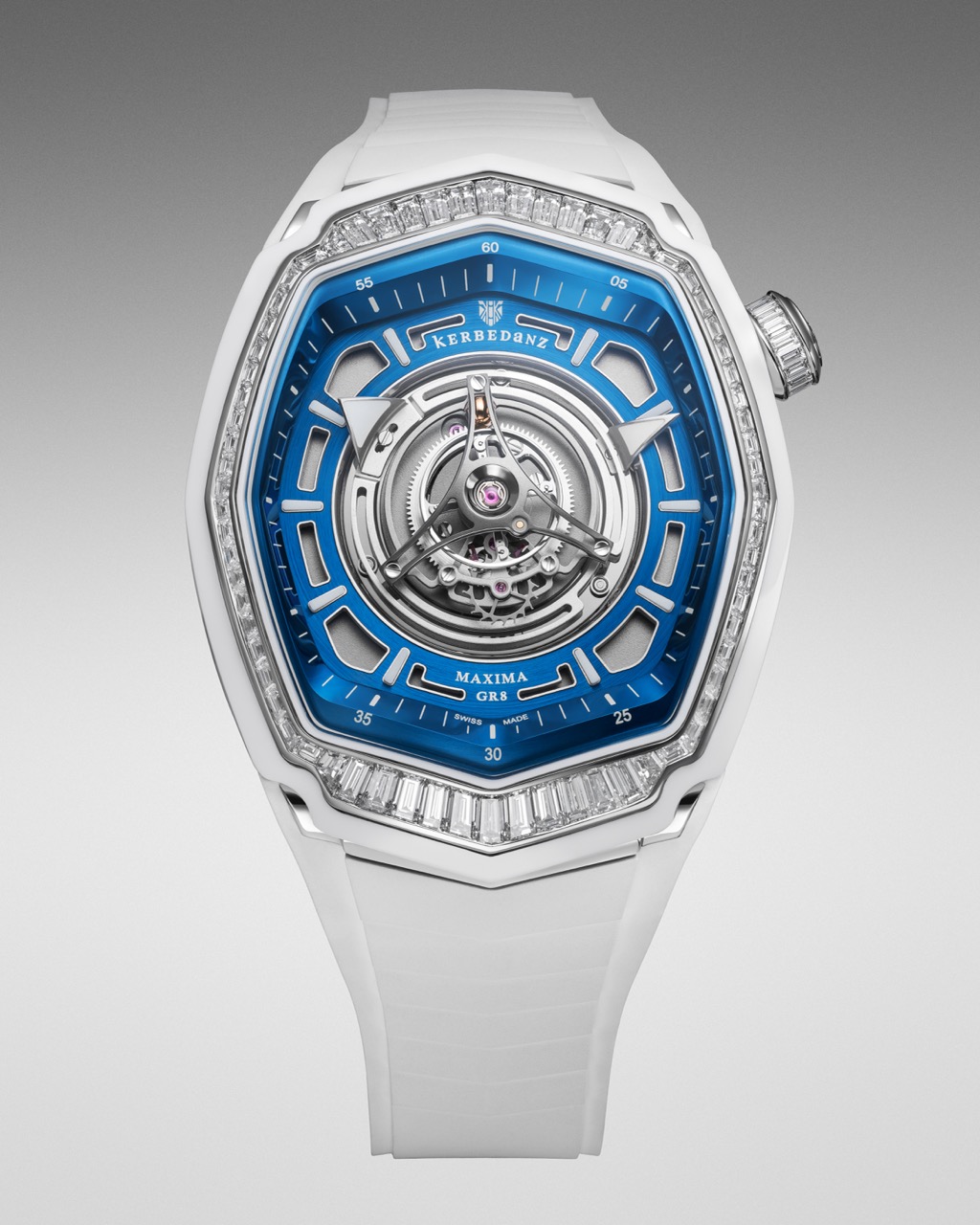
The new Maxima GR8 combines a 39-millimeter white ceramic case with a bezel and crown made of Grade 5 titanium. The combination of titanium and gemstone settings is a key feature of this model: The material is less prone to deformation during setting than gold and therefore requires correspondingly precise preparation of the stone settings.
The bezel is set with 70 white baguette-cut diamonds, and the crown features an additional 18. The 88 stones, totaling 6.54 carats, are selected for their VVS1 clarity. Their straight edges accentuate the case’s contours and form a clean, geometric frame around the intricate movement.

At the center, the flying one-minute tourbillon rotates. The hours and minutes are displayed on the periphery, leaving the center free for the escapement. The automatic KRB-13 caliber consists of 233 components, features 32 jewels, and operates at four hertz. Two mainsprings connected in parallel provide approximately 65 hours of power reserve. The open dial is crafted using the “Kerbedanz” technique and decorated by hand.
The unveiling marks the launch of a new partnership with watch and jewelry retailer Ahmed Seddiqi in the United Arab Emirates. The timepiece will be presented at the Mavericks of Time event in Abu Dhabi. Kerbedanz has announced a global production run of 28 pieces; the price is 220,000 Swiss francs, excluding taxes. The Maxima GR8’s mechanical core is thus complemented by a design that places a much stronger emphasis on jewelry.
Carl Suchy & Sons: The Table Waltz Is Coming to Geneva
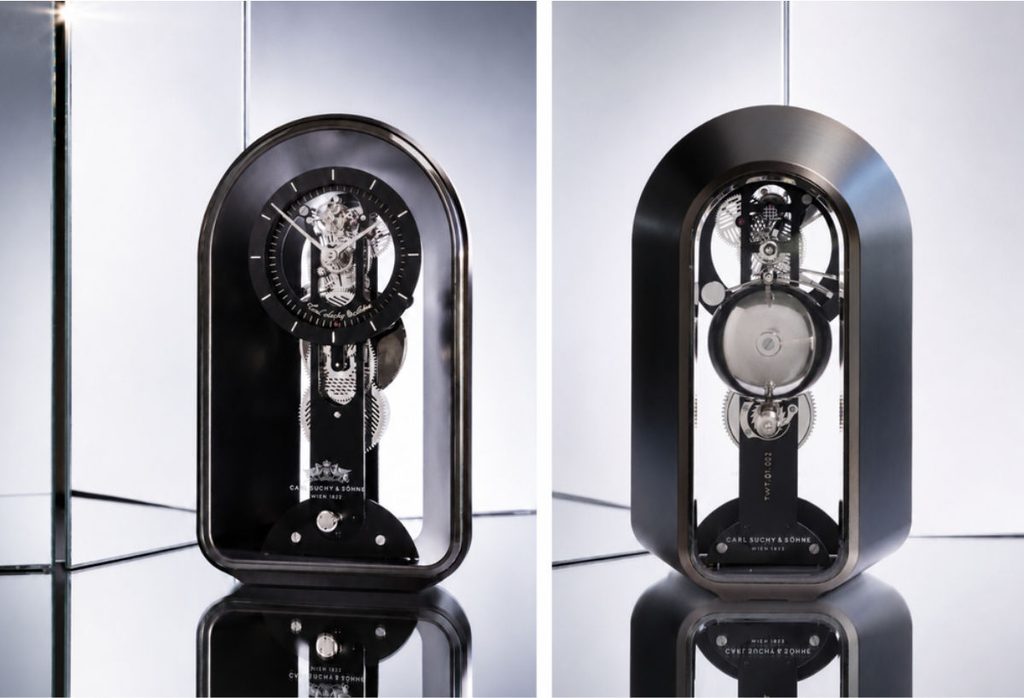
Carl Suchy & Söhne has been nominated in the GPHG “Mechanical Clock” category for its Table Waltz Tourbillon Mirror Edition. From October 30 to November 15, 2026, the table clock will be on public display alongside the other finalists at the Musée d’Art et d’Histoire in Geneva. This event offers the opportunity to examine its mechanics up close.
The Mirror Edition was created in collaboration with Piano Chow, the founder of The Lavish Attic. The design is by Rainer Mutsch, and the mechanical development is by master watchmaker Therese Wibmer. The CS-T-1 caliber, manufactured in Austria, is hand-wound and has a power reserve of seven days. Its tourbillon consists of more than 50 custom-made components. A bell chimes on the hour upon request; the hour strike can be turned off.

The case is milled from a solid block of brass and then nickel-plated and finished. Faceted and engraved glass panels, developed in collaboration with the Viennese glass manufacturer J. & L. Lobmeyr, offer a view of the movement. The reflective surfaces of the Mirror Edition enhance its spatial effect. The table clock is approximately 25 centimeters tall.
The exhibition is located at 2 Rue Charles-Galland. It is open from 11 a.m. to 6 p.m., and on Thursdays from 12 p.m. to 9 p.m.; it is closed on Mondays. For a more detailed look at the Table Waltz and the other nominees, see our article “GPHG 2026: Watches Not Meant to Be Worn on the Wrist.”
Louis Erard × Vianney Halter: Two Timepieces for One Era
With the Futur Antérieur, the third collaboration between Louis Erard and Vianney Halter draws closer to the design language of Halter’s Antiqua. Two separate dials, framed by riveted bezels, are set within an asymmetrical steel case. The larger dial displays hours and minutes, while the smaller one displays only seconds. Each dial is powered by its own automatic movement.
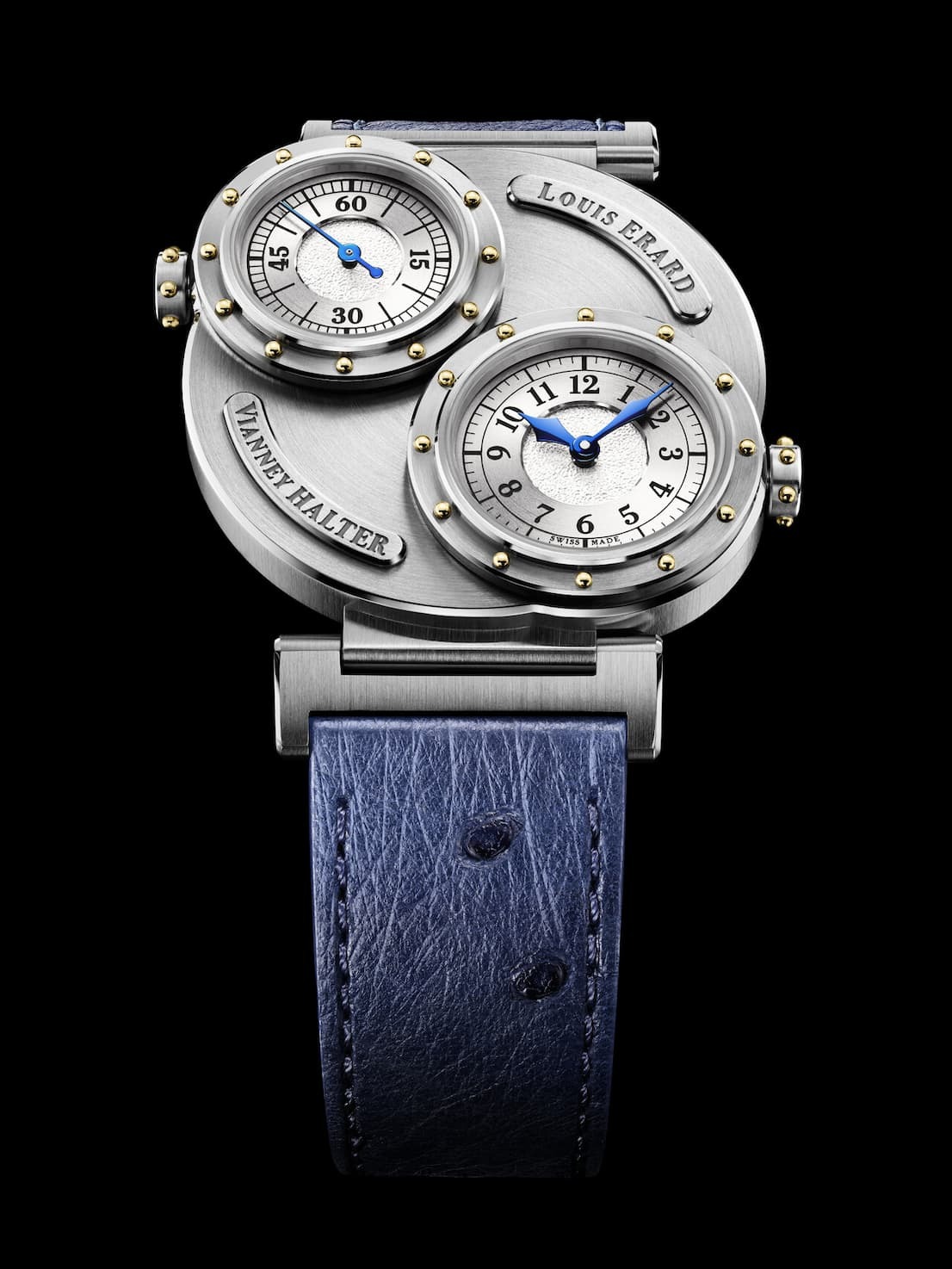
The two Sellita SW100 calibers each measure just 17.20 millimeters in diameter. Both operate at four hertz, feature 25 jewels, and offer at least 38 hours of power reserve; Louis Erard cites 42 hours as a typical value. These are therefore two independent movements, not a single movement with an off-center small seconds hand. Two crowns allow for separate operation.
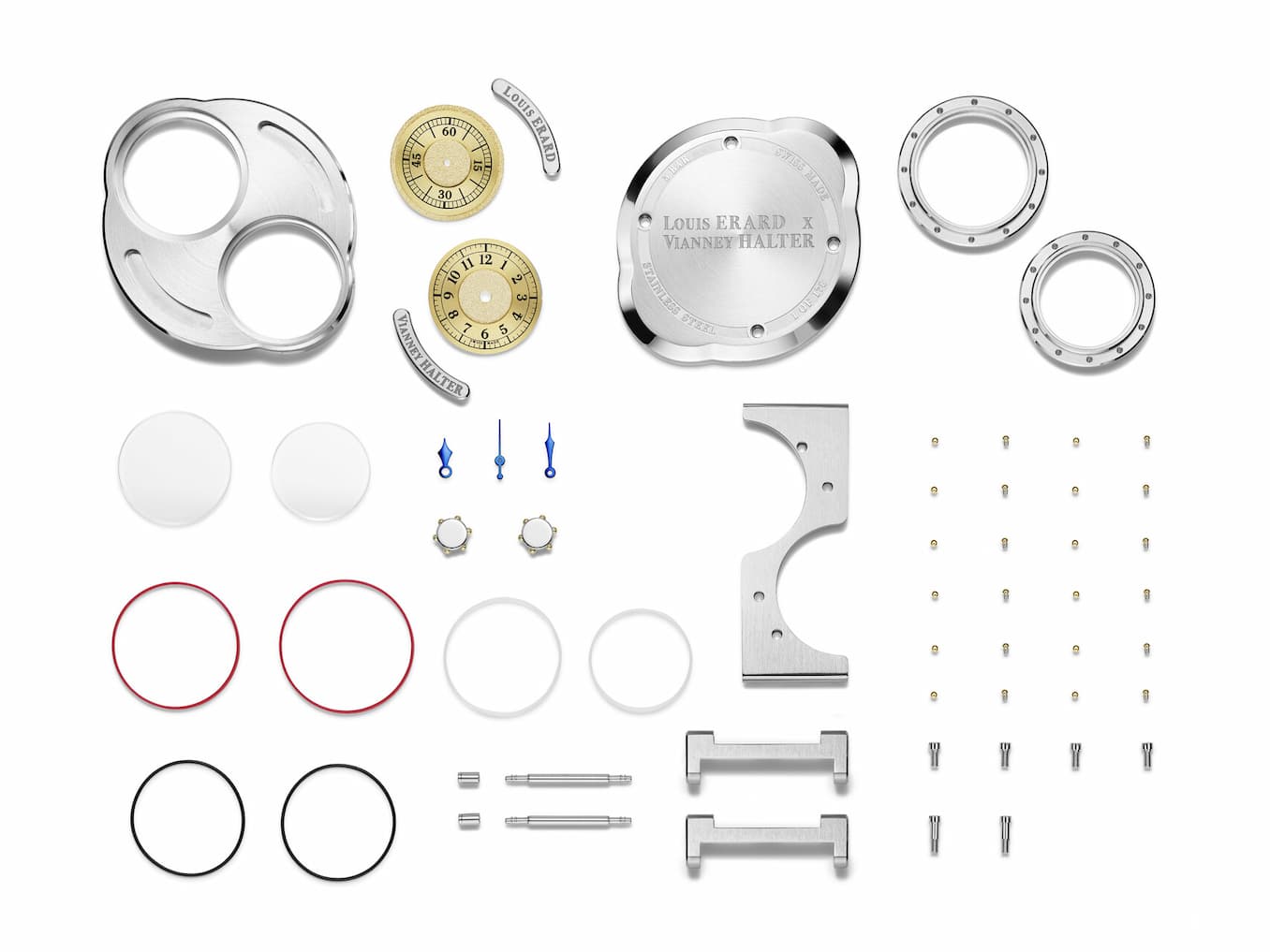
The case consists of 67 components, measures 38 × 44 millimeters, and is 8.85 millimeters thick. Two sapphire crystals with anti-reflective coating on both sides protect the dials; the case back is solid. The watch is water-resistant to 50 meters. Polished rivets and blued steel hands echo Halter’s signature design, while satin-finished surfaces ensure the unusual geometry remains legible.
The Gold and Silver models take their names from the dial colors—both feature a stainless steel case. The Gold model combines yellow-gold-plated dials with a black ostrich leather strap, while the Silver model pairs rhodium-plated dials with a blue strap. Each version is limited to 178 pieces. Online sales begin on November 5, 2026. The design goes beyond a new dial layout: it makes the separation of the displays a mechanical and design principle.


