Between chalk, art, and champagne bubbles
From the Vineyard to a Global Icon: The Art of Luxury Champagne Production
Although INSIGHT LUXURY usually focuses on the world of watches and jewelry, this time we’re taking a look behind the scenes at another symbol of luxury—champagne. Its production requires just as much craftsmanship, tradition, and precision as the finest luxury goods manufacturers.
The different stages of champagne production
An article for Insight Luxury by Nadine Rieck

There are places in this world where time does not pass, but matures. Places where silence is not a lack of words, but a dialogue between nature and humanity. Champagne is one of those regions where even the fog seems to whisper. And from this almost mystical landscape emerges a drink that crowns our celebrations, accompanies our victories, and soothes our disappointments—sometimes all at once.
But before the champagne bubbles so nonchalantly into our crystal glasses, it embarks on a journey of almost epic proportions. A journey in several stages—meaningful, with a touch of quiet down-to-earthness that reminds us that even the most refined drink begins with dirt under one’s fingernails.
We will now guide you through these different stages step by step.
1. From winter to bloom—the behind-the-scenes groundwork in
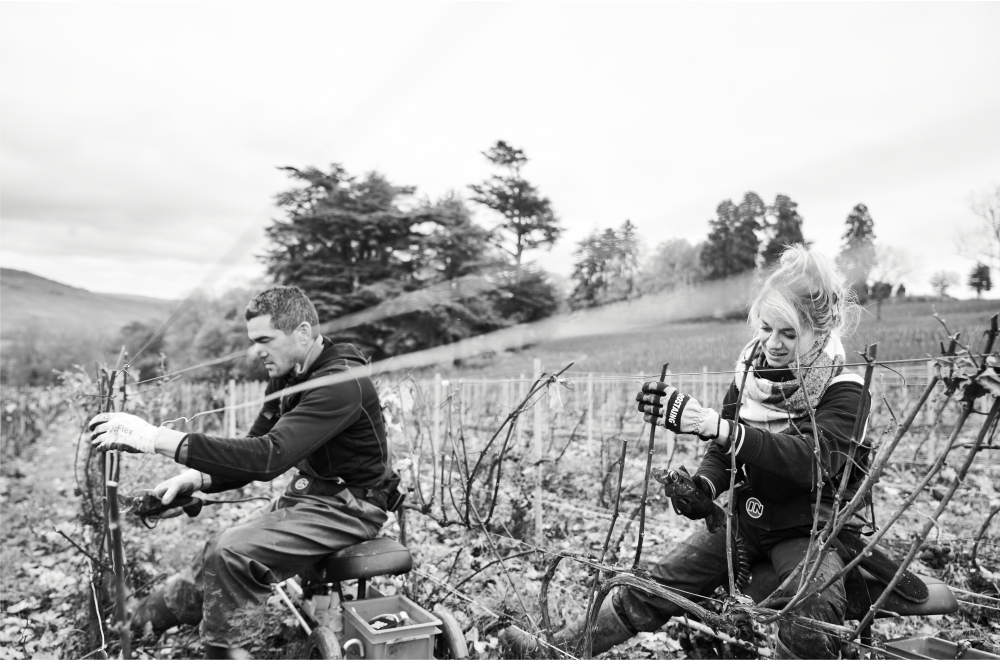
Before a grape is ripe enough to eventually become champagne, the work begins in the vineyard—with both visible and invisible efforts that shape the terroir of Champagne. The winemakers there tend to their plots with care, good judgment, and long-term planning
Pruning begins as early as fall, when the leaves fall. In Champagne, this step is essential—old or excess shoots are removed no sooner than after the dormant period to give the vine structure and renewed vigor for the coming year. Depending on the vineyard’s location and grape variety, different pruning methods are used: for example, the “Chablis” cut, the “Cordon” cut, the “Guyot” cut, or the “Vallée-de-la-Marne” cut. These different methods influence how vigorously the vine grows and how concentrated the harvest will be later on—making them a decisive factor in determining quality and style.
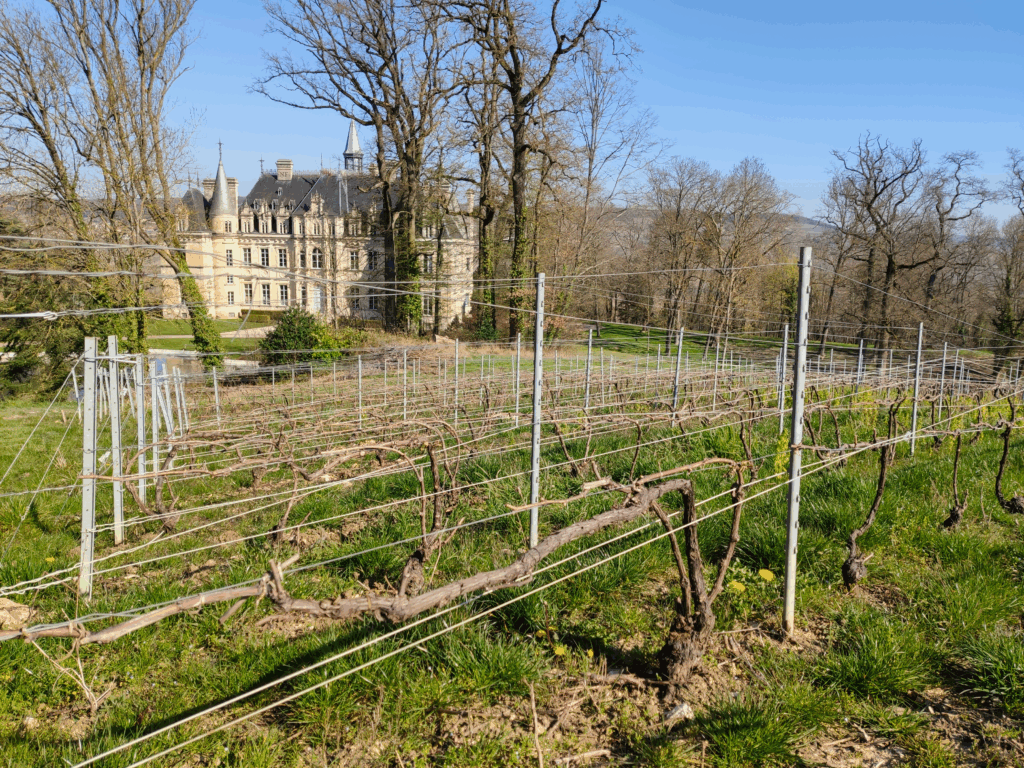
In the spring, excess shoots or side shoots are removed or thinned out (a process sometimes referred to as “de-budding”); usually at the end of May, the young shoots are trained upright (“training”); and in June, they are secured between wires (“trellising”) to distribute the foliage evenly and ensure good ventilation and sunlight. This keeps the grapes healthy and ensures even ripening—a quiet masterpiece of order. In some vineyards (depending on the cultivation method), the soil is tended, organic matter is added or incorporated—this promotes soil fertility and maintains a healthy microclimate. This is a particularly important aspect in sustainably managed vineyards.
From late August to early September (depending on the weather and ripeness), the harvest begins—by hand—to ensure that only perfect grapes are picked. Hundreds of hands work in unison, each grape a note in a harmonious whole. Even without organic certification, strict regulations and time-honored traditions ensure that quality and consistency are maintained throughout the region.
2. The Grape Harvest—When the Day Begins with Dew and Ends with Back Pain
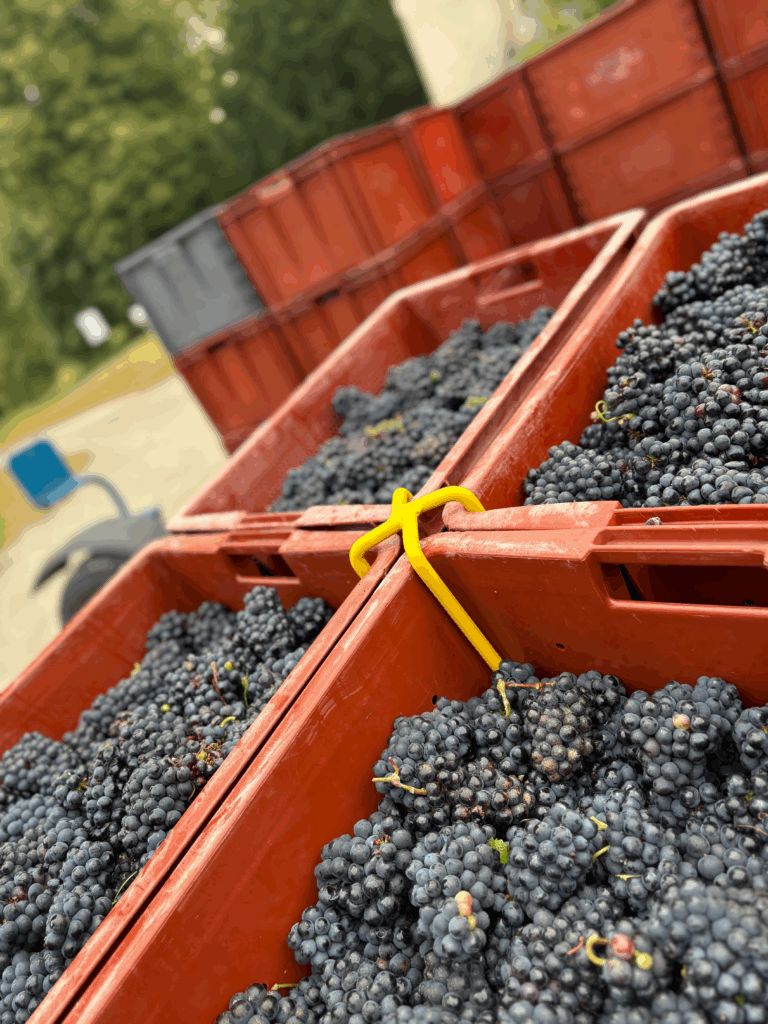
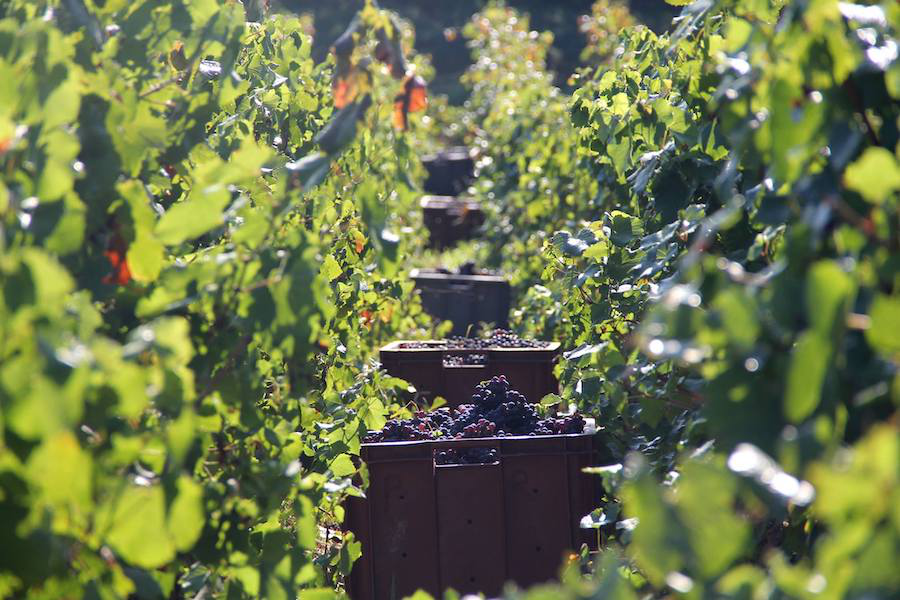
Champagne grapes—Chardonnay, Pinot Noir, or Meunier—are always harvested by hand. This is called “vendange manuelle.” The technical term sounds elegant, but it simply means standing bent over and hoping it doesn’t rain.
The ripeness of the grapes is determined with meticulous care, because the resulting champagne thrives on freshness and finesse, not on excessive sweetness. A winemaker from Épernay once explained with a smile that the art lies in picking the grapes “when they are ready—not when we are ready.” An elegant way of saying: Nature is in charge.
3. Pressing—the “cuvée” moment
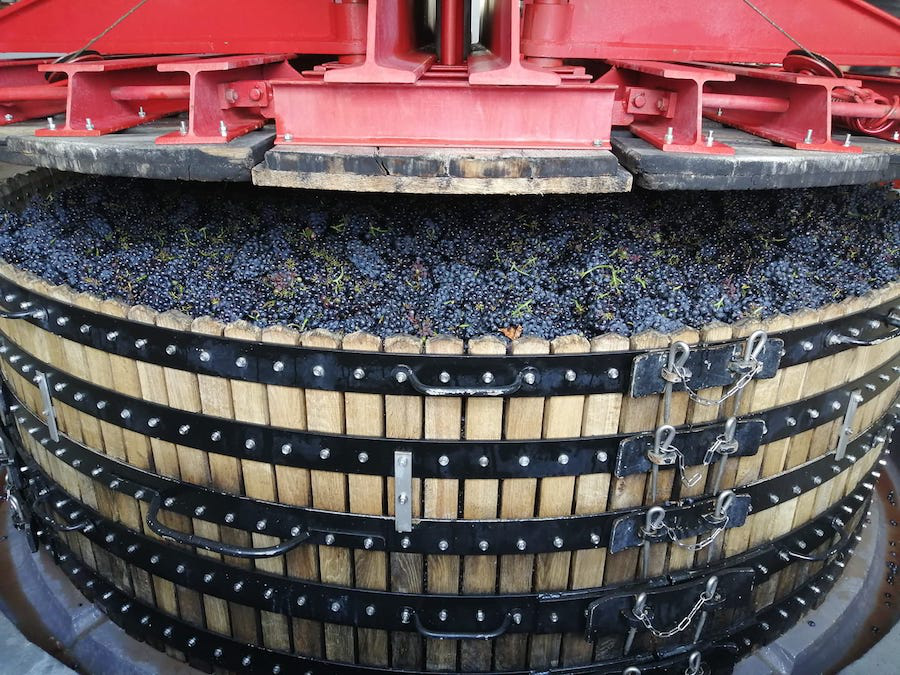
After the harvest comes gentle pressing. The best must, obtained from the first pressings, is called the cuvée. The first pressing yields the finest, clearest must. The second pressing—known as the taille—is more robust. Both can later be turned into champagne, but the difference is about as subtle as that between silk and satin: only connoisseurs can detect it, but everyone can feel it.
4. The first fermentation—the quiet beginning of a sparkling destiny
After the must is pressed and clarified, the first fermentation begins in Champagne—the stage during which sugar is converted into alcohol, and the wine becomes what is known in technical jargon as “vin clair”: the light, still base wine from which champagne is later produced. A cellar master once told me that this wine is “like a teenager: still a bit immature, but full of potential.”
And where and how does fermentation take place?
Nowadays, the first fermentation usually takes place in temperature-controlled stainless steel tanks.

These tanks provide a neutral, controlled environment that helps preserve the grapes’ natural fruit flavors and create a clean, fresh base.
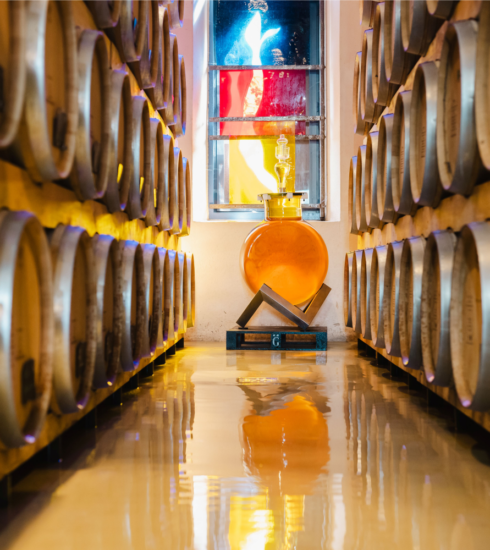
However, some producers—out of a sense of tradition or to achieve certain styles—also prefer to use wooden barrels or large wooden vats.
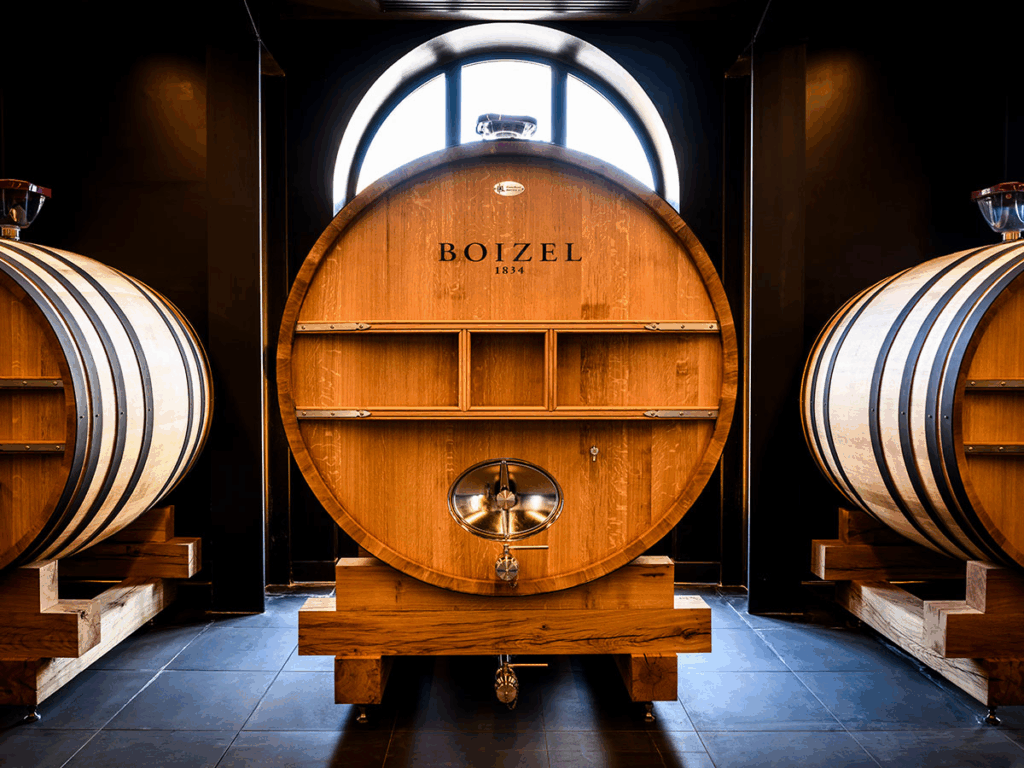
Historically, this was the norm: all champagnes were once fermented in wooden barrels.
Concrete or cement-lined tanks—which were once common—can still be found in some basements (often with a protective coating), although stainless steel is the predominant material.
Depending on the type of fermentation vessel chosen, the resulting profile of the base wine may vary: wood, for example, can impart additional aromas (such as subtle vanilla notes), while stainless steel remains neutral and highlights the fruit.
The Process and Effects of Fermentation
Immediately after racking, primary fermentation begins—the must “bubbles” as the yeasts metabolize the natural sugars in the grapes. This process produces alcohol, carbon dioxide, and a variety of aromatic compounds that give young base wines their fresh, lively character. The first fermentation can take place using only the natural yeasts on the grapes, or selected yeasts can be added. Major Champagne houses and modern production methods almost always use added pure-culture yeast because it allows them to better control the style of the Champagne.
The temperature is strictly controlled during fermentation—typically between about 16 and 20 °C (sometimes 18–22 °C, depending on the producer and style)—to ensure a consistent, gentle fermentation and prevent the development of too many undesirable aromas or excessive heat. The process typically lasts about two to three weeks. Afterward, the wine usually has an alcohol content of around 10–11% by volume—exactly the range from which the finished champagne will emerge after bottle fermentation and aging.
Sometimes, a process known as malolactic fermentation (MLF) is carried out afterward (though this is optional): During this process, bacteria convert the sharp malic acid into milder lactic acid, which gives the wine more body, finesse, and a softer acidity profile—however, this step is not mandatory and depends on the desired style. Omitting MLF results in a base wine that appears fresher, more acidic, and more pronounced.
The timing of the completion of primary fermentation and the transition to malolactic fermentation (MLF) or resting can vary from producer to producer. Some let the base wine rest after fermentation (“vin clair”) and age it for a while before proceeding.
In some cases, chaptalization (adding sugar before fermentation if the must does not contain enough natural sugar) may also be used—which, of course, affects the alcohol content and style.
The base wine from the first fermentation lays the foundation: this is what determines how crisp, fresh, and lively the final champagne will taste—or how much complexity and structure it will have. Fermentation in oak can give it more texture and depth, while fermentation in stainless steel tanks can impart subtlety and fruitiness.
5. Assemblage—the art of composition
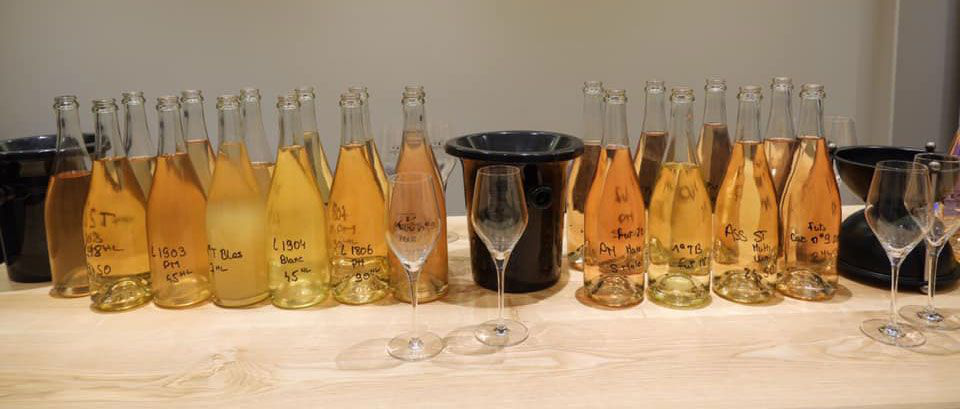
Blending is at the heart of the art of champagne-making. This is where various base wines—often from different vineyards, grape varieties, and vintages—are blended together.
The cellar master becomes a conductor in this process: he composes harmonies, seeks balance, and juxtaposes elegance and structure. To achieve this, major wineries sometimes taste over a hundred base wines. It is a process that demands discipline and a palate as precise as a Swiss watch.
6. Bottling, Racking, and Secondary Fermentation—Where the Magic Begins

After the blending process, once the vin clair is ready, the champagne enters a crucial stage of its transformation: the mise en bouteille, during which the tirage mixture is added. In this process, the base wine is poured into the final champagne bottle—along with a mixture of sugar and yeast.
This step is key to the second fermentation, known as the “prise de mousse,” which later produces the characteristic bubbles.
The bottles are sealed tightly—usually with a crown cap or a temporary stopper at first—and taken to the cool chalk cellars. There, the second fermentation begins inside the bottles: the yeast ferments the sugar, producing carbon dioxide that remains dissolved in the wine and causes the pressure to rise—thus creating the sparkling heart of Champagne.
The bottles now rest for months, often for years, in the famous cellars of Champagne. The cool, humid environment ensures slow maturation; the aromas develop, the texture refines—and still base wine transforms into a lively, effervescent experience. This phase is quiet, almost unassuming, and yet crucial: this is where the magic begins, imparting freshness, elegance, and vibrancy to every glass.
7. Aging on the lees – Vieillissement sur lies
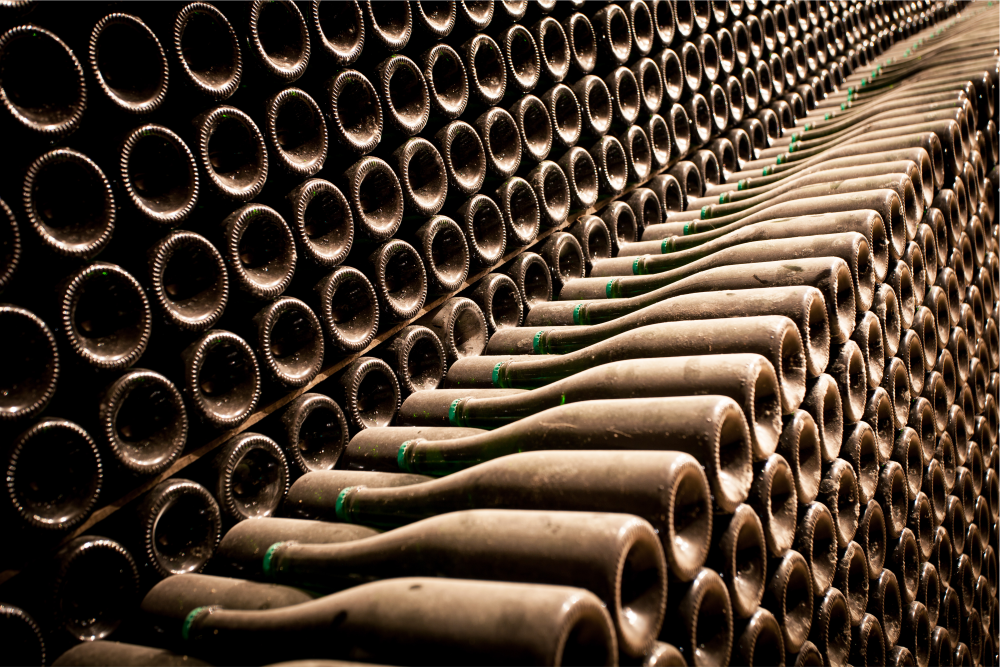
After the second fermentation, the bottles rest on the lees. This phase is called “vieillissement sur lies” and is crucial for the development of complexity, finesse, and aroma. The aging period is at least 15 months for non-vintage champagne and at least 3 years for vintage champagne.
During this time, the yeast slowly works its magic on the wine: it breaks down sugars and other components, releases aromatic compounds, and imparts a delicate creaminess to the champagne, along with notes of bread, nuts, and brioche. This patient interplay of time, yeast, and wine is what distinguishes a simple base wine from a champagne of elegance and depth.
8. Shaking—a daily dance
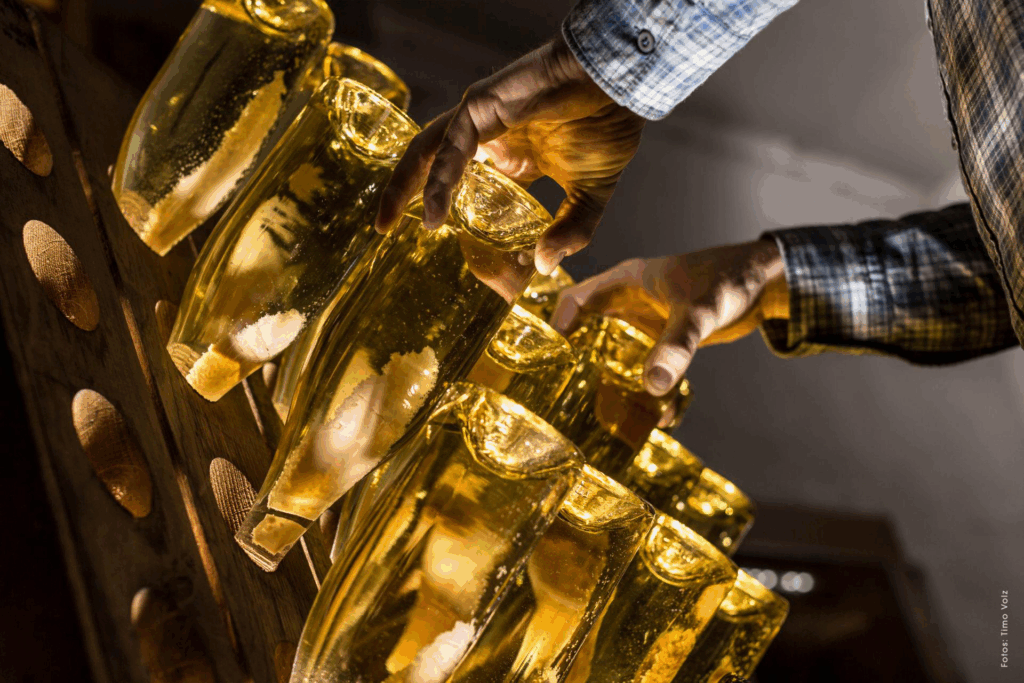
Then comes another step in the darkness of the cellar: remuage, the process of gently shaking the bottles.
The process simply involves removing the dead yeast cells that formed during bottle fermentation from the wine. The goal is to move them to the neck of the bottle, where they can later be removed—a clean process without which the champagne would appear cloudy and unsettled.
Historically, remuage was performed by hand. The bottles were placed in wooden racks, known as pupitres, and were carefully rotated and tilted every day for weeks on end. Every movement had to be precise. This task required experience, patience, and a deft touch.
Today, gyropalettes make the work easier. They automate the rotation and tilting process for several hundred bottles at once, significantly reducing the time required and making the process less labor-intensive. Nevertheless, manual riddling remains common in many tradition-conscious champagne houses, particularly for prestige cuvées or large bottle sizes, because the experienced hand of a cellar master can detect subtleties that machines cannot.
At the end of the remuage process, all the yeast sediment has settled in the neck of the bottle. The bottle is now ready for dégorgement—the removal of the yeast sediment—allowing the champagne to reveal its full clarity, brilliance, and elegance.
9. Disgorging—a controlled release
During dégorgement, the yeast plug is removed from the neck of the bottle. To do this, the neck of the bottle is frozen. When opened, the frozen plug shoots out due to the internal pressure—a small, elegant burst of energy.
10. Balance and Finish—the House’s Signature
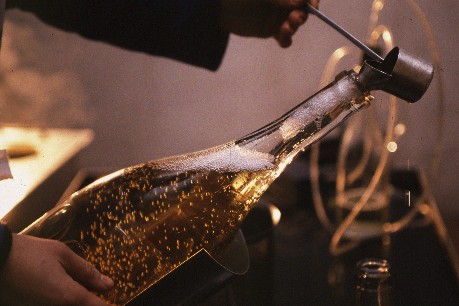
Once the wine has been cleared of all yeast residues through the dégorgement process, the champagne is ready for the final major step: the liqueur d’expédition (dosage liqueur or shipping dosage)—a mixture of wine (often a mature reserve wine) and cane sugar (though technological advances have made it possible to gradually replace this with sugar beets)—is added to the bottle.
This process is called dosage and is crucial: it not only determines the sweetness but also shapes the final style and character of the champagne.
The quantity and composition of this final dosage are often a closely guarded secret of the house—that final artistic touch that sets one champagne apart from another. Some producers opt for a neutral dosage to preserve the wine’s natural character; others use aged reserve wines or even a touch of Esprit de Cognac to add extra nuance and depth.
The final dosage determines how the champagne is labeled—from “bone dry” to “sweet.”
| Name | Residual sugar / Dosage (g/L) |
| Brut Nature / no dosage / undosed | < 3 g/l |
| Extra Brut | 0–6 g/L |
| Brood | < 12 g/l |
| Extra Dry (Extra Sec) | 12–17 g/l |
| Sec | 17–32 g/L |
| Demi-Sec | 32–50 g/L |
| Doux | > 50 g/l (rare in champagne) |
Depending on the dosage—and thus the level of sweetness—the sensory profile of the champagne also changes:
Brut Nature / Extra Brut: Very dry, with a distinct emphasis on acidity, minerality, terroir, and varietal character—ideal for purists who value freshness and authenticity.
Brut: The classic style—the sugar adds a smoothing effect, slightly rounding out the acidity and creating a harmonious balance without compromising the wine’s freshness and elegance.
Extra Dry / Sec / Demi-Sec: A sweeter dosage, which makes the champagne seem rounder and smoother. Fruity aromas come through more strongly, and the wine often has a more opulent, velvety mouthfeel.
Doux: Very sweet; traditionally served as a dessert champagne; more comparable to sweet sparkling wines than to modern dry champagnes.
Immediately after bottling, the bottle is corked—the cork, secured with a wire cage (le muselet), ensures that the wine retains its fine bubbles and that no gas escapes. This is often followed by a brief shaking to ensure that the liqueur d’expédition and the wine mix evenly before the champagne is labeled and shipped.
It is this final step—the dosage—that gives each champagne its distinctive “signature”: precisely the balance, length, and aroma that the house intends.
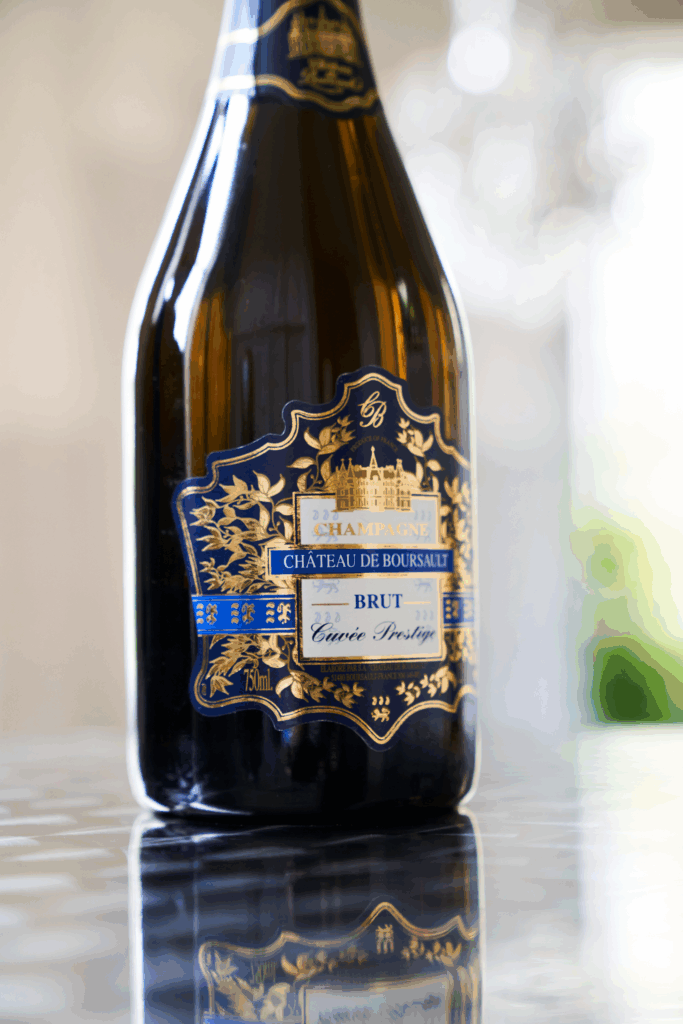
These different stages reveal that champagne is more than just a drink. It is a silent work of time, a testament to patience and craftsmanship, in which limestone and silence come together to create, for a fleeting moment, the illusion that life itself shines from the depths of stillness