The Moon Phase – A Decorative Complication with Meaning
The moon has fascinated people since time immemorial. On nights when the moon is full, it bathes the landscape in a mysterious light. Shortly before or after the new moon, it appears as a slender crescent in the sky, and the hidden far side of our moon continues to capture our imagination to this day. And then, of course, there’s the man in the moon…
For millennia, the moon has held profound symbolic, cultural, and religious significance. In many cultures, it represents change, the rhythm of life, and the connection between heaven and earth. Although the moon phase display is primarily valued today as an aesthetic feature, it used to serve a very practical purpose—for example, for sailors who relied on the moon for navigation and tides, as well as for farmers and hunters who followed the lunar calendar.
Arnold & Son: Perpetual Moon Colours of the Moon
With the “Colors of the Moon,” Arnold & Son puts astronomy in the spotlight. The three stainless steel versions are each limited to 18 pieces, and mother-of-pearl—colored using a PVD process—is used for both the dial and the moon phase display. The moon phase disc is luminescent and displays three shades inspired by the varying colors the moon can take on depending on the season and specific atmospheric conditions. (MSRP: 21,100 CHF) arnoldandson.com
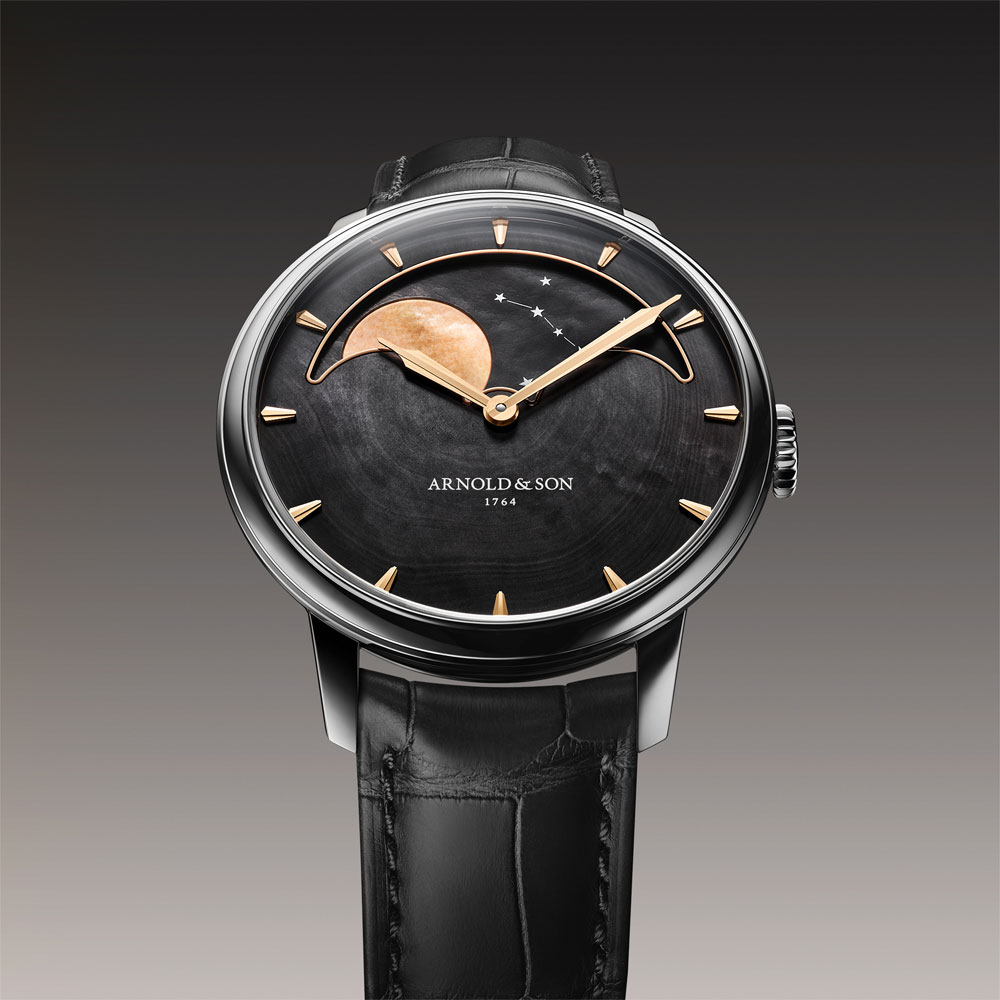
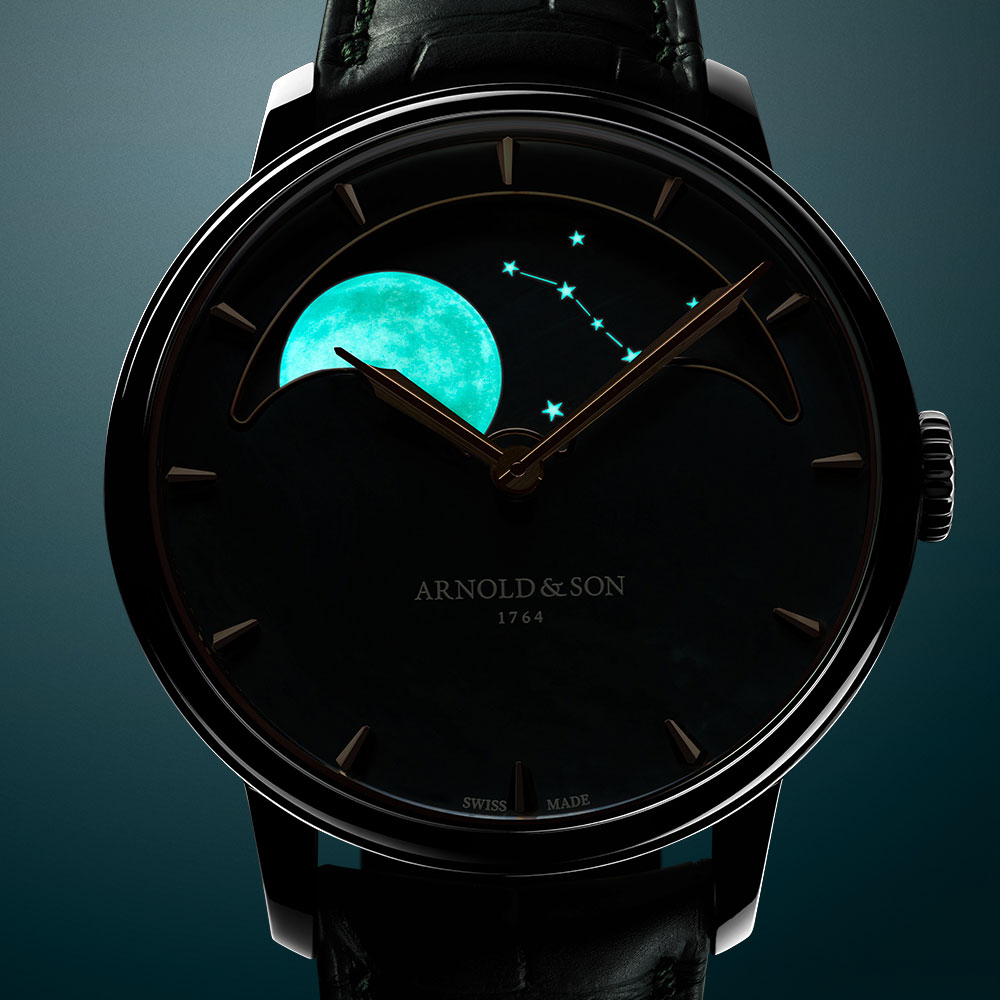
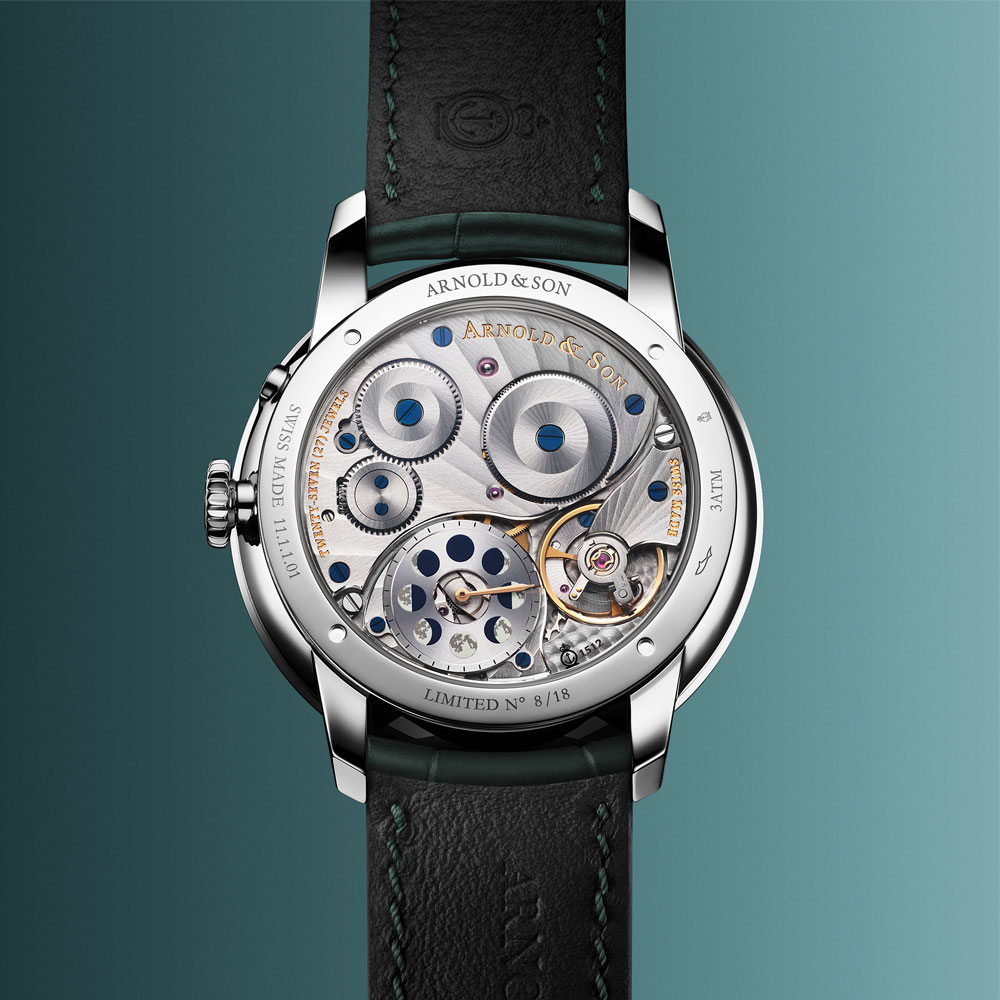
- Case: Stainless steel, 41.5 x 11.67 mm, water-resistant to 3 bar
- Movement: A&S1512, hand-wound, 90-hour power reserve
- Dial: mother-of-pearl with PVD coating or dyed, hand-painted constellations, Superluminova,
- Strap: Alligator leather with a stainless steel pin buckle
The Moon and the Art of Watchmaking
The moon holds special significance in watchmaking. As early as the 17th and 18th centuries, moon phase displays were used in astronomical clocks and pocket watches to illustrate the lunar cycle. Today, the moon phase complication is one of the most classic and poetic complications in haute horlogerie.
It represents not so much a practical use as the fusion of astronomy and mechanics, the mastery of complex watchmaking, the depiction of the natural passage of time, and the beauty and transience of the moment.
That is precisely why a moon phase display is considered one of the most evocative complications of all: it serves as a reminder that time can be measured not only in hours and minutes, but also in the recurring rhythms of nature.
It’s no wonder that the moon phase display has so many fans and inspires designers to come up with ever-new interpretations.
Sternglas: Nao Moon Phase Edition Neuwerk
With the Naos Moon Phase Edition Neuwerk, Sternglas draws inspiration from the history of a place that, like few others, symbolizes orientation, constancy, and the eternal rhythm of nature: the Hamburg island of Neuwerk. At low tide, it can be reached on foot across the mudflats; at high tide, it is completely surrounded by water. This steady rhythm is governed by the moon. (MSRP: €299) sternglas.de
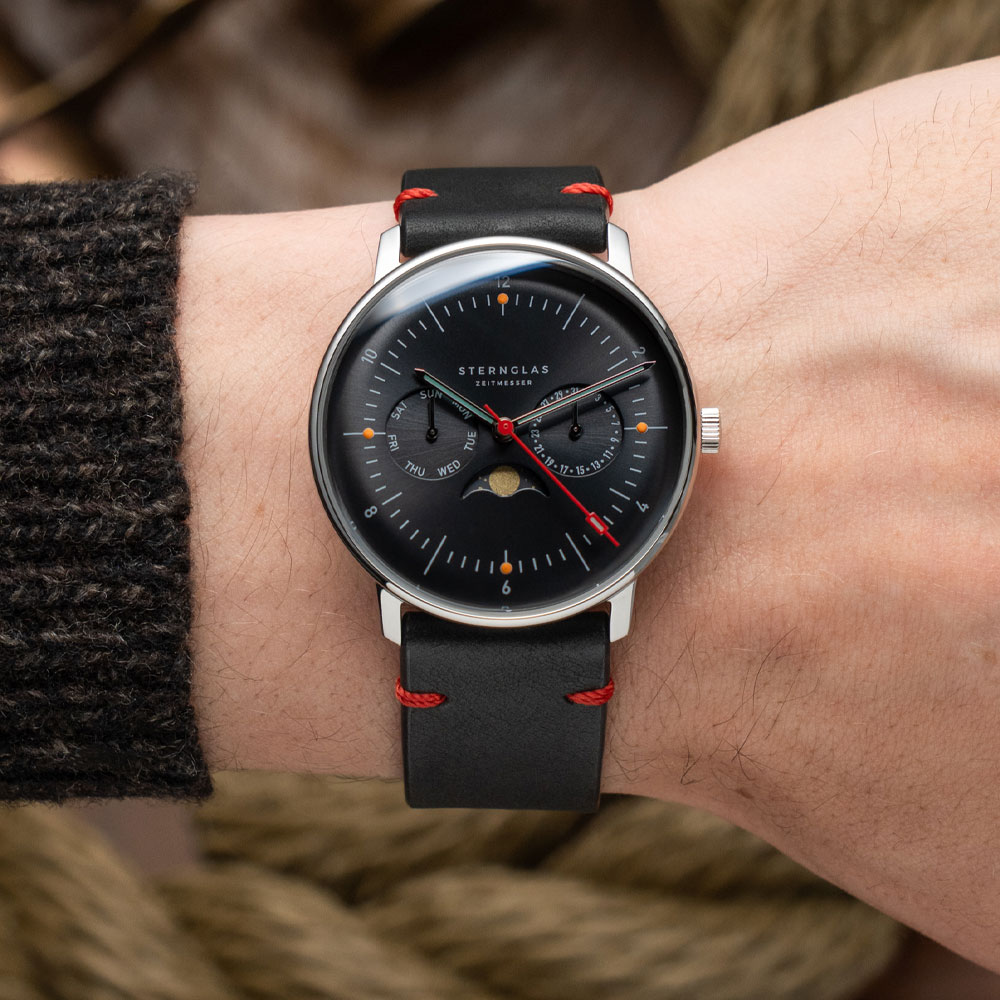
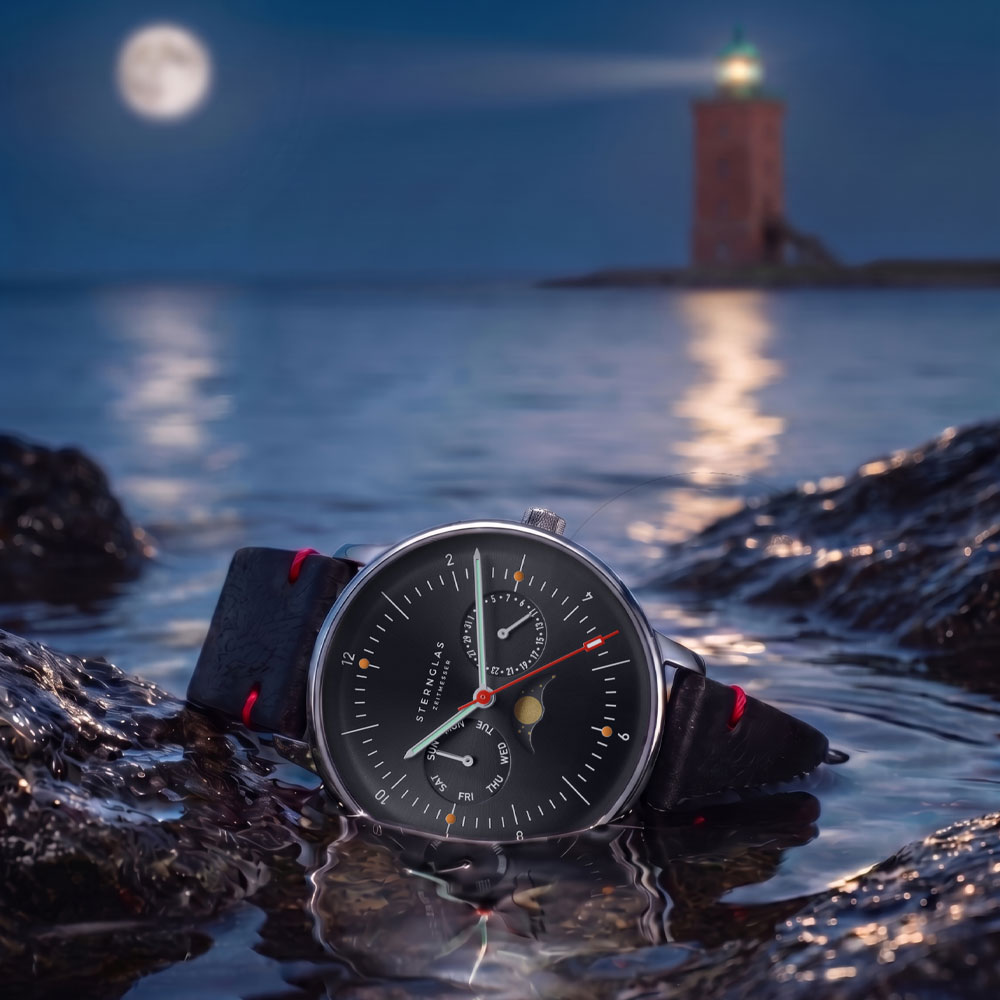
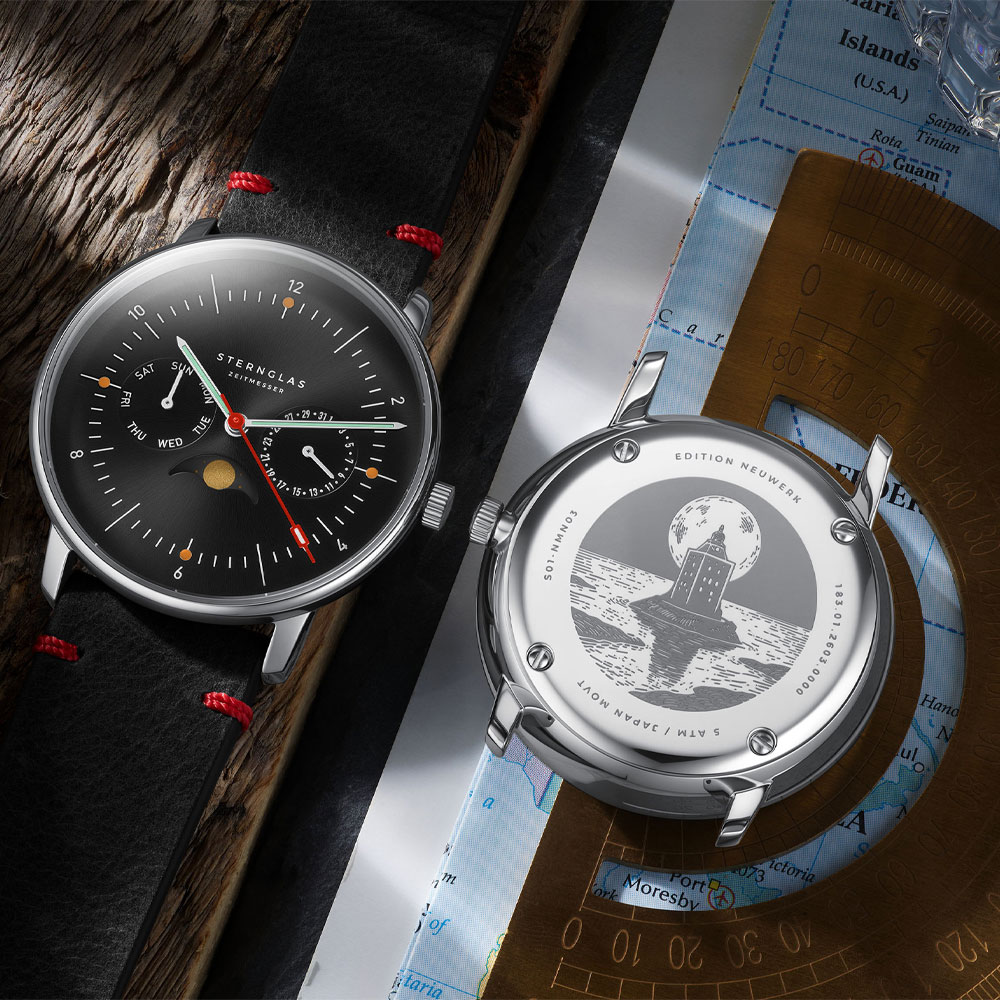
- Case: Stainless steel, 38 x 8 mm, water-resistant to 5 bar
- Movement: Miyota 6P20, quartz
- Dial: Anthracite with orange Luminova markers
- Strap: Vintage Nero-Red, quick-release system
What the Moon’s Phases Can Do and How They Work
The moon phase complication displays the current moon phase within the lunar cycle. Although it often appears to be purely decorative, it is based on a precise mechanical calculation.
Below the dial is a moon disc featuring two moon symbols positioned opposite each other. This disc has 59 teeth and is slowly advanced by the movement.
The moon disc rotates one tooth every 24 hours. After 59 days, it has completed one full rotation. Since two moons are depicted on the disc, one lunar phase corresponds to 29.5 days (59 ÷ 2).
A crescent-shaped cutout in the dial reveals only a portion of the moon at a time. As the disc rotates, it creates the illusion of the waxing, full, and waning moon.
How accurate is a traditional moon phase?
The actual lunar month—that is, the time from one new moon to the next—is 29 days, 12 hours, 44 minutes, and 2.9 seconds (≈ 29.53059 days). The classic 59-tooth design, on the other hand, is based on exactly 29.5 days.
The deviation is about 44 minutes and 3 seconds per lunar month. As a result, the error slowly accumulates: After about 2 years, 7 months, and 20 days, the deviation amounts to approximately one day. At that point, the display must be corrected manually.
Union Glashütte: 1893 Johannes Dürrstein Edition Double Moon Phase
Inspired by historic pocket watches, this timepiece simultaneously displays the lunar cycles of the Northern and Southern Hemispheres. As the visual centerpiece of the dial, the “double moon phase” immediately catches the eye and defines the model’s distinctive character. (MSRP: €3,100) union-glashuette.com
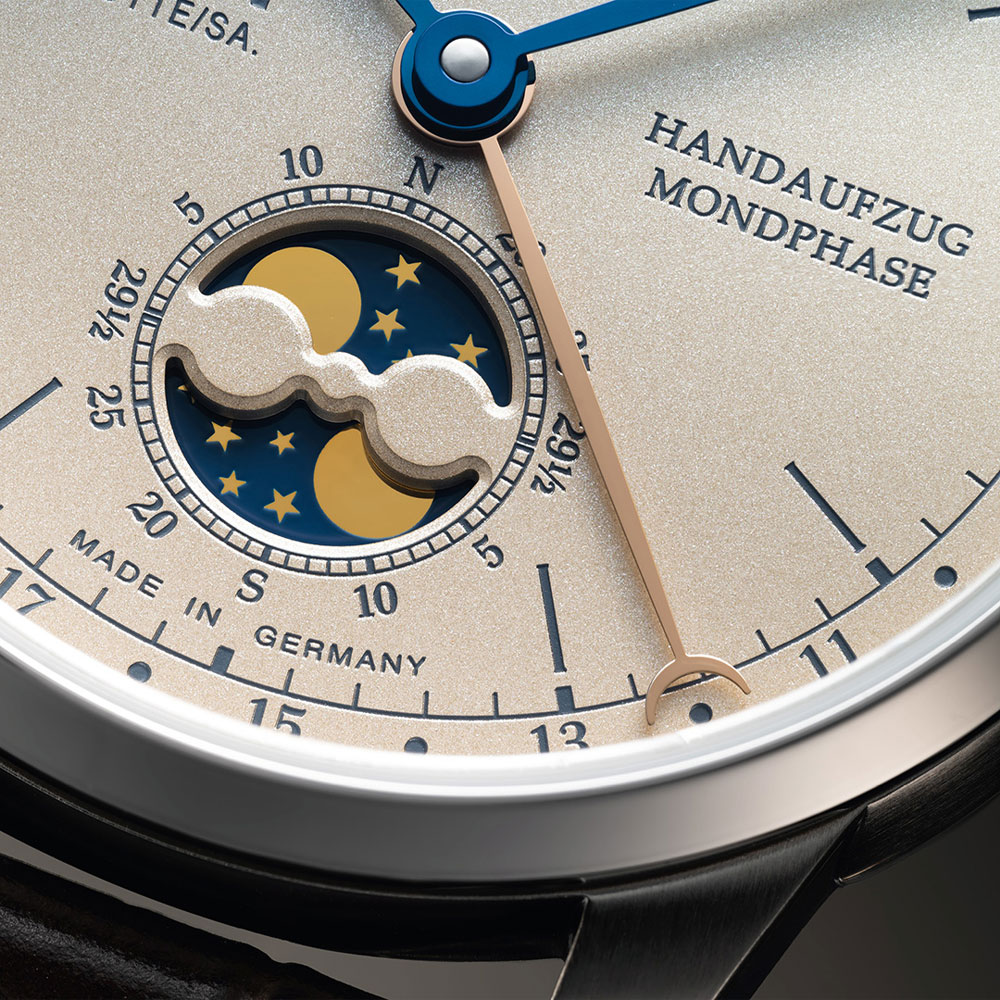
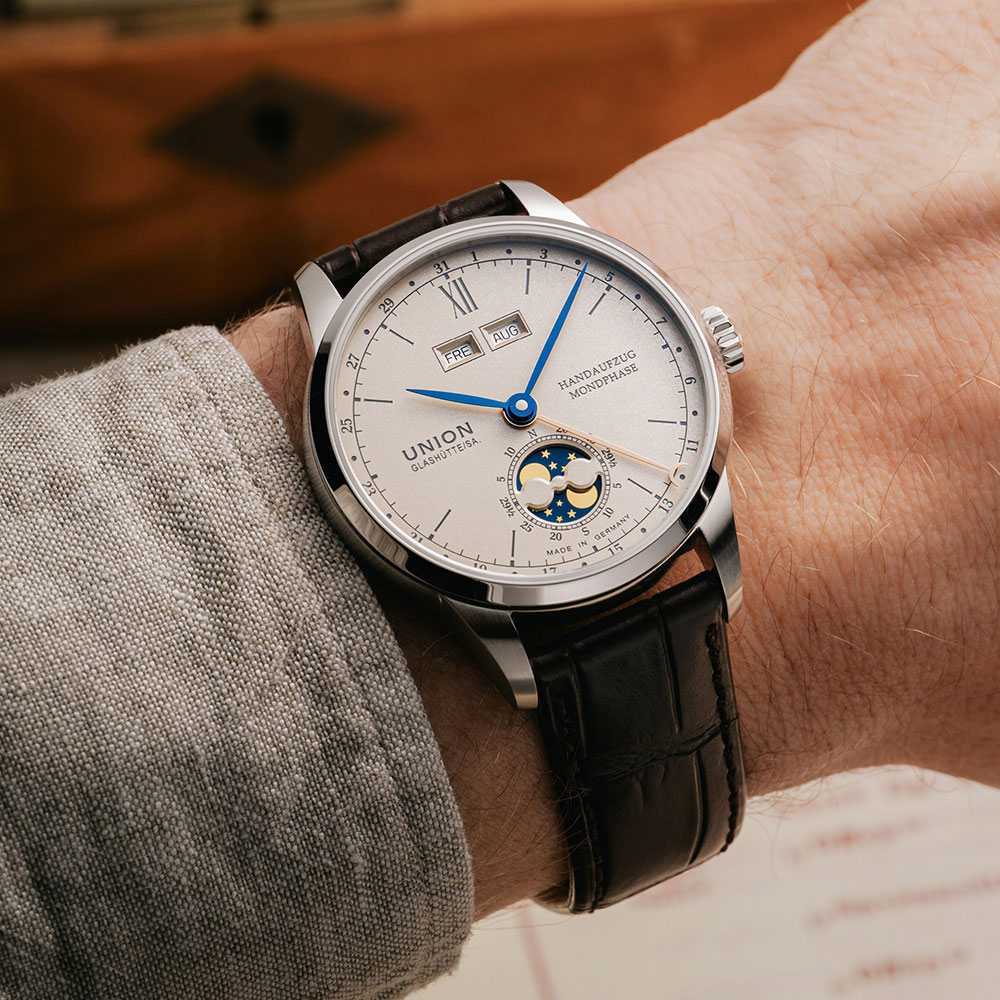
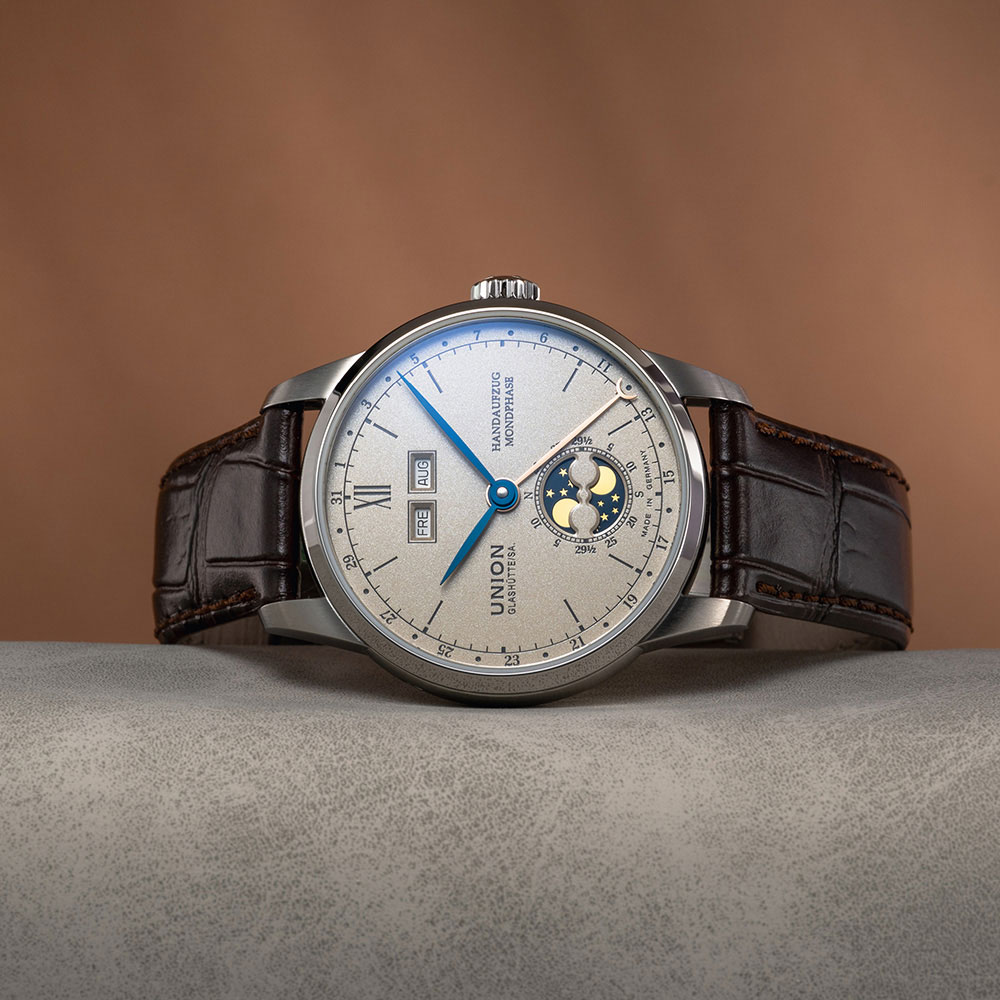
- Case: Stainless steel, 41 x 12.23 mm, water-resistant to 10 bar
- Movement: UNG-58.S2, manual winding, 60-hour power reserve
- Dial: Champagne-colored, grained, engraved numerals
- Strap: Leather strap with crocodile embossing, double folding clasp
High-Precision Moon Phases
Many watchmakers today use exceptionally finely tuned gear trains with more complex gear ratios. Depending on the design, the moon phase does not need to be corrected until after 122, 135, or 577 years. Some exceptional designs even achieve theoretical accuracies spanning several millennia.
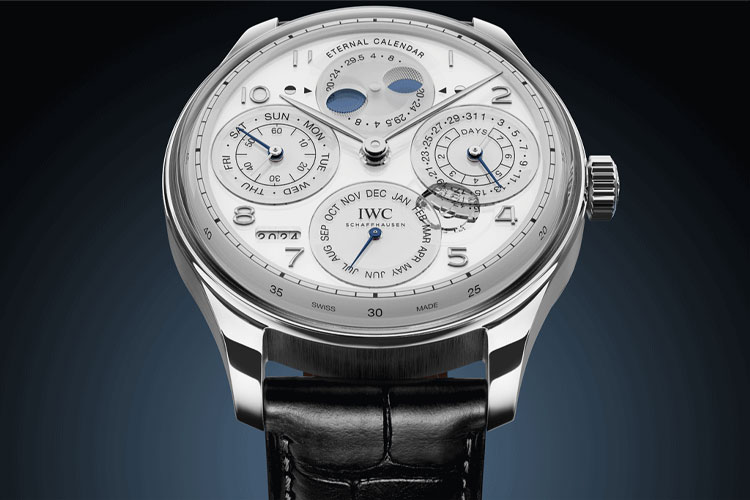
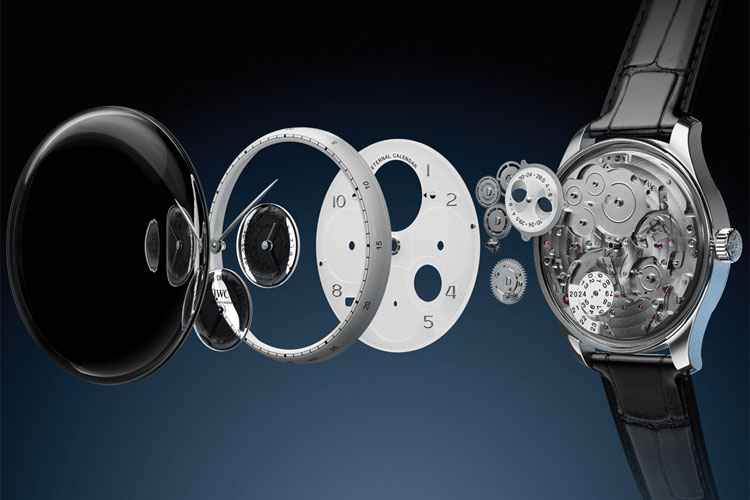
The record is held by the “Portugieser Eternal Calendar,” which IWC unveiled to an amazed watch community at Watches & Wonders in 2024. Thanks to a newly developed reduction gear, the moon phase display will not deviate by even one day from the actual synodic lunar cycle until 45,361,055 years have passed. This high precision is achieved through gears with specially calculated numbers of teeth that replicate the actual lunar cycle almost exactly.
Setting the Moon Phase
The moon phase is usually set using a small adjustment pusher on the case or the crown: First, the date of the last full moon or new moon is determined. The watch is then set to this reference point, and the moon phase display continues to run automatically.
Incidentally, there is generally no difference in how the moon phase display works between mechanical and quartz watches. In both cases, the moon phase is typically displayed by a moon disc with 59 teeth. The main difference lies in how this disc is driven: by the mechanical gear train or by a stepper motor powered by a battery.
Jacques Lemans: Derby
The new “Derby” moon phase models from Jacques Lemans combine classic watchmaking elements with traditional aesthetics and sophisticated mechanics to create a modern look. (MSRP: €179–279) jacques-lemans.com
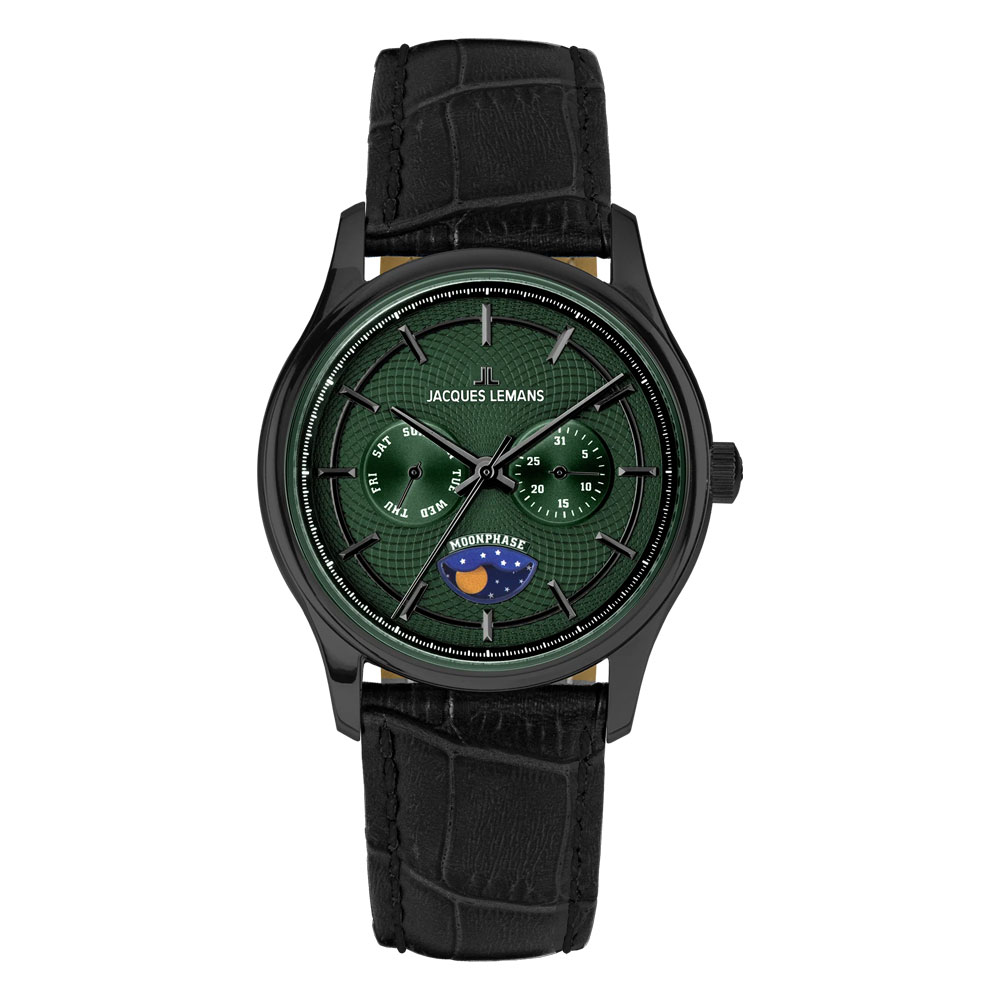
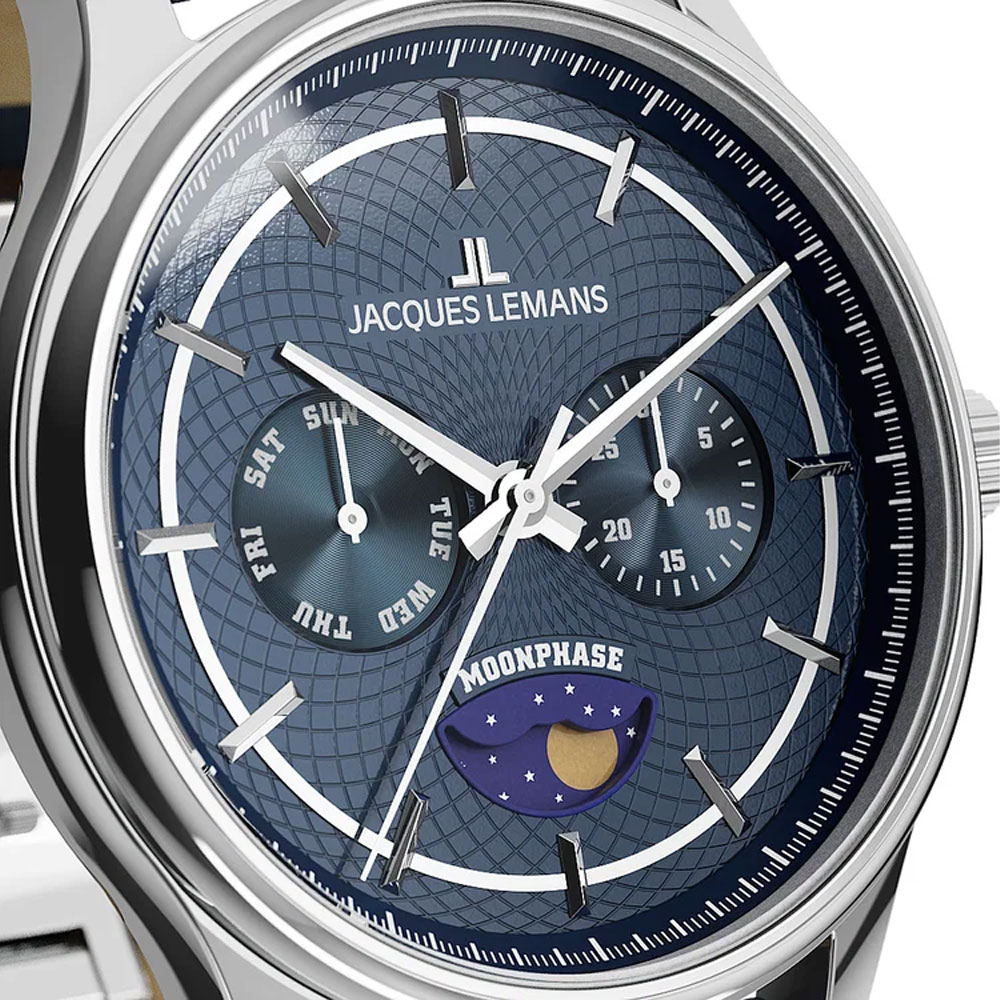
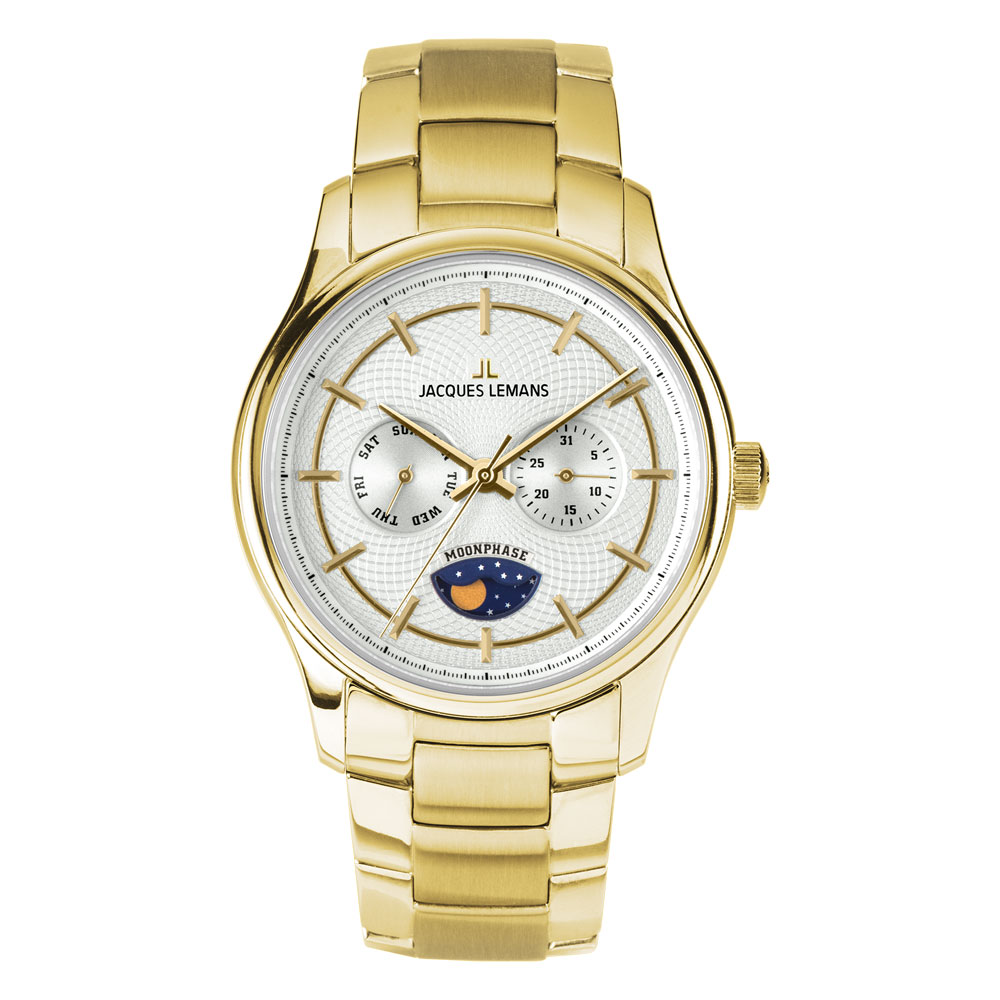
- Case: Stainless steel, stainless steel with IP gold or IP black finish, 43 mm, water-resistant to 10 bar
- Movement: Quartz
- Dial: 15 color options, textured
- Bracelet: leather or stainless steel