
Munich Show 2026: The World's Most Valuable Gemstones Are Coming to Munich
Four extraordinary gemstone minerals will be presented together for the first time at the Munich Show from October 22 to 25, 2026. The special exhibition “Pioneers & Legends” focuses not only on size and rarity, but also on the stories behind these spectacular discoveries.
Cover photo: The “Dragon”—this crystalline gold, which naturally formed into the shape of a dragon, is one of the most legendary finds from the famous Colorado Quartz Mine in California
The centerpiece is the “King of Kashmir”: an aquamarine cluster weighing more than one million carats. The stone was discovered in 2019 in the Shigar Valley in Pakistan and is traveling to Munich on loan from the Houston Museum of Natural Science.
Four finds, four different stories
The four exhibits differ significantly in material, color, and crystal shape. What they have in common is that their appearance is not the result of human intervention: the key factor is the rare geological conditions under which the minerals were able to grow and remain preserved over long periods of time.
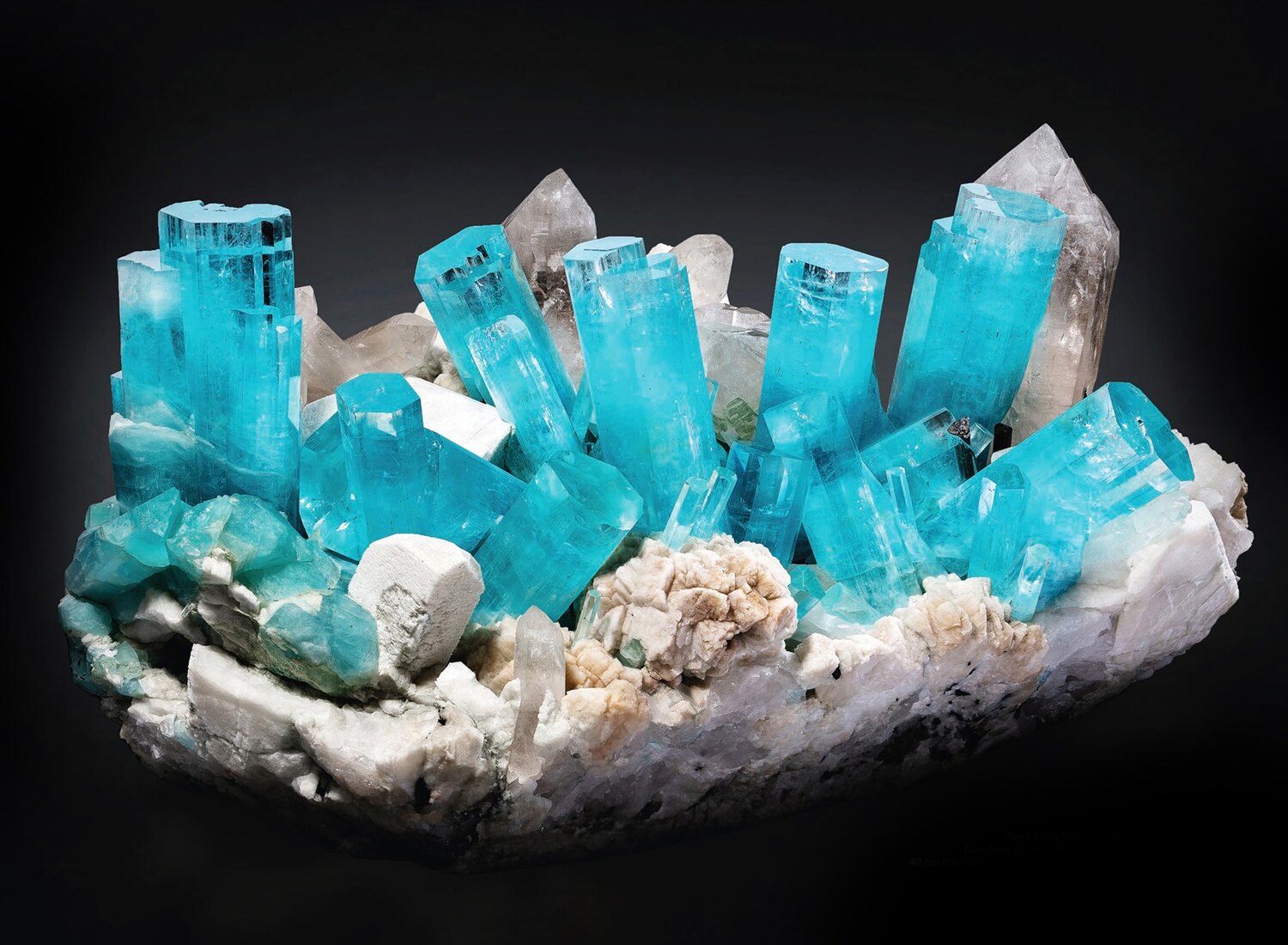
The “King of Kashmir” is a cluster of aquamarines weighing more than one million carats. It was discovered in 2019 in the Shigar Valley in Pakistan. In addition to its size, the cluster is particularly remarkable for its well-formed crystals and their natural arrangement on the host rock. The Gemological Institute of America ranks this specimen among the most significant mineral discoveries of modern times. It is coming to Munich on loan from the Houston Museum of Natural Science.
The “Dragon” (cover image) is made of crystalline gold from the Colorado Quartz Mine in California. The naturally formed structure’s silhouette resembles a dragon—hence the name. Unlike cast or machined gold, this piece showcases the precious metal in a complex, natural crystalline form. It is considered one of the most significant specimens of its kind and can be seen in the featured image.
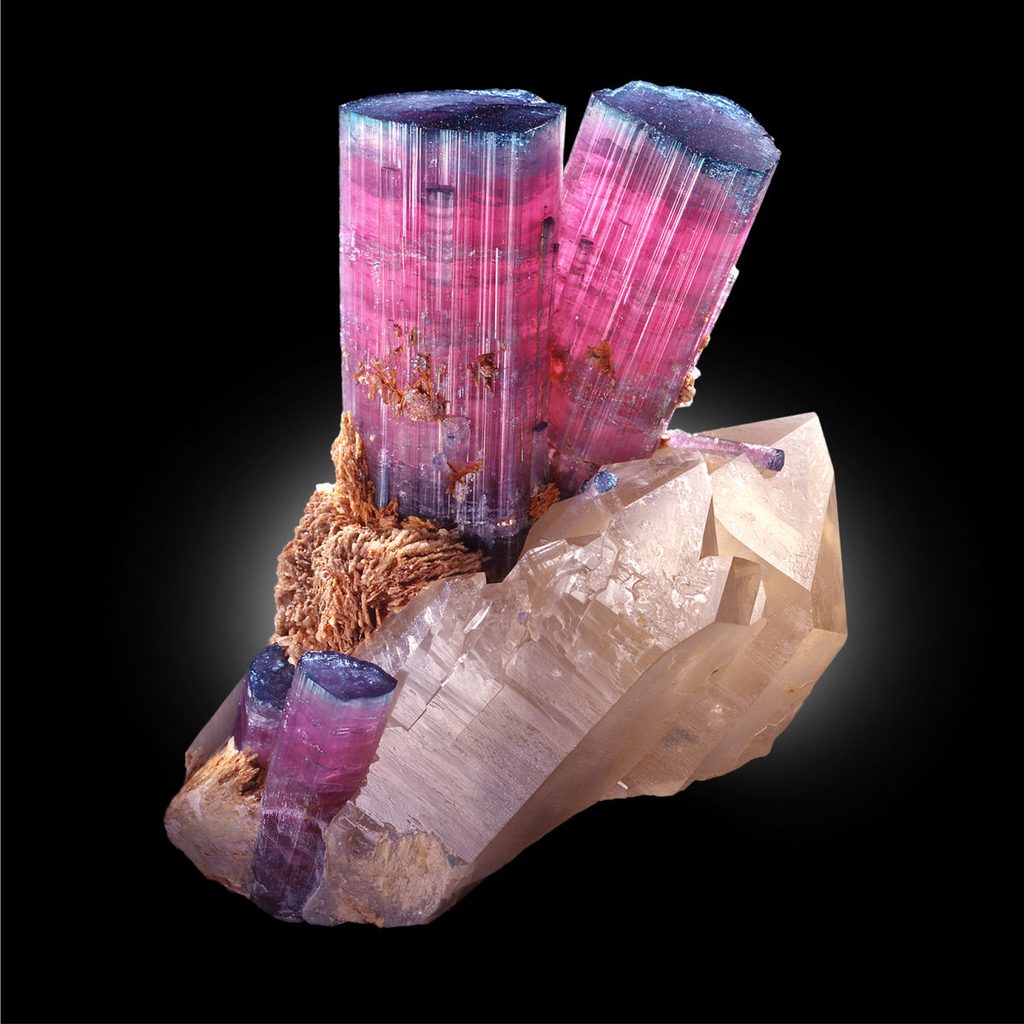
The “Rabbit Ears” are an exceptionally well-formed tourmaline specimen. Their distinctive shape and the combination of intense red and blue color zones make them instantly recognizable. It is precisely this combination of clear crystal formation and high-contrast natural coloring that is extremely rare in tourmalines.
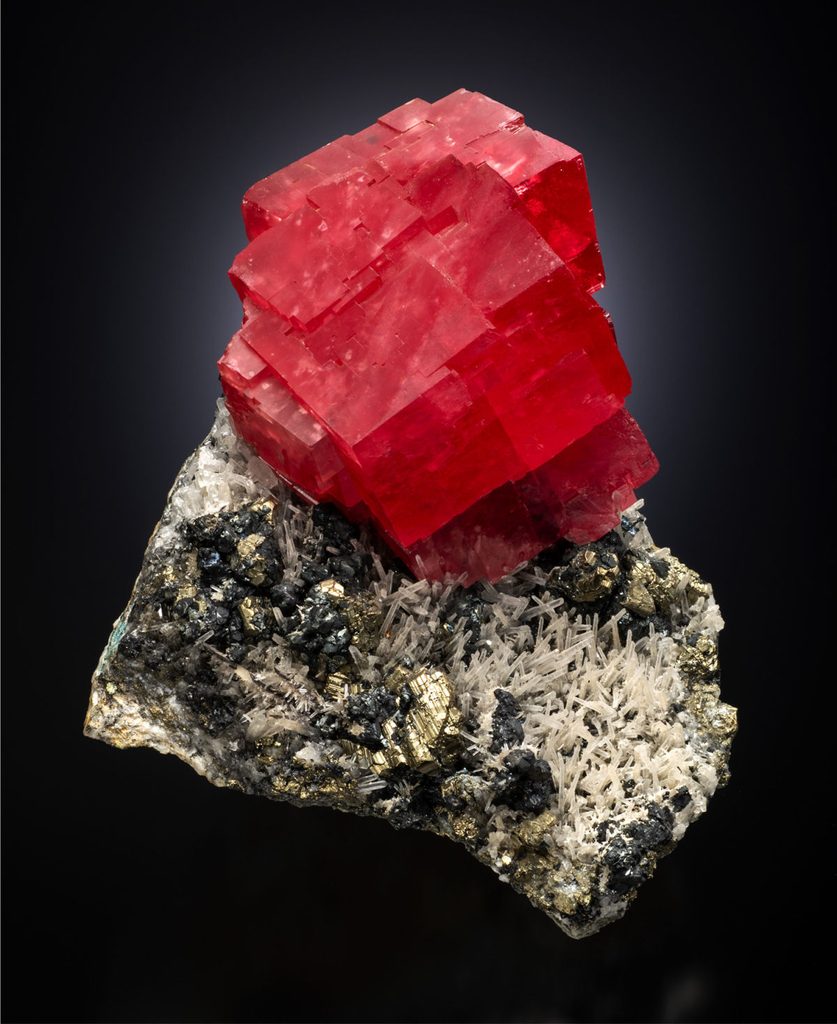
The “Alma Queen” is a deep-red, nearly flawless rhodochrosite crystal. Among experts, this specimen is often referred to as the “Mona Lisa” of minerals. What makes it so special is not just its vivid color, but the combination of its purity, balanced proportions, and exceptionally good condition.
This collection illustrates why significant minerals have long been relevant to more than just collectors. Provenance, condition, and scientific significance play just as important a role as their sculptural impact. It is precisely this combination of natural history and material culture that makes the special exhibition interesting even for an audience that is otherwise primarily interested in jewelry and gemstones.
Trade visitors and the general public
The Munich Show takes place on the grounds of Messe München at the West Entrance. Thursday and Friday are designated as trade visitor days, while the event opens to the general public on the weekend. In addition to the special exhibition, the fair features minerals, fossils, gemstones, and jewelry.
Munich Show 2026: October 22–25, Messe München, West Entrance.