
Watch News: Haute Horlogerie—Jacob & Co., Ressence, and URWERK
A striking mechanism with cathedral gongs, an oil-filled display with a magnetic drive, and hour prisms that rearrange themselves at the top of every hour: Jacob & Co., Ressence, and URWERK showcase three distinct approaches to sophisticated mechanical watchmaking.
Jacob & Co.: Palatial Flying Tourbillon Minute Repeater
Jacob & Co. returns to its first minute repeater. Twelve years after the original model, the new Palatial Flying Tourbillon Minute Repeater combines two classic complications with a newly developed hand-wound movement—and features long cathedral gongs and a low-noise regulator.
Return After Twelve Years
The first Palatial Flying Tourbillon Minute Repeater was released in 2014, marking Jacob & Co.’s entry into the world of striking mechanisms. To celebrate the brand’s 40th anniversary, the concept is now being reissued. The edition is limited to twelve pieces—one for each year since its debut.
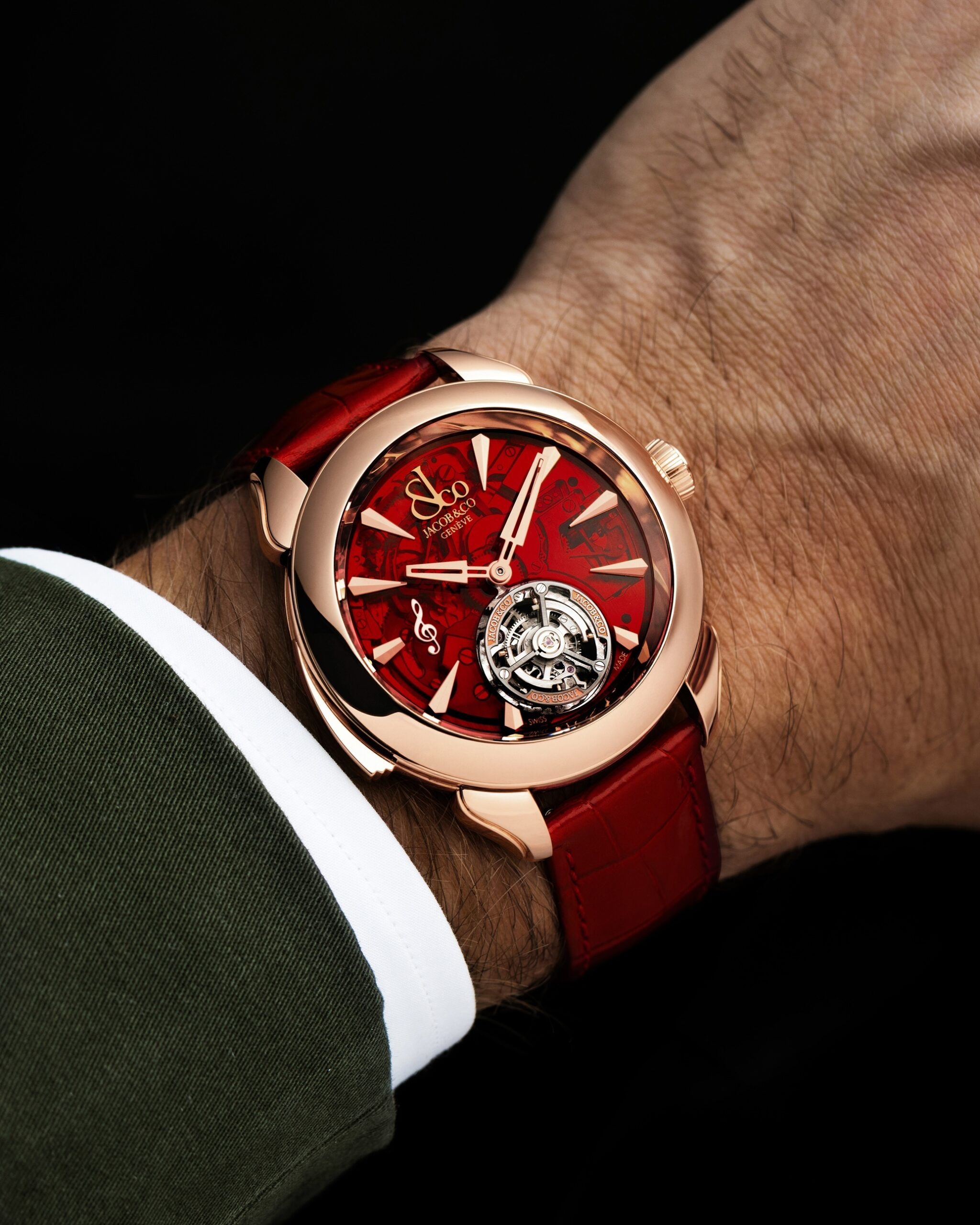
The case is made of 18-karat rose gold. Behind it lies a red dial made of mineral glass with applied rose-gold hour markers. A musical clef at nine o’clock indicates the acoustic complication; the skeletonized hands are shaped like a metronome.
Minute Repeater with Cathedral Chimes
A slider on the edge of the case winds the striking mechanism. When released, low tones sound for the hours, alternating high and low tones for the quarter-hours, and high tones for the remaining minutes. Two hammers strike two cathedral gongs to produce these sounds.
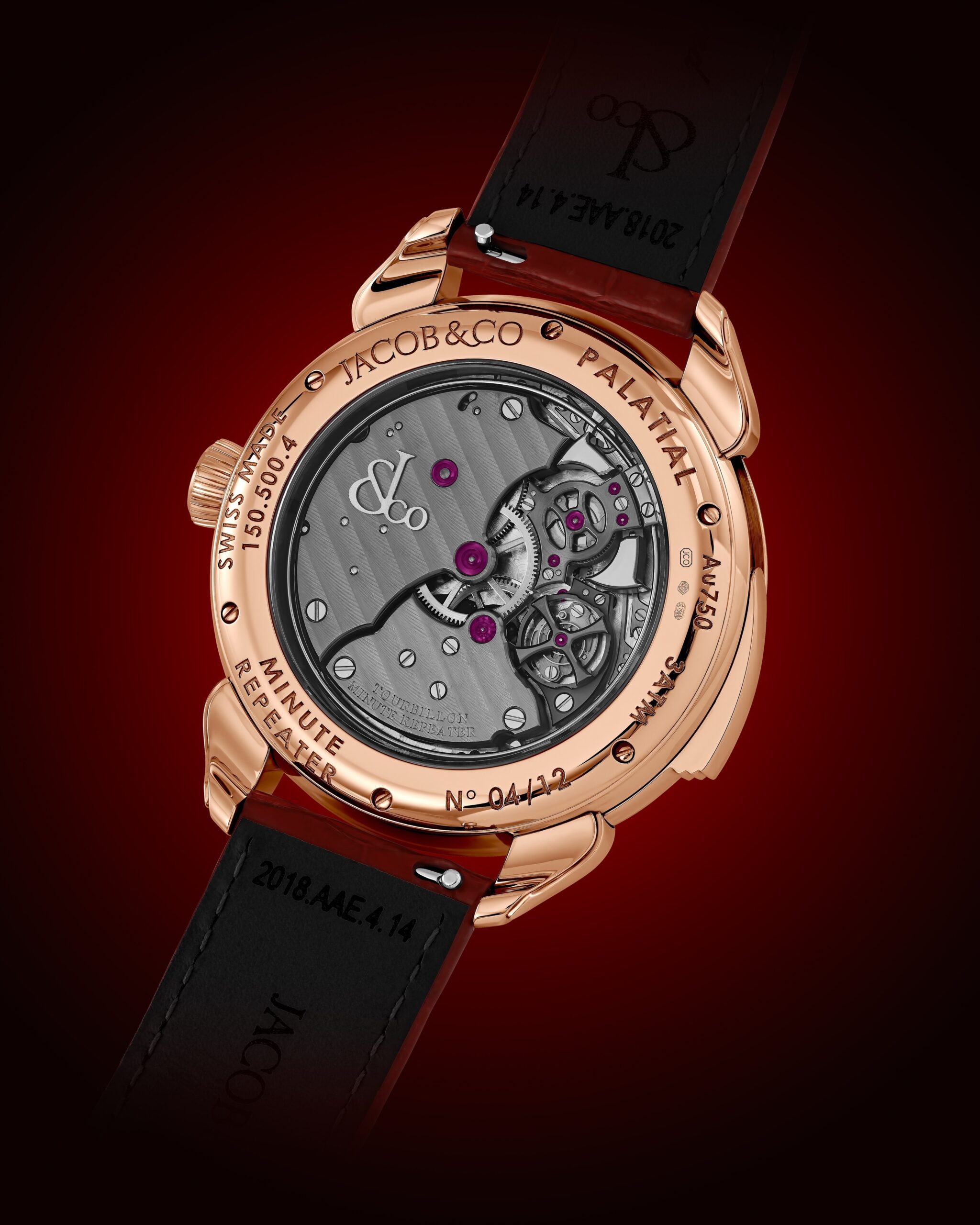
The gongs encircle a larger portion of the movement than in conventional designs and are thus intended to sustain their resonance longer. They are shaped, hardened, assembled, and tuned by hand based on sound. Another new feature is a centrifugal regulator that controls the striking sequence without masking it with its own mechanical noise.
New JCCM04 Caliber
The hand-wound JCCM04 caliber succeeds the JCBM03 from the first model. It combines a minute repeater with a flying tourbillon, whose cage rotates once per minute at the 6 o’clock position. The movement consists of 308 components and 29 jewels, operates at a frequency of 21,600 vibrations per hour, and offers a 90-hour power reserve.
The sapphire crystal case back reveals the hammers, gongs, and much of the movement. The finishing features Côtes de Genève, polished bevels, and finely drawn edges. The price is $390,000.
Ressence TYPE 10: Oil, Magnets, and Its Own Caliber
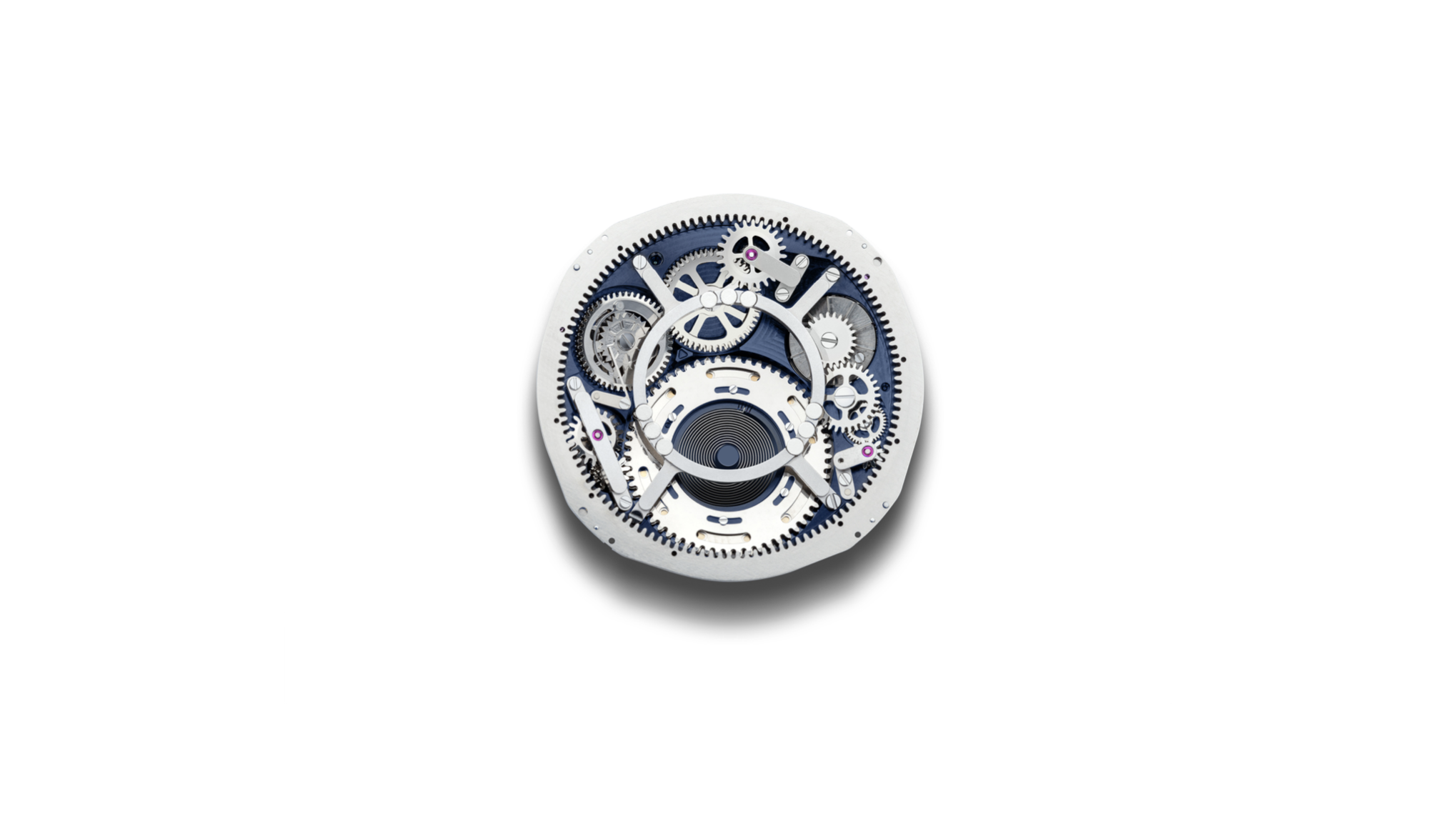
With the TYPE 10, Ressence combines its oil-filled display system with an in-house automatic caliber for the first time. The RW-04 operates in a dry compartment of the case, while the ROCS-10 module glides through oil. Power is transmitted contactlessly via magnets.

Two separate worlds in the same case
The RW-04 caliber consists of 252 components and operates in air. Above it, the ROCS-10 display module—composed of 196 components—is housed in an oil bath. Two sets of magnets are spaced just 0.2 millimeters apart; they are separated by a titanium membrane 0.1 millimeter thick. No mechanical shaft or opening in the case is required between the two areas.
60 hours from two mainsprings
The automatic RW-04 uses two mainspring barrels and offers a 60-hour power reserve. Ressence developed the movement specifically for the TYPE 10, rather than adapting an existing caliber. The TYPE 10 DN, limited to 100 pieces, will be unveiled at WatchTime New York and is scheduled to be available starting in November 2026.
URWERK UR-300 Time Quantum: The Change of Hours as a Reorganization
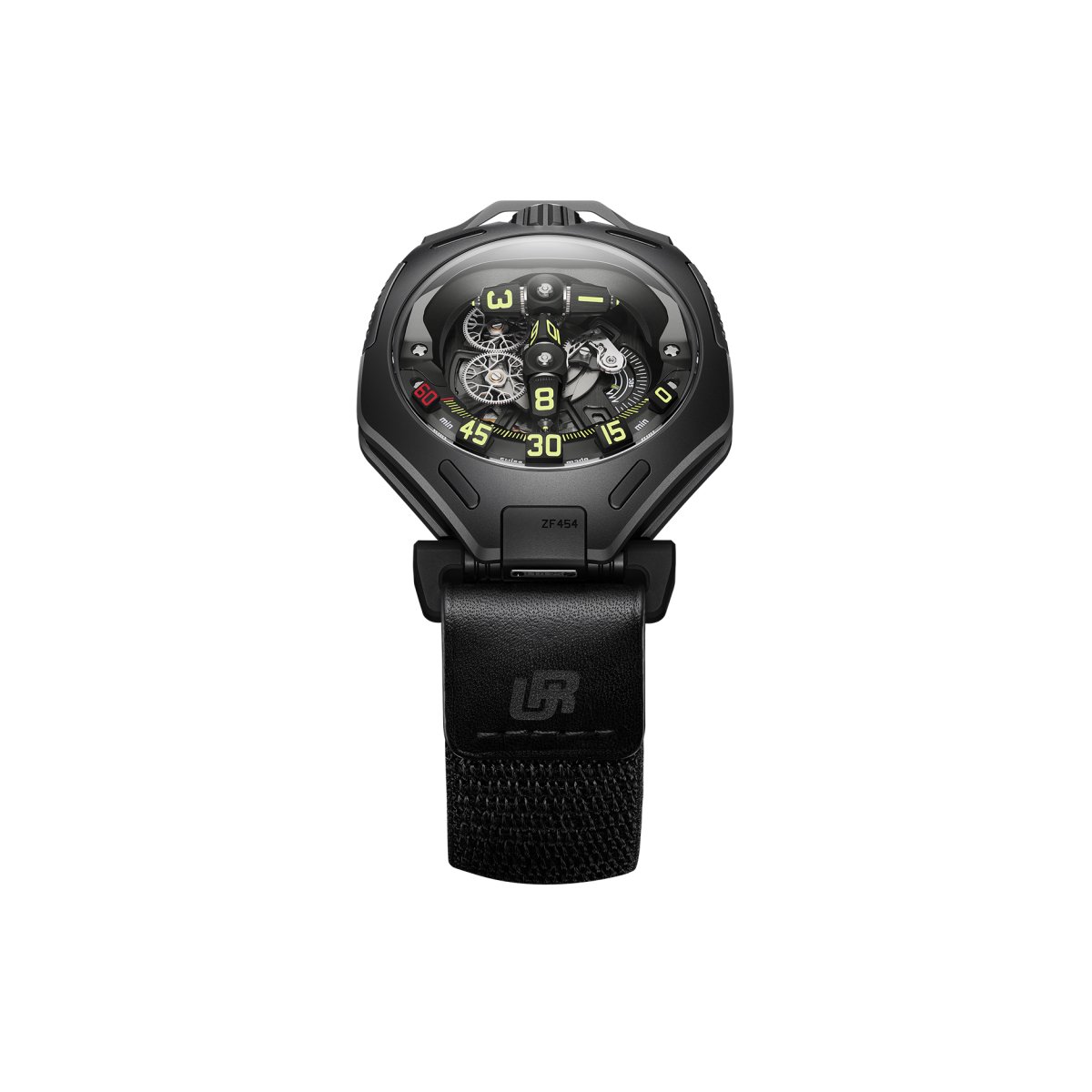
With the UR-300 Time Quantum, URWERK reimagines the brand’s familiar satellite display. Two linear hour modules are positioned at right angles to each other, forming a T-shaped configuration. When the hour changes, the displays do not jump backward; instead, they completely rearrange themselves in a brief forward jump.
Four prisms and a short forward jump
Four three-sided hour prisms move across the display. The minutes are displayed on a 108-degree arc ranging from zero to 60. Three small seconds displays each cover 20 seconds on a 120-degree arc. These movements create a display that resembles a running mechanical model more than a traditional dial.
The transition to the next hour is the central moment: the visible components move forward, breaking apart their previous configuration and reassembling themselves for the next hour. URWERK thus builds on the concept of the wandering hour indicator, but replaces the familiar retrograde jump with a new sequence of movements.
Titanium and Regulated Winding Power
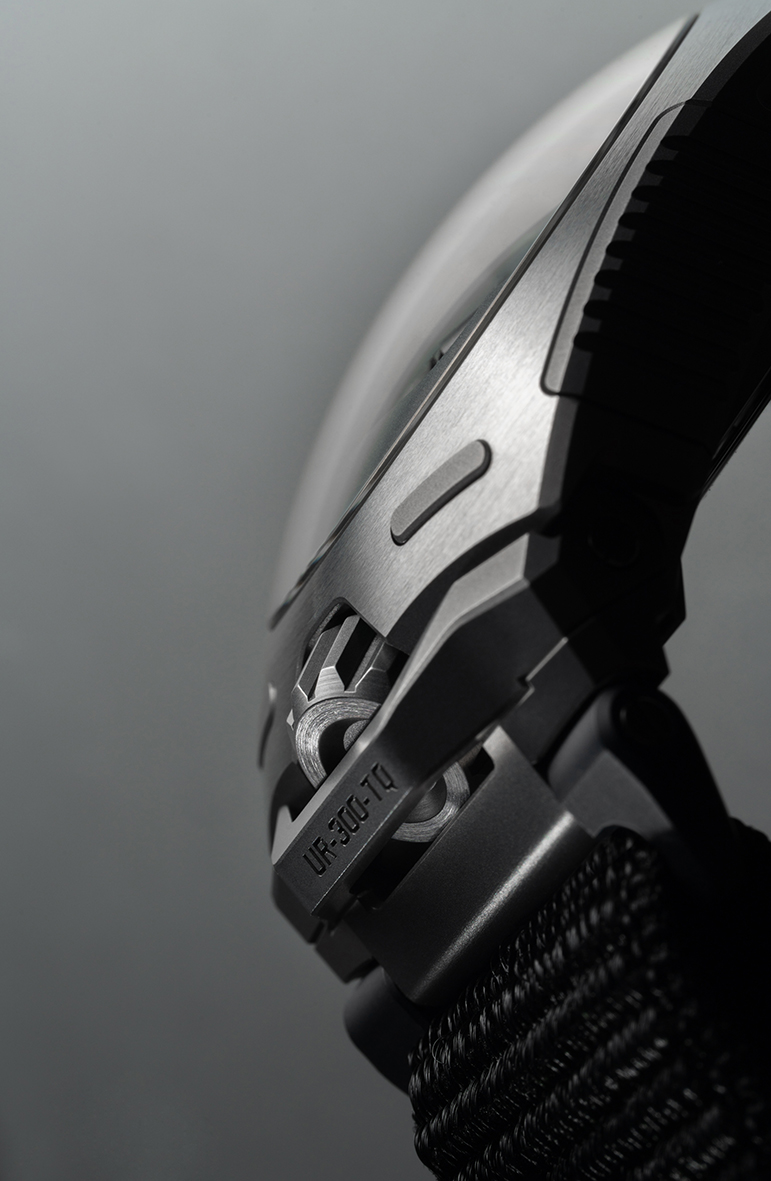
The satin-finished and microblasted Grade 5 titanium case measures 45.2 × 58.8 millimeters and is 18.25 millimeters high. Sapphire crystals with an anti-reflective coating provide a clear view of the dial. Flexible lugs made of anodized aluminum connect the case to a nylon strap; the watch also features a newly developed crown guard.
Inside, the watch is powered by the UR-30.01 automatic caliber, featuring 40 jewels, a frequency of 4 hertz, and a 43-hour power reserve. The patented Dual-Flow-Turbines system regulates the winding mechanism and protects the movement from excessive stress. The screw-down crown has two positions, and the watch is water-resistant to 30 meters.