GPHG 2026: Watches That Don't Belong on the Wrist
The Mechanical Clock category is one of the most distinctive at the GPHG. Freed from the constraints of size of a wristwatch, watchmakers can explore larger movements, bring intricate mechanisms into full view and create timepieces that blur the boundaries between horology, design and craftsmanship.
In 2026, six very different timepieces made it to the finals. Our look at this category begins with the Table Waltz Tourbillon Mirror Edition by Carl Suchy & Söhne.
Carl Suchy & Sons: Viennese Table Clocks
For Carl Suchy & Söhne, the table clock is not a new venture. The historic manufactory had already been producing travel and table clocks. With the Table Waltz, the revived Viennese company revived this tradition and developed it into a small, standalone collection.
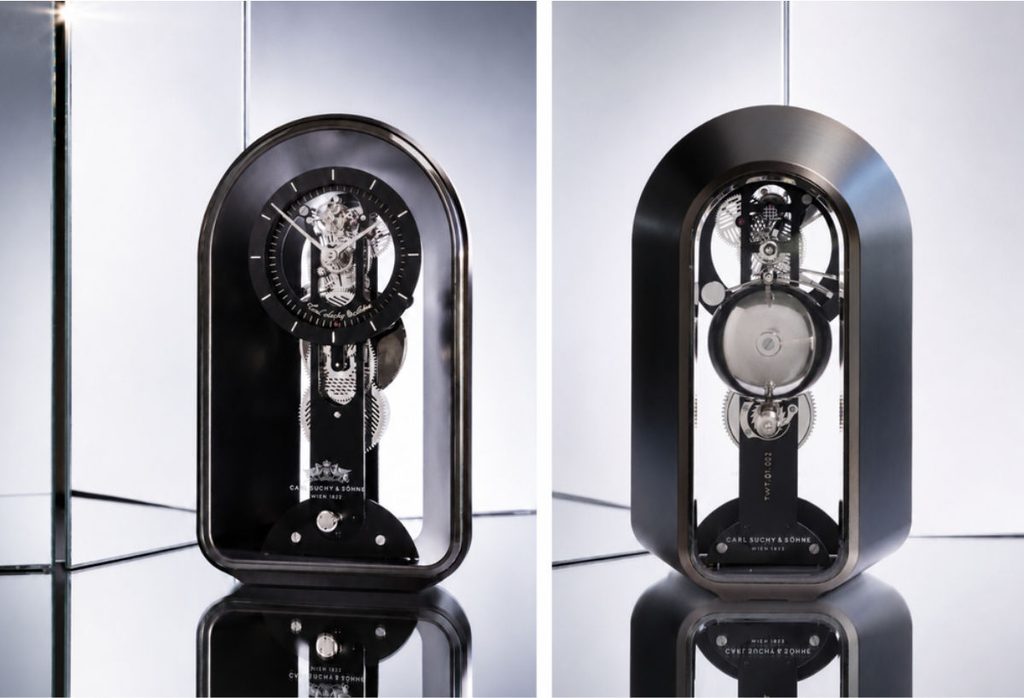
At the GPHG 2026, Carl Suchy & Söhne will present the Table Waltz Tourbillon Mirror Edition. The centerpiece is the in-house Caliber CS-T-1, which is manufactured in Austria and offers a seven-day power reserve. The tourbillon cage consists of more than 50 custom-made components.
In addition, there is a gold-plated silver bell that chimes every hour on the hour, if desired. This makes the clock not only visible but also audible.
The case is milled from a solid block of brass, then nickel-plated and finished by hand. The front and back feature faceted and engraved glass, created in collaboration with the Viennese glass manufacturer J. & L. Lobmeyr. The design is by Rainer Mutsch, and the technical concept is by master watchmaker Therese Wibmer.
The Table Waltz Tourbillon Mirror Edition by Carl Suchy & Söhne is among the GPHG finalists in the “Mechanical Clock” category. From October 30 through November 15, the table clock—developed in Vienna—will be on public display at the Musée d’Art et d’Histoire in Geneva. The exhibition brings together all of the competition’s nominated timepieces.

Measuring just over 25 centimeters in height and weighing about three kilograms, the Table Waltz is much more than a classic table clock. The tourbillon becomes the visible centerpiece of the movement and can be observed up close.
The standard Table Waltz Tourbillon is limited to ten pieces and costs 66,000 euros. The Mirror Edition was nominated for the GPHG; its reflective surfaces further emphasize the interplay between the movement, the case, and the surrounding space.
Six Different Interpretations of “Clock”
The other nominees demonstrate just how broad the scope of this category is.
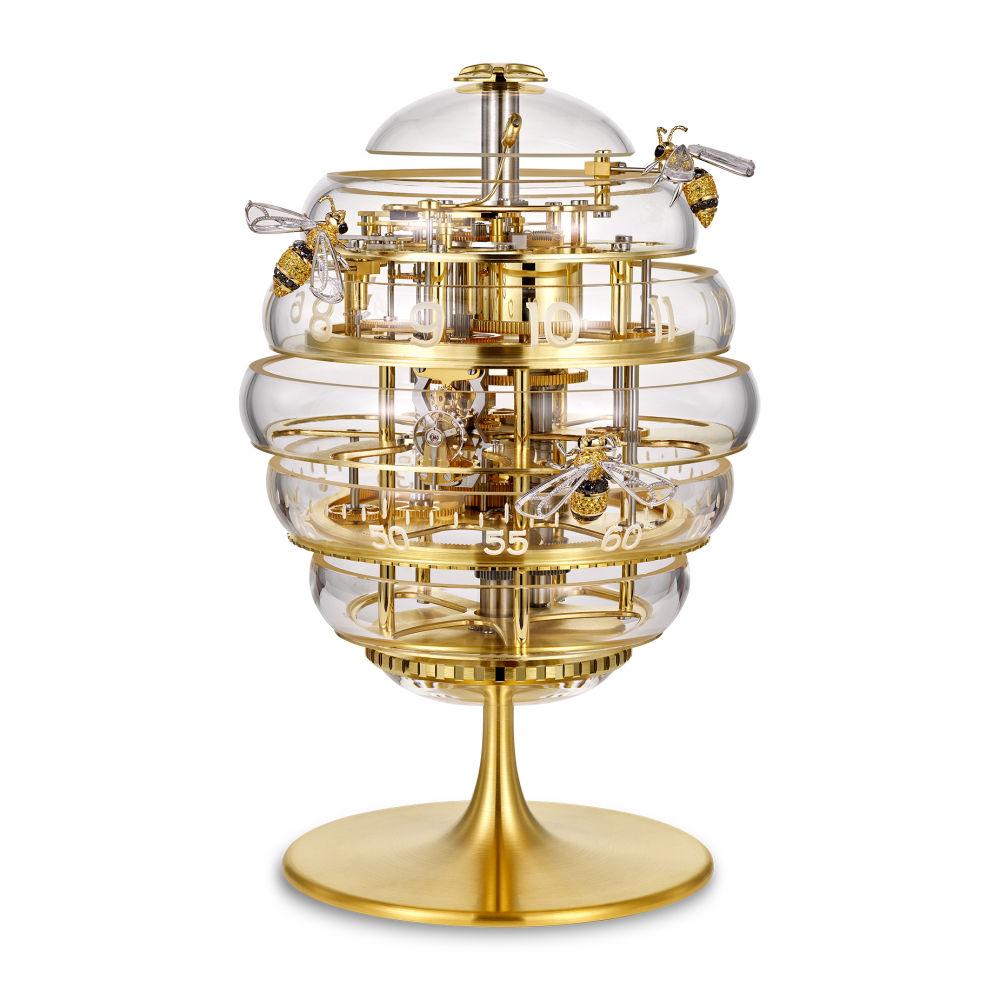
Chopard unveils the Beehive Chiming Table Clock. Developed in collaboration with L’Épée 1839, this table clock draws on the Maison’s beehive symbolism. Borosilicate glass, rotating glass discs, and gemstone-set bees blend watchmaking and jewelry. The design also features an hourly chime.
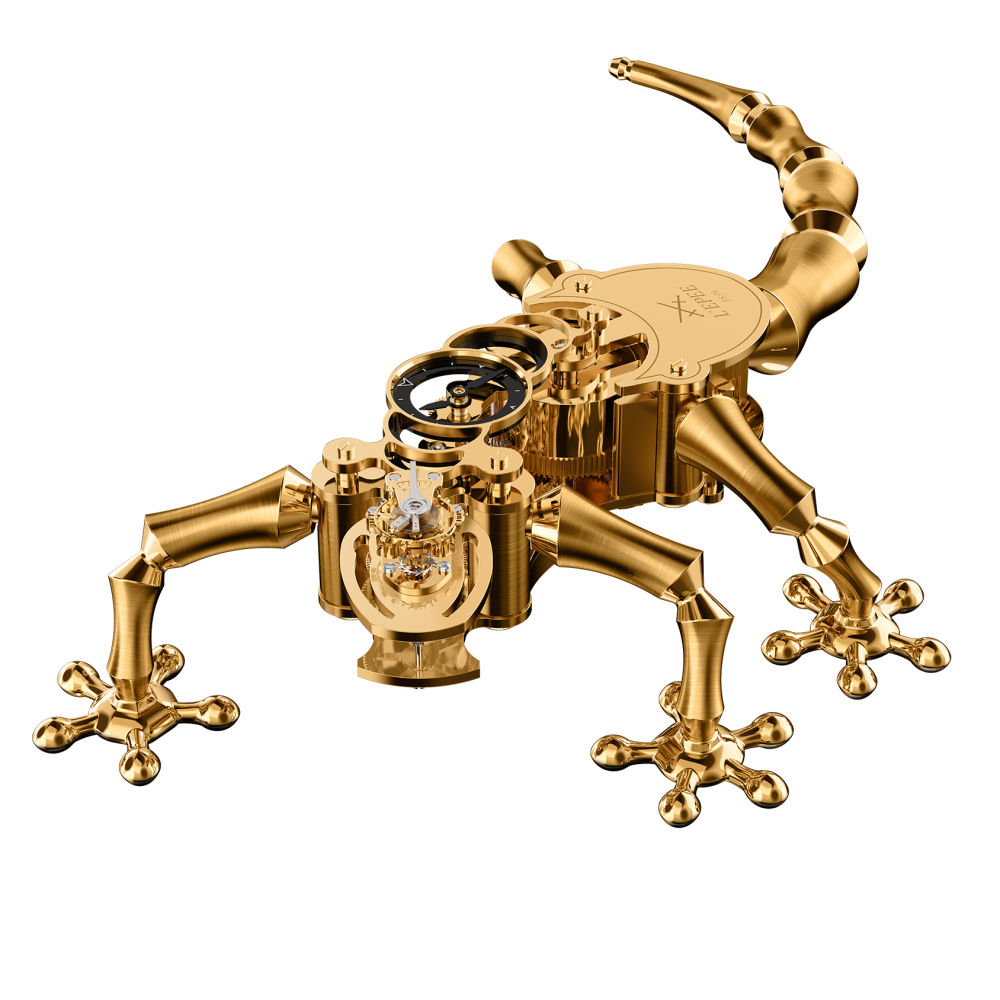
At L’Épée 1839, the clock becomes a mechanical sculpture. The Gekko takes the form of a gecko and can be mounted on the wall in various positions. A rotating dial ring ensures that the time remains clearly legible regardless of the object’s position.
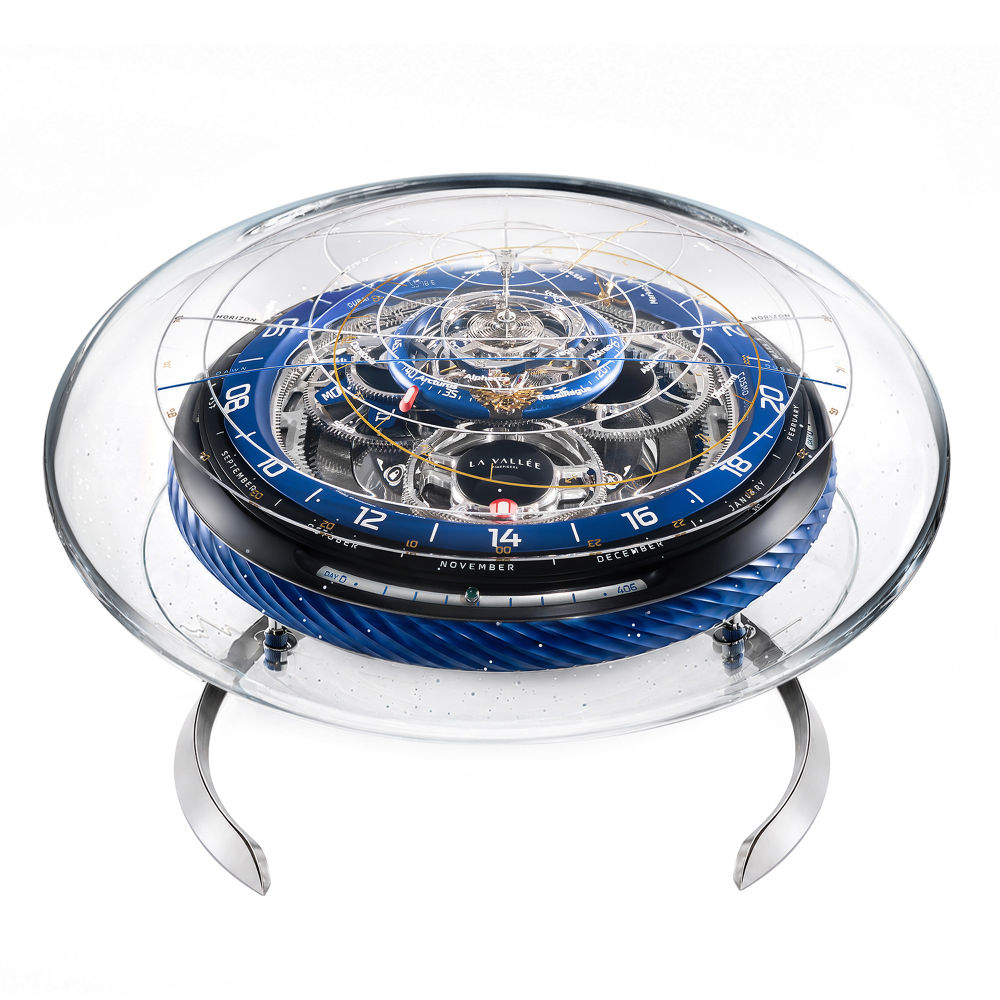
La Vallée is thinking even bigger with the Cosmo. Beneath a hand-blown Murano glass dome, a mechanism consisting of 1,280 components features astronomical displays. The entire movement rotates once around its own axis within a sidereal day. A single winding lasts for 406 days.
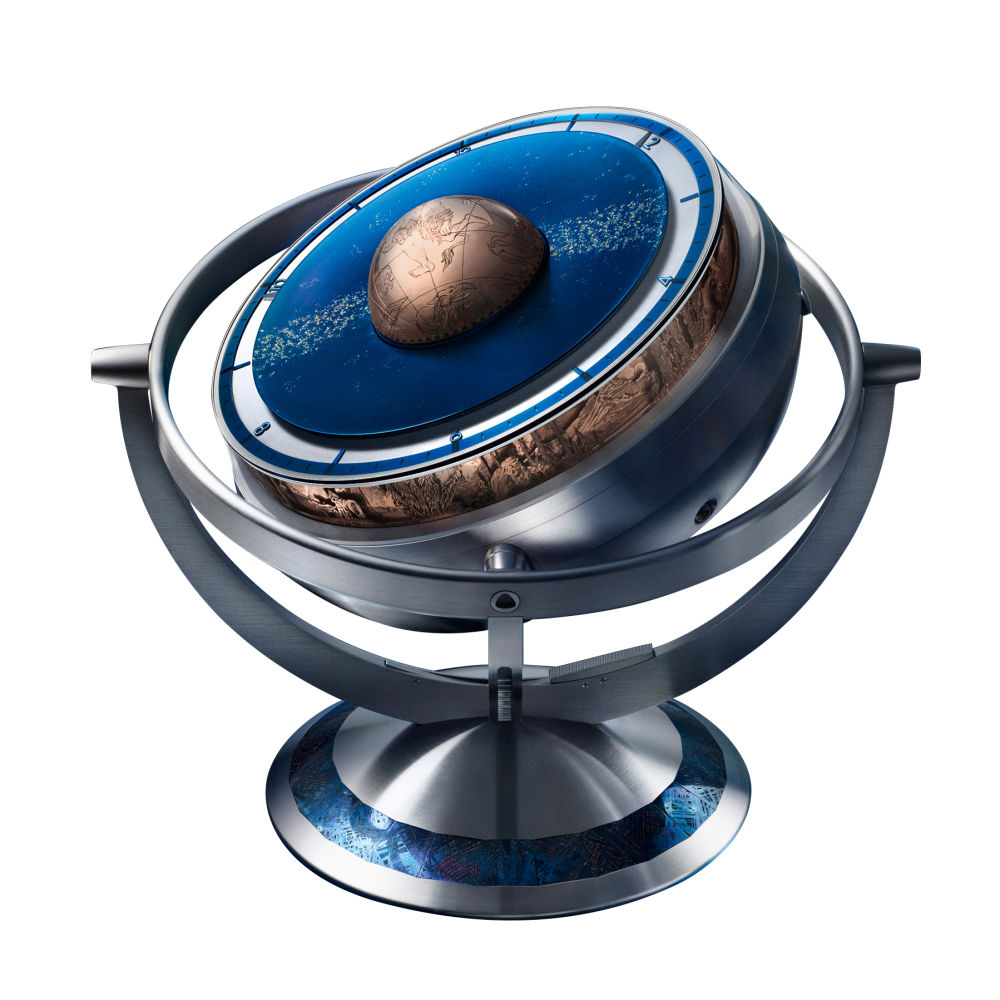
Louis Vuitton and De Bethune revisit a historic concept with the LVDB-03 Sympathique Louis Varius. The table clock also serves as a reference for the accompanying wristwatch. When the wristwatch is placed in its holder, it is wound and synchronized with the table clock. The clock’s movement has a power reserve of eleven days.
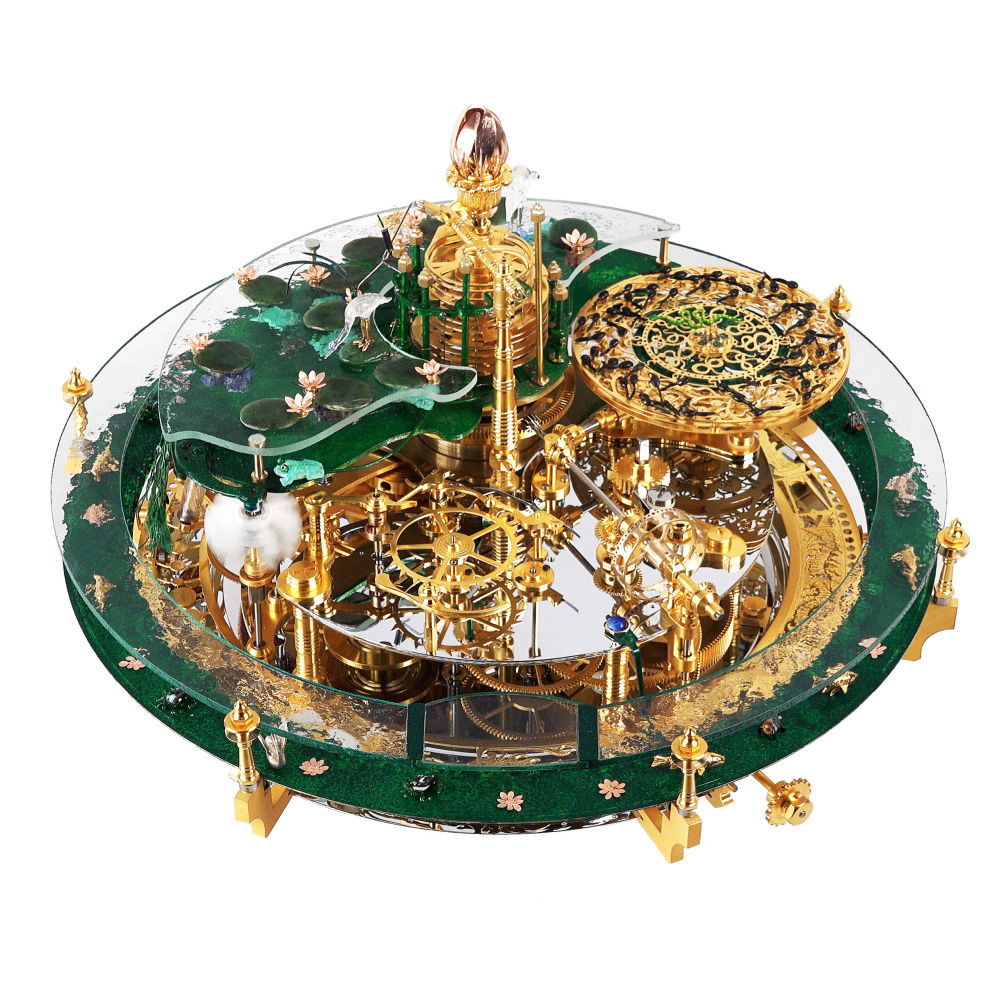
With Miki Eleta, mechanics ultimately become theater. The Frog Queen tells the time through frogs, plants, a snake, and other moving figures. A frog appears every hour, and every twelve hours, the “Frog Queen”—hidden inside a flower—makes an appearance. Other automata add further movement to the scene.
More Space for Mechanics
This category, in particular, showcases a side of watchmaking that is often overlooked. Without being confined to just a few centimeters on the wrist, movements can grow in size, striking mechanisms can be heard, and the mechanics themselves can become part of the design.
The six nominees take very different approaches. The Table Waltz Tourbillon remains the closest to the classic table clock, combining it with contemporary Viennese design. Chopard transforms it into a piece of jewelry, L’Épée into a sculpture, La Vallée into a mechanical universe, Louis Vuitton and De Bethune into a complex “sympathique” system, and Miki Eleta into a kinetic theater.
That is precisely why the “Mechanical Clock” category is one of the most interesting at the GPHG 2026: it illustrates particularly clearly just how far watchmaking can be taken when it moves beyond the wrist.