Same cuvée, different taste: The glass that reveals champagne
In fine dining as in oenology, the shape of the glass isn’t just about aesthetics—it’s science. Every bubble, every aroma, every nuance of texture can be highlighted, or hidden, depending on the glass you choose.
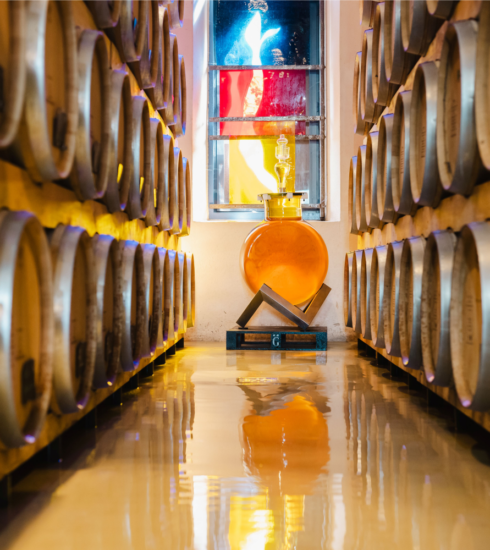
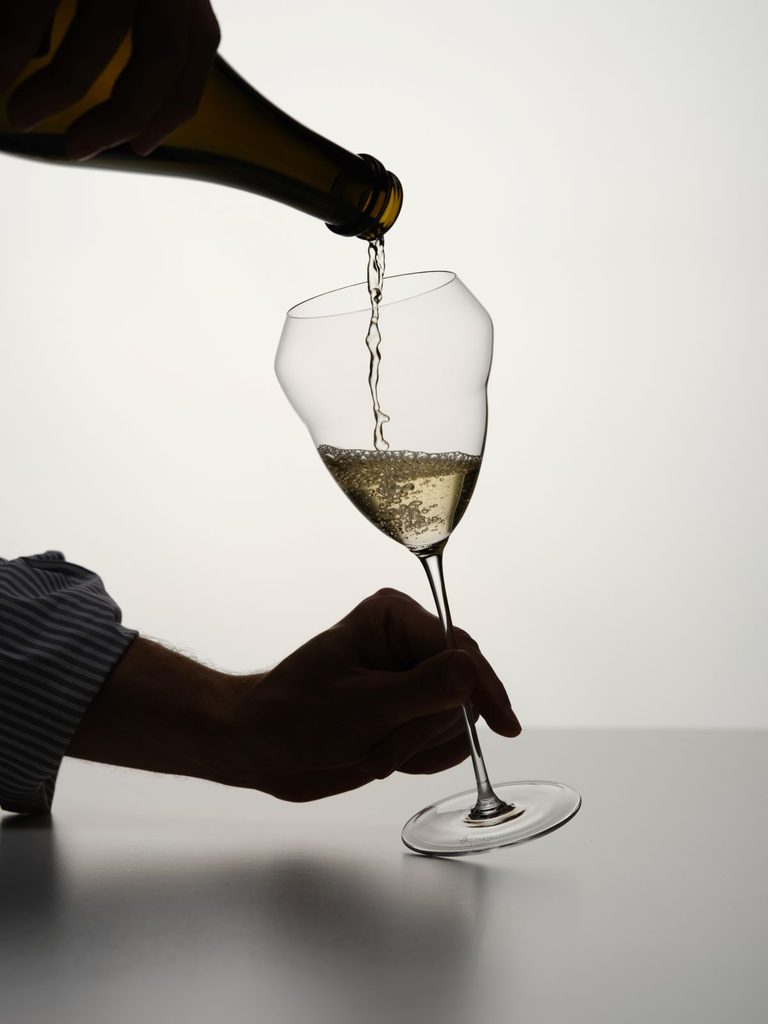
Cover photo: Champagne Henri Giraud, Sebastien Le Golvet – Photo: David Eley AGoodNose
We’ll show you how the choice of glass changes the champagne experience.
The flute: a grand stage for the bubbles, a small window for the aroma
Emerging in the 19th century, the flûte was designed to showcase the sparkle and elegance of champagne in the salons of the Bourgeoisie and the Grand Hotels of Europe.
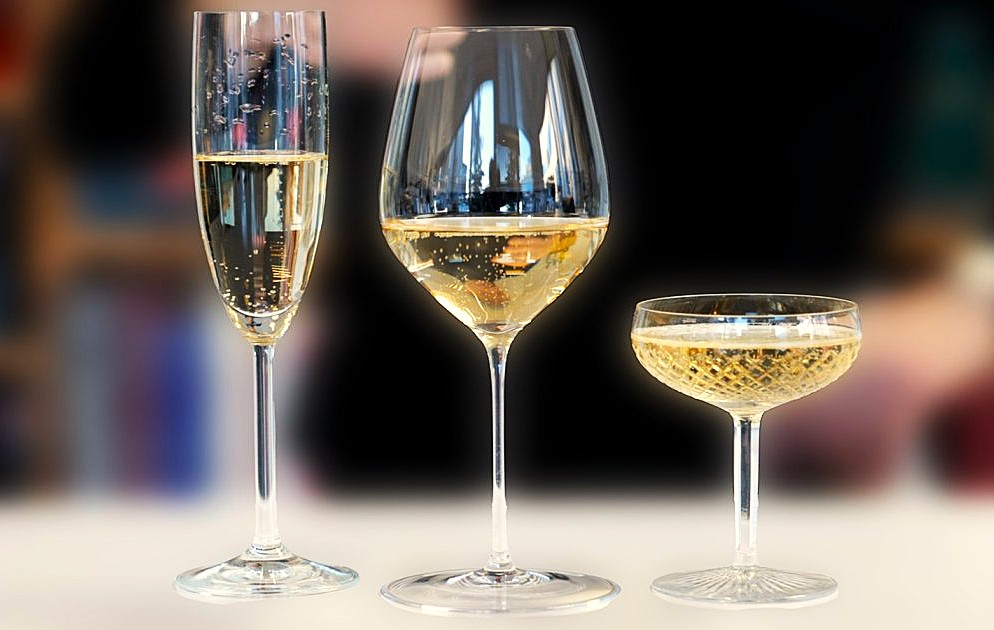
Its tall, narrow silhouette concentrates the bubbles, slows CO₂ loss, and keeps the wine fresh. However, its narrow opening limits aeration and aroma release, producing a more linear, less complex aromatic profile. The flûte is perfect for admiring the mousse, but less effective at revealing the full richness of a complex cuvée.
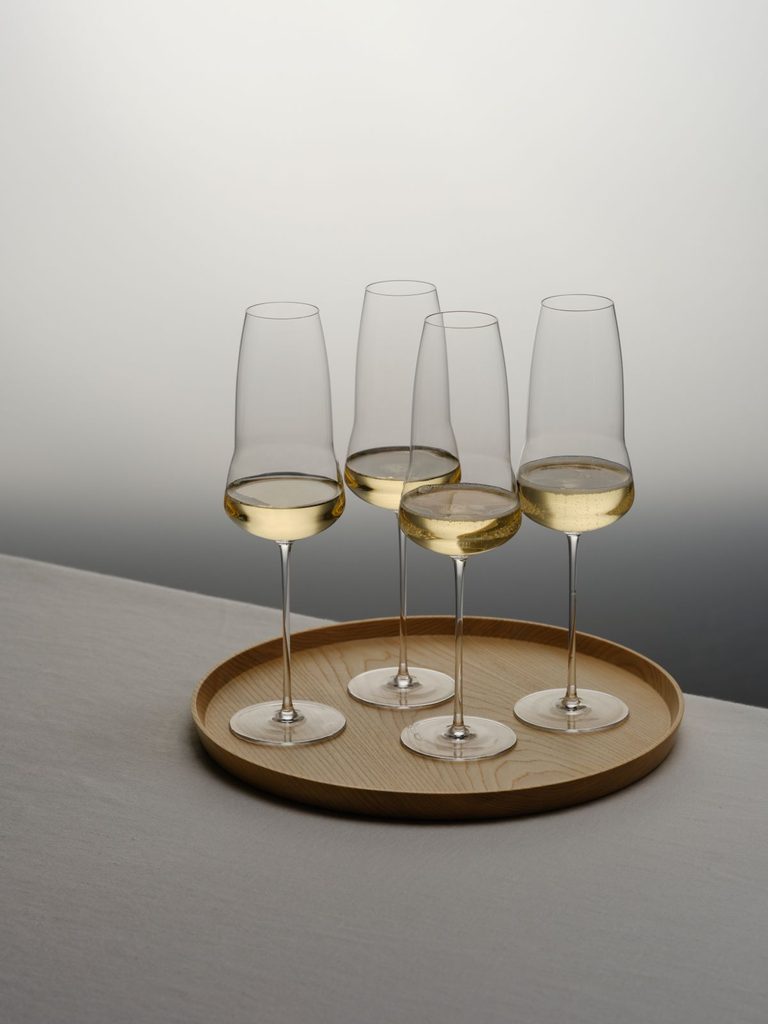
The flute is ideal for observing the bubbles, but less suitable for showcasing the full depth of a complex cuvée.
The Tulip Glass: Sommeliers’ Favorite, the perfect balance
The tulip glass appeared in the 1970s–80s as sommeliers and winemakers sought a vessel that could fully express the complexity of champagne while preserving its effervescence. Inspired by a white wine glass but slightly tapered at the rim, it combines two advantages: a wider bowl allows the wine to breathe, while a slightly narrowed opening concentrates the aromas toward the nose and guides the mousse across the palate.
The result: a finer perception of volatile compounds, creamier bubbles, a fuller texture, and a more precise reading of the terroir and aging. Today, it’s the preferred choice in professional tastings and among the most prestigious Champagne Houses.
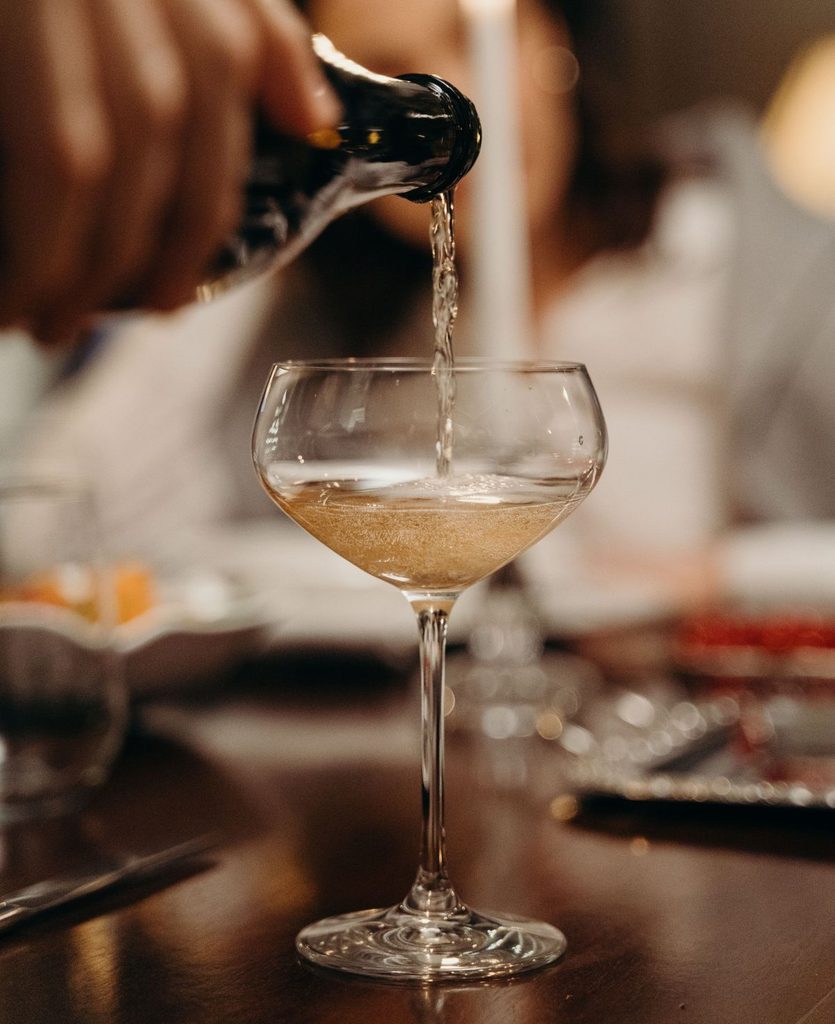
The Coupe: historic icon, limited sensory performance
Introduced in the 18th century and popularized in European aristocratic circles, the coupe
became a symbol of celebration in the early 20th century, particularly during the Roaring Twenties. Legend has it that its shape was modeled on Marie Antoinette’s breast – a seductive myth, though historically unverified, that reflects champagne’s link with power and luxury living.
From a technical standpoint, its wide surface accelerates CO₂ release and disperses aromas, reducing bubble persistence and sensory precision. An iconic object, but less suited to a discerning tasting.
The White Wine Glass: revealing complex cuvées
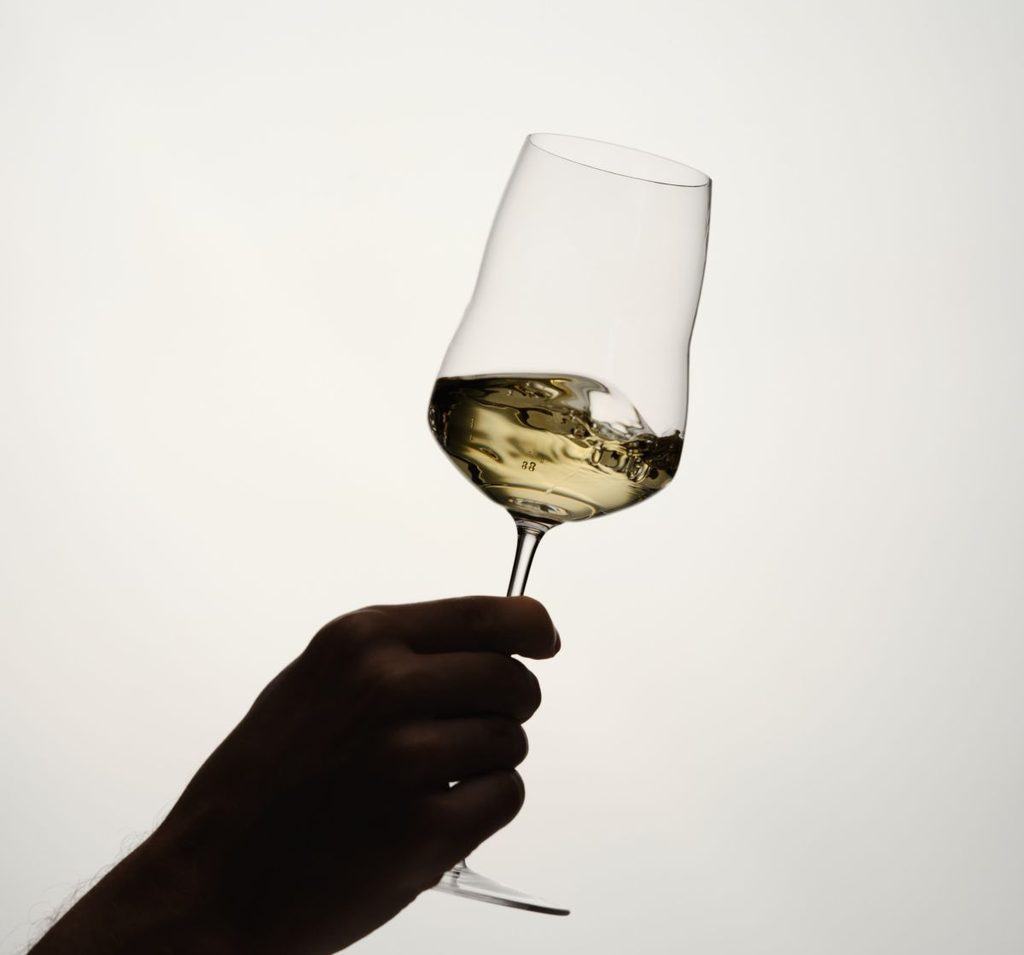
At the start of the 20th century, sommeliers began using white wine glasses for vintage and exceptional champagnes, seeking a larger bowl that allowed optimal aeration and subtle aroma concentration.
With its generous volume and wide opening, this glass reveals the depth, complexity, and aromatic richness of highly structured champagnes, while allowing the mousse to fully develop and the texture to express itself in all its finesse.

A fun experiment to try:
Serve the same bottle of champagne into three different types of glasses—flute, tulip, and white wine glass.
It’s the same champagne, but you’ll taste three different experiences—thanks to the way the shape of the glass affects perception (and yes, it can be a little confusing!).
Related:
INSIGHT Art of Living – Exclusive Discoveries for Our Readers

Discover champagne for yourself and explore its diversity: Together with Champagne Château de Boursault, INSIGHT-LUXURY is preparing an exclusive offer for our readers:
A tasting package featuring three select champagnes from the house will be available at a special discounted price. In addition, we are offering the exceptional Cuvée Le Clos from Champagne Château de Boursault separately.
More information will follow shortly.
Conclusion: The shape of the glass shapes the sensory experience.
It controls the effervescence, orchestrates the aromas, and reveals (or hides) the full depth of the champagne.
The ultimate luxury? Choosing your glass with as much care as your cuvée.