
Cartier Presents Chapter II of "Le Chœur des Pierres"
A single stone can define the proportions of an entire necklace. At Cartier, this starting point—featured in the second chapter of *Le Chœur des Pierres*—is known, among other names, as *Stellara*: a 41.01-carat sapphire from Sri Lanka forms the centerpiece of a radiating composition. Surrounding it is a structure of diamonds, open spaces, and precisely drawn lines.
Stellara: A Sapphire at Its Center
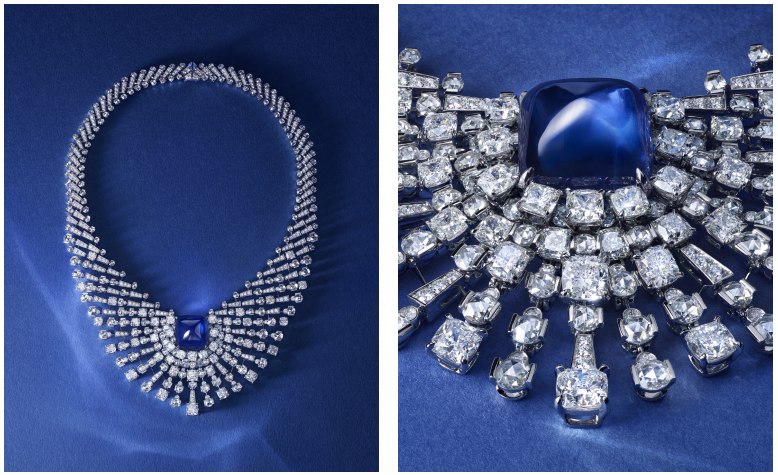
The deep blue of the sapphire is set against a bright backdrop created by the surrounding diamonds. Their varying shapes and sizes create a sense of movement that radiates outward from the center stone. The openwork design allows space between the rows of stones, keeping the overall look light despite the size of the central stone. Thus, even within an elaborate jewelry design, the sapphire remains the clear focal point.
This is precisely where the design challenge of such creations lies: a large gemstone calls for a setting that holds it securely while concealing as little of its beauty as possible. In the case of Stellara, the surrounding composition reflects this concept. The radial arrangement makes the stone the visual focal point without reducing the necklace to a mere pendant.
Panthère Tunya: Color Becomes Movement
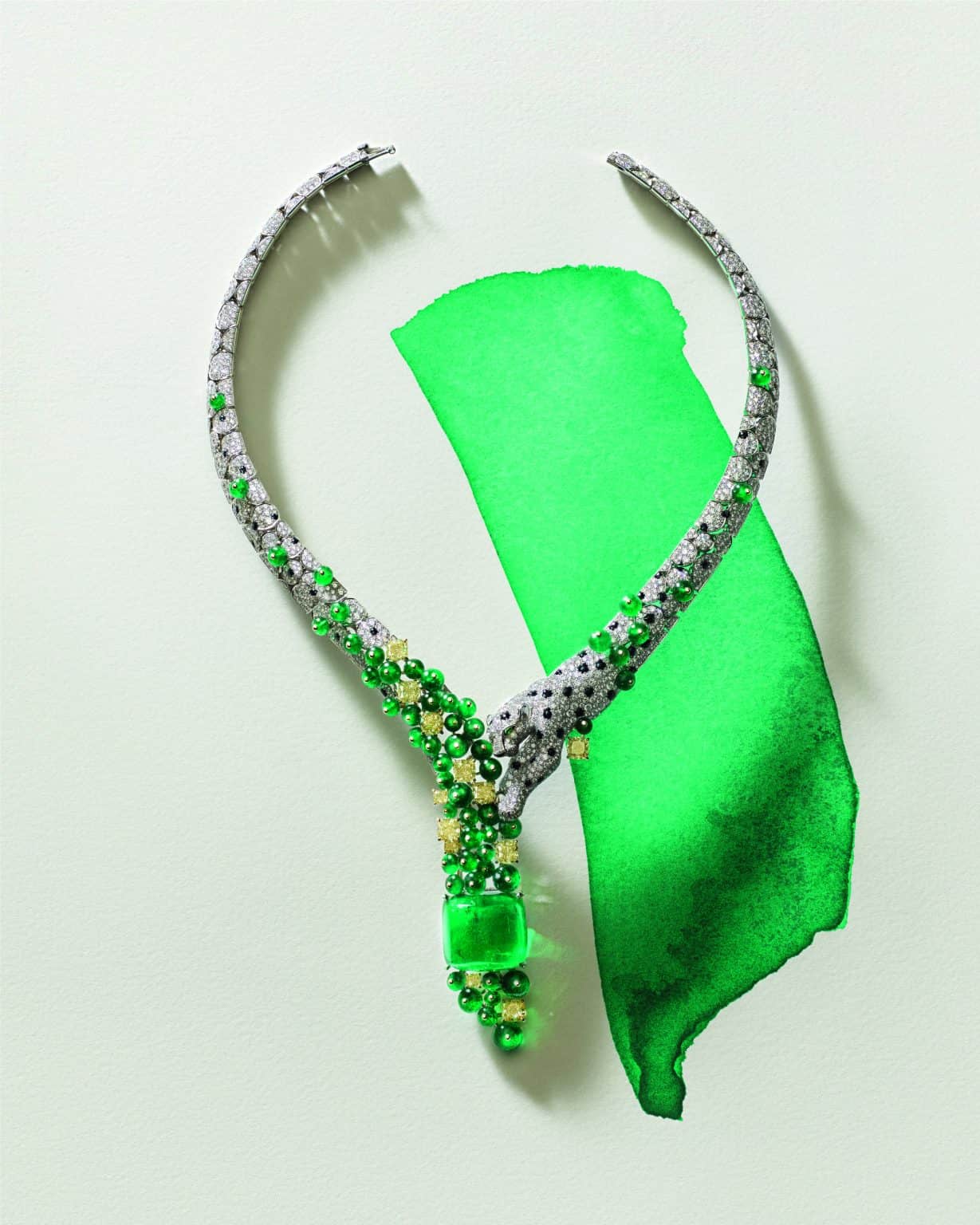
Panthère Tunya creates a different effect. A panther crafted from onyx and diamonds rests atop a cascade of green emerald beads. Yellow diamonds add warm accents amid the cool shades of green. The animal motif remains clearly recognizable, yet its spotted body blends seamlessly into the structure of the necklace.
While Stellara focuses attention on a central blue stone, this creation derives its impact from the interplay of form and flowing color. The pearls give the jewelry a dynamic surface. The panther appears to rest within this green landscape, while at the same time becoming part of its lines.
A chapter with multiple voices
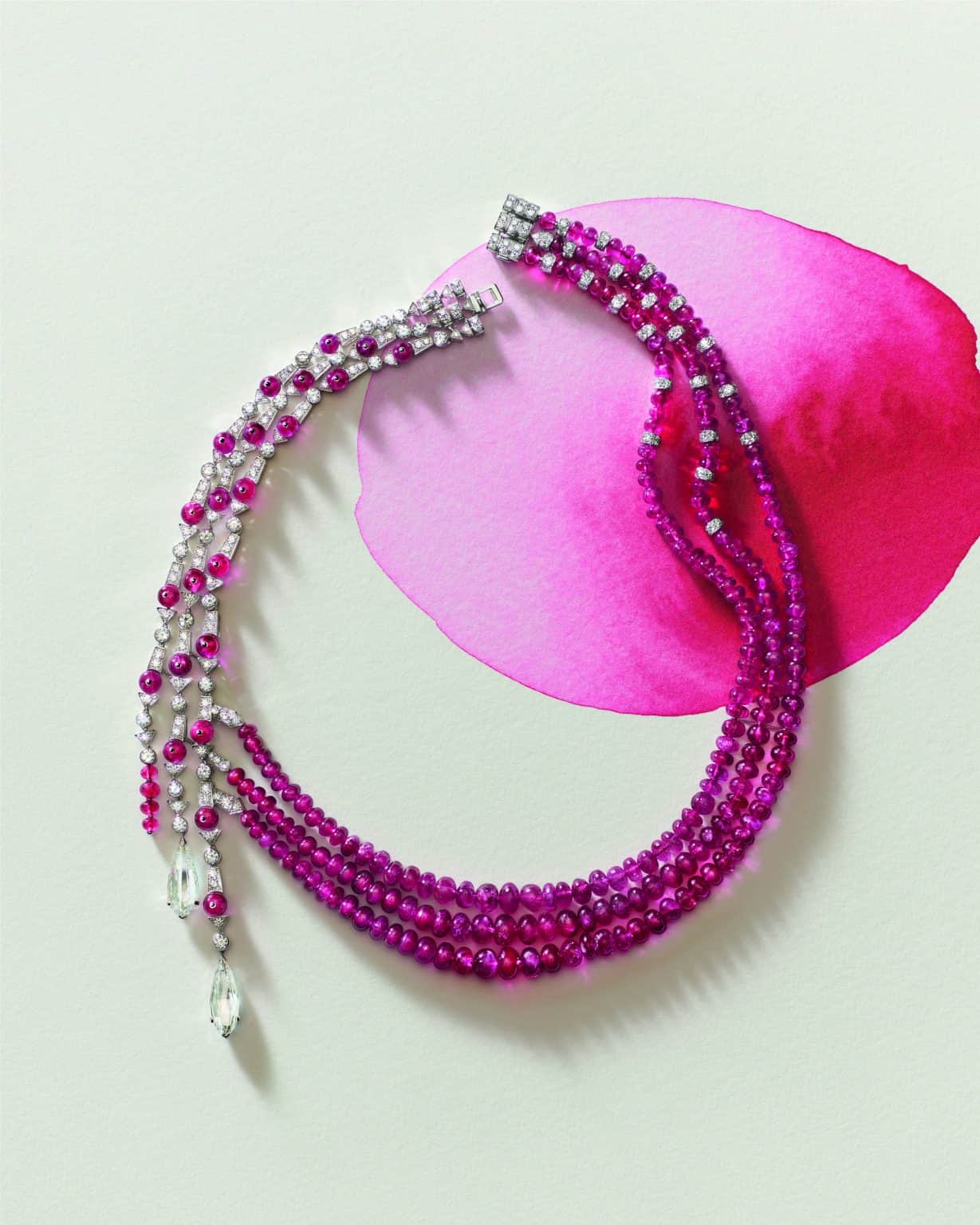
This new chapter also features Tutti Chaya, Fibria, Polydroma, Tipaza, and Etnara, as well as five standalone earring designs. The selection carries forward the collection’s core concept: the color, cut, shape, and radiance of the gemstones serve as the starting point for the designs. Consequently, rhythm, volume, and color contrasts can vary significantly within the same collection.

The distinctive style emerges from the harmony between the gemstones and the design. Goldsmithing, gem cutting, and settings must all work in tandem right from the development stage to ensure that the desired form also works when worn on the body. A look at the first chapter of Le Chœur des Pierres shows how consistently Cartier carries this idea forward. The second chapter expands the visual universe with new gemstones and new compositions.