Watches & Wonders 2026: A Buzz in Geneva – Tourbillons
Everyone agrees that the tourbillon is, first of all, one of the greatest technical challenges in fine watchmaking and, secondly, pretty much unnecessary—at least when it comes to wristwatches.
After all, it was originally developed to compensate for the gravitational error of the escapement in pocket watches, which were always carried in the same position. On an arm that moves this way and that, such compensation is not necessary. Fortunately, however, technical logic does not prevent manufacturers and buyers of complicated watches from repeatedly falling in love with the tourbillon, improving it, or redesigning it. At Watches & Wonders 2026, there will be many fine examples of this to see again this year.
A. Lange & Söhne: Hidden – Lange 1 Tourbillon Perpetual Calendar Lumen
However, the complication is not always immediately apparent: On the “Lange 1 Tourbillon Perpetual Calendar Lumen” by A. Lange & Söhne, only the word “Tourbillon” on the dial indicates that the movement’s escapement assembly rotates continuously—until it is stopped, a specialty of the manufactory, to allow the watch to be set to the exact second.
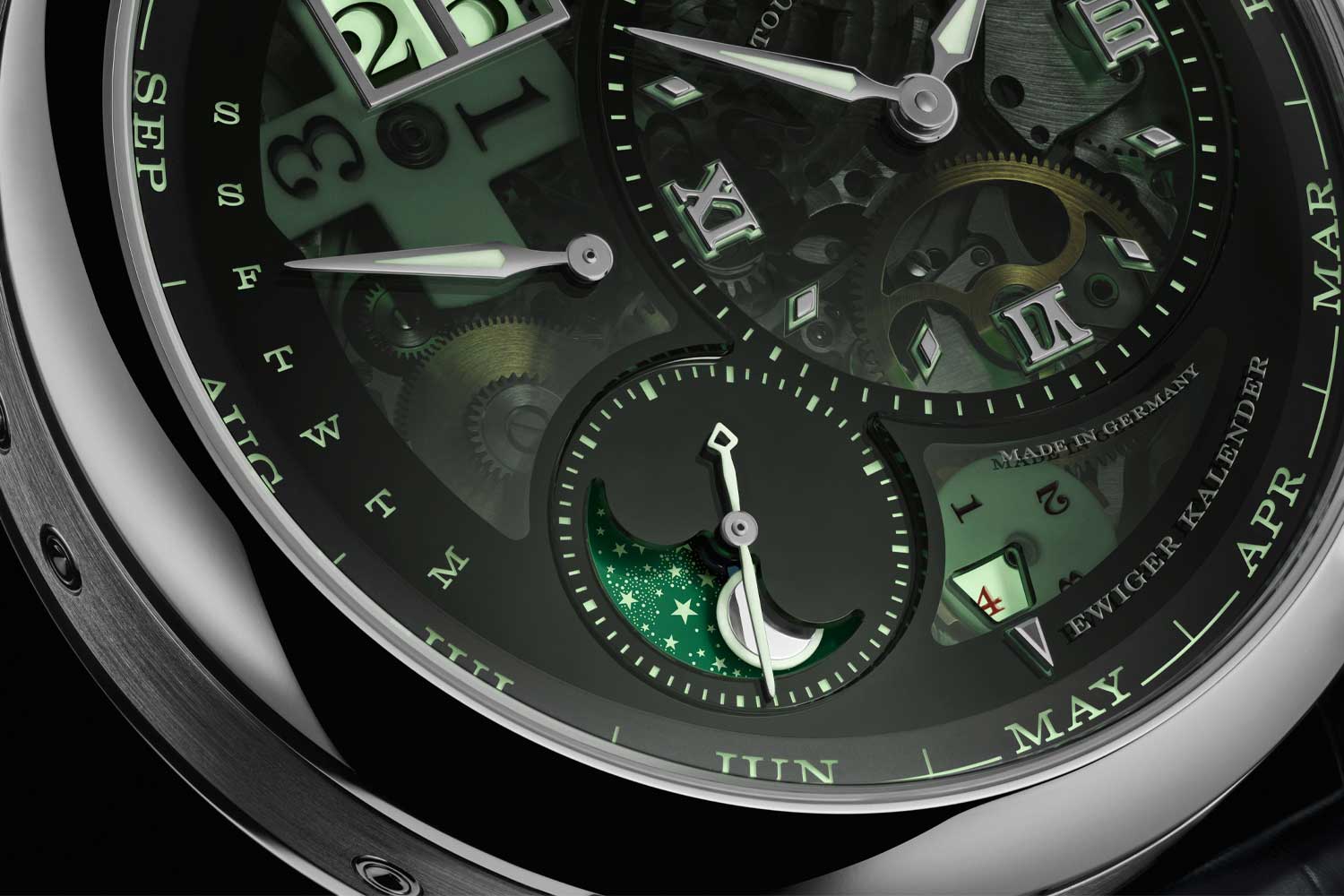

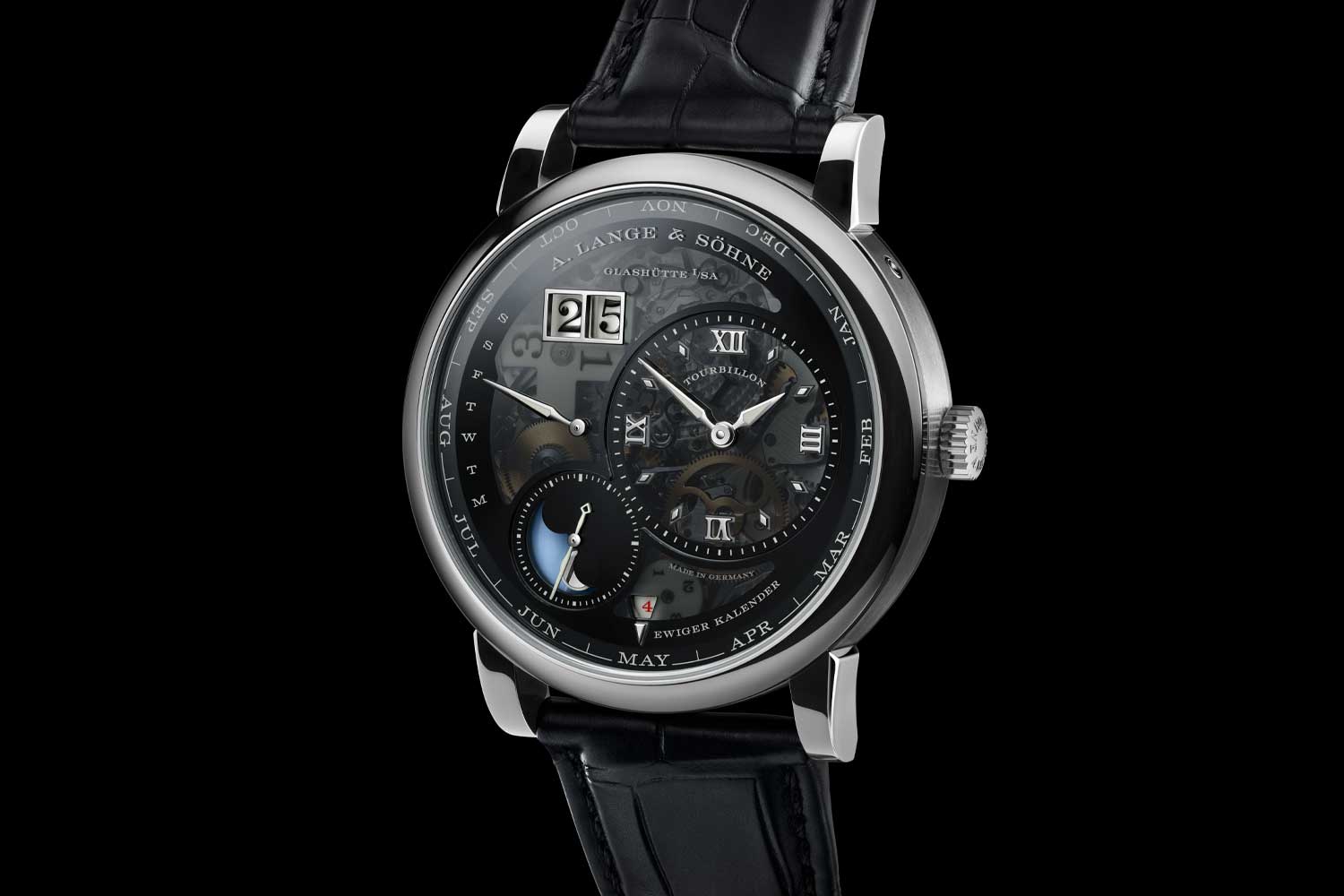
Both the movement and the stopping mechanism can be viewed through the sapphire crystal in the back of the 41.9-millimeter platinum case. The new L225.1 automatic caliber also features an unusual perpetual calendar with an external month ring and a retrograde day-of-the-week display at 10 o’clock—all date indications change in a single jump.
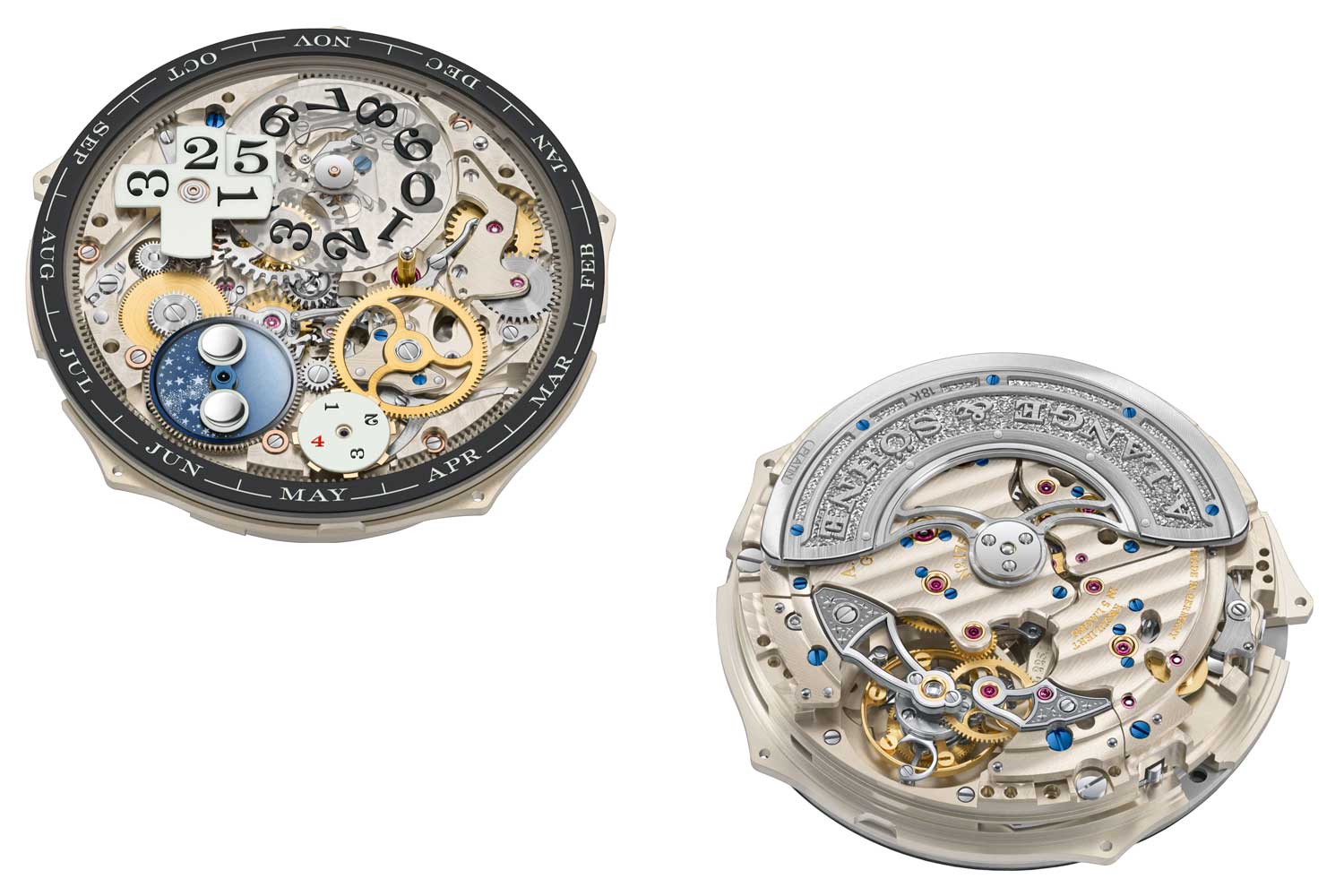
The energy for this is supplied by the white-gold rotor, whose outer segment, made of platinum, provides additional momentum. Lange has also developed particular expertise in the field of luminous material, which charges beneath the semi-transparent dial in the “Lumen” models.
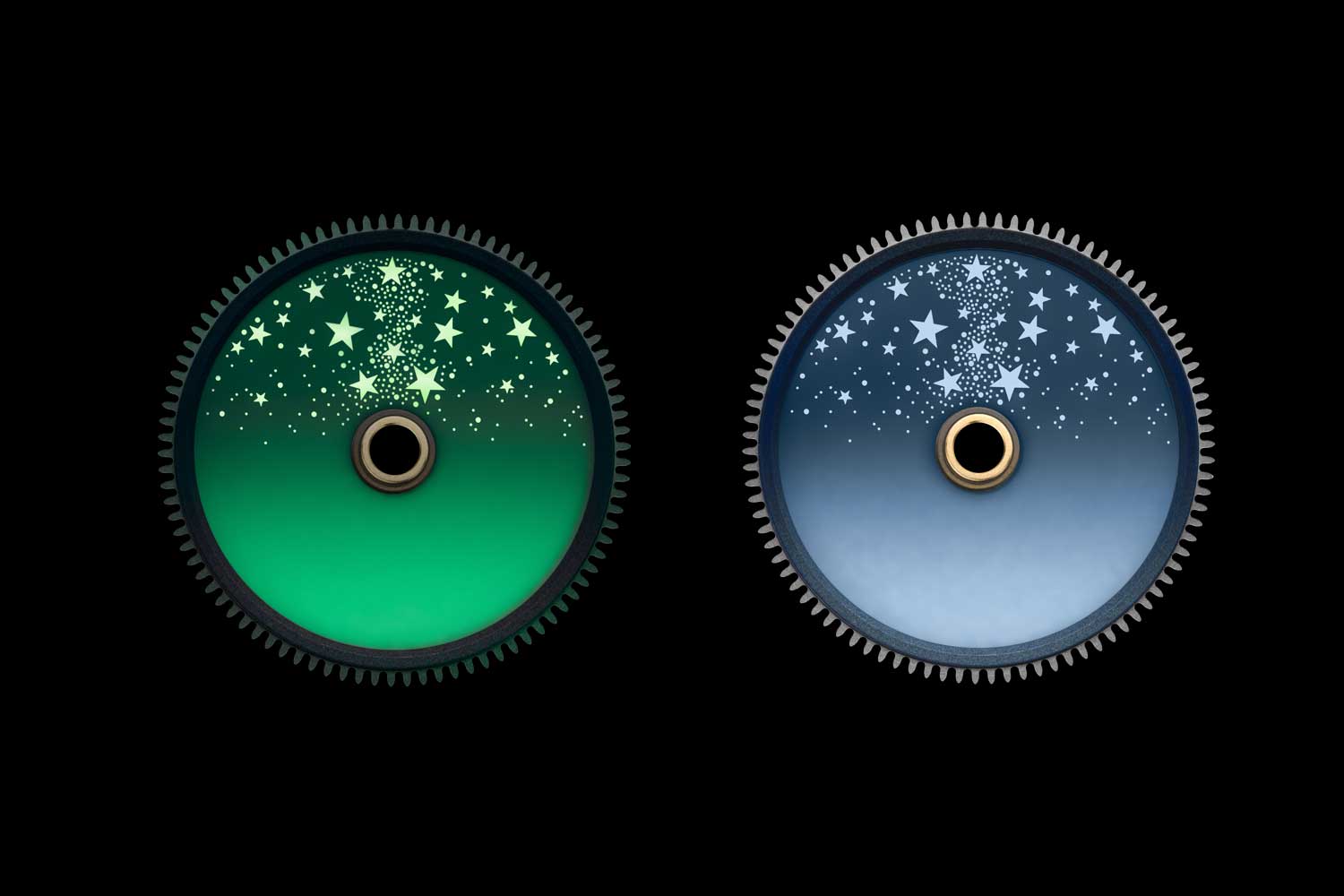
Limited to 50 pieces, the “Lange 1 Tourbillon Perpetual Calendar Lumen” offers a unique instrument-style look at night. (MSRP €550,000)
Jaeger-LeCoultre: A Tourbillon Within a Tourbillon – Hybris Inventiva Gyrotourbillon À Stratosphère
At Jaeger-LeCoultre, the newly developed tourbillon takes center stage, both technically and visually. The “Hybris Inventiva Gyrotourbillon À Stratosphère,” limited to 20 pieces, marks the launch of a new series of timepieces, each featuring a particularly advanced complication. In this case, it represents a further enhancement of the Gyrotourbillon’s mobility.

In the hand-wound Caliber 178, it rotates around three axes. To put it simply, there is a tourbillon within a tourbillon within a tourbillon. As it rotates, the escapement can theoretically occupy over 98% of all possible positions. Naturally, all parts of the movement are meticulously finished, featuring fine decorative engravings and polished edges. On the front, the white gold plates are coated with a transparent blue enamel layer over the sunburst finish, and the bridges are lacquered to match.
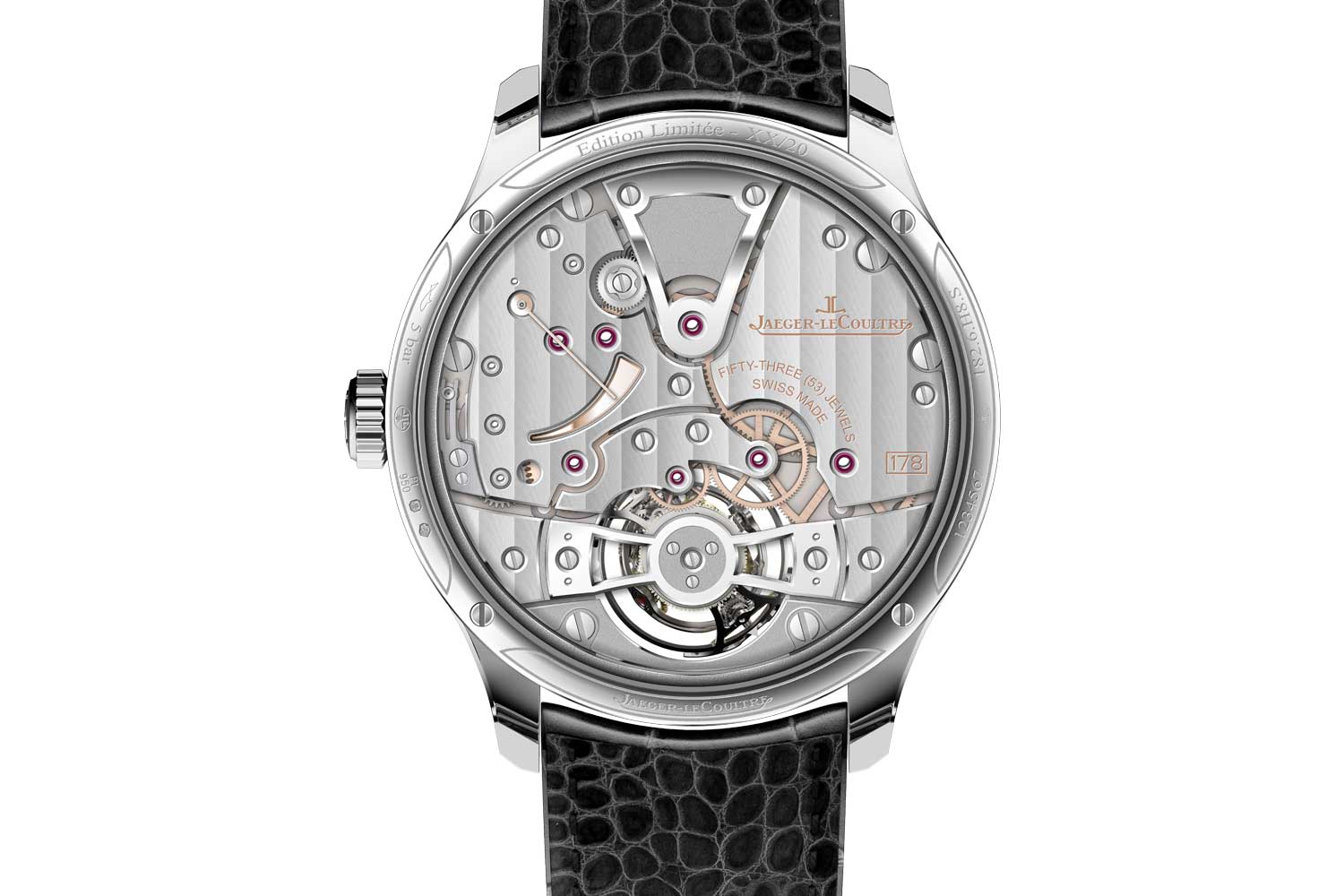
A platinum case measuring 42 millimeters in diameter and a generous 16 millimeters in height provides the perfect setting for this micro-mechanical marvel.
Bianchet: Spring-loaded – Ultra-thin Maserati
Anniversaries are important not only in the watch industry—where a long history is a testament to expertise—but also in the automotive industry. This year, Maserati is celebrating: not the company’s founding, which took place in 1914, but the introduction of the trident as its logo 100 years ago.
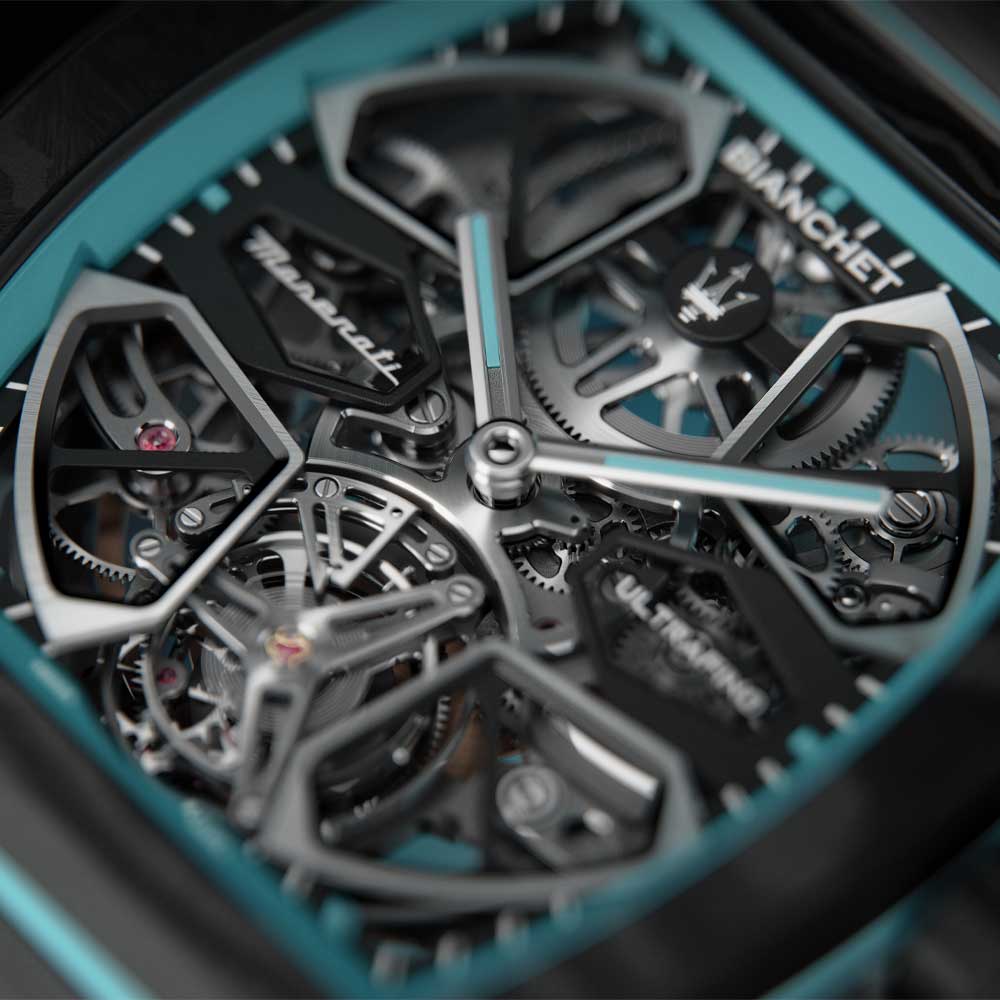
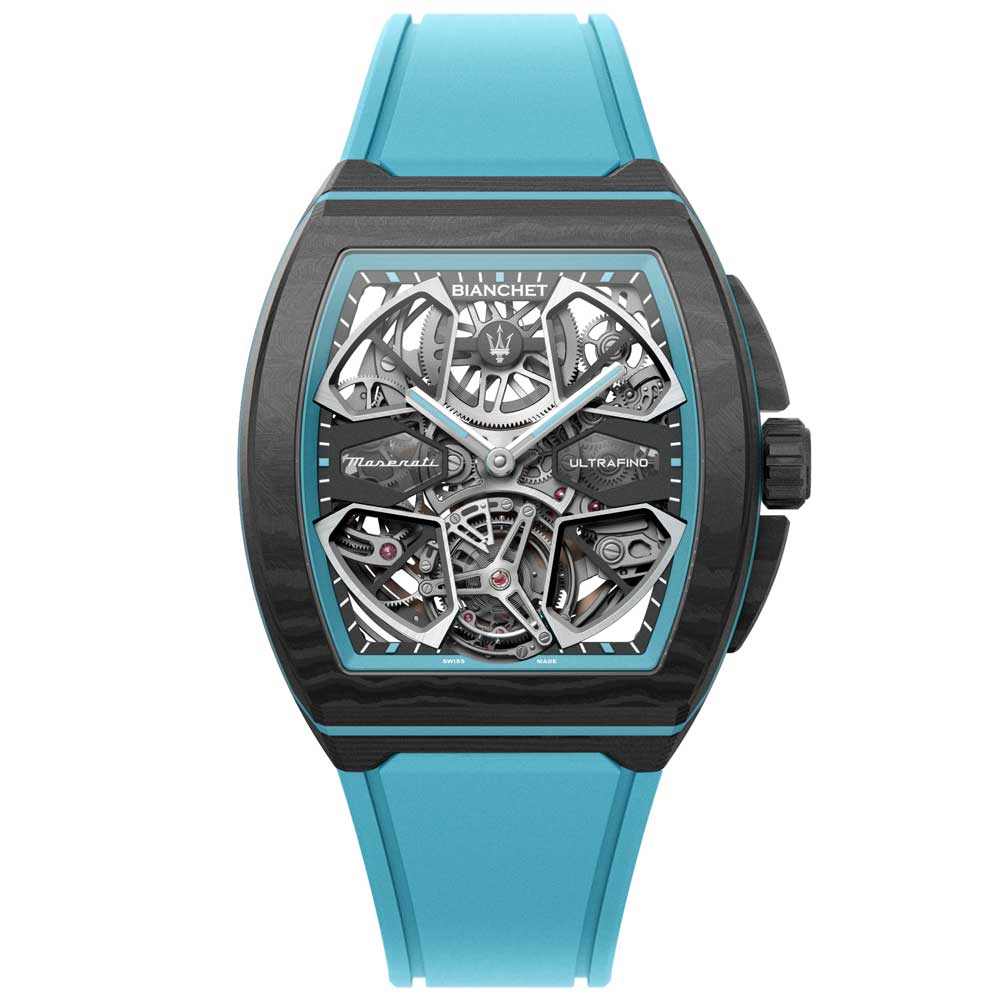
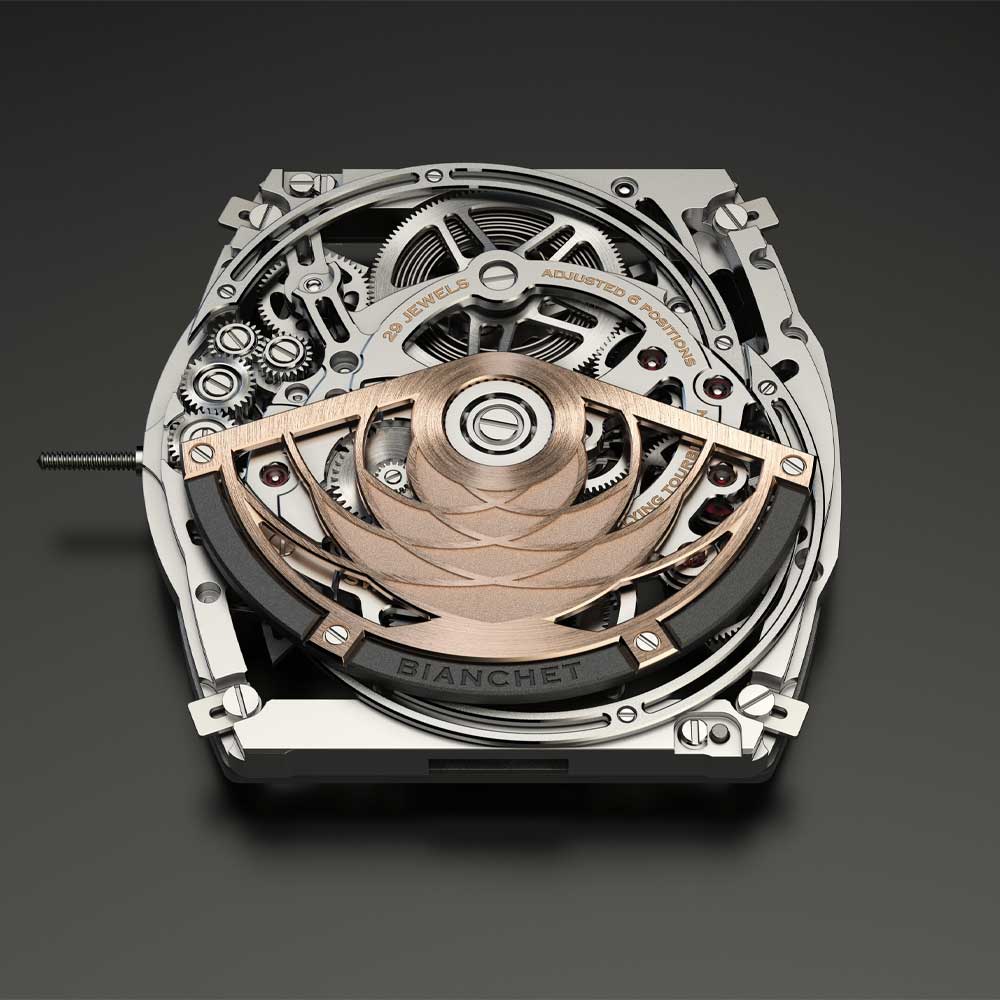
To mark this occasion in style, the Italians have teamed up with the Swiss manufacturer Bianchet, specialists in exceptional tourbillons. The result of this collaboration is the “Ultrafino Maserati,” limited to 100 pieces. The tonneau-shaped case is characteristic of Bianchet.
The designers drew inspiration from Maserati supercars for the skeletonized dial and the UT01 automatic caliber with a flying tourbillon: for example, the dial’s geometry echoes the iconic wheel caps. And just as with sports cars, which require special suspension, the escapement and movement plates were fitted with an innovative shock protection system that allows them to withstand even extreme accelerations.
Artya: Twins – Complexity
Artya has never been one to settle for conventional timepieces. In its “Complexity” model, limited to just nine pieces, the brand has installed not one but two unusual tourbillons—or rather, Cônillons: mechanisms tilted at an angle in which the balance wheel rotates in a conical motion because its axis is not fixed. At first glance, this appears somewhat strange, but through the watch’s caseback, one can observe how a connecting differential synchronizes the two rotors.


The generously sized sapphire case, measuring 42 × 48 × 13 millimeters, features a glass dome over each of the cônillons. But as mentioned earlier, conventions—or practicality for everyday use—are not a factor here. The “Complexity” costs CHF 190,000 with a transparent case and CHF 220,000 with a ruby-red one.