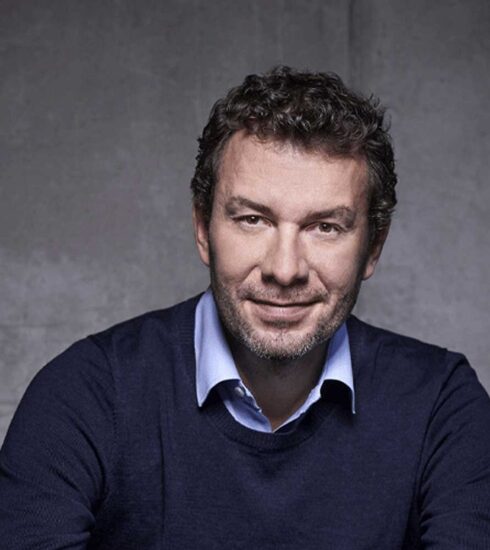

Lab-grown Diamonds: Interview with Founder and CEO Christine Marhofer
INSIGHT speaks with Christine Marhofer, founder and CEO of Nevermined and mandana, about the role of precious metals, diamonds, and value appreciation—and why lab-grown diamonds aren’t just a matter of price, but also open up new creative possibilities.
Diamonds have always required some explanation. But with lab-grown diamonds, advising customers has become even more complex. What are your current experiences when talking with customers?
CM: We’re clearly seeing that there’s less need for basic education now than there was at the beginning. Lab-grown diamonds are increasingly viewed as an integral part of product line and design planning, rather than as a short-term trend or a cheaper alternative.
Instead, the questions have become much more specific and technical: Where does the diamond come from? How was it produced? What proof of quality is available? Our “Made in Germany” approach at Nevermined is seen as an important sign of trust in this context.
At the same time, interest in larger carat weights, unique cuts, and fancy colors is growing. As a result, today’s consultations go much more in-depth, focusing on origin, quality, and new design possibilities.
Both categories consist of crystallized carbon. The difference lies primarily in how they are formed: what is the best way to explain the differences?
CM: It can be explained in a single sentence: Lab-grown diamonds are real diamonds with a different origin. Mined diamonds form deep within the earth over very long periods of time and are then extracted. Nevermined lab-grown diamonds, on the other hand, are grown under controlled conditions using a process called CVD—Chemical Vapor Deposition—in our lab in Essen. To do this, small diamond seeds are placed in a vacuum chamber. Carbon is deposited there atom by atom, layer by layer, until a real diamond has formed.
Visually, chemically, and physically, they are both identical. Lab-grown diamonds are also graded according to the well-known 4Cs—carat, color, clarity, and cut. The difference, therefore, lies not in the diamond itself, but solely in its origin.
Which terms are particularly important in counseling—and which ones should be avoided?
CM: To me, clear labeling is absolutely essential. “Lab-grown diamond” describes very clearly what it is: a real diamond that has been grown in a laboratory under controlled conditions. The term “labor-grown diamond” is also used, although “lab-grown” has now become the internationally accepted term.
I would avoid terms like “artificial” or “synthetic.” They can easily give the impression that the gem is a replica, made of zirconia or moissanite, for example. These materials may look similar to a diamond, but they have a different chemical composition and different physical properties. Nevermined lab-grown diamonds, on the other hand, are real diamonds. It is precisely this distinction that must be made clear during the consultation.
Natural diamonds symbolize rarity, origin, and long-term value. Lab-grown diamonds offer flexibility in terms of price and design. How do you view this?
CM: To me, jewelry is not primarily a financial product. Neither mined diamonds nor lab-grown diamonds should be viewed across the board as an investment. Gold and platinum have a tangible material value. But a piece of jewelry’s value also stems from its design, craftsmanship, brand, and—above all—its emotional significance. An engagement ring isn’t bought because someone hopes its price will rise, but because it symbolizes a special moment.
A key advantage of lab-grown diamonds is that they offer greater flexibility in terms of size, cut, and color without causing the price to skyrocket. What possibilities does this open up for jewelry design?
CM: An enormous number. We can work with higher carat weights, extraordinary fancy cuts, and intense colors that would be financially out of reach for many customers if they were using mined diamonds. As a result, the design process no longer automatically begins with the question: What do we need to scale down to fit the budget?
We have much more freedom to think about proportions and the impact of a piece of jewelry. A larger center diamond, an unusual pear, oval, or emerald cut, or a combination of different fancy colors can completely transform the look and feel of a design. For me, this is one of the most exciting aspects, because the technology gives designers significantly more creative freedom.
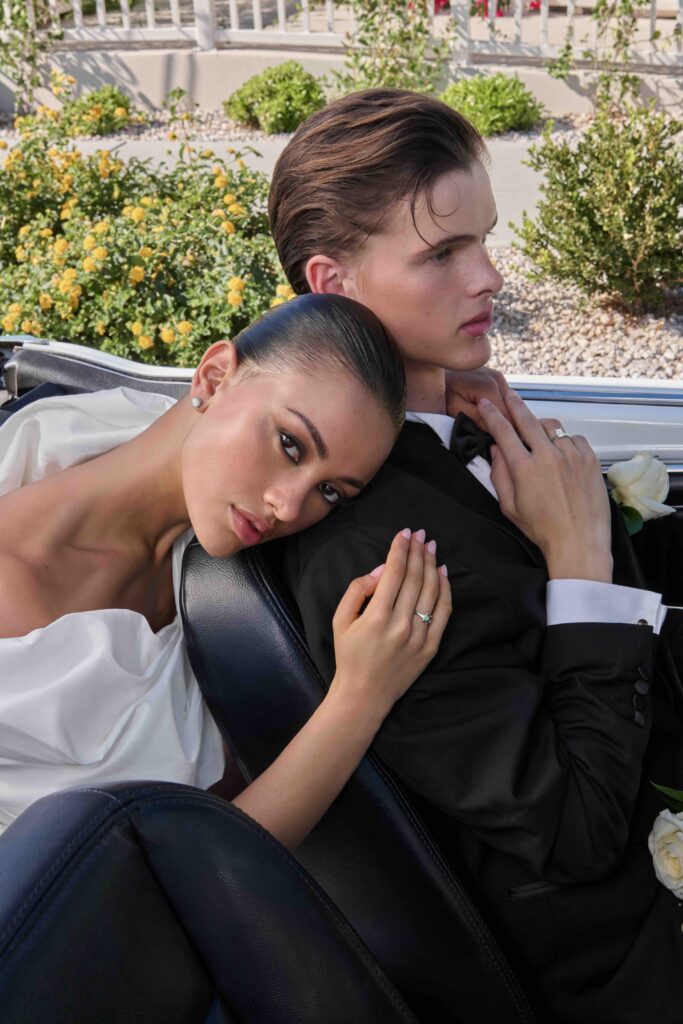

Does that also change the way jewelry is designed? In other words, is there a shift away from the idea of “as classic and timeless as possible” toward more expression, color, and individuality?
CM: I don’t think we have to choose between classic and unique. A solitaire ring can look very clean and modern. At the same time, more and more people are looking for jewelry that truly suits them and their personality.
With mandana Jewellery, we can make that happen. Our collections include understated and minimalist pieces, as well as highly expressive designs featuring moving elements, unique cuts, or colors. Our All Gens collection, for example, is designed for all genders and generations. The Colours and Cuts designs feature fancy-colored diamonds and unusual shapes. Today, there’s simply more than one “right” way to wear diamond jewelry. It’s precisely this freedom that I find particularly exciting.
A topic that interests many people: How do lab-grown diamonds get their color, or is that a trade secret?
CM: The scientific basis is no secret, but our exact formulas certainly are. The color isn’t created by a surface coating, but directly within the diamond. Put simply, this is achieved by specifically replacing individual carbon atoms with other atoms during the diamond’s growth. It sounds simple, but it’s very challenging to pull off. Even the tiniest changes can affect the color.
That is why the entire process must be controlled very precisely for each color—from the gas composition to the temperature to the growth duration. At Nevermined, this is the result of several years of research, numerous experiments, and, above all, a great deal of patience.
Are colored lab-grown diamonds primarily a design consideration—or are they also a way to reach customers who want to wear jewelry in a more personal and less conventional way?
CM: Definitely both. Color instantly evokes a reaction in us. A deep blue, a rich pink, or a vibrant yellow can completely transform a design while also carrying personal meaning. This also allows us to reach people who may not have had classic diamond jewelry on their radar until now. They’re looking for something unique that fits their style. That’s exactly where I see the opportunity: to make real diamond jewelry more accessible, more personal, and more versatile.
Are you more interested in accessibility, creative freedom, sustainability—or a new language in jewelry?
CM: To me, it’s all part of the same picture. My original idea was to develop sustainable diamond jewelry that is high-quality, emotionally resonant, and accessible to more people. But I quickly realized that simply using a different kind of diamond wasn’t enough. You have to look at the entire value chain. In Europe in particular, we’re seeing growing interest in traceable origins, regional production, and transparent supply chains.
This development validates our approach, and Nevermined is laying the groundwork for it today. Our in-house production facility in Essen, 100% certified green electricity, transparent processes, and SCS-007 certification for Sustainable Rated Diamonds. At mandana, this results in jewelry made from recycled 18-karat gold or 950 platinum, crafted in Germany and Spain. In this way, technology becomes something personal that you can wear with a clear conscience and pass on to others later.
How important is it to position lab-grown diamonds not as a substitute for natural diamonds, but as a distinct category with its own strengths?
CM: That’s been our approach from the very beginning. Lab-grown diamonds have their own origins, their own history, and their own unique strengths. That’s why I wouldn’t present them exclusively as a cheaper alternative in the retail market. That would mean focusing solely on price and overlooking their true potential: larger diamonds, unique colors, new designs, transparent sourcing, and a target audience that chooses jewelry more consciously and sustainably.
Both categories can coexist in specialty stores. The key is that they are clearly explained and presented separately.
What questions should retailers ask their suppliers before adding lab-grown diamonds to their product line?
CM: I would always ask first: Where exactly are the diamonds mined? What kind of energy is used in the process? Is it possible to trace their origin all the way back? What independent certifications are available, and how is consistent quality ensured?
But collaboration after that is just as important. Retailers need personal points of contact, personalized advice, and quick support—whether in person, by phone, or via email. That’s why at Nevermined, we prioritize maximum transparency and have deliberately opened up our production facility in Essen like a “glass factory.” Our partners can learn about the entire process and take part in exclusive lab tours.
Anyone who has seen firsthand how a diamond is formed here not only speaks about it with greater confidence but also sells it more persuasively. Knowledge builds trust. And trust is the foundation of long-term sales success.