
Homo Faber 2026: Venice Puts the Spotlight on Arts and Crafts
In September 2026, the Biennale on San Giorgio Maggiore will showcase artisanal crafts from around the world. Numerous luxury brands will also be participating—from Vacheron Constantin and Cartier to Buccellati, De Beers, IWC Schaffhausen, and Piaget.
Cover image: Piscina Gandini Homo Faber 2026 ©Es Devlin STUDIO
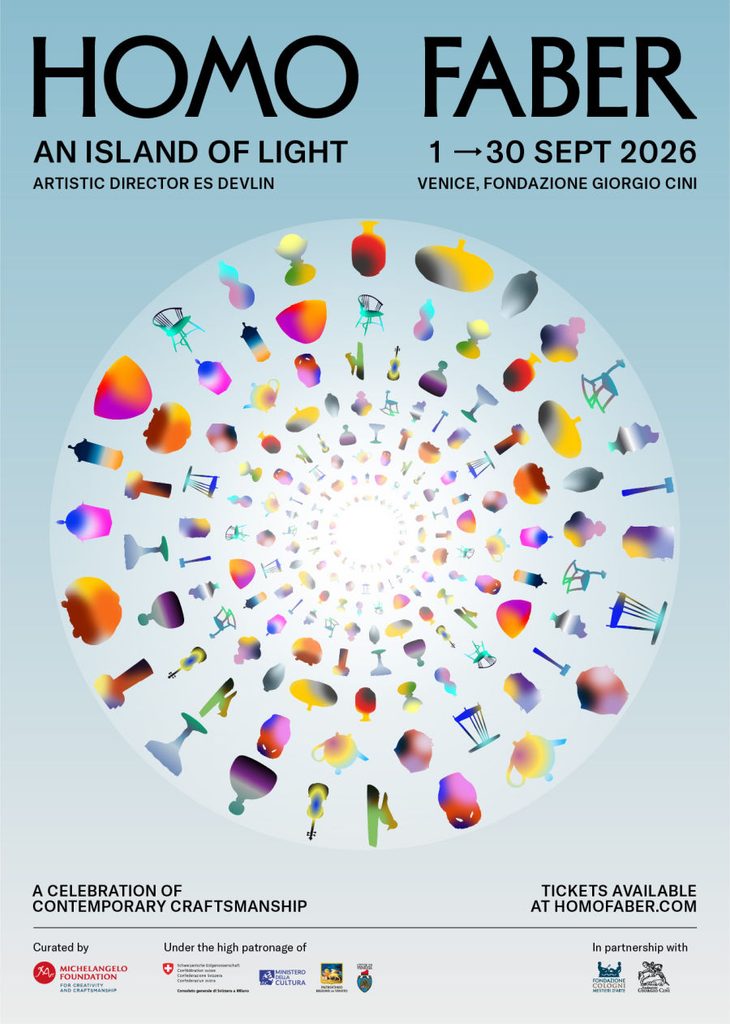
Luxury is often about craftsmanship. At Homo Faber, that craftsmanship comes to life. For one month, the Venice Biennale brings together artisans from around the world, showcases their work, and offers a glimpse into materials, techniques, and production processes.
The fourth edition will take place from September 1 to 30, 2026, at the Fondazione Giorgio Cini on the island of San Giorgio Maggiore. Under the title “An Island of Light,” Homo Faber 2026 will explore the interplay of light, materials, and craftsmanship. More than 500 artisans from over 70 countries are expected to be represented with more than 700 objects. The program includes 15 immersive installations, complemented by demonstrations, workshops, culinary events, and guided tours.
Homo Faber is thus an exhibition, a stage, and a meeting place all at once. The focus is not on new collections or classic brand presentations, but on the people, techniques, and materials behind extraordinary objects.
The Idea Behind *Homo Faber*
The Michelangelo Foundation for Creativity and Craftsmanship is behind the Biennale. The international nonprofit organization was founded in Geneva in 2016 by Johann Rupert and Franco Cologni. Rupert is an entrepreneur and chairman of Richemont; Cologni is a longtime patron of the arts and a former Richemont executive.
The foundation is dedicated to promoting high-quality arts and crafts. It raises the profile of artisans, fosters exchange, supports the transfer of knowledge, and builds international networks. The name “Homo faber” refers to humans as creators and designers—to those who shape objects through skill, experience, and labor.
The first edition of Homo Faber took place in Venice in 2018. At that time, 900 objects by 410 artisans were on display; 62,500 visitors came to the island. Following the 2022 and 2024 editions, the event will return for the fourth time in 2026.
An Island of Light
British artist and set designer Es Devlin will serve as artistic director for 2026. She is known for large-scale, often walk-in installations and works with light, mirrors, movement, and space.
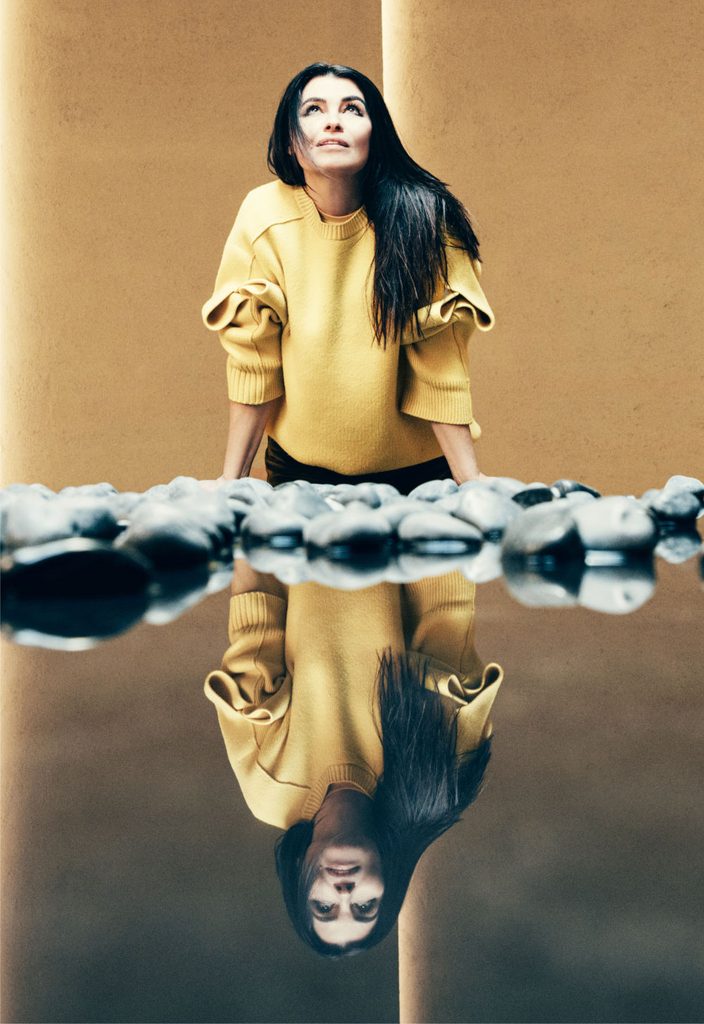
This style also characterizes “An Island of Light.” The artisans are viewed as individual “islands” of knowledge that together form a larger archipelago. Light serves not only to set the scene; it also reveals surfaces, textures, colors, and changes in materials.
In addition to the exhibits, the program includes live demonstrations and workshops. Visitors can observe the creative processes and try out selected techniques for themselves. Ninety international students from craft and design schools are serving as Young Ambassadors for the exhibition, providing background information on the works, materials, and production methods.
With “Homo Faber in Città,” the Biennale is also expanding into the city of Venice. Workshops are opening their doors, and themed routes lead visitors to local artisans. Two additional exhibitions have been announced at Casa Sanlorenzo: a presentation on masters from Venice and the Veneto region, curated by Artemest, and an exhibition on artisans from Luxembourg.
Luxury Brands at Homo Faber 2026
The sponsors of Homo Faber 2026 include numerous companies from the international luxury industry. Watch and jewelry brands are particularly well represented.
As a “Champion of Creativity and Craftsmanship,” Vacheron Constantin belongs to the second-highest sponsorship tier. A. Lange & Söhne, Cartier, Montblanc, and Van Cleef & Arpels follow as “Advocates.” Partners designated as “Allies” include Buccellati, De Beers, IWC Schaffhausen, Jaeger-LeCoultre, Panerai, and Piaget.
Fashion, leather goods, porcelain, interior design, and yacht building are also represented. These include Chloé, Delvaux, Santoni, and Serapian; le19M, the artisan center created by Chanel; the porcelain manufacturer Ginori 1735; Promemoria; Villari; iDOGI; Artemest; and Sanlorenzo Arts.
The funding tiers first describe the role of the partners within the overall project. They do not automatically mean that every brand will be represented in the exhibition with its own brand presentation or collection.
Craftsmanship, Techniques, and Brands
Some companies support specific demonstrations or themes within the program. This creates various connections between the brand, the material, and the craftsmanship involved.
Vacheron Constantin is sponsoring demonstrations on paper design and micro-origami. Cartier is supporting the creation of a concert guitar. Montblanc is collaborating on a project involving the engraving of Murano glass. Jaeger-LeCoultre is involved in the restoration of an 18th-century painting.
At the jewelry houses, the projects offer a closer look at materials and techniques. Buccellati is supporting an exhibition that brings together silver and gold in decorative silversmithing. Piaget is sponsoring “Lace forged from metal,” a project that translates delicate lace patterns into metal. De Beers is supporting a project to preserve Botswana’s basket-weaving tradition.
Other partnerships open our eyes to additional areas of craftsmanship. IWC Schaffhausen supports the Japanese nerikomi technique, in which colored clays are layered to form patterns. Chloé supports the further development of Madagascan raffia traditions. Delvaux supports French basketry. Santoni is associated with contemporary papermaking using recycled materials.
In addition to its role as a sponsor, Van Cleef & Arpels is also making its presence felt outside the main exhibition. Since 2023, the house has been supporting the work of the Venice Gardens Foundation at the cloister garden of the Church of the Redentore. During *Homo Faber*, this location will host a photography exhibition by Juliette Agnel.
Homo Faber in Venice
Homo Faber blends elements of an exhibition, a cultural program, and hands-on craft instruction. The Fondazione Giorgio Cini on San Giorgio Maggiore serves as the Biennale’s central venue. The exhibition’s extension into the city also takes visitors to studios, workshops, and places where arts and crafts remain a living tradition in Venice to this day.
For visitors, this creates an experience that brings together objects, creative processes, and encounters. The exhibition showcases not only the finished works but also the paths that led to them: the selection of materials, tools, techniques, gestures, and time.
Homo Faber 2026 – An Island of Light
September 1–30, 2026
Giorgio Cini Foundation, San Giorgio Maggiore, Venice
For more information and the program:
https://www.homofaber.com/en/biennial/homofaber-2026