
When Earth’s History Becomes an Object
Minerals and Fossils: Extraordinary Objects—Made by Nature
24 metric tons of raw stone, somewhere on a private farm in South Africa. In order to even recover the piece, a road first had to be built. A 50-metric-ton bulldozer was used, and two flatbed trucks were brought in from about 1,000 kilometers away—one for the stone, the other for the mobile crane. Afterward, the load traveled another 1,000 kilometers to the port, and from there by container to Germany.
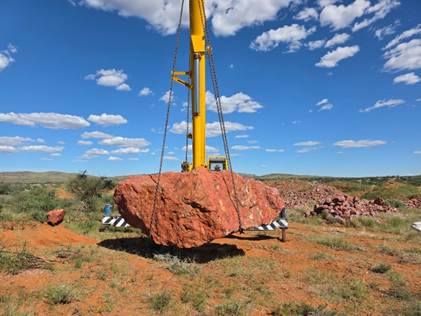
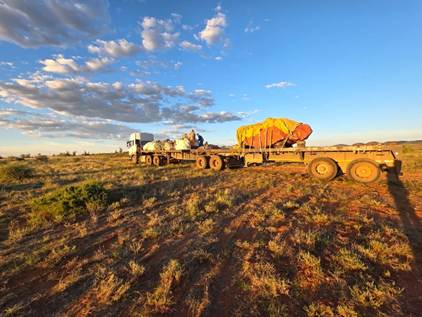
Raw jasper and its transport. Photo: welt-der-kristalle.de
Today, nothing remains of its original shape. The red jasper has been transformed into a sphere 1.50 meters in diameter and weighing about five metric tons. According to *Welt der Kristalle*, the source material is about two billion years old. *Welt der Kristalle*
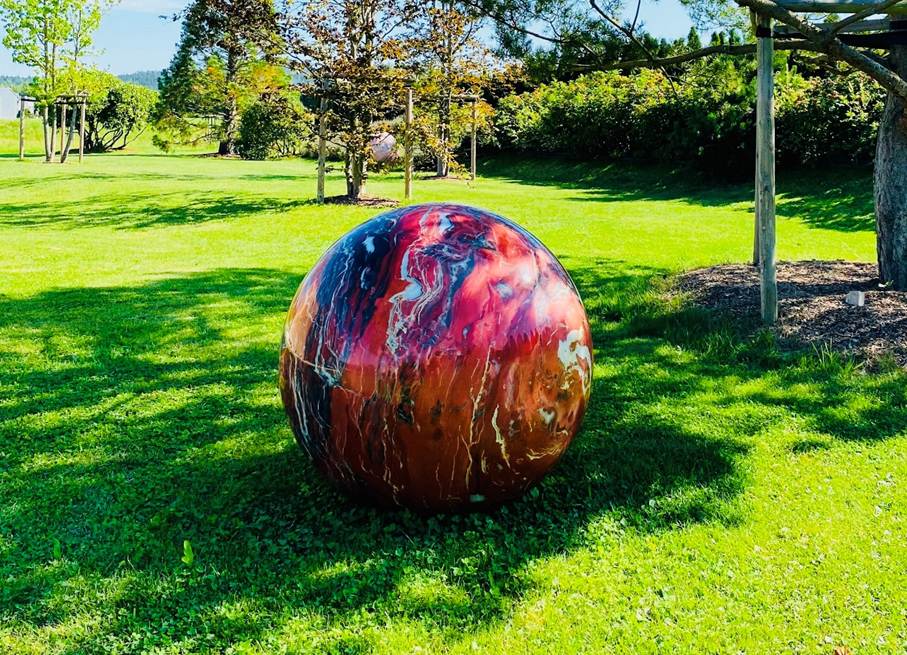
A natural find thus becomes a monumental, one-of-a-kind piece. The process of creating it is labor-intensive, its scale extraordinary, and the result possesses a presence more commonly associated with sculpture than with classical mineralogy. Such pieces have always existed. What was often missing was an appreciation of their aesthetic and collectible significance beyond the realm of the academic community.
When Our Perspective Changes
At events such as the Munich Show, such items have long been displayed alongside traditional collector’s items, raw materials, and scientific exhibits. A closer look reveals mineral specimens, crystals, and fossils of a quality and presence that go far beyond the familiar image of a natural history collection.
Unique pieces are displayed on pedestals, set in just the right space and lighting, with their origin and discovery documented. With the finest specimens, a single glance is often enough to understand why they fascinate collectors: their color, form, and structure appear so precise that one almost forgets that no designer was at work here.
Galleries and specialty dealers such as Wilensky, Fine Minerals International, Granada Gallery, and MCP have long worked with specimens of precisely this quality. The focus is on pieces that are mineralogically significant and, at the same time, have a strong visual presence.
It is precisely the best examples that explain this market more convincingly than any theoretical classification.
40,000 carats of aquamarine
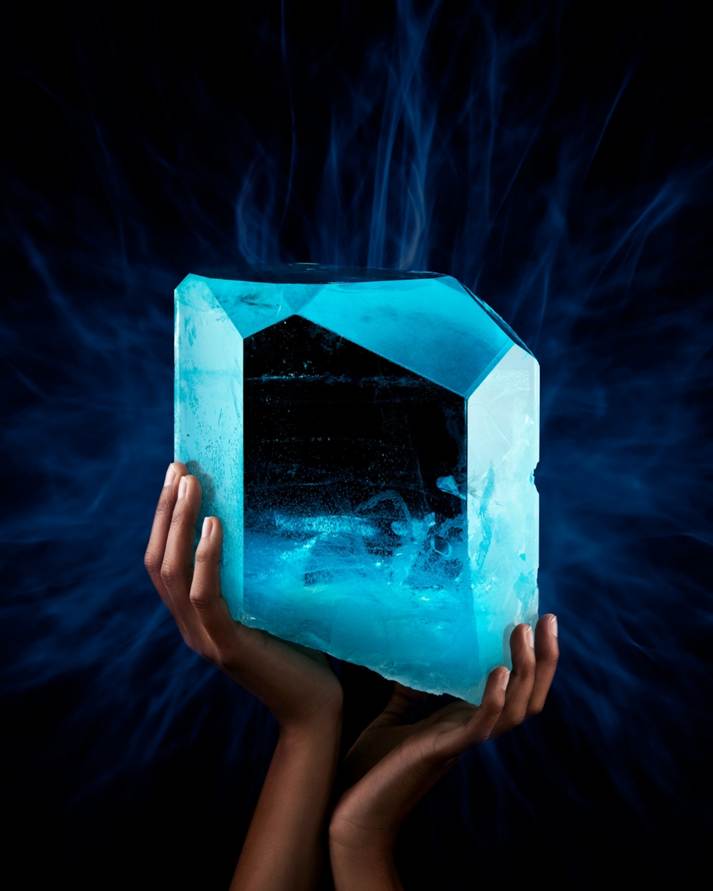
An aquamarine crystal from the Sakangyi pegmatites near Mogok in Myanmar measures 23 centimeters in height, 18 centimeters in width, and weighs eight kilograms. That amounts to approximately 40,000 carats.
Its size alone is spectacular. Added to this are its intense blue color, high transparency, and a clearly defined crystal form. In this description, the specimen is considered one of the most extraordinary known aquamarine crystals due to this combination of qualities. By way of comparison, there is an aquamarine in the collection of the Smithsonian National Museum of Natural History weighing 15,256 carats. Aquamarines
Numbers like these change our perception. A mineral name—one we tend to associate with a cut gemstone—suddenly becomes a large, distinct object in its own right. Its impact is already evident in its natural form.
A Rarity in 23 Centimeters
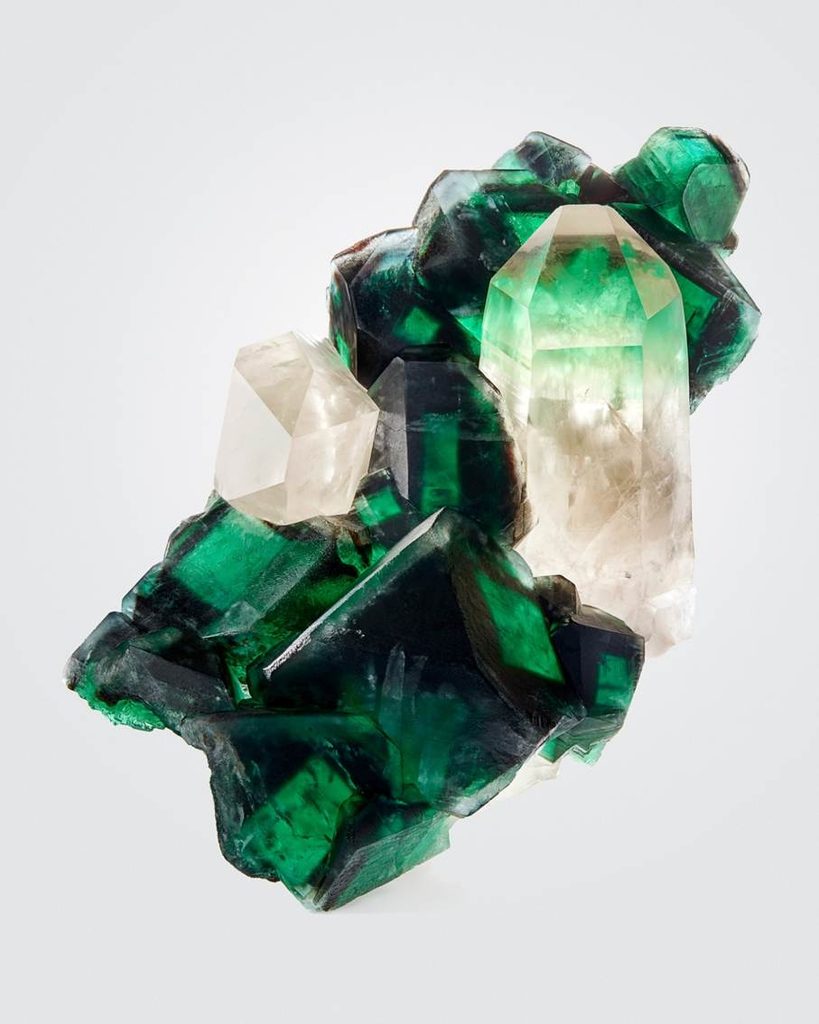
The so-called “Alien Eye” fluorite from the Erongo region in Namibia is 23 centimeters tall. It owes its name to an unusual banding pattern: dark outer bands surround intensely green, diamond-shaped centers, creating a pattern that reminds collectors of an eye.
The story behind its discovery makes this piece even more interesting. The material comes from a single deposit known as the “Alien Eye Pocket.” According to the seller, it yielded fewer than 30 high-quality specimens and crystals. Alien Eye Fluorites
This explains why two fluorite specimens are virtually impossible to compare on the market. The decisive factors are the source, quality, crystal formation, the rarity of the specific specimen, and the number of comparable specimens. The “Alien Eye” combines all of these factors: a distinctive pattern, a limited find, and a shape that immediately sticks in your memory.
When Nature Has Already Composed
This is particularly striking in a specimen from the Swiss Alps: pink fluorite on smoky quartz from the Tiefengletscher in the canton of Uri.
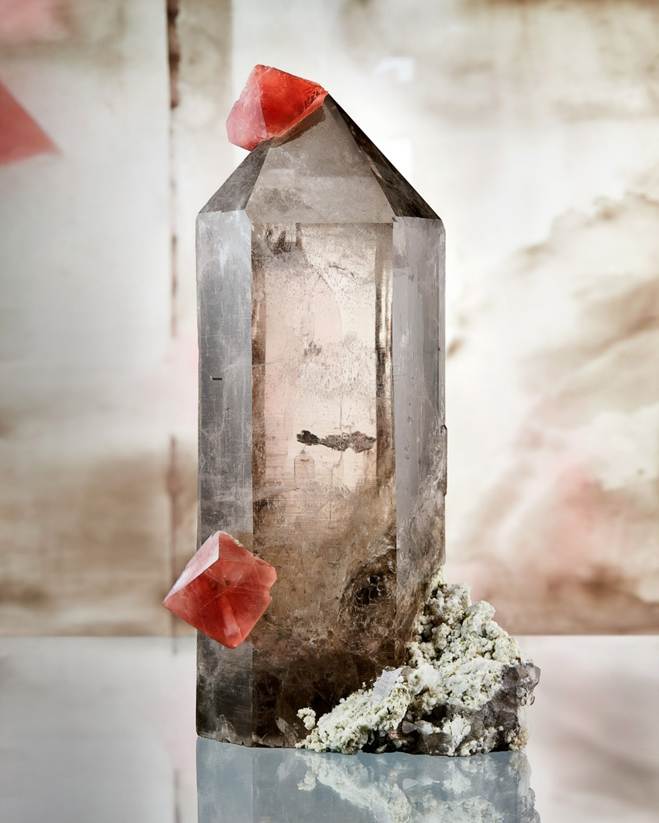
A smoky quartz crystal just under 29 centimeters tall features two large, isolated pink fluorite octahedrons. The composition appears almost as if it were deliberately arranged. At the same time, the piece originates from a region with a long mineralogical history. Significant historical finds come from the same area; crystals from a famous discovery in 1868 are now housed at the Natural History Museum in Bern. Fluorite Smoky Quartz
That is precisely what makes it so fascinating: Nothing about it was designed, and yet the composition appears almost perfect. Proportion, contrast, balance, and spatial effect play just as important a role in such masterpieces as mineralogical data.
Origins Become History
The situation is similar with a rubellite from the Malkhan pegmatite field in Transbaikalia, Russia. Two elongated red tourmaline crystals grow from a matrix of white quartz. The vivid color and clear structure give the specimen an almost graphic presence.
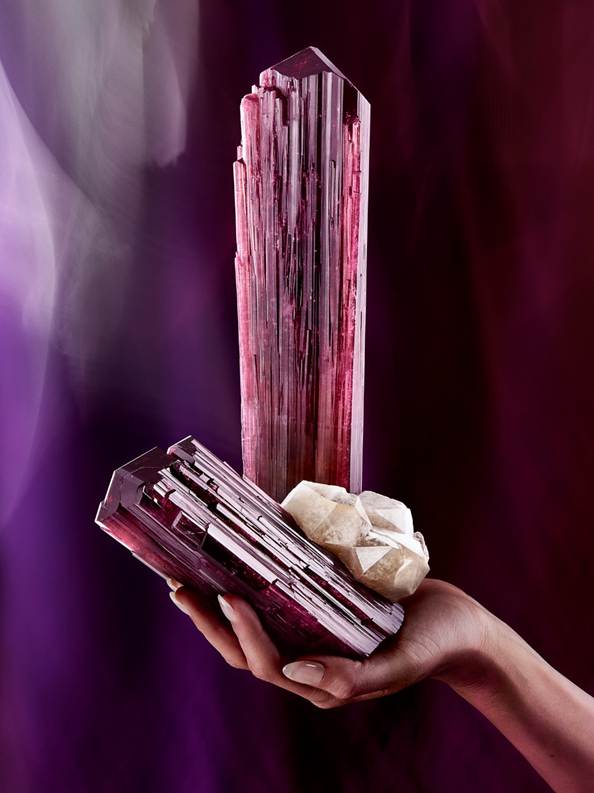
The deposit itself is part of history. Malkhan has produced some of the most significant colored tourmalines. Although tourmaline had long been known there, exceptional rubellite specimens did not gain prominence on the international collectors’ market until relatively late. Particularly high-quality specimens began appearing with increasing frequency in major collections starting around 2015. Rubellites
This gives provenance a similar role to that in other fields of collecting. The place of discovery, the period of discovery, previous collections, and documentation can all contribute to the significance of an item.
This is even more evident in an aquamarine from the Shigar Valley in Pakistan. The light blue crystals grow there alongside white orthoclase and black schorl. The specimen also has a documented provenance: it comes from the former collection of William Ferris. Aqua Schorl
So there’s more to it than just the material. Each piece is given its own story.
The Munich Show as a Stage
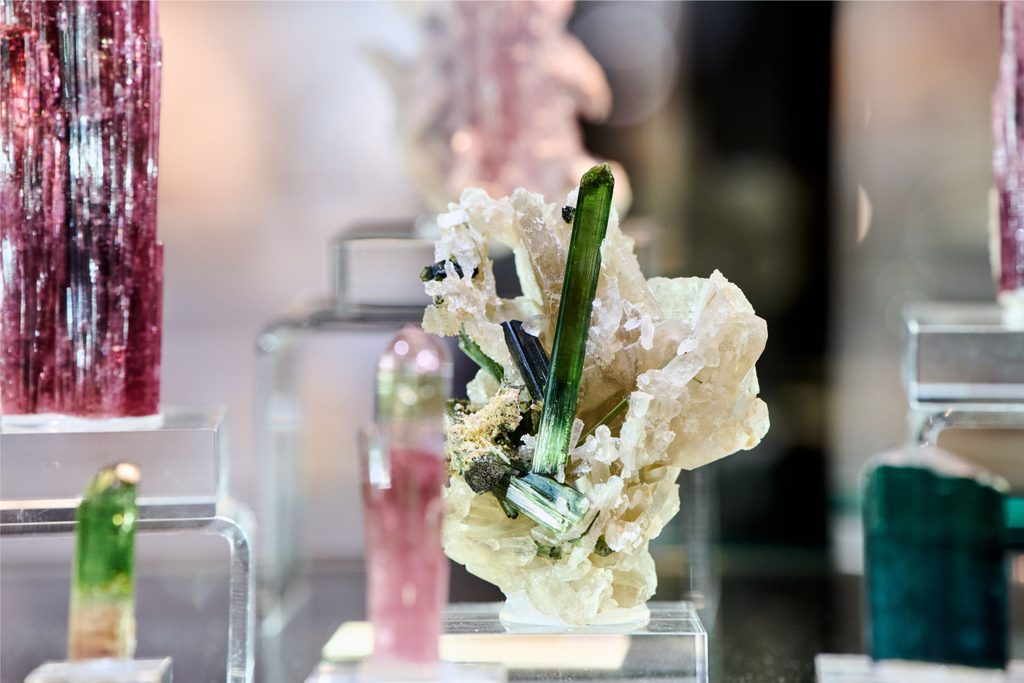
The Munich Show, in particular, highlights this breadth. In just a few halls, raw materials, scientific collections, spectacular one-of-a-kind pieces, and deliberately staged natural forms come together. Some exhibitors focus on classic mineral specimens, while others specialize in fossils, petrified wood, or large-scale objects for architecture and interior design.
The range is enormous. A piece can fit in one hand or weigh several metric tons. Some specimens remain closely tied to mineralogy and research, while others have long been selected as showpieces for private collections and upscale spaces.
This gives rise to a unique visual language. Large minerals stand freely in the space, fossils are mounted on custom-made metal structures, and petrified wood is crafted into furniture or sculptural objects. The scientific origin remains part of the story, but the aesthetic impact also plays a decisive role in determining where the object will ultimately be placed.
And then come the fossils
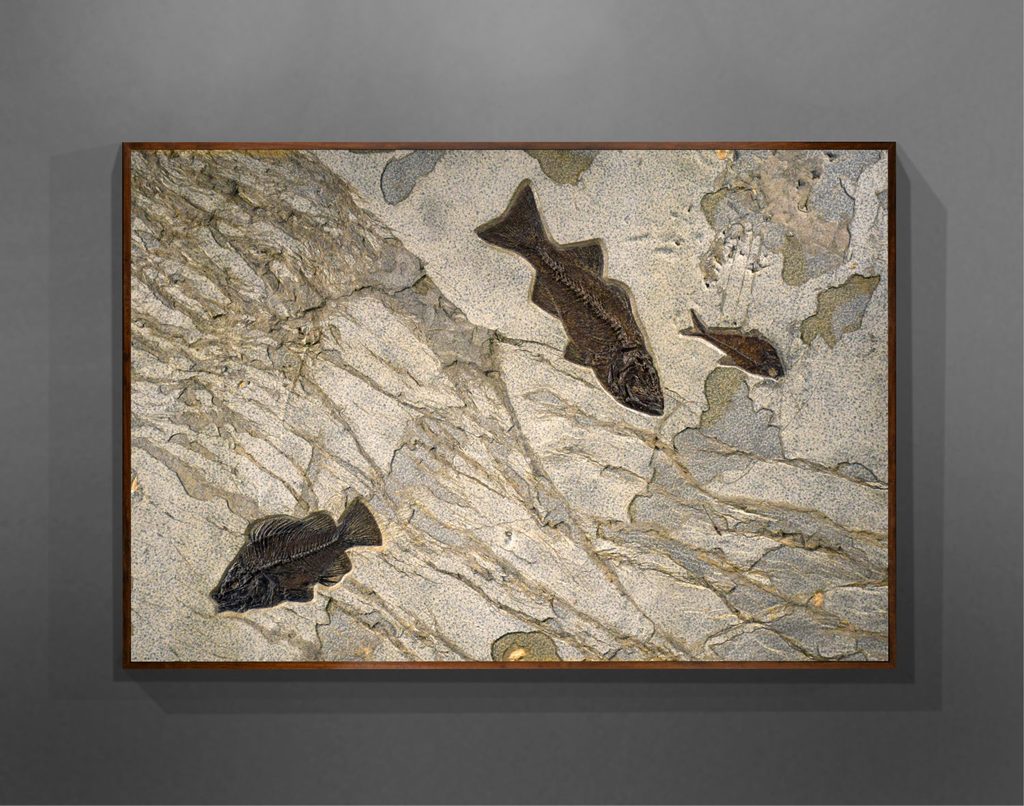
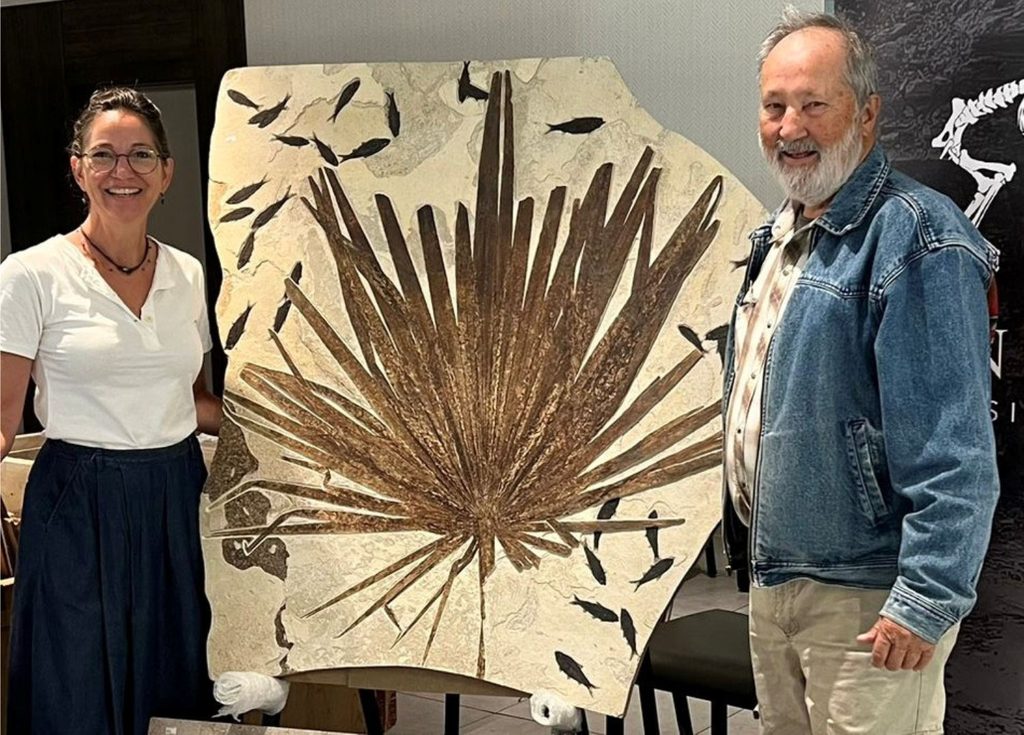
When it comes to fossils, this story takes on an additional dimension. A mineral tells the story of geological processes. A fossil, on the other hand, also preserves traces of a living organism. It could be an ammonite, a fossilized fish, a plant, or a complete dinosaur skull.

With such specimens, additional quality criteria come into play. How much of the original material remains? Which areas have been restored? Does the material come from a single animal, or were multiple individuals combined? How well is the taxidermy documented? For top-quality specimens, these questions are crucial. A skeleton that appears complete may actually involve extensive reconstruction. A specimen presented in a less spectacular manner may be considerably more significant from both a scientific and a collector’s perspective.
$44.6 million for a Stegosaurus
The auction of the Stegosaurus “Apex” at Sotheby’s in New York in 2024 demonstrated just how far this market has come. The skeleton, which is approximately 150 million years old, fetched $44.6 million, setting a new auction record for a fossil at that time.
The price is an extreme figure. Nevertheless, it illustrates the range within which the most significant fossils now fall.
Completeness plays a central role here. In the case of dinosaurs, well-preserved skeletons that can be attributed largely to a single individual are extremely rare. Specimens assembled from multiple animals can be valued quite differently, both scientifically and commercially. Transparency regarding the proportion of original material and the extent of reconstruction is therefore a key factor in determining value.
From a Found Object to an Artwork
Back to the five-metric-ton jasper sphere.
Her story represents another side of this market. Here, natural materials are deliberately transformed. Through processing, 24 metric tons of raw material are turned into a precise geometric form. The grain is preserved, but the original shape disappears.
This is precisely where an interesting contrast lies with a mineral specimen, in which the natural formation is to be preserved as unchanged as possible. In one case, it is the original crystal form that fascinates; in the other, it is the craftsmanship involved in working with an extraordinary material.
In the end, both can end up in the same room.
The images of the recovery process show just how great the distance can be between the starting point and the finished object: red rock in a South African mine, a crane, heavy-haul trucks, containers, and finally a high-gloss sphere 1.50 meters in diameter. World of Crystals: The story is part of the object.
What Matters Most
The higher the quality and value, the more important the documentation becomes. For minerals, the location of discovery, the period of discovery, restorations, adhesives, and previous collections are of interest. For fossils, additional factors include the proportion of original material, reconstructions, preparation, and lawful provenance. For processed natural specimens, the journey from raw material to finished object is an essential part of their classification.
Here, too, high-quality collecting fields share similarities. Rarity alone is rarely enough. Quality, condition, provenance, and history must all align. Above all, however, the individual piece must be compelling.
A Different World of Nature
Anyone who is familiar with minerals and fossils mainly from museum display cases, small collections, or traditional mineral fairs sees only a small part of this world.
At the forefront are objects whose quality, rarity, and presence far exceed those of others. Some were formed millions of years ago, others billions of years ago. No designer determined their color, no artist conceived their crystalline form. Humans discover them, select them, prepare them, document them, and sometimes alter them.
This range is particularly evident at the Munich Show. Amid rough stones, scientific specimens, and classic collector’s items, there are time and again pieces that would hold their own in any discerning collection or high-end interior.
Some fit in a display case; others require a flatbed truck.
More about MunichShow and GemWorld