
Vacheron Constantin Métiers d’Art: Six Animals, Six Rare Crafts
Feathers, glass, folded paper, gold wire, and wood are not the materials one typically associates with a mechanical watch movement. Vacheron Constantin uses precisely these materials as the starting point for its new “Métiers d’Art: Homage to the Animal Kingdom” collection. Six artisans have adapted their disciplines to the scale of a watch dial—and in some cases had to completely redevelop their usual techniques.
The six concept watches are part of the “One of Not Many Crafts Program.” The program deliberately looks beyond the classic Métiers d’Art of watchmaking. Instead of guilloché, enamel, engraving, or gem-setting, the focus is on feather art, glass sculpture, micro-origami, gold embroidery, paper sculpture, and wood inlay.
Four millimeters of space for six crafts
The shared technical specifications impose strict limits: The cases measure 42 millimeters in diameter and 12.9 millimeters in height. Between the surface of the dial and the sapphire crystal, there are only four millimeters available for three-dimensional work. Techniques normally used in sculpture, textiles, furniture, or large-format works on paper therefore had to be scaled down and, at the same time, protected against vibrations.
The automatic Caliber 2460 G4 creates an unusually uncluttered display for this purpose. The hours, minutes, day of the week, and date appear in four windows along the edge of the dial. No hands are needed above the central display. The movement consists of 237 components, operates at 4 hertz, and offers a 40-hour power reserve. On the back, a specially designed rotor made of 22-karat gold is visible, featuring engravings inspired by traditional artisanal crafts.
Feathersnake: a snake made of more than 200 feather parts
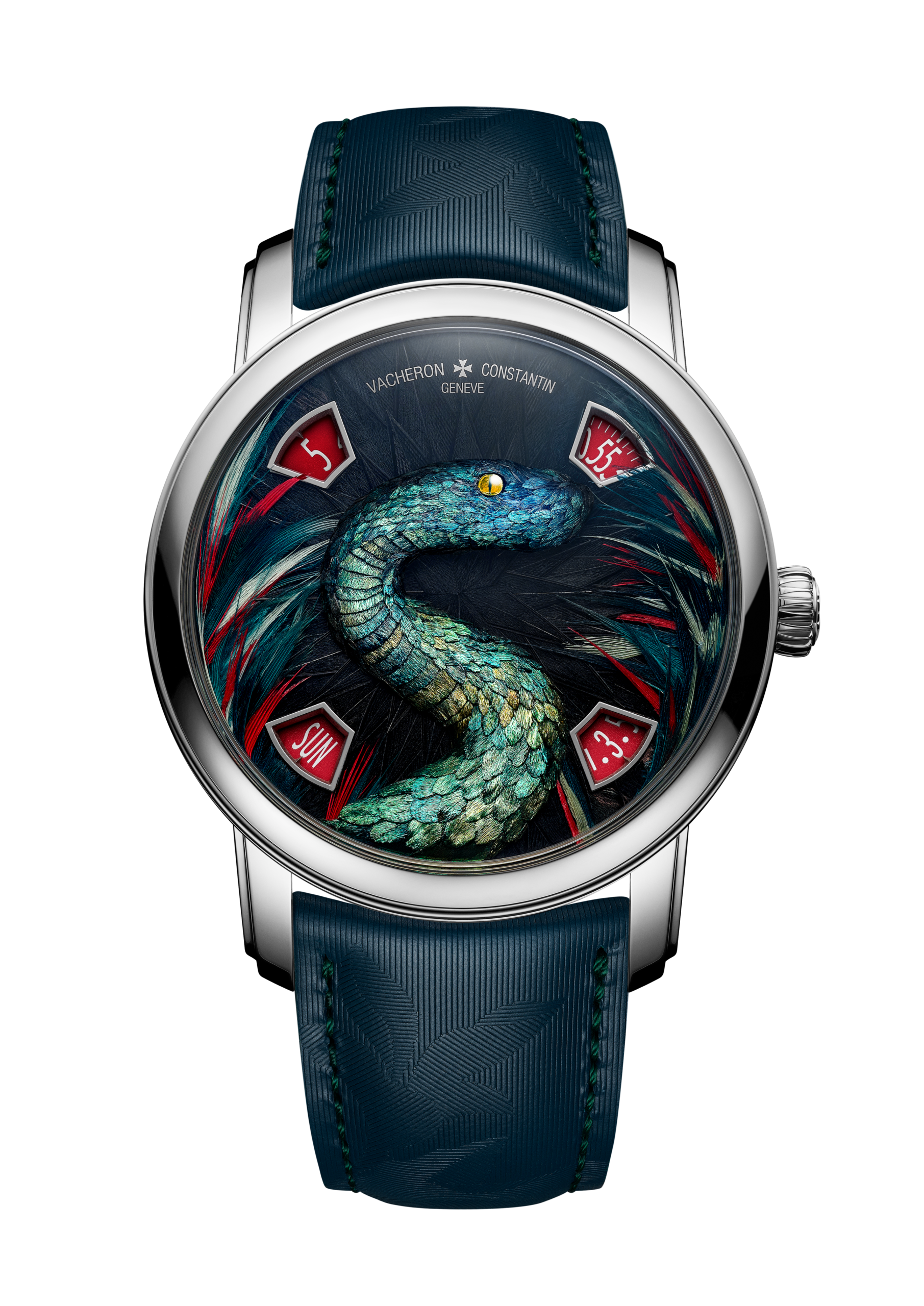
French feather artist Julien Vermeulen created “Feathersnake,” an imaginary snake that winds its way through a fantastical plant world. Its body consists of more than 200 tiny elements, cut from seven rare peacock feathers. Goose feathers form the surrounding vegetation and the background.
A specially designed metal component holds the springs in place and creates a relief of up to three millimeters. Research, prototyping, and production alone took approximately 250 hours. The white gold case bears the reference number 7630A/000G-H206; the watch is a one-of-a-kind piece.
Glassoctopus: Sculpture made of molten glass
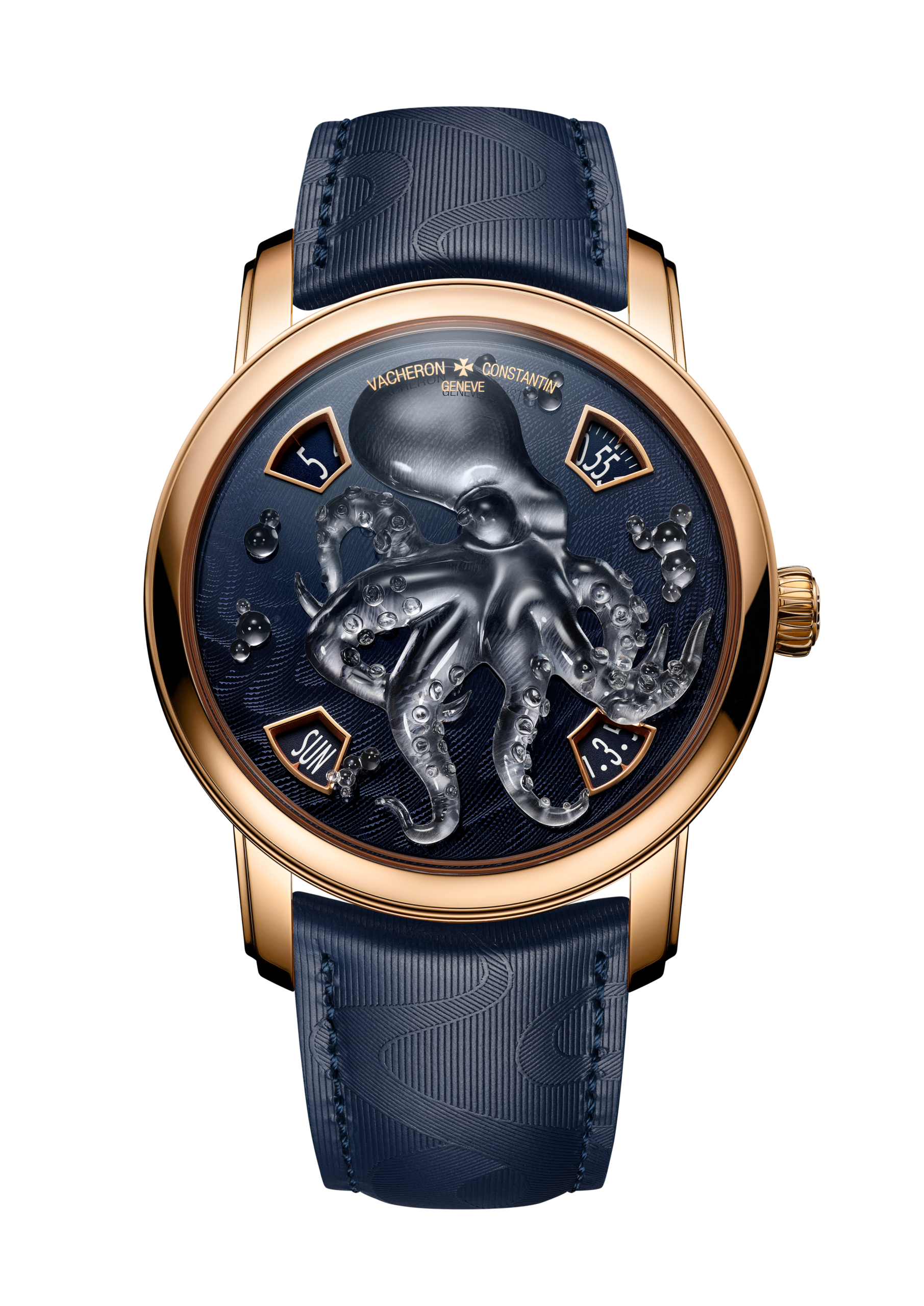
For “Glassoctopus,” Simone Crestani fashioned a transparent octopus out of tiny glass rods. Custom-made tungsten tools made it possible to shape the tentacles and body in a way that is hardly comparable to conventional glass sculpture techniques.
The sculpture, just 3.5 millimeters high, appears to float above a hand-guilloché, dark blue-coated gold base. More than a year went into its development; each prototype alone took at least three working days to complete. The case of the Reference 7630A/000R-H205 is made of 18-karat rose gold.
Origami: Manta Ray Made from Japanese Paper
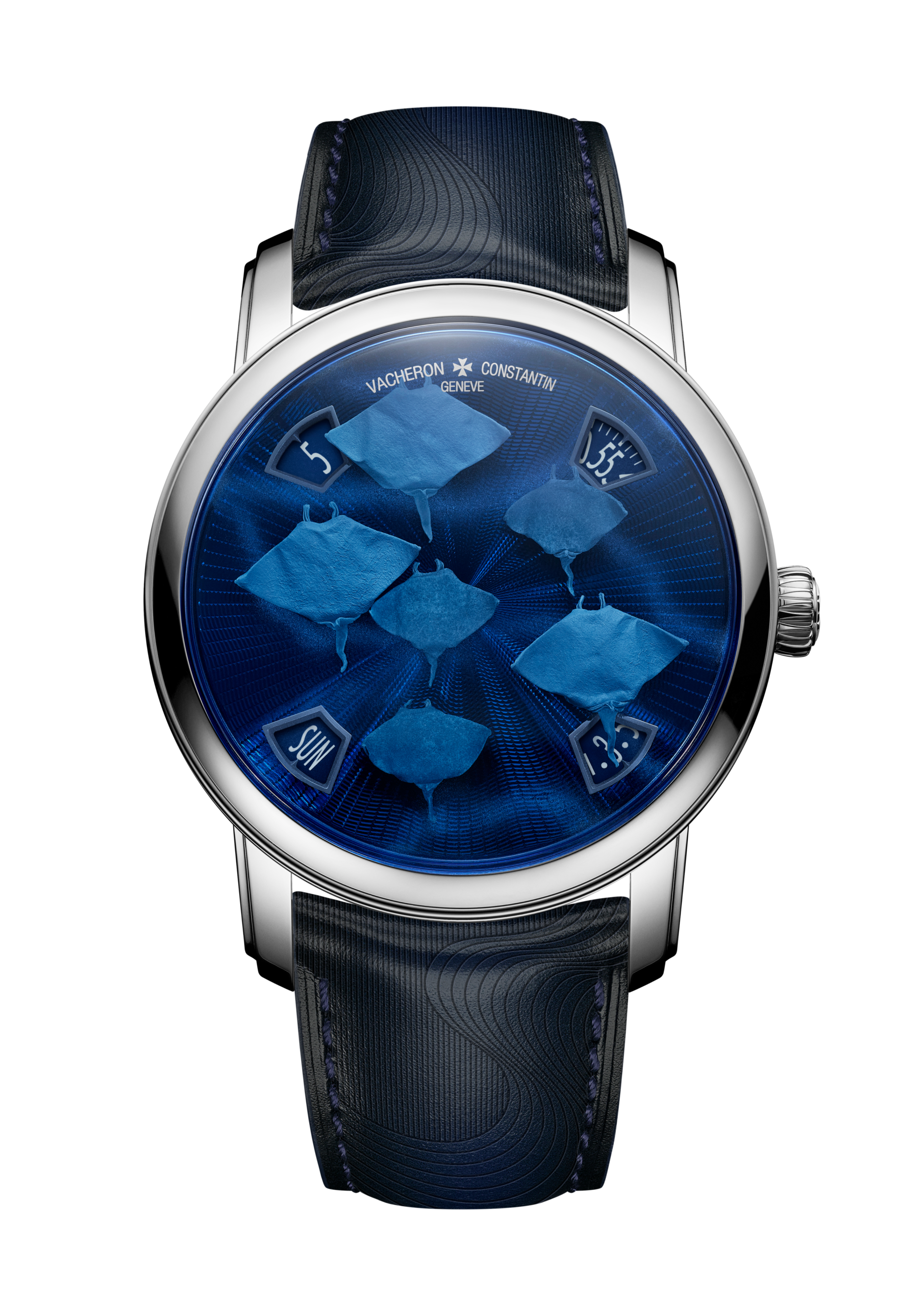
In “Oraygami,” Anya Midori has six mantarays floating above a hand-guilloché seabed. The creatures, which are five to ten millimeters long, are folded from specially dyed Japanese paper and mounted on delicate brass pins at varying heights.
Midori worked using only her fingers, fingernails, and the tip of a toothpick—without a magnifying glass. Because existing origami folding patterns did not adequately capture the proportions of the rays, she developed a new folding sequence. The development took more than two years. The white gold model bears the reference number 7630A/000G-H204.
Tigerbroidery: Gold embroidery directly on the dial
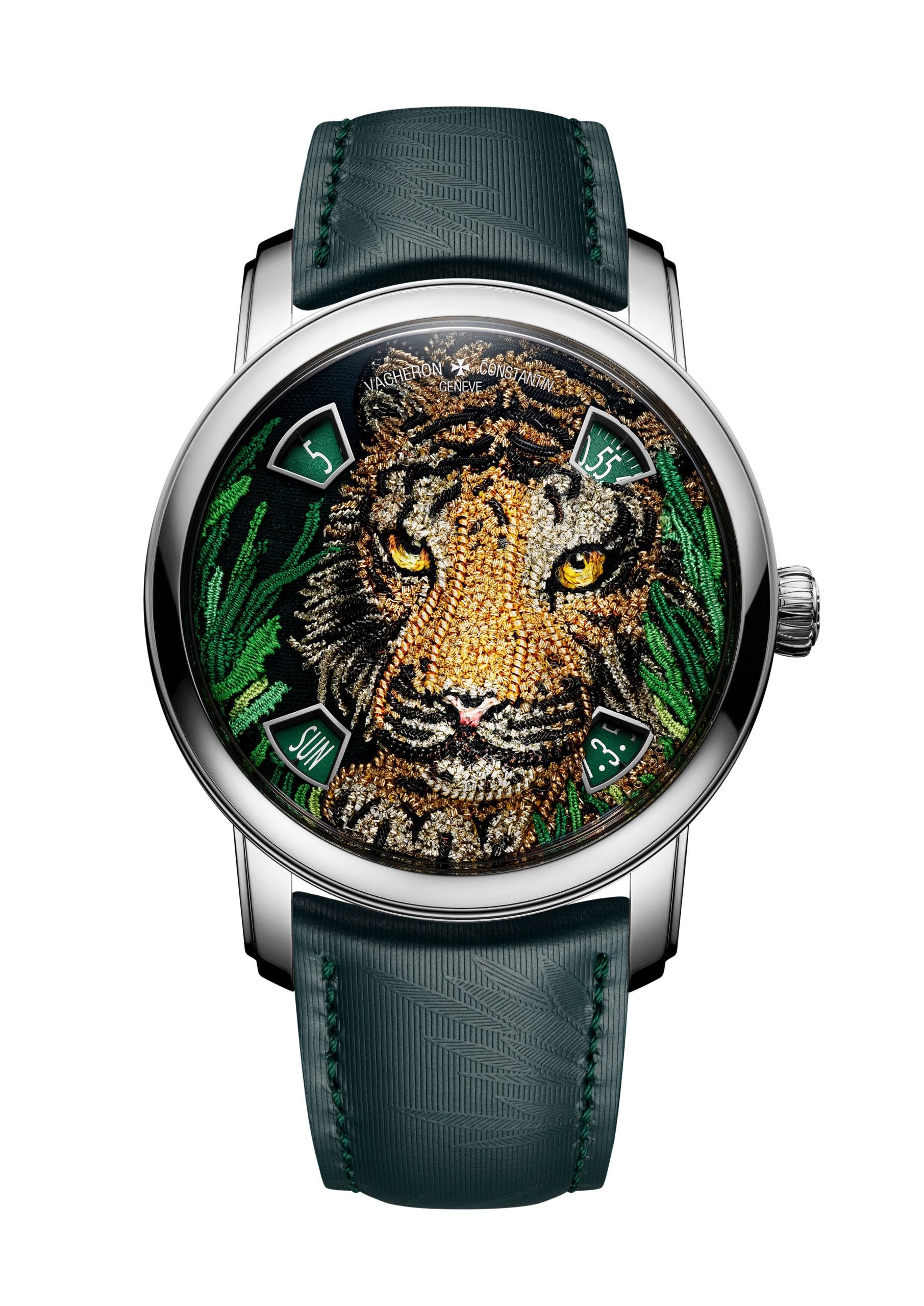
Laura Baverstock embroidered a tiger and the surrounding vegetation using 9-karat yellow and white gold wires and Japanese silk. Ceramic-coated copper threads were used for the black stripes; the eyes alone are composed of ten different colors of silk.
To make it possible to embroider directly onto a watch at all, Vacheron Constantin developed a perforated titanium dial plate. The position of each opening had to align with the final design. It took approximately 210 hours of work to complete the dial of the white gold watch 7630A/000G-H207.
Papercroc: Relief made of white cotton paper
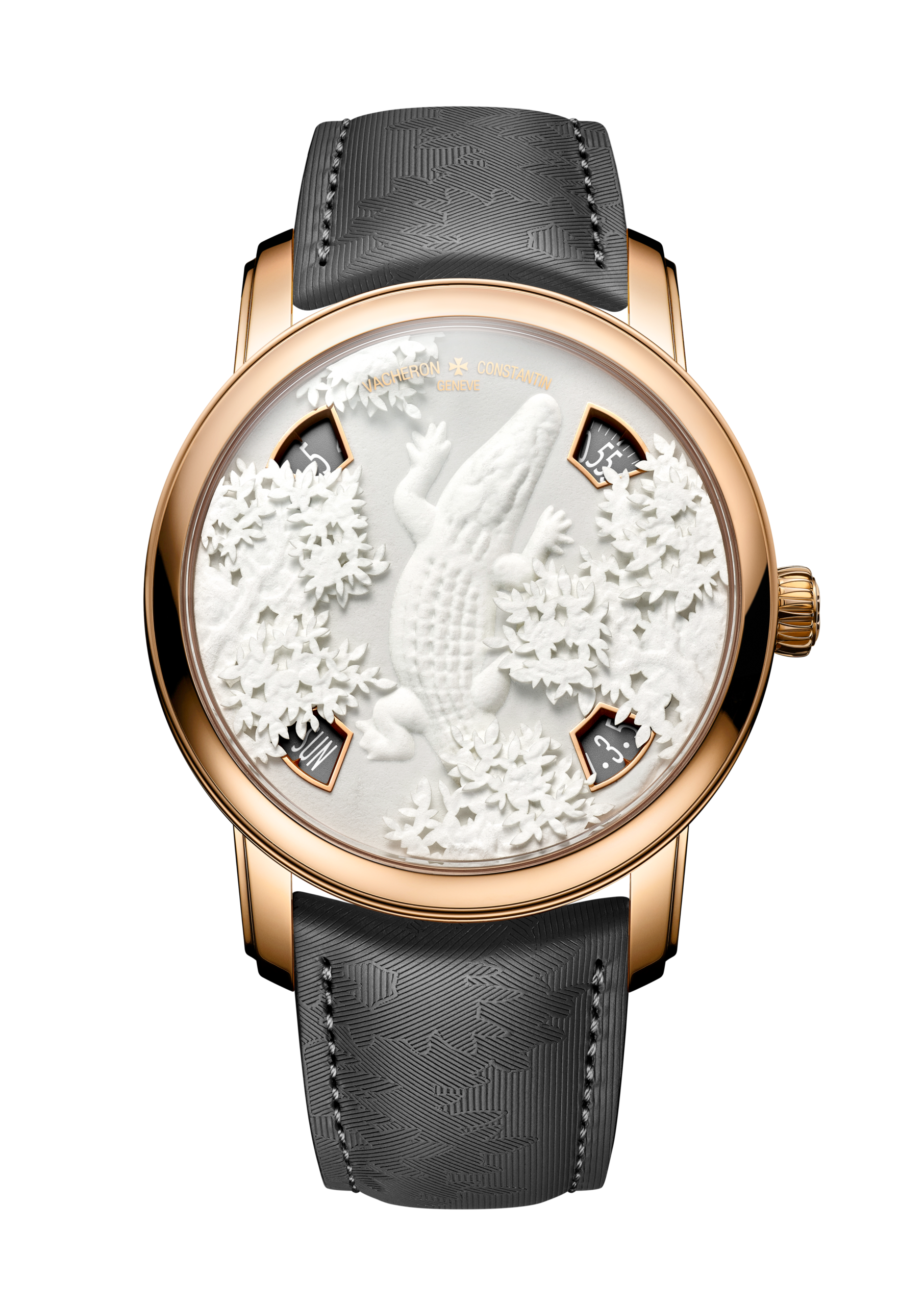
Marianne Guély transforms white cotton paper into a crocodile moving through a monochromatic landscape of plants. Sheets with basis weights of 250 and 300 grams were embossed, laser-cut, and assembled by hand in multiple layers.
The scales and leaves are formed on engraved brass dies heated to 60 to 70 degrees. Light and shadow bring out the relief, which is only three millimeters high. The four display windows are an integral part of the composition and not merely technical cutouts. The “Papercroc” bears the reference number 7630A/000R-H202 and features a rose gold case.
Woodenwings: Twelve Types of Wood for a Falcon
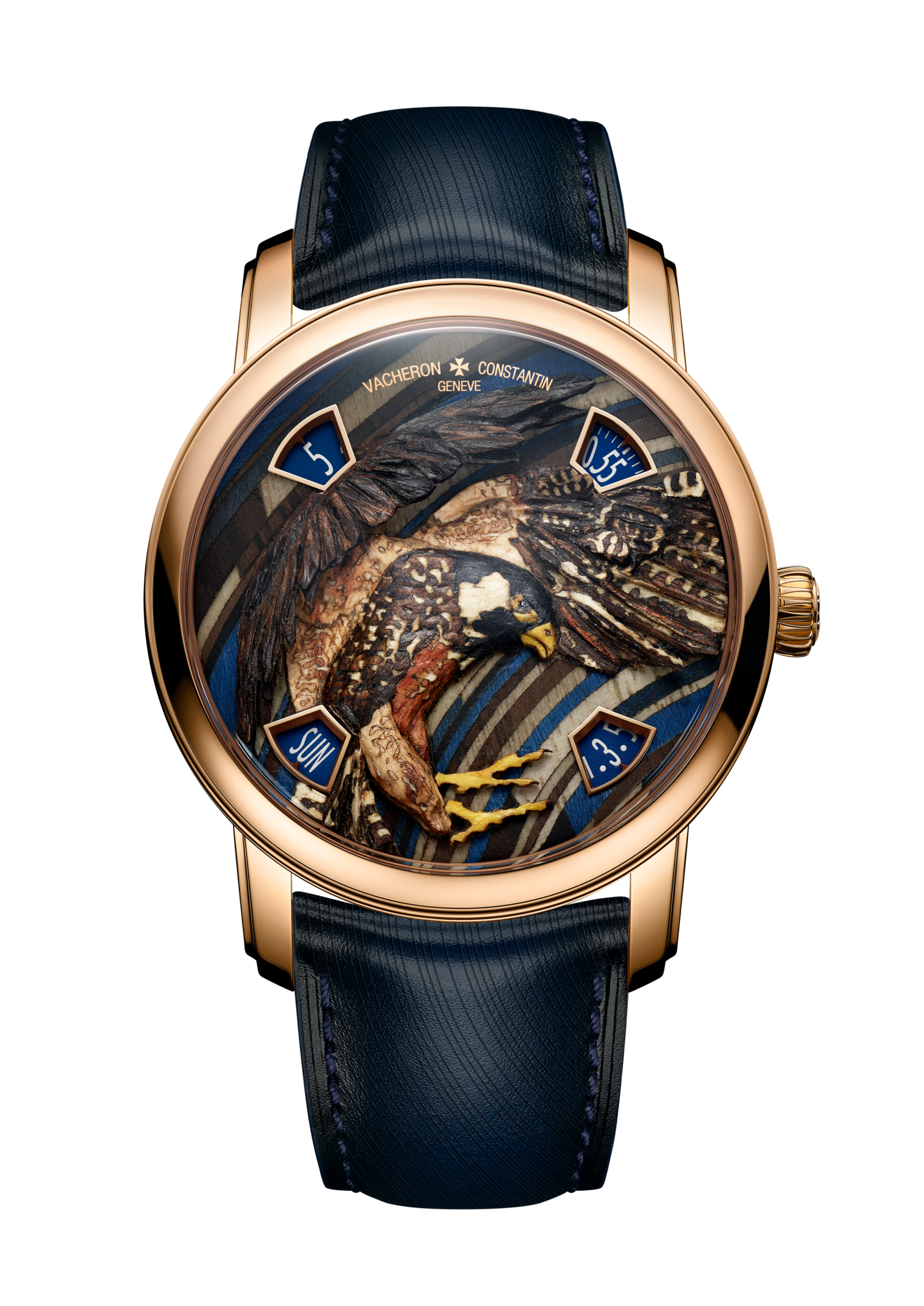
Anna Le Corno constructed the “Woodenwings” falcon from twelve types of wood, including figured birch, ziricote, tulipwood, smoked eucalyptus, and bog oak. Three types of inlay work create the three-dimensional effect: concentric inlay in the background, multi-layered veneers for the body, and a specially developed assembly of individual feathers for the wing.
Standard tools were too large for the job. Le Corno worked under binocular magnification using surgical scalpels, microscopic milling tools, and custom-made grinding tools. The rose gold watch bears the reference number 7630A/000R-H203.
More of an experiment than a collection
Vacheron Constantin explicitly describes all six pieces as concept watches and one-of-a-kind creations. Prices have not yet been disclosed. Their value to the brand therefore lies not in a new regular product line, but in experimenting with techniques, tools, and materials that have rarely been associated with watchmaking until now.
It is precisely this experimental nature that sets the project apart from many Métiers d’Art collections. While animals provide the common theme, the focus is on the question of how small a craft can be made without losing its materiality and expressiveness. The six watches will be exhibited as part of Homo Faber 2026 in Venice.